2024 Library

For a seventh year I have followed a self-developed reading strategy with the objective to read broader. The goal: read books falling under diverse headings. This strategy is still working for me, another rich year of reading.

For the curious, here is the library of 19 books including avenue of reading:

  • A Trip Around the Sun by Mark Batterson and Richard Foth (hoopla)
  • Against Empathy by Paul Bloom (hoopla)
  • And There Was Light by Jacques Lusseyran (hoopla audio)…most thought-provoking book on the list
  • Attached to God by Krispin Mayfield (hoopla)…my favorite book on the list
  • Awe by Paul David Tripp (hoopla)…9th annual read
  • The Complete Guide to the Prayers of Jesus by Janet Holm McHenry (hard copy)…most compelling book on the list
  • Creation Regained by Albert M. Wolters (hoopla)
  • From the Mouth of Dogs by B.J. Hollars (hard copy)…most engaging book on the list
  • Greetings from Duluth by B.J. Hollars (hoopla)
  • Humble Inquiry by Edgar Schein (hoopla)
  • The Last Exchange by Charles Martin (hoopla)
  • Life of the Beloved by Henri Nouwen (hoopla)
  • The Pleasure of His Company by Dutch Sheets (hard copy)
  • Sacred Scars by Michelle Bengtson (hoopla)
  • Say All the Unspoken Things by John Sowers (hard copy)…the best big idea book on the list
  • The Shift by Colby Martin (hoopla)
  • Think Ahead by Craig Groeschel (hoopla)…most helpful book on the list, under consideration as an annual read
  • Unclobbered by Colby Martin (hoopla)
  • What Aging Men Want by John C. Robinson (hoopla)…most practical book on the list

NOTE: If you’re not familiar with hoopla, check it out: https://www.hoopladigital.com/

Photo by Maël BALLAND on Unsplash

And There Was Light (book review)

Last year I came across Jacques Lusseyran’s story by reading a collection of his essays. Before I left on my Christmas road trip last week while looking for an audio book to listen to, I was thrilled to find Lusseyran’s memoir, And There Was Light. What a story to listen to during this season of the year!

In my 2024 Library posting that you’ll find tomorrow, I’ve called this book the most thought-provoking book I read this year. Here are five reasons:

  • Lusseyran convinces you he can see light despite being blind
  • Lusseyran and his young friends lead a significant Nazi resistance in France
  • Lusseyran shows you the power of words, both spoken and written
  • Lusseyran reminds you of the strength of the human spirit whose foundation is faith in God
  • Lusseyran proves odds can be broken

There are so many quotes worth noting from this memoir. That’s one downfall to listening to it-unable to highlight them. However, I’d encourage you to listen to it rather than read it. Andre Gregory’s narration draws you into the world of a blind child who grows into a hero, a choice he made so all would be drawn to the light.

If you are a lover of history, check out this book.

If you enjoy World War II stories, check out this book.

If you are clueless like I was about the French resistance, check out this book.

If you wish to better understand the world of the blind, check out this book.

If you wish to shine light into the dark, check out this book.

Sealing Hope for ’25

Recently gave my Kindle away. Just lying around, it was time to give it a new home.

When I was looking through the library I had built on it before deactivating it, there was one book that I knew I’d want to find a way to keep. GOOD NEWS: It’s on Hoopla!

If you’ve been following this blog for any amount of time, this book will most likely sound familiar. Why? Because since 2016 I’ve read it every year. I just finished the ’24 reading. It may be the last time I hold to an annual commitment to read it. No doubt, I glean relevant takeaways each time I read it. And, interestingly, with each reading, I also observe personal growth based on the lens of my reading and my responses.

Paul David Tripp’s Awe is the book. This reading, chapters 7, 10, and 13 received the most highlights. Chapter 10, “Worldview,” is always a great reminder of how to look at current circumstances:

Your idea of God will never be either accurate or stable if you’ve arrived at it by trying to figure out what he is doing in the situations in your life…when you wear the glasses of Isaiah 40 you can understand yourself, others, meaning and purpose, right and wrong, identity, morality history, and the future properly.

Chapter 13, “Work,” I’ve blogged about before. What stood out today was Tripp’s many references to rest, which is my word for 2025.

Success is not about accruing power but about resting in God’s power…Awe of God teaches me that, by grace, my life of work can now be an expression of rest and not worry.

Chapter 7, “Complaint,” is consistently corrective, which oddly can be encouraging. The meat of the chapter discusses five questions that Tripp says steal or seal our hope; Tripp believes we answer these questions every day:

  • Is God good?
  • Will God do what he promised?
  • Is God in control?
  • Does God have the needed power?
  • Does God care about me?

I encourage you to sit with these questions this week. They may renew your awe for what’s happened in ’24. They may seal your hope for what’s going to happen in ’25.

Photo by Kelly Sikkema on Unsplash

Making Sure Not to Forget

Caught another intriguing episode of Everything Happens. The title: Living with the End in Mind. Kate’s guest: Dr. Kathryn Mannix, palliative care physician and cognitive behavioral therapist.

One story Dr. Mannix relayed towards the end of the conversation was a detailed account of a cancer patient, a mother expressing deep worry about what her death would mean for her children. In a very specific notion of what it would mean for her daughter to be motherless, she said “they’ll be nobody to tell her about periods.”

These types of worries and thoughts became their work. One tool they devised to deal with them was by keeping a worry book.

This is another really great technique. So every time her thought monster gave her another thing to worry about, instead of worrying about it, because worry is our way of making sure we don’t forget to deal with something. If you get a little worry book, you just write it down and say “okay, gotcha, thanks. Bye. You can go now because I’ve captured it.” And next time I have worry time, which is my appointment with myself once a week to sit down and look at my list of things that I mustn’t forget to worry about. Sometimes when you look at the list, you can see three of them that actually, I was obviously having a really bad day that day because they are just not worth worrying about. Just cross those ones right out. And that still leaves me with a few. So which couple shall I tackle today? And so it moves us from being at the mercy of all difficult thoughts. To being the person who’s choosing when and how to think about those difficult thoughts.

How did you like that definition of worry: our way of making sure we don’t forget to deal with something?

I relate. Not that I keep a book, but I’ve found that choosing when and how to think about difficult thoughts is freeing. And dare I say holy.

Why holy? It seems to align with a portion of the Sermon on Mount found in Matthew. Here’s the portion I’m thinking about:

25 “I tell you, do not worry. Don’t worry about your life and what you will eat or drink. And don’t worry about your body and what you will wear. Isn’t there more to life than eating? Aren’t there more important things for the body than clothes? 26 Look at the birds of the air. They don’t plant or gather crops. They don’t put away crops in storerooms. But your Father who is in heaven feeds them. Aren’t you worth much more than they are? 27 Can you add even one hour to your life by worrying?

28 “And why do you worry about clothes? See how the wild flowers grow. They don’t work or make clothing. 29 But here is what I tell you. Not even Solomon in all his royal robes was dressed like one of these flowers. 30 If that is how God dresses the wild grass, won’t he dress you even better? Your faith is so small! After all, the grass is here only today. Tomorrow it is thrown into the fire. 31 So don’t worry. Don’t say, ‘What will we eat?’ Or, ‘What will we drink?’ Or, ‘What will we wear?’ 32 People who are ungodly run after all those things. Your Father who is in heaven knows that you need them. 33 But put God’s kingdom first. Do what he wants you to do. Then all those things will also be given to you.

I’m not suggesting it would be appropriate, even empathetic, to quote these verses to someone pondering their death. What I am saying is the principal of kingdom living that says, “God knows what I need. He knows what everyone in my life needs right now. And my not being here won’t change that. It’s hard to keep that thought first. But it’s possible. And the thoughts that keep me from doing that need to be captured. When I do that and the more I do that, God is free to give me what I need right now, and free to give those I’m worried about what they need now…and the next day…and the next day… and the next day…

If you find yourself in a place where God isn’t free to give you what you need, maybe a worry book would be a great gift to yourself for Christmas or the New Year…so you don’t forget to deal with something…so God can.

Photo by Freddy Castro on Unsplash

Piano Lessons on Humility

Bored between football and hockey late this afternoon, my surfing led me to a documentary mid-air. It being about a piano, I paused and didn’t move the channel.

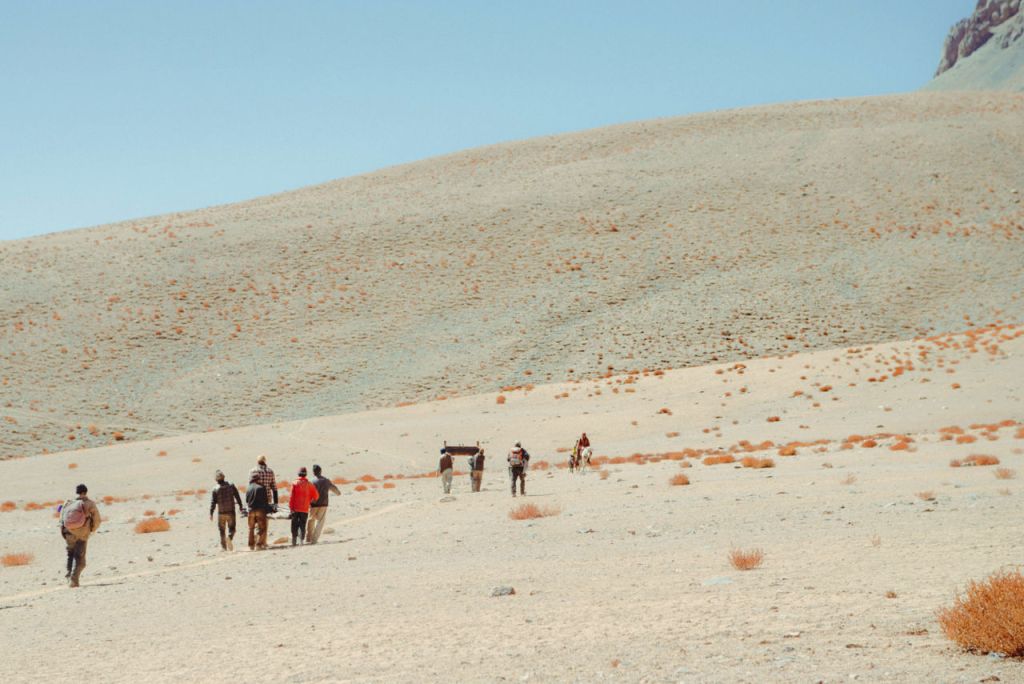
Piano to Zanskar is an award-winning British documentary film which tells the story of Desmond O’Keeffe, also known as Mr Gentle, a 65-year old piano tuner who embarks on an impossible mission.

Facing his future in retirement, “sitting in deck chairs and eating lemon drizzle cake”, Desmond decides instead to take on the most challenging and perilous delivery of his four decade career: transporting a 100 year-old, 80 kilo, Broadwood and Sons upright piano, from bustling London to the remote heart of the Indian Himalayas. 

Setting off from his busy workshop in Camden Town, and enlisting the help of two young and eager apprentices, Desmond’s ambitious destination is a primary school in Lingshed, Zanskar. At 14,000 feet above sea level, it is one of the most isolated settlements in the world. 

At 56 years of age, I continue to receive lessons on humility; they come faster and deeper. Watching this film, I faced several realities of extraordinary privilege my life has afforded that I must stop taking for granted.

  • Grew up in a home with a piano. (As of 2015, one in 3,788 U.S. families owned a piano. That statistic for the world isn’t known.)
  • Received piano lessons at various levels.
  • Earned a degree in music education.
  • Taught piano for seven years.
  • Started a piano competition in the early 90’s, now known as The Greater Jacksonville Federation Piano Competition, that continues today.
  • Have played for thousands of church worshippers in America, Belarus, and Jordan.

God has used pianos to heal me, to touch others, and to lift his name high.

For His sake, may the humility lessons continue.

Discovering Who You Really Are

Wednesday I asked a pastor a theological question worded something like this: “There’s two views on this topic. Which one do you take?”

I’ve experienced two reactions to this question: “How much time do you have” or “Really? That’s what we’re doing right now?” His rolled eyes didn’t match his answer.

I see a tension between both of those. So I see both of them in Scripture, and sometimes I just have to say you can’t answer that tension… I think we need to just to leave that tension there than trying to answer it, because Scripture doesn’t answer the tension.

“That tension can’t be answered. Just leave it there.”

His response was worded unlike any other. Even if pastors acknowledge the tension and would like to avoid it, no one has expressed their view like this. Bottom line: it’s okay to not have the answer. It’s actually better for peace and rest to not force one for any reason.

Continuing to chew on his answer I find it refreshing, particularly when applied to other tensions society revels over debating and dividing over. Millions of dollars and minutes are wasted over tensions that just need to be left alone.

The pastor’s reply modeled this beatitude: “Blessed are the peacemakers for they shall be called children of God.” In his paraphrase The Message, Eugene Peterson wrote “that’s when you discover who you really are and your place in God’s family.”

Here’s to resting in our place in God’s family!

Photo by Eric Prouzet on Unsplash