The lives of those fully engaged in the human struggle will be riddled with bullet holes. Whatever happened in the life of Jesus is in some way going to happen to us. Wounds are necessary. The soul has to be wounded as well as the body. To think that the natural and proper state is to be without wounds is an illusion. Those who wear bulletproof vests protecting themselves from failure, shipwreck, and heartbreak will never know what love is. The unwounded life bears no resemblance to the Rabbi. –Abba’s Child by Brennan Manning, Chapter 9, “The Rabbi’s Heartbeat”
A final highlight from reading Manning’s book. I choose to find it encouraging.
Jesus was barely breathing, it seemed, before someone was coming for him. Until it was finished, he never donned a bulletproof vest. He apparently agreed; wounds were necessary.
As a follower, a disciple, our hope is to resemble. That entails a few necessities about wounds:
Expect them in full engagement.
Taking a soul hit requires healing as much as a body hit; soul hits don’t indefinitely release us from living anymore than a flesh wound does. Respect and treat them the same.
Our wounded Rabbi understands. Our hope rises through his wounds.
Chapter six, “Present Risenness,” in Brennan Manning’s Abba’s Child caught me offguard. The resurrection theme has been on alert to my ears for the last year. Manning’s language both challenges and refreshes. Read these highlights to experience it.
For me, the most radical demand of Christian faith lies in summoning the courage to say yes to the present risenness of Jesus Christ….This yes is an act of faith-a decisive, wholehearted response of my whole being to the risen Jesus present beside me, before me, around me, and within me.
The resurrection of Jesus must be experienced as more than a past historical event…in other words, the resurrection needs to be experienced as present risenness…If our faith is alive and luminous, we will be alert to moments, events, and occasions when the power of resurrection is brought to bear on our lives. Self-absorbed and inattentive, we fail to notice the subtle ways in which Jesus is snagging our attention.
The present risenness of Jesus as “life-giving Spirit” means that I can cope with anything. I am not on my own.
Hope knows that if great trials are avoided, great deeds remain undone, and the possibility of growth into greatness of soul is aborted. Pessimism and defeatism are never the fruit of the life-giving Spirit but rather reveal our unawareness of present risenness.
May your day flow with the life-giving Spirit of present risenness.
Some authors clearly are gifted writers, have a way with words, and express themselves with little effort, so it seems. Tish Harrison Warren impresses me as one.
Having not grown up in liturgical church world, her book title intrigued me. The hope that she’d make connection between what happens on Sunday to living Monday through Saturday seemed promising and refreshing. Hope found.
Our hearts and our loves are shaped by what we do again and again. -Chapter 2, Making the Bed: Liturgy, Ritual, and What Forms a Life
The weekly worship ritual has always challenged me. In comparison to my growing up years in Baptist world, I knew the song title of the next hymn just by the page number. It’s been a while, but I believe “Victory in Jesus” was #296 in our hymnal. After a couple of decades, that familiarity led to dry and rote worship for someone that it’s all they’ve known.
Warren gives purpose behind the repetition. Much like making the bed daily, our minds and spirits are formed by worship’s repetition. Chapter three expands this idea through the ongoing necessity of brushing teeth. A three-year-old doesn’t understand the why that a twenty-three-old can’t imagine questioning or stop practicing.
How should we respond when we find the Word perplexing or dry or bring or unappealing? We keep eating. We receive nourishment. We keep listening and learning and taking our daily bread. We wait on God to give us what we need to sustain us one more day. We acknowledge that there is far more wonder in this life of worship than we yet have eyes to see or stomachs to digest. We receive what has been set before us today as a gift. -Chapter 5, Eating Leftovers: Word, Sacrament, and Overlooked Nourishment
Chapters 6 and 8 held the most meaningful connections for me. Using the everyday examples of a fight with her husband and sitting in traffic, Warren basically said, “Peace, though hard work, is possible; patience, though power-producing, is pretty basic.”
I imagine the final three chapters could hold the most meaning for other readers. She paints the holiness of communion, work, and Sabbath through the strokes of calling a friend, drinking tea, and sleeping. These principles alone are worth the effort to add this book to your “to read” list.
For those who attended a liturgical service today and may have left wondering or wandering, I’d encourage you to take some time with Warren.
For those churchgoers who can’t imagine being impacted by liturgy on Sundays or any other weekday, chances are the lens your using needs adjusting. This book can help.
For those who are curious about practicing sacred living but not sure where to start, give this book a look. It may be found in the liturgy of your existing ordinary.
Within what felt like minutes one morning last week, I thought to myself, “Am I being punked right now?”
It was the last Monday of July. I wondered if there was some secret conspiracy for everybody to go into react mode about anything and let’s include John. Next thought to myself, “What’s the current state of the moon?”
Along comes my worship pastor yesterday to introduce a song he is thinking about adding to our worship library. There is a piano take version he asked me to listen to. When I found it, I learned it’s actually born out of the artist’s completion of a soon-to-be-released book entitled Everyday Hallelujah.
In the recently released EP, there are two tracks about the book-one introducing it; the other a reading of the first chapter. These three sentences from the first chapter took me back to Monday morning and frankly, just about every day of any workweek:
Worship can be simple acts of service like mowing your neighbor’s lawn, working at a soup kitchen, or buying a stranger a cup of coffee. It can also be in the routines of life-like a prayer when you tuck your kids into bed or in the middle of your workday when you realize you are bringing order to chaos, beauty to the mundane. We worship with the lives we live. -Phil Wickham
Chances are, reader, you fall into one of two categories. You either bring order to chaos or you create beauty out of the mundane. And chances are, those in the other category disrupt your worship…more than you want to admit…out loud.
So here’s a mind shift. Rather than wonder if you’re being punked, what if you said, “Looks like I have an opportunity to worship.”
I actually fall a little into both categories, but my strength is bringing order to chaos. So yeah, I can tend to get ruffled with the chaos dwellers, particularly when they all arrive at the same time on a Monday morning as if they saved it all up from the weekend.
Here’s the challenge: View your bringing order and creating beauty as worship. When we do it together everyday, the result is a hallelujah to the one who knows all about bringing order and creating beauty, the King granting us the lives we live.
The Beatitudes and the kingdom of heaven have been on my mind this weekend.
Not because I’m on a spiritual high. Actually, it’s more like my heart is being reshaped.
Recovering from direct and indirect wounds, I’m more inclined to respond in kind than bless, rage a war on kingdoms built in God’s name that do not bear the image.
War doesn’t bless; war would be a perversion of “your kingdom come.”
Maybe it’s not reshaping as much it’s yeast at work. The mixing and kneading is the kingdom of heaven slowly rising.
The song, the prayer, the promise, the hope is the simultaneous blessing and nudge, “Rejoice and be glad, because great is your reward.”
I think those are drawing near to heaven who in this life find that they need men less and love men more. And to like more in being loved without being needed. For where agape is there, in some degree, is heaven.
Natural loves can become eternal only insofar as they’ve allowed themselves to be taken into the eternity of agape, and this always involves a sort of death.
What a find! Audio recordings of C.S. Lewis from 1958 reading his own work.
The quotes above come from the final chapter on charity and agape love.
I find joy in these words. Kinship permeates in hearing another believer express the truth of dying to the desire to being needed resulting in more love.
Heaven draws near the more we love and allow ourselves to be loved.
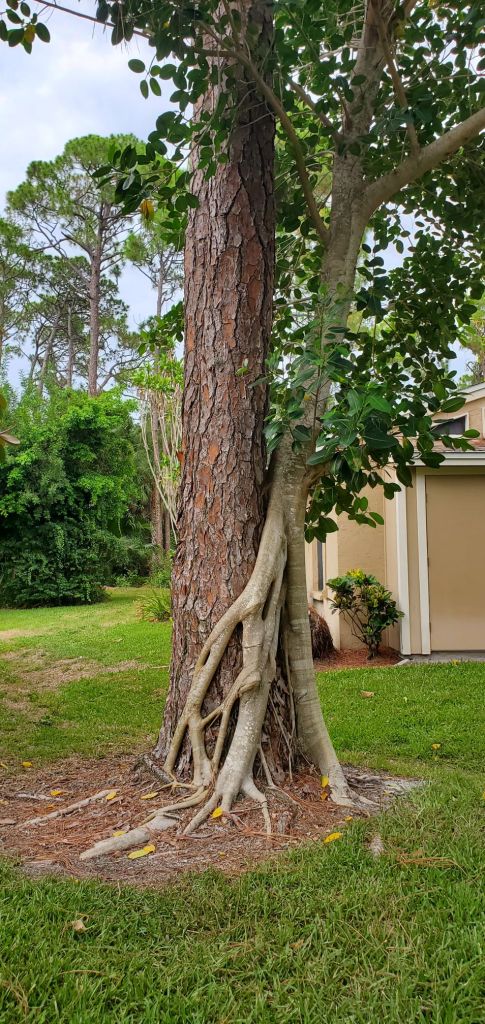
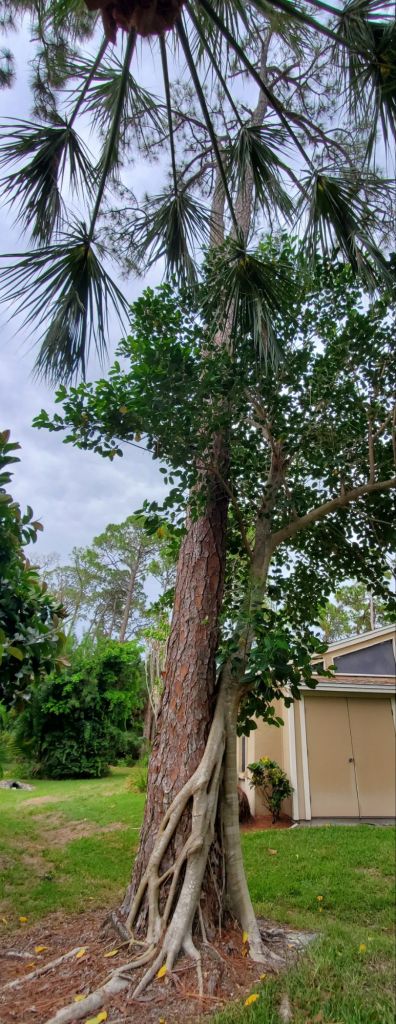
On my walk to the recycle container in my community, it’s not uncommon to see something eye-catching for the first time. Recently, this was the one.
There are other larger clusters of similar design that I’ve wondered over, so this one hadn’t stood out. Now I cannot not see it between cul-de-sacs C and D.
I’ve also been walking through Romans. Explains the eye-catching.
Chapter 11 has always grabbed my attention. It’s Paul’s graphic image of wild branches (representing Gentiles) being “grafted in” to an olive tree (representing the Jews). His message is layered, but it ultimately describes exactly who God’s mercy is for…Everyone.
Interestingly, the next chapter starts with words that indicate Paul’s not done with this thought. This continuation is a well-known 1+1=2. Except, I’m not sure we always see the equation.
Chapter 12 pleads for believers to worship God for his mercy by offering ourselves as “living and holy sacrifices.” No individual, no one people group is better than all the others. In fact, we are one; we are reliant on each other like parts of a body.
Just as our bodies have many parts and each part has a special function, so it is with Christ’s body. We are many parts of one body, and we all belong to each other. Romans 12:4-5NLT
Maybe the equation Paul is telling us is more accurate is 1+1=1.
If I knew an dendrologist (confession: I googled that), I’d invite them on a walk to cul-de-sacs C and D. Imagine what other equations there are to be reminded of…or to consider from the Creator’s point of view.
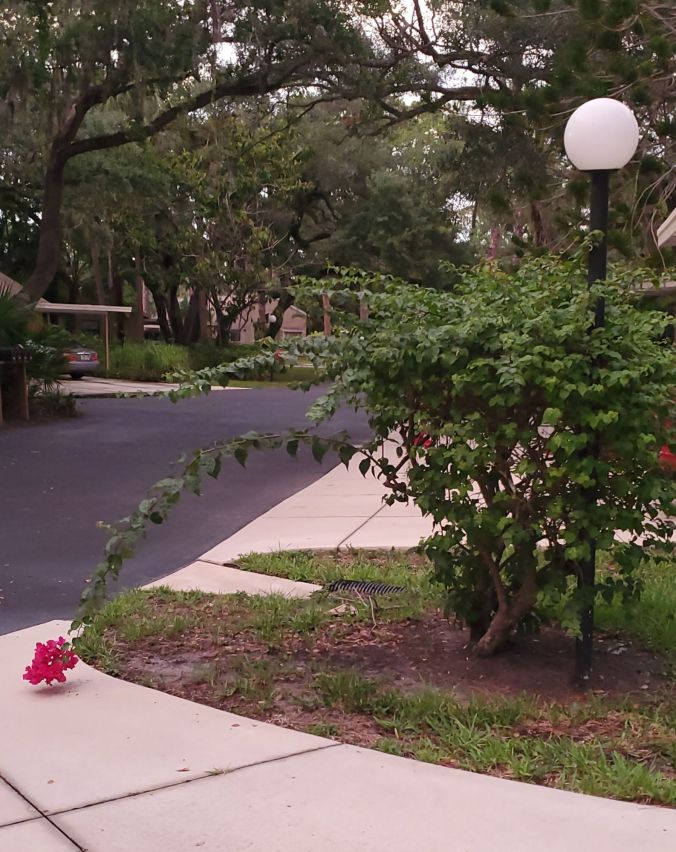
The last time I quick-trimmed the hedge by the drive, it was pretty near impossible to not do the same to my neighbor’s.
The main thing that kept me from intruding was the ridiculousness of the pink bloom.
Guess where my eye goes every time I drive down the cul-de-sac.
Which is always the effect of ridiculousness-you can’t seem to stop looking, maybe because of the sheer awe.
The word ridiculous took on a new meaning for me while listening to a podcast episode last weekend-the same day of the quick-trimming. It wasn’t a direct quote, but the implication by one of the guests was this: “God is ridiculous.”
It may sound like rejection, but that’s not even close to how they used that adjective. The extreme opposite.
Modern slang of ridiculous means overwhelmingly amazing. Like Usain Bolt’s Olympic breakout in 2008 in Beijing. Or the view of the mountain backdrop when I walked out from dinner in April in Maui. Or my grand niece’s reaction every time she eats ice cream.
It’s ridiculous to me that this bush has only two blooms…and one of them belongs to this branch…and it’s lusciously pink…and it’s not resting on the pavement. To be honest, and that no one has trimmed it.
It’s a small example, one of infinite number, of God’s ridiculousness.
His ridiculous care for all the creatures (beetles, squirrels, bunnies, geckos) I pass during my early morning runs.
His ridiculous patience for all the humans he passes…all at once…at all times…without end.
His ridiculous attention to meeting needs before they are even realized.
His ridiculous forgiveness to all who misrepresent his image he copied to create them.
His ridiculous provision for peace at a table set for two in the middle of a battlefield.
Something may be hindering your ability to see it. My instinct is to encourage you to pray about it. That might be too much to ask. If that’s where you find yourself, here’s a prayer you might voice.
God, right now I’m struggling to appreciate you and being amazed by you. Right now, I could use your power, your rest, your peace, your acceptance, your embrace. Truthfully, I’m not really sure what I need. Maybe what I need most is for you to show me something so ridiculous that can only be explained that you provided it. Will you do that for me?
Amaze me. Overwhelm me. Show me your ridiculousness.
This view through the slider of my Florida room continues to grow as a favorite. Certainly gave me thought this weekend.
The palm tree in the background represents how I’m tempted to think life should be. Straight up. No curves. Plenty of abundance visible to all. Healthy and alive. Pretty near perfect.
Maybe that’s why it’s barely visible by the opposing look of the foreground tree. Life represented by what’s closest.
Sudden turns, like the end of a highway with only one way to turn to keep ascending.
And that’s after a three-way option. Still proceeding skyward, just in different directions.
And closer to the base, a couple of knubs that have a story before my time. What happened there? A human? A storm? Both?
What’s close is beauty, uniqueness, character carved over time into one of a kind.
How’s that for a God whisper?
“I’m making you beautiful, unique, with character unlike any other. Welcome to my image!”
More from Mark Chironna’s “Rising With Hope” devotional
Here are three clips:
Before you pray for God to change your circumstances, ask Him to adjust your way of seeing them. (Day 22, Being and Becoming)
You are not a compartmentalized being, and God has not called you to disregard any part of yourself. (Day 23, Living in Your Body)
When He searches your heart, you can trust His gentleness. He will locate the triggers of your unrest, but His surgery is not only about removing what needs to go. It is also about resuscitating the precious parts of your heart, including the hopeful, creative places that have lain dormant under the weight of oppression and disappointment. He will awaken you to the living soul you were becoming and were created to be–the one who became hidden from sight over the course of time.. (Day 26, God in Your Depths)