After reading the bulk of Mate’s research and arguments, I was ready to take in the final three chapters, particularly #17 and #19.
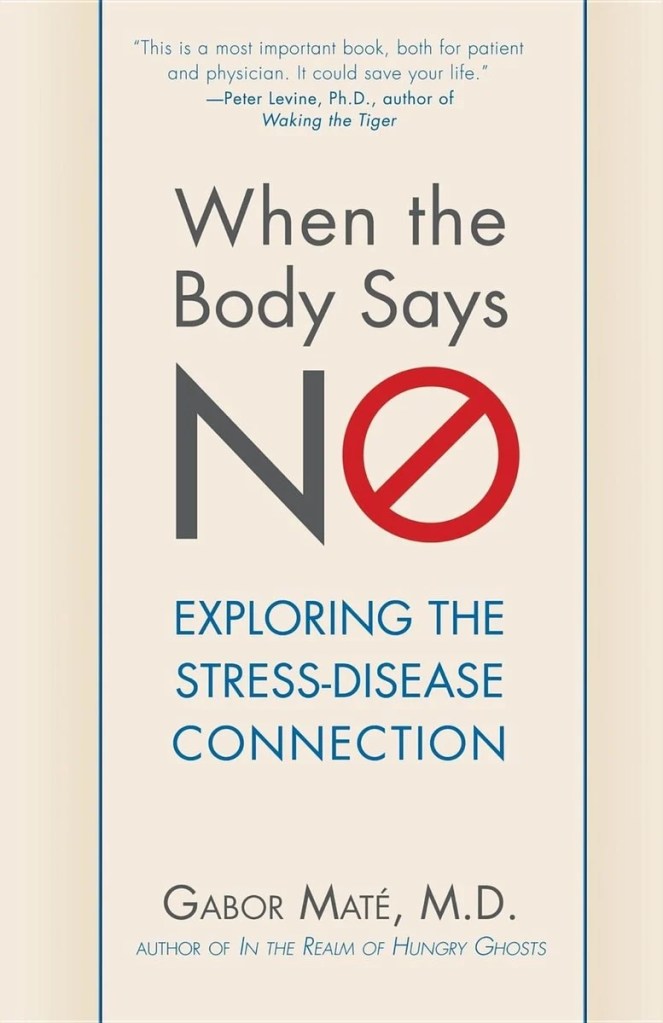
Chapter 17 is entitled “The Biology of Belief,” coined from Dr. Bruce Lipton. Dr. Lipton defines the biology of belief as the process where early experiences condition the body’s stance toward the world and determine the person’s unconscious beliefs about themselves in relationship to the world. Mate shares eight of these unconscious beliefs that control behaviors of defense or growth. He ends the chapter encouraging anyone overloaded with stress induced by these beliefs.
If we would heal, it is essential to begin the painfully incremental task of reversing the biology of belief we adopted very early in life. Whatever external treatment is administered, the healing agent lies within. The internal milieu must be changed. To find health, and to know it fully, necessitates a quest, a journey to the centre of our own biology of belief. That means rethinking and recognizing–re-cognizing: literally, to “know again”–our lives.
For those who may resist this last quote because it sounds void of spirituality, Dr. Mate addresses that in chapter 19, “The Seven A’s of Healing.” Although I have to say, “knowing again” sounds very salvific.
The final A of healing Mate describes is affirmation. Following his outline of the importance of creativity and connectivity, he wraps up the book with this:
Many people have done psychological work without ever opening to their own spiritual needs. Others have looked for healing only in the spiritual ways-in the search of God or universal Self-without every realizing the importance of finding and developing the personal self. Health rests on three pillars: the body, the psyche, and the spiritual connection. To ignore any one of them is to invite imbalance and dis-ease.
May rest and balance be yours.
 John Gregory