Two ongoing life wins today: Spiritual Directing and Being Known Podcast Listening
I’m up to episode 9 in season 11, which is entitled “Rupture and Repair.” This episode focused on mastering the art of repair.
23+ minutes into the conversation Curt said this:
Everybody needs the place where you can come and discharge…especially in the presence of someone else who can receive it. We need to know what needs to be discharged can be done in the presence of someone who can receive it.
He goes on to make the connection that everyone who pursues repairing ruptures is actually growing in their ability to be a peacemaker.
A peacemaker can then be someone who is growing in their understanding of how to manage their own ruptures.
A peacemaker is also someone who is a trusted receiver of someone’s responses to their ruptures.
Together peace is pursued.
Together repair is possible after rupture.
Rupture is coming. How can we grow in our response? Who can I lean on to be a receiver in my need for peace?
This was just one of many gems in this episode. Catch the full episode here:
NOTE: Spiritual Directors are receivers and peacemakers. It’s why I keep returning…and winning.
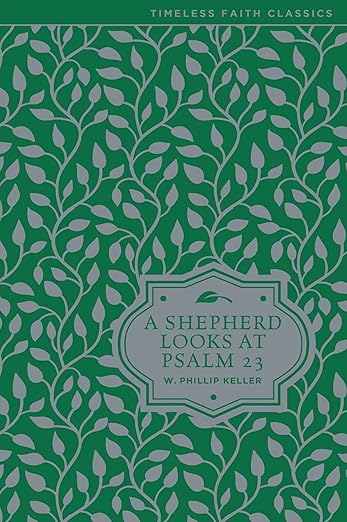
After reading The Lord is My Courage on hoopla, a related title was suggested which I decided to read because of the unique promise. That promise was a look at this poem from the basis of the author’s years as a keeper of sheep. It did not disappoint.
An overall takeaway is just how near death sheep can be unless their shepherd relentlessly cares for them. Keller explains that David’s poem actually addresses all four seasons in a year of a sheep’s life and what is necessary for the sheep to “not want.”
The strange thing about sheep is that because of their very makeup it is almost possible for them to be made to lie down unless four requirements are met…They are free of all fear, free from friction, free of pests, and free from hunger. (Chapter 3, “He Makes Me Lie Down in Green Pastures”)
In that same chapter he explains that a flock that is restless, discontented, always agitated, and disturbed never does well. Sound familiar? The value of being made to lie down is to our benefit.
The most vivid image Keller paints comes in chapter five, “He Restores My Soul.” He draws a parallel between another familiar David passage in Psalm 42:11, “Why are you downcast, O my soul? Why so disturbed within me? Put your hope in God…”
Only those acquainted with sheep and their habits understand the significance of a “cast” sheep or a “cast down” sheep.
This is an old English shepherd’s term for a sheep that has turned over on its back and cannot get up again by itself.
A cast sheep is a very pathetic sight. Lying on its back, its feet in the air, it flays away frantically struggling to stand up, without success. Sometimes it will bleat a little for help, but generally it lies there lashing about in frightened frustration.
If the owner does not arrive on the scene within a reasonably short time, the sheep will die…Nothing seems to so arouse his constant care and diligent attention to the flock as the fact that even the largest, fattest, strongest, and sometimes healthiest sheep can become cast and be a casualty.
He goes on to describe what’s required when he finds a cast ewe, which includes rubbing limbs to restore circulation after picking her up one or more times until she regains equilibrium and starts to walk steadily and surely.
One final noteworthy thought is this one from chapter 7, “Even Though I Walk Through the Valley.” Keller shares that this is a turn in the poem not only from the viewpoint but also in the season being described, how summer and autumn look for the shepherd and his flock. Keller explains David’s firsthand experience by making this statement: “Never did he take his flock where he had not already been before.”
If you find yourself today in search of freedom, or lying on your back flaying, or walking through the valley, rest assured your shepherd is with you. He has what you need. He’s watching over you. I encourage you to find a way to read this book to let those truths grow roots in your heart, mind, and soul.
Recently, after reading a book about the life of Jesus, I decided it was time to read through the Gospels. For the most part, I’m taking it a chapter a day.
This week I read the Parable of the Sower, one of Jesus’ most well-known parables, in Mark 4; it’s also found in Matthew 13 and Luke 8. The teaching focuses on four outcomes of the sown seeds: stolen, short-lived, choked, and fruitbearing.
Keeping your path receptive to the sown seeds requires diligence. Diligence against predators. Diligence to protect roots. Diligence to prioritize eternal things. Diligence to stay hungry and thirsty.
The featured picture on this post is from my back yard. Fortunate for me, HOA fees keep the community where I now live quite immaculate. In the month that I’ve lived here, it’s clear diligence is heavily disciplined.
The state of my heart and soul is no one else’s responsibility. I can’t pay a fee for someone else to be diligent on my behalf. Pretty sure that leads to wrong priorities, unprotected and rootless living. If my heart was originally set on eternity, it’s in my best interest to diligently maintain that origin.
Rewatched Rain Man last night. Worth it. So many layers that each time I watch I have different reactions.
In the scene that takes the plot in a new direction, I had one of those reactions. Watch.
The 40-second clip of Ray and Charlie singing is what grabbed me. The beauty of their reconnection through music is unique and priceless.
Singing over someone is beautiful. It’s not the same as singing to someone, like Ray had to Charlie. It’s not the same as singing about or with someone. Singing over them stands alone in the connection created, thus the unique beauty of the moment.
The reason this stuck out to me was I had the opportunity to witness the beauty of someone singing over someone just the day before. I won’t go into the details. Technically, I wasn’t supposed to be there. I count it a joy to have witnessed.
When you sing over someone, no one cares about the elements and expectations of a grand performance like pitch or stage presence. In fact, it’s the opposite. The connection of hearts means the most in that moment. And that’s where the beauty lies.
As churchgoers attend church this weekend, I hope they’ll allow this connection to have room, whether they are being sung over or are doing the singing over.
As sabbath keepers embrace their time this weekend, I wish for them at least one moment of such beauty.
Jason Dunn’s accomplishments are extraordinary. His drive definitely seems to put him in a small percentage of not just athletes but people of any discipline or profession.
His strategies to prepare and execute his goals are worth attempting. It may be tempting to think, “I can’t do anything close to what he’s done (100-mile races, Ironman World Championship).” But I believe he’d be the first to reply, “This is not about going after what others go after. It’s about overcoming the doubt and fear to pursue what feels impossible.”
These four quotes thread how Dunn went about setting goals, going after them, and accepting the ups and downs.
Finding inspiration is often easier than people realize; you just need to choose to see the good in the world around you.
If you think or say that something is hard, it will be hard.
Grateful people are not only beautiful, but they are often humble, too.
To be truly successful, you must first do what you don’t want to do when you don’t want to do it-until you do!
If you are on the fence about going after something that seems out of reach, give this book a read. May you find the inspiration to test your limits.
I closed on a new home April 28th and within 24 hours was completely moved in. That’s the short version. The long version includes many right decisions that I eventually started calling “going through the green lights” that I continued to experience.
The decision to move began in December simply by responding to a “for rent” sign. I wasn’t really sure about renting, but it was almost too good to be true. A .2 mile trip to work. After checking it out, the green light read “Move, but buy instead of rent.” The odyssey began.
I didn’t have a timeline other than sometime in 2025, ideally the first half. I now drove five days a week to Sarasota versus three, so the sooner the better, and before the summer heat.
I started a relationship with Zillow. I thought I knew where I’d be most comfortable in Sarasota, so I started following listings in that area. I found quickly that the possibilities widened to areas I had previously ruled out.
Zillow isn’t stupid. Floods of emails suck you in and can foster obsession. One trick that got me moving further on the journey was open house notifications. I finally broke down and went through the next green light: “It’s just an open house. Go and see what that location and price point feels like.”
That decision to go to a March 2nd open house led to an unexpected green light: “Here’s the agent you are going to work with.”
Funny. I didn’t know I was looking for one. I wasn’t in a hurry. I thought I had plenty of time.
Don’t get me wrong. No one forced me through that green light. But it was a little too obvious. My coming to that open house and them being the agent at that showing was supposed to happen. I wasn’t forced; but when the light is green, I’ve learned to keep moving.
Fear or uncertainty can cause us to not proceed down a path that we weren’t expecting or may not think we are ready for. This part of the home buying journey reminded me of two main things about God and his children:
He’s always at work preparing us for what he has in store for us.
He knows the desires of our heart and excitedly wants to fulfill them.
If you are sitting at a green light, take heart. It’s safe to move forward.
Came across this version of Matt Maher’s “Inheritance” yesterday. What a find!
Happy Easter!
Lyrics:
VERSE 1 Right from the very start You had me in Your heart Nothing but dust and yet You gave me life and breath Loved me before I knew For nothing that I could do You wrapped Your Word in flesh What an inheritance
CHORUS You don’t withhold a thing You were the offering I don’t deserve it It doesn’t make sense What an inheritance
VERSE 2 There on a lonely hill 10,000 debts fulfilled Heard in Your final breath Last will and testament Father, Your work is done Now let Your kingdom come Death has been laid to rest What an inheritance
POST-CHORUS 1 Oh, oh, oh What an inheritance
VERSE 3 Spirit of life and truth Filling the upper room Beating within my chest What an inheritance Counsel and closest friend What an inheritance
CHORUS 2 Freely You give to me Freely I will receive I don’t deserve it It doesn’t make sense What an inheritance
One thing I’m grateful for is the availability of creating playlists. They are a tool for wellness and many other things.
My Easter playlist is one of my favorites. Usually each year I edit it, typically by adding new songs. I’m not doing that this year. I’m enjoying the familiarity of the existing 20 songs, letting them remind me why this week matters.
Most of the songs were released over a decade ago, and probably half of them never made it to radio. They are hidden gems to my spirit.
I encourage you to check out my playlist for two reasons:
Finished listening to Seeing with the Eyes of the Heart today. One of the last discussion points centered on the reality we all encounter of facing aloneness.
Adyashanti stated he believed almost no one understood Jesus, making him one of the most alone figures in spiritual literature. To explain what he meant, his reply included these thoughts about aloneness.
Engaging spirituality in an authentic way will bring us to encountering our aloneness many, many, many times…Ironically the greatest feeling of belonging comes through these deep and profound encounters with our aloneness. It’s so paradoxical that our greatest sense of belonging comes by going through those doorways of aloneness…We almost always try to do end runs around aloneness, finding surrogates for the experience of aloneness rather than really meeting it…We’re all one. That’s a really great and nice thing. But we all are simultaneously very unique expressions of the one. We all have our very unique journey that is not exactly like anyone else’s…Aloneness, in the ends, leads through the door not only to connectedness but a kind of spiritual autonomy.
I relate.
There is an aloneness on the journey of making your faith yours, not anyone else’s. Think of any faith decision you’ve made to this point that was lifechanging or formative. It came down to you making that choice by yourself. Those decisions, those moments rooted you, grounded you, expanded the territory of your faith, and girded your faith in such a way that it no longer relied on another person’s faith.
Yet, because of that, you now have the strength, the maturity, or the allure to those in your faith community that draws people to inquire how you got it. And the connectedness is more about the kingdom than you. Your aloneness that you walked through, whether you wanted to or not, brightens your image of God. It’s attractive while also preparatory for your next round of aloneness.
These thoughts remind me of this quote:
“Here is the world. Beautiful and terrible things will happen. Don’t be afraid.” -Frederick Buechner, Beyond Words
Beautiful and terrible await you in aloneness. Don’t be afraid.
Roughly a third of the way in, Adyashanti asked to address the topic of forgiveness. His thoughts were striking.
At one level I think the greatest forgiveness is when we really see that there’s no need for forgiveness because everything is inherently, consistently forgiven. It’s human beings that decide we are sort of God’s arbitrators of who can and cannot be forgiven, and it disconnects us from the experience of the way forgiveness works in the universe.
No need for forgiveness seems utopian. Yet, his reasoning is captivating. He’s not saying there is no literal need for forgiveness. He’s suggesting we must task ourselves to learn how it works, first from God and then between humans.
Some of Jesus’ last words on the cross were “Forgive them for they know not what they do,” referring to the people who put him there. If you are on the cross and you can forgive the people who put you there, that’s a pretty big forgiveness. You’re forgiving hate, and you’re forgiving violence…there’s a great teaching in that. If he couldn’t have forgiven them, he could have never been free from them. He would have been trapped in their hate because he couldn’t forgive their hate. He would have been trapped in their violence because he couldn’t forgive their violence…Ignorance can take some pretty violent forms…Most people are pretty much doing what they can do. What they are doing is an exact reflection of the state of their consciousness.
The striking image of these thoughts is being trapped. Couple that with being trapped in hate or violence with the foundation being the other person’s ignorance, forgiveness not only seems possible but desirable.
If we have no forgiveness, our participation in the world is seared with anger and hate, even if we are working with something that is very necessary and good. This motivation seems to come from fear rather than love.
May our searing be exposed. May love overcome our fear.

 John Gregory