The latest YouVersion reading plan I’m in addresses bitterness. Day 3 of the plan ended with this question:
How can failing to shed bitter tears result in sinful bitterness of heart and life?
Overcoming Bitterness, by Stephen Viars
Can’t say I’ve ever made the connection between not shedding tears and bitterness. Before answering the question, I rephrased the question into a statement:
Failing to shed bitter tears results in sinful bitterness of heart and life.
Viars revisited the stories of David, Mordecai, and Peter to illustrate his thought. When I considered situations from the past that I may still have bitterness about, I wondered, “Maybe I haven’t sufficiently shed tears about them. Now, it seems unnecessary. Yet, it’s worth the encouragement to acknowledge how tears could have served in the past and the value of embracing them in the future to eliminate bitterness growing.”
By the way, to answer his question I flipped it to list three ways tears help us:
Last month I came across the work of Dr. Lisa Miller, unaware of her connection to the national institute that accredits the counseling center where I work. Quickly I was up to speed and got a copy of her book The Awakened Brain.
I started reading it during the downtime of Hurricane Idalia, finishing it today. Here is one statistic from the introduction that gives reason for Miller’s work:
A study of more than 67,000 college students across 108 institutions in the United States published in 2019 found that 20% reported that they had engaged in self-harm such as cutting, 24% reported suicidal ideation, and 9% had attempted suicide.
Introduction: Anything Can Be Shown
She defines the awakened brain in the introduction to give you some sense of the foundation she is going to build for this way of approaching life.
The awakened brain is the neural circuitry that allows us to see the world more fully and thus enhance our individual, societal, and global well-being…The awakened brain includes a set of innate perceptual capacities that exist in every person through which we experience love and connection, unity, and a sense of guidance from and dialogue with life.
Introduction: Anything Can Be Shown
In chapter four she makes an interesting observation about heredity and environment. Through research, she’s determined that spirituality isn’t solely determined by environment. A person isn’t limited only by the spiritual environment of their early years; in fact, we are born with spiritual awareness. That is good news for everyone.
A person’s degree of spirituality is determined 29% by heredity and 71% by environment…People at greater risk for mental illness due to their developmental stage actually have the most to gain from spirituality.
Chapter 4, Two Sides of the Same Coin
Woven throughout the book are compelling stories of spiritual journeys, including her own. These stories, including clients as well as business and national leaders, illustrate the transformation of lives who live responding to what life is showing them, particularly when they lean in to spirituality.
What I was witnessing was less that we heal when we impose a more positive meaning on the world, and more that we shift toward health when somehow, and usually through struggle, a bigger meaning is revealed to us…feeling better isn’t just a matter of creating new thoughts, of replacing unhappy ones with happier ones; it’s also about noticing and aligning ourselves with whatever life is showing us.
Chapter 7, When Inner and Outer Align
Admittedly, Dr. Miller’s work has not been easy in the scientific community. In many ways she is countercultural, somewhat blazing a trail to question if the way of American living has been wrong for many years.
We make our best decisions when we integrate our heads, hearts, and life’s guidance, learning to tune into our choices and hurdles as part of our spiritual path…We discover that we are seekers rather than makers of our path.
Chapter 9, The Castle and The Wave
Having lived many years in achieving mode and wondering how to step back from it, chapter 12 gave language to my struggle that is lifegiving. It may not ring true to everyone, but the clearness Dr. Miller makes between the two modes of awareness is my main takeaway from the book. I believe it’s the usage of the two words achieving and awakened.
We all have two modes of awareness available to us at all times: achieving awareness and awakened awareness…Achieving awareness is the perception that our purpose is to organize and control our lives…When we engage our awakened awareness, we make use of different parts of our brain, and we literally see more, integrating information from multiple sources of perception. Instead of seeing ourselves as independent makers of our path, we perceive ourselves as seekers of our path.
Chapter 12, The Two Modes of Awareness
Dr. Miller, of Jewish faith, does not use the language of the New Testament. I suggest she paints a clear picture of the difference between Paul’s teaching regarding walking in the flesh and walking in the spirit. Flesh walkers live for themselves; spirit walkers have their eyes open to the world, ready to put themselves aside for others.
Through awakened attention, we open up more channels of perception. We learn not only to notice but also to draw meaning from what shows up in our lives. We see more, and we’re better able to use what we see.
Chapter 14, Awakened Attention
If you are a believer who questions the place of science in your faith, I encourage you to read this book. If you are an academic who questions the place of spirituality in your life, I encourage you to read this book. Allow Dr. Miller to challenge your brain and your faith. What’s the worst that can happen?
Earlier this year in other readings, I was challenged to consider the Old Testament through the eyes of Judaism. Can’t say I thought much about it prior. So I searched for a book along those lines and landed on this one, published in 2011.
When you hear a familiar story told through a different perspective, you have an opportunity to learn, to broaden your understanding, and I believe most importantly, deepen your connection to others.
Arrogance is not only a moral and spiritual malady. It breeds stupidity. For those who are utterly convinced of their own absolute rightness cannot hear the warnings of others, cannot pay attention to the signals from the world around them, cannot learn from their own mistakes.
Chapter 10, Who Hardened Pharaoh’s Heart
How the authors interpreted biblical and current events through the lens of the Exodus provides a consistent reminder that God is present in every situation. It is a freedom journey that He doesn’t abandon.
God dwells most deeply where the newly free remember their pain with tears, create their future in joy, and carry their vision into every journey of their lives.
Chapter 18, Carrying the Sacred Space
One thing I’ve always appreciated about the Jewish faith is their persistence to remember by storytelling. I appreciate it because I need to be reminded of it, particularly in efforts to know my fellow man better.
It is not enough for a people to become free just once, any more than it is enough for the grain to sprout or the lambs to be born just once. Over and over, year after year, rebirth, regrowth must come again.
Chapter 22, Transforming Our Festivals and Our Lives
My main takeaway from this book is to continue engaging other faiths, cultures, and stories different from mine. It is sacred. It enriches everyone willing to engage.
When Palestinians and Israelis, or American and Iraqis, or Jews and Muslims and Christians join with each other to mourn those who have died at each other’s hands, that weaves a sacred fringe between us.
Currently I’m going through a YouVersion reading plan for James 1. The first four days of ten have pretty much focused on this verse:
For you know that when your faith is tested, your endurance has a chance to grow.
James 1:3 NLT
Reading this the other day, it struck me to get specific. For instance, when faith in one area of life is tested it has a chance to grow. To flesh that out, here are ten additions where growth can be experienced by faith testing.
When your faith in your spouse is tested, your endurance as a vow-keeping partner has a chance to grow.
When your faith in your boss is tested, your endurance as a loyal employee has a chance to grow.
When your faith in your children is tested, your endurance as a loving parent has a chance to grow.
When your faith in your parents is tested, your endurance as an honoring child has a chance to grow.
When your faith in your government is tested, your endurance as a contributing citizen has a chance to grow.
When your faith in your company is tested, your endurance as a committed team player has a chance to grow.
When your faith in your church is tested, your endurance as a kingdom-minded citizen has a chance to grow.
When your faith in your investments is tested, your endurance as a focused treasurer has a chance to grow.
When your faith in your friend is tested, your endurance as a reliable presence has a chance to grow.
When your faith in your God is tested, your endurance as an image bearer has a chance to grow.
“It is likely that leadership success, both current and future, will be determined more by the learning that takes place after being given a leadership assignment than by what has been learned prior to it.”
Read this quote for the first time this week. It’s made me think and reflect.
I’ve always held the philosophy that what has been learned prior has prepared a leader for success in a new assignment. However, Habecker has made me consider the learning after being in a new position. I believe there are stipulations as to whether this learning leads to success more than prior learning.
STIPULATION #1: What’s the leader’s ongoing approach to learning?
Is it ongoing? Is it plural, meaning it focuses on all areas of life? If the answer to either of these is no, learning is going to be minimal and therefore success will be hindered. Leaders never stop learning.
STIPULATION #2: What’s the leader’s level of humility?
Followers of Patrick Lencioni have heard his repetition on the needed virtue of humility in leadership. Humble leaders in a new assignment will have a greater bend toward learning. They carry a “I haven’t been here before and have a need to learn” posture that paves the way for ongoing learning.
STIPULATION #3: What’s the leader’s inclusion of interpersonal relations learning?
The temptation exists to believe this is a one-time effort. Or that by a certain age there’s nothing more to learn about relationships. Or a resignation to “this is just who I am.” A new assignment will bring new relationships. An ongoing, humble learning posture toward those relationships will be important for successful leadership.
I met a leader this week that I believe understands these stipulations. He is less than a year into an assignment that came with more firsts and surprises than he anticipated. In his late 50’s, he certainly has prior learning. But he is keenly aware it is not enough.
So yes, success for him, for that matter for all of us, will be based on pursuing learning – ongoing, humble, all-inclusive learning.
I follow a page on Facebook called Becoming Minimalist. I wouldn’t call myself a minimalist, but the posts on the page are compelling. They certainly align with my values.
Last weekend I joined the ranks of those who no longer have a DVD or CD collection. Thank you, Goodwill. They have enriched my home by accepting my once treasured collections. In addition to these two collections, they now own all my clocks and about half my library.
Why are these collections gone? Am I making room for other collections? No. Am I downsizing? No.
Some would call it decluttering or minimizing. All I’m doing is getting rid of things that no longer enrich my life. And in a sense, my life is being enriched even further.
One of the latest Becoming Minimalist posts grabbed my attention in any odd connecting way. It was a guest blog post that was more for readers with large clothing collections. Not that I’d say I fit in that category, but I have gradually been doing the same with clothes-not replacing, just decreasing.
The blog writer was Julia Ubbenga of Rich in What Matters. The topic of her post addressed simplifying life by repeating outfits. In her list of 10 reasons, check out the enriching values of #9:
9. More reminders of how little you need to be happy
Owning a repeatable, small wardrobe constantly sends you the message that contentment can be found in less. A glance at your curated closet prompts thoughts like: “I need so much less than I thought I did to be happy.”
I’m much less likely to buy on impulse or waste time scrolling in search of my next purchase when these thoughts infiltrate my mind every morning. My sense of gratitude also increases the more I remember life truly is better with less.
My understanding of spiritual disciplines has been exposed as limited in the last few weeks. A thread of three interactions pulled back the curtain.
Depending on who you’ve read or what denomination you’ve participated in, any teaching on spiritual disciplines containing a list most likely included any or all of these:
meditation
prayer
fasting
study
simplicity
solitude
submission
service
confession
worship
guidance
celebration
This list is from Richard Foster. The article where you can find this list includes several more. Seems a lot to master. One could see why many just don’t bother. Daunting.
The first peek behind the curtain came when a lunch conversation mentioned Rob Bell’s teaching that everything is spiritual. I hadn’t heard his name is years and wasn’t familiar with his book by that exact title. I read the Kindle sample and checked out a few videos (here’s one). Bottom line: Goes to reason if everything is spiritual, then all disciplines are spiritual.
Not long after that, Chuck DeGroat pulled the curtain back further when I read this in his book:
Disciplines place us in relationship-with Christ and within a community of wounded healers. The discipline of a disciple is to follow-that is, to walk in the shadow of Christ, to learn his ways, to struggle together when difficulties arise, to laugh and to cry. This is how friendship with God unfolds, as a relationship between two persons deeply committed to each other in covenant love. This relationship cannot be reduced to a mere practice or ritual, but it certainly involves practice and ritual-the give and take required in any relationship.
These two lead-ins prepared my mind to completely receive the final one. In a conversation on this subject and how to freshen them up, out of nowhere the question was asked, “Have you looked at blogging as a spiritual discipline?”
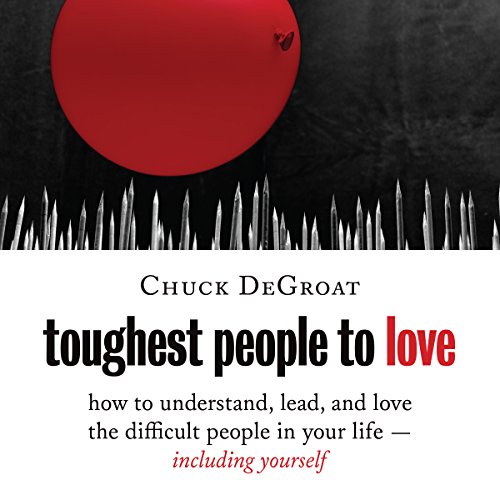
Finished the most meaningful book I’ve read this year. I’m glad to have followed the breadcrumbs to be introduced to Chuck DeGroat. Toughest People to Love (2014) is the first of his books I chose to read.
There are many things to appreciate about his style of writing.
He makes it clear where he’s going
He balances instruction with stories
He provides solid references
He gets to the point
He scored points with me by referencing Dr. Curt Thompson several times
It’s not lost on the reader that DeGroat chose to include “love” in the book title. He comes across as wanting that for you and for the people in your life.
We’re not called to make people feel bad or guilty. We’re called to lead them to an honest appraisal of themselves, which in turn leads to honesty before God and others.
Chapter 5, Loving the fool: when relationships turn ugly
It’s not a gooey love that he’s after. He means it when he asks for honesty. DeGroat achieves truth and love as an author, showing a great balance as a former pastor and a professor.
Consider the fragmented, dualistic thinking of the modern world. Often psychologists see depression merely as a neurochemical problem that needs to be fixed with medication and therapy. And too often pastors spiritualize psychological maladies that may require further expertise…Compassion does not ignore the truth. It enters into it, wrestles with it. It requires a solidity and strength of relationship with others which endures even in times of extraordinary difficulty.
Chapter 6, Growing through pain: the gift of the dark
Part three of the book is likely the part that will most deeply speak to readers. The three chapters focus on personal growth, and he mentions the concept of wholeheartedness (he has another book by this title, by the way; on my “to read” list). His clarity on the divided heart from a biblical view leaves no question as to what that means and why it needs to be addressed.
One glaring symptom of the divided heart is exhaustion…To be whole, we need to be healed, and this takes a lifetime.
Chapter 7, Living with wholeness: rest and resiliency in the leader’s life
For leaders, he saved the best for last in chapter 8, Growing into leadership maturity: self-care and the art of shadow-boxing. He describes five disciplines that involve “practice and ritual-the give and take required in any relationship.” He also gives the following description of American culture, one that I firmly agree with:
I’ve heard many criticize American culture, and even American Christians, as self-consumed. I beg to differ. I see people who are afraid of themselves.
If you fall in any of the following categories, I encourage you to read this book:
People who know they could love better
People who are leaders in any capacity
People who can’t figure out how to love a significant other
People who aren’t satisfied with their current capacity to love
People who enjoy the works of Dan Allender, Curt Thompson, Richard Rohr, Eugene Peterson, David Benner, and Henri Nouwen
This afternoon I had one of those “Huh…I never thought of it that way” moments.
I was describing to someone why it’s never worked out for me to pursue a particular job. Over the years many folks have encouraged me to pursue it, and I even came relatively close to it once. As I was telling this story, these words came out of my mouth: “It just never felt right. You know, sorta like trying on Saul’s armor.”
I stopped talking for a second to let that sink in, more for me than the guy listening. In my head I said, “That’s a perfect analogy. Can’t believe I’ve not made that connection before.”
If you don’t know that reference by the way, or need a refresh, check out 1 Samuel 17. It’s the David & Goliath narrative. Well-meaning Saul outfits shepherd boy David in his own armor. No go. David knew well enough that it wasn’t going to work. He took it all off, and we know how the story ends.
Suppose David ignored “well enough.” Suppose he caved because that’s King Saul. How do you question the king, that you just met? “Who do you think you are?” Suppose he allowed the natural to get in the way of the supernatural. We’d have a whole different story end.
Truth is, many relationships start by well-meaners that knew well enough. Many jobs begin that were never the right fit. Hindsight tells us that, but imagine what’s possible when courage undergirds one’s mindset and convictions so that well enough writes the story.
When we are in tune with God and with our own mind and body, we know well enough. And it’s really just a split second between anyone’s well meaning and our well enough that determines how the story ends.
In preparation for that split second, what if we chose this conviction? “I’m not here in the king’s name. I’m not even here in my name. I’m here in the name of the same God as David’s. Well-meaners, thanks, but no. In this moment, in this battle, in this decision, God’s well enough fits just fine.”
Dear, dear Corinthians, I can’t tell you how much I long for you to enter this wide-open, spacious life. We didn’t fence you in. The smallness you feel comes from within you. Your lives aren’t small, but you’re living them in a small way. I’m speaking as plainly as I can and with great affection. Open up your lives. Live openly and expansively!
2 Corinthians 6:11-13 MSG
Earlier this week the explanation for division amongst Christians that resonated with me was how small we’ve made God…without seeing it. The next morning these three verses were part of my daily devotional reading. Sync.
When believers sing “How Great is Our God” but refuse to drive onto the campus of another church whose theology doesn’t perfectly align with theirs, Paul says, “You fenced yourself in…and God.”
None of us have all the answers. And the second we believe we do, God no longer sits on His throne. He’s lost any signs of “omni” because we’ve lowered him to our image, the reverse of our beginning.
Forgive us.
Forgive us for our reductive pride.
Forgive us for yielding to the temptation to make you in our image.