Leaving The Shield

He is a shield for those who live with integrity. Proverbs 2:7

Solomon says wisdom leads to living with integrity which in turn results in being shielded by God.

We all long to feel safe and protected. Reflecting on this verse recently, I made the connection between making wise choices and maintaining safety from God when the right choice is made. His safety and protection is not guaranteed and is put in jeopardy when I choose to disobey or disregard wisdom. Whatever the results are from an unwise choice is my fault; I chose to leave the protection behind God’s shield.

This isn’t necessarily a popular thought these days. Living life as you want without any fear of repercussions is what culture preaches. Then when life strikes back after someone makes a poor choice, suddenly God is questioned and possibly even denied. It’s his fault, not ours. I bet if we asked some guys from scripture they would testify differently about what happens when you leave the shield of God’s protection.

Ask David. When he left because of his lust, people died, including his infant son.

Ask Jonah. When he left because of his prejudice, he ended up on the beach, covered in fish guts.

Ask Achan. When he left because of his selfishness, he lost everything, and so did his family.

We’re just like these guys. We’ve left the shield at some point. Thankfully, that doesn’t have to be a permanent decision. 

Have you thanked God lately for his protection, for being your shield, for welcoming you back after you’ve left? Maybe the next time you talk with him, not only thank him but also commit to following him with integrity, to staying behind his shield of protection.

Through the Thorn

This week I finished a book that a friend gave me entitled Kiss the Wave by Dave Furman. Furman is a pastor in Dubai who suffers from a nerve disease and struggles with disability in both arms. I’ll just go ahead and recommend this book for anyone who is living with or giving support to someone with a lifelong disability.


Chapter 9, “Weakness is Always the Way,” had the most nuggets for me. Furman reminds the reader that God’s ways are not our ways. He talks about the Japanese form of art called Kintsugi, which involves joining together broken pottery pieces with gold or another precious metal, as an example. God uses the brokenness of pain and suffering to create in us images of his power through our weakness. Weakness is the way (a borrowed title from a book of the same name by J.I. Packer).

If we were steel vessels without blemish or weakness, we might be tempted to think we have no need for God. However, God uses weakness to show our need for dependence upon him.

It is a privilege to boast in our weaknesses because they reveal who our Father really is – a great God.

Have you ever considered that your weakness is a part of God’s glorious plan for your life?

We can embrace God in our trials with faith that God is doing a work in us beyond our comprehension. Our scars are not things to run from or to hide from others. Through them we exalt the one who is conforming us more and more into his image.

Furman’s final scriptural example in this chapter is from 2 Corinthians 12 where Paul talks about his weakness of a thorn in the flesh. Paul says he boasted in his weaknesses and was content with them because he was made strong through them. Then Furman wrote this: “We might wonder what Paul could have accomplished if he didn’t have that the thorn. But the reality is, everything Paul accomplished was done by God – not in spite of the thorn but through the thorn.”

Most likely you have a thorn. It could be physical, emotional, mental, even spiritual. Maybe you live with MS, or you battle depression, or you’re trying to overcome the emotional scars of family history. Maybe your thorn is like Thomas’s where you tend to doubt and worry more than trust and believe. What if you studied Paul’s life then followed his example of surrendered contentment? What could God do if you let him work through your thorn?

Stop Listening to Yourself

I read this quote yesterday from Martin Lloyd-Jones. I’m guessing we all could use this reminder from time to time.

I say that we must talk to ourselves instead of allowing “ourselves” to talk to us!…Have you realized that most of your unhappiness in life is due to the fact that you are listening to yourself instead of talking to yourself? Take those thoughts that come to you the moment you wake up in the morning. You have not originated them, but they start talking to you, they bring back the problems of yesterday, etc. Somebody is talking. Who is talking to you? Your self is talking to you…The main art in the matter of spiritual living is to know how to handle yourself. You have to take yourself in hand, you have to address yourself, preach to yourself, question yourself. You must say to your soul: “Why are you cast down” -and say to yourself: “Hope in God”-instead of muttering in this depressed, unhappy way. And then you must go on to remind yourself of God, Who God is, and what God is and what God has done, and what God has pledged himself to do.

*D. Martin Lloyd-Jones, Spiritual Depression: Its Causes and Cure (Grand Rapids, MI: Eerdmans, 1965), 20-21

Understanding Gender Dysphoria (book review)

January 13 I posted my 2018 reading plan. My coach helped me develop it as an answer for personal growth. Apart from that plan, I would have missed an important read.


In my search for a book on the divisive cultural topic of sexuality, I discovered author Mark Yarhouse, a Wheaton College graduate and a psychology professor at Regent University in Virginia. He’s written several books in this field for the Christian audience, so I figured he would be a good choice. He proved me right.

It is important to consider that original sin has corrupted all of existence, including human sexuality and experiences of our gendered selves.

Scripture reminds us that God does not abandon us in our fallen state.

The topic of gender dysphoria is not the same as homosexuality.

This 7-chapter book is graciously written for readers on all sides of the conversation. To assist us all in the conversation, he gives a great explanation for where we could fit in an integrated framework in the dialogue. He divides everyone into one of three groups: integrity, disability, and diversity. These names are lenses through which people often approach the topic of gender identity. Evangelical Christians are drawn to the integrity framework as it emphasizes the sacredness of maleness and femaleness. He encourages learning from all three in order to inform ministry settings and engage the broader culture. I agree.

You may be asking, “So what is gender dysphoria?” If you haven’t already googled it, do so. But then give Yarhouse the opportunity to give you an exhaustive look at the topic. If you are asking “should I read this book,” allow me to answer with the following questions:

  • Are you a church leader who truly wants to engage your community? If so, yes.
  • Are you a therapist? If so, yes. Your specialty field doesn’t matter as much as this subject does.
  • Do you know someone in your family or in your friend’s family who struggles with sexuality questions? If so, yes.
  • Do you struggle with giving grace to others outside your belief system but wish you didn’t? If so, yes.

Christians can benefit from valuing and speaking into the sacredness found in the integrity framework, the compassion we witness in the disability framework, and the identity and community considerations we see in the diversity framework. No one framework in isolation will provide a sufficient response or a comprehensive Christian model of pastoral care or cultural engagement.

For everyone’s sake, consider reading this book.

Get to the Doctor!

Psalm 19 is full, rich, and worth meditation. Verses 12-13 jumped out at me this morning.

Who perceives his unintentional sins? Cleanse me from my hidden faults. Moreover, keep your servant from willful sins; do not let them rule me.

Did you notice the two types of sin he acknowledges? Unintentional and willful. That’s worth chewing on.

We all have a pretty good idea what our willful sins are, if we are honest. Many of them start with our tongue: slandering, gossiping, lying, or stretching the truth for our benefit. Others stay hidden from others in our minds and hearts, but they aren’t hidden to us. These types of sin are easy to address because we are aware of them.

But what about those unintentional sins? How are we supposed to address or acknowledge what we can’t see? 

May I suggest thinking of these sins as blind spots. If you were experiencing strange spots in your vision, what would you do? You’d probably go to the doctor, right? Because of his experience and knowledge, he could explain to you why your vision is spotty. 

What if the difficulty in your emotional/mental/spiritual life is hidden from your view? If you knew what it was or how to address it, you would do it, right? So when we can’t figure it out on our own, we have options similar like going to the eye doctor:

  • Pray these two verses
  • See a counselor or therapist
  • Go to church
  • Lean on a friend/mentor
  • Get connected to a small group

These are just a start. I would say that they could/should also be moved from optional status to non-optional status. If we want to stay clear of experiencing blind spots, ongoing connection with others desiring the same thing is the best place to be. Don’t wait for the blind spots to rise. Expect them. Position yourself in places where they can be seen, and you can receive the answers you cannot see for yourself. Get to the doctor!

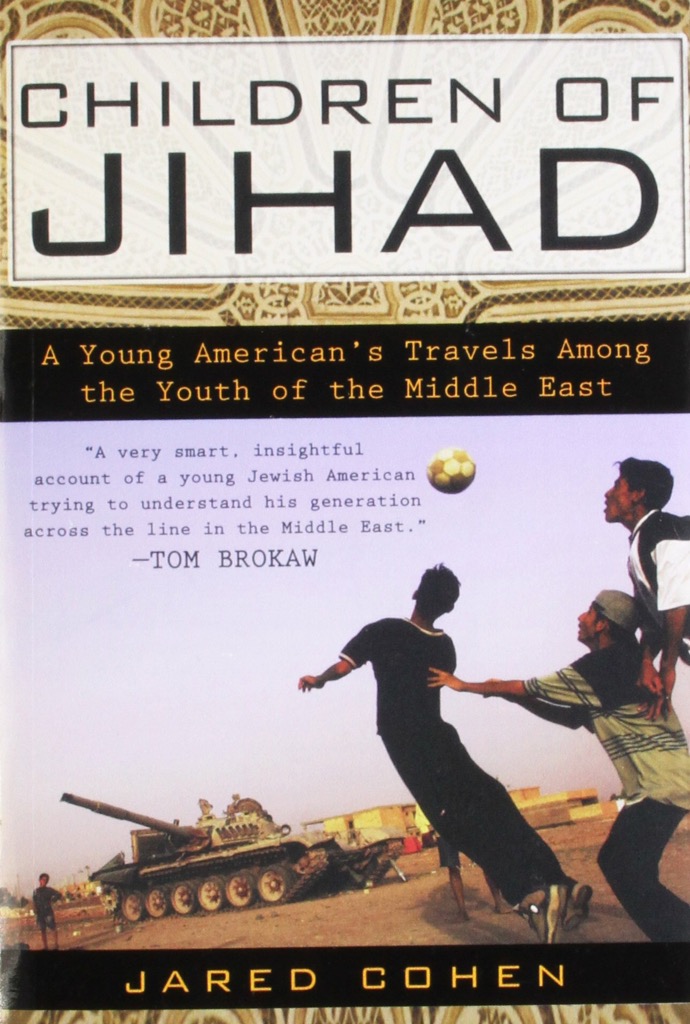
Children of Jihad (book review)

The library is my friend. These days it’s because of the audio books available there-“there” meaning the Manatee Central Library just blocks from the church office.

My routine so far this year has been to get an audio book, listen to it while driving around town, return it as soon as I’m done and immediately get a new one. In selecting a new one, I am content to take the first one that grabs my attention. 

The last one to grab my attention was entitled Children of Jihad. I’m guessing it got my attention because of my recent travels to the Middle East. This writer, Jared Cohen, had travelled there-much more deeply than I had or probably will and for completely different reasons. The cd jacket cover said Cohen’s reason was to try to understand the spread of radical Islamic violence by researching Muslim youth. Attention grabbed.

Published in 2007, this book recounts Cohen’s travels for a few years starting in 2004. Cohen was 23, a Rhodes scholar wanting to learn about global affairs by witnessing them firsthand. His travels took him through Lebanon, Iraq, and Syria. He visited villages, cities, universities, and even unknowingly drove through the heart of an insurgency war zone landing him in Mosul.

His tales are mind blowing, mind shifting, and even mind altering. He reveals a perspective that only comes from firsthand encounters and perspectives. He challenges, like any good journalist, both sides of the story. In this case, the one side of the story includes the locals he met while the other side includes those back at Oxford and in his home state of Connecticut. 

Again, I haven’t travelled like Cohen. My encounters in the Arab community have been in the bubble of ministry here in the States and in one country where Cohen didn’t include his research. But I agree with his assessment. We don’t have all the story if all we know is what we see on American news. We are not being respectful to the citizens of the Middle East and their relatives around the world when we lump them all under the same profile. We should lower ourselves and engage them to really appreciate their personal story and to respect them as we respect ourselves.

This book will cause you to pause. To rethink. To revisit. Maybe even to confess. If you care to do such developmental work, Children of Jihad can be a tool for you.

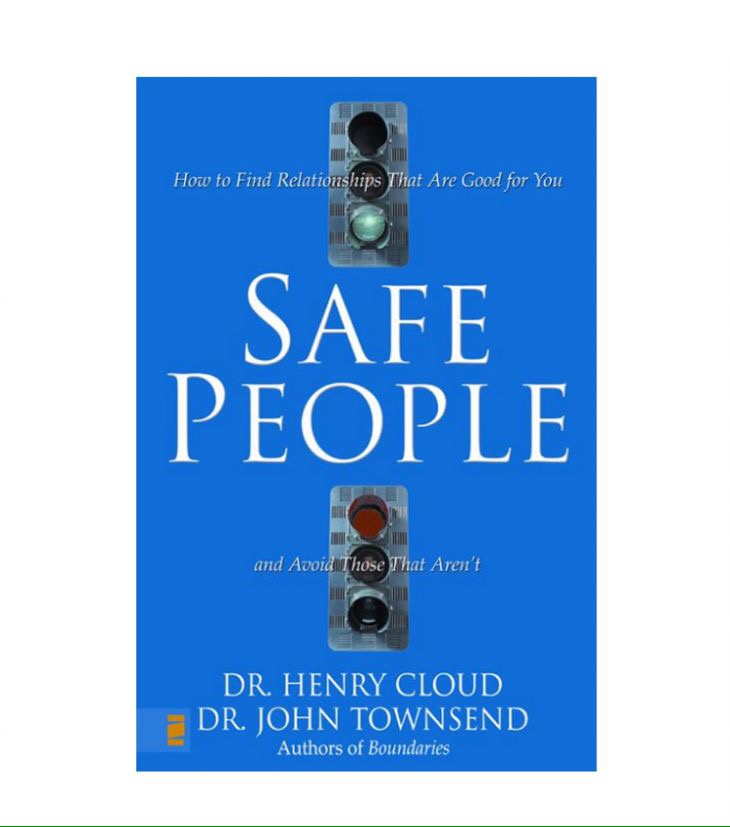
Safe People (book review)

I finished another great read from Henry Cloud and John Townsend.

One of the marks of a truly safe person: they are confrontable.

Safe people know that they are subject to change. They want to mature and grow over time.

Safe relationships are not just about trust, support, and sharing. They are also about truth, righteousness, and honesty.

To best deal with unsafe people, we first need to understand what causes us to be unsafe.

And that’s just from chapters two and three.

I came across this book while searching for a resource for developing a coaching program about relationships. Pretty sure this book is worthy. Here’s why:

  • Clear definitions, illustrations, and suggested tools for implementation.
  • Complete and thorough look on the subject.
  • You are not given the idea that you are perfect and others aren’t. It’s a look at yourself, if you choose to accept the opportunity.

Anyone would find this book helpful. Keep your ears open for a group coaching program on this subject, most likely coming this fall.

Fear is a Liar

Exodus 3-4:16
Fear steals your curiosity. 3:1-4
Fear steals your “yes.” 3:11,13; 4:1,10,13
Fear steals your awe of God. 3:5-6,14-15;4:11

Daniel 3
Fear will tell you to bow to other gods. Vs. 1-6
Fear will tell you to give your allegiance to what you can see. Vs. 7-12
Fear will tell you to resist God’s plan. Vs. 13-18
Fear will tell you that God cannot be trusted. Vs. 19-30

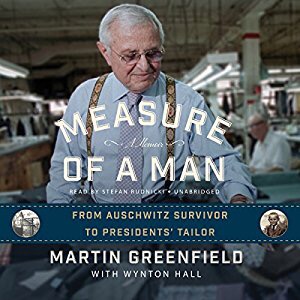
Measure of a Man (book review)

This may be the best audio book I’ll ever hear. If there aren’t plans for it to become a movie, it’s just a matter of time. Someone alert Steven Spielberg or Martin Scorsese.

The quality of an audio book can be determined by the reader. Within minutes you understand why this reader, Stefan Rudnicki, has won Grammys. 

Yet, even though the quality of the production is fantastic, the mesmerizing aspect of this book is the life story it covers. Mr. Greenfield’s story includes the horror of the holocaust, his transitioning to America, his providential start in the tailoring business, and his fortuitous connections to politicians and celebrities. Despite his success, he maintains the importance of loyalty to his family, his faith, and his workers. He gives all the credit to God for how his life illustrates the measure of a man.

Read this book if you…

  • …like biographies.
  • …enjoy history.
  • …are an immigrant.
  • …love America.
  • …are inspired by other’s success.
  • …believe God deserves all the credit.

Missing God’s Gift (Something Misplaced?)

Yesterday a friend told me how different he is from who he was just 18 months ago. Earlier this week a group discussed how a coaching program has altered their life’s rhythms in just 7 weeks. These people were expressing how receiving a gift from God, such as leaving a successful corporate job to start all over or exiting the routine of life to enjoy Sabbath, has changed who they are. And they want more.

God’s gifts come to us in various formations. Sometimes they are clearly seen as coming straight from God. Other times, we are a little more challenged to determine if an opportunity or unforeseen blessing are indeed gifts from God. That is, unless we live from the viewpoint that God works at all times and through all things in our lives. Until we reach that viewpoint, it’s likely we will often miss God’s gifts.

Why don’t we automatically have this viewpoint? What keeps us from it? How can we move toward it? In talking with these people, I’d say they would say they had some things misplaced.

Misplaced Contentment-Yes, it’s possible to be so content that you miss noticing an offer from God. Our contentment can often lead us to settling, stubbornness, and even pride. So a God-given opportunity can appear unsettling, unnecessary, maybe even unworthy. Think rich, young ruler.

Misplaced Fear-In this case, fear of just about anything (loss of job/income, ability, identity, power/influence, health, security) or anyone (family, peers, leaders, employer, yourself) has been given higher rank than God. Think Moses’ initial bush response.

Misplaced Stewardship-Stewardship covers more in our lives than just finances. Stewarding your family, your talents, your choices, your time, your emotions, your mind, your body, for example. Think about most kings in the Old Testament.

Misplaced Allegiance-Satan is committed to leading us to misplace our allegiances. We can become more allegiant to so many earthly kingdoms that we miss God’s leading us toward his heavenly kingdom. Think about the Pharisees and Paul’s warnings about false teachers in the church.

Misplaced Commitment-Commitments lead to routines, obligations, and expectations-some short term, others long term. These can become idols causing us to be completely blind to something more aligned with God’s plans for us. Think Eli, Saul, or Martha.

We often miss God’s gifts to us because our misplacements lead us to consider way too many “what ifs.” So consider a few reverse thinking “what if” results when God’s gifts are missed:

  • What if you miss God’s gift because you ignore a burning bush?
  • What if you miss God’s gift because you run toward Joppa instead of Nineveh?
  • What if you miss God’s gift because you always look backward rather than forward?
  • What if you miss God’s gift because you follow the crowd and declare, “Crucify him!”
  • What if you miss God’s gift because your faith is so small that your reply to God’s offer is, “No thanks.”