Started listening to a new audio book, In the Shelter by Padraig O Tuama. In chapter one he asked an interesting question about prayer, one I’ve not heard worded this way before. “Where is it that we are when we pray?”
It’s a different way to challenge one’s emotional and mental approach to prayer.
We are often in many places. We are saying to ourselves, “I should be somewhere else,” or, “I should be someone else,” or “I am not where I say I am.” In prayer, to begin where you are not is a poor beginning.
To begin where you are may take courage or compromise or painful truth telling; whatever it takes, it’s wise to begin there. The only place to begin is where I am.
Not where you want or feel you ought to be. This could mean rather than naming your present state-confused, frustrated, hurt, angry, lonely, unhappy, etc.-you ask for where you want to be or where you feel it is your duty to be-fulfilled, joyful, connected, healed, satisfied, understood, peaceful, etc.
Not in many places. We can often pray about what has happened, what we fear is going to happen rather than what is happening in this moment. We can be drawn to focus on the past or the future to the point that the present is ignored, maybe even avoided. The result that we aren’t even intending can be distance, even creating space for drifting to begin.
I believe what he’s encouraging is twofold. One is raw honesty. The other is naked vulnerability.
Prayer that is honest and vulnerable, not pious or fake, says to God, “I’m here. I believe you are too. Let’s talk.”
I listened to Kathleen Norris’s book The Cloister Walk this week. Fascinating.
A highlight was Chapter 13, an honest look at her 10 years of relationships with celibate men and women.
In them the strengths of celibacy have somehow been transformed into an openness that attracts people of all ages, all social classes. They exude a sense of freedom.
She acknowledges her own struggle to understand how this can be, yet rejects culture’s prejudice take on reasons for celibacy.
As celibacy takes hold in a person over the years, as monastic values supersede the values of the culture outside the monastery, celibates become people who can radically assess those of us out in the world, if only because they’ve learned how to listen without possessiveness, without imposing themselves. With someone who is practicing celibacy well, we may sense that we are being listened to in a refreshingly deep way. And this is the purpose of celibacy. Not to obtain an impossibly cerebral goal mistakenly conceived as holiness, but to make oneself available to others, body and soul. Celibacy, simply put, is a form of ministry.
Natural tendency is to reject what we don’t understand or aren’t willing to be open to accept as necessary.
Ministry is a choice.
Availability is a choice.
Listening is a choice.
Our obedience to God’s choices for us won’t always be understood or accepted by others. Jesus actually told us to expect this to happen, to follow calling, to be about the Father’s work.
It’s necessary for transformation, for freedom.
Be strong in your obedience. Your body and soul will thank you. So will other’s.
I first heard this song after being pointed to it by a nose hair friend going through hard times. It’s on my 2025 Rest Playlist, which I started my day with today. Because friendship was on my mind, I listened to this song with a different ear and heart.
Here’s the thought that surfaced:
Some friends are better valley friends; some friends are better highlands friends.
I can hear some head scratching. “John, true friends, real friends don’t care about valleys and highlands. They’re in it for all of it.” Heard. But let me tell you my experience.
Back in the early-90s while in my 20s, I had a group of friends that got together often to play card games. Anywhere from 4-6 of us. We were friends mostly through work and church. Some were married, some single. We were very much highlands friends.
Eventually we all parted ways as relationships go, yet we tried to keep in touch. And then, one of the couples got a divorce. In that moment, we were challenged.
I had never experienced friends getting a divorce. For that matter, I’d never experienced anyone divorcing that was close to me. It was foreign territory. An unknown valley that I was more observing than experiencing. And as much as I tried, it was just awkward. The result? These days we’d call it ghosting. I felt a lot of guilt about it.
Forward five years, another couple of church friends got divorced. This time, I knew better, and I was the valley friend they needed. I had grown in what it meant to be a friend through the valley. That experience led me to go back to my first divorced friend and acknowledge I could have been a better friend through his valley.
Here I sit almost thirty years later, and it’s like I’m the opposite-better valley friend than highland friend. And when I listened to this song this morning with my friend evaluator hat on, it was a call to grace.
Grace for myself. Sure, I’d like to be the ideal friend regardless of the space. When I believe I’m not, grant myself grace to grow in whichever land my friend is walking.
Grace for my friends. Sure, I’d like them to be ideal friends regardless of my space. When I’m tempted to say they aren’t, grant them grace to grow in the land I’m walking.
Maybe the lesson isn’t as much about valley and highland friends. It’s about grace granting, to others and to myself. “All the same.”
Last Fall I read Krispin Mayfield’s Attached to God.
I wrote one post about a lament exercise he outlined, but I never offered my thoughts about the whole book once I finished. Today, I finished rereading it. Time to share.
I’m a little obsessed.
My hunch is that anyone wishing to understand or improve their relationships with humans and with God would also believe Mayfield delivers on the subtitle’s promise of a practical guide. His effort to breakdown attachment science then connect it to one’s relational experience with God produces clarity and hope for any breakdown to be restored.
Of all my highlights, here are three to whet your appetite.
Distance happens in all relationships. (Chapter 1, “The Still Face of God”)
A friend of mine recently made a self awareness by saying, “I guess I live in a fantasy world.” I’d say that’s true for many professing Christians in regards to their beliefs about how close they are expected to feel to God at all times. Mayfield argues human relationship with God is like our other relationships-distance happens.
I was in my 30s before I fully accepting this truth. Many close friends moved and distance happened. It’s normal. That doesn’t provide comfort or easy acceptance, just normalcy. Learning how to respond to distance in a secure way is worth the effort, for you and for the relationship.
Information doesn’t change your beliefs, experience does. (Chapter 4, “Shutdown Spirituality”)
When religious folks get their head around this one, attachment shifts. And it’s a struggle. Why? We are programmed that attending church or a study group is the sole means of establishing beliefs. Any transparent pastor or counselor would most likely agree with Mayfield. They’ve seen how experiences affirm or alter beliefs, in their own lives and in those they serve.
From my experience, this has definitely played out the last 15 years for me. Traveling to other countries, visiting other denominational churches, and dialoguing with Christians on the other side of all kinds of aisles has made me check my beliefs. And yes, some have changed.
In any authentic relationship, there’s room for real talk. (Chapter 10, “The Risk of Trust”)
When people describe what the younger generations are looking for in their attachment to religion and God, the word authentic comes up regularly. I believe age doesn’t matter; we all hunger for it. This 57-year-old does.
RECOMMENDATION: For all your attachment seasons, secure or insecure in any relationships including God, this book deserves space in your library.
Meeting writers after you’ve read their book or blog is an interesting experience. My experiences have always been positive. I can’t think of an interaction when I walked away saying, “They weren’t at all what I expected.”
There’s a whole different vibe when you know them before they are published or start a blog. If you thought you knew them well beforehand, you find out pretty quickly that they have layers, stories that have made them the person you know. In many ways, you walk away from reading their work saying, “What a gift they just gave the world!”
That’s my response to reading my friend Dawn Van Beck‘s latest book Deliver Me. Only having crossed paths this last year, we are still learning our layers and stories. Well, I guess I can’t say that as much now since that’s pretty much what Dawn does in this book. And she doesn’t hold back.
Dawn’s raw vulnerability as she addresses regrets, shame, forgiveness, and letting go relays her healing journey to freedom. You can imagine she states many life-giving lessons, but here’s the one that I most appreciated.
That’s what happens when you give God a little-He creates more. (chapter 11, “Releasing the Shackles”)
In describing a dream where she experienced the release from shame and the gift of forgiveness, Dawn paints a clear picture of what I believe she did by writing this book. One belief of mine: I believe she gave more than a little. She gave a whole lot more. And God is creating even more.
Dawn, thank you for giving. Thank you for sharing your story. I pray God continues to create more.
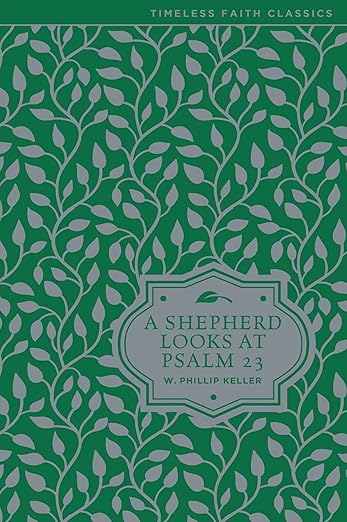
After reading The Lord is My Courage on hoopla, a related title was suggested which I decided to read because of the unique promise. That promise was a look at this poem from the basis of the author’s years as a keeper of sheep. It did not disappoint.
An overall takeaway is just how near death sheep can be unless their shepherd relentlessly cares for them. Keller explains that David’s poem actually addresses all four seasons in a year of a sheep’s life and what is necessary for the sheep to “not want.”
The strange thing about sheep is that because of their very makeup it is almost possible for them to be made to lie down unless four requirements are met…They are free of all fear, free from friction, free of pests, and free from hunger. (Chapter 3, “He Makes Me Lie Down in Green Pastures”)
In that same chapter he explains that a flock that is restless, discontented, always agitated, and disturbed never does well. Sound familiar? The value of being made to lie down is to our benefit.
The most vivid image Keller paints comes in chapter five, “He Restores My Soul.” He draws a parallel between another familiar David passage in Psalm 42:11, “Why are you downcast, O my soul? Why so disturbed within me? Put your hope in God…”
Only those acquainted with sheep and their habits understand the significance of a “cast” sheep or a “cast down” sheep.
This is an old English shepherd’s term for a sheep that has turned over on its back and cannot get up again by itself.
A cast sheep is a very pathetic sight. Lying on its back, its feet in the air, it flays away frantically struggling to stand up, without success. Sometimes it will bleat a little for help, but generally it lies there lashing about in frightened frustration.
If the owner does not arrive on the scene within a reasonably short time, the sheep will die…Nothing seems to so arouse his constant care and diligent attention to the flock as the fact that even the largest, fattest, strongest, and sometimes healthiest sheep can become cast and be a casualty.
He goes on to describe what’s required when he finds a cast ewe, which includes rubbing limbs to restore circulation after picking her up one or more times until she regains equilibrium and starts to walk steadily and surely.
One final noteworthy thought is this one from chapter 7, “Even Though I Walk Through the Valley.” Keller shares that this is a turn in the poem not only from the viewpoint but also in the season being described, how summer and autumn look for the shepherd and his flock. Keller explains David’s firsthand experience by making this statement: “Never did he take his flock where he had not already been before.”
If you find yourself today in search of freedom, or lying on your back flaying, or walking through the valley, rest assured your shepherd is with you. He has what you need. He’s watching over you. I encourage you to find a way to read this book to let those truths grow roots in your heart, mind, and soul.
Recently, after reading a book about the life of Jesus, I decided it was time to read through the Gospels. For the most part, I’m taking it a chapter a day.
This week I read the Parable of the Sower, one of Jesus’ most well-known parables, in Mark 4; it’s also found in Matthew 13 and Luke 8. The teaching focuses on four outcomes of the sown seeds: stolen, short-lived, choked, and fruitbearing.
Keeping your path receptive to the sown seeds requires diligence. Diligence against predators. Diligence to protect roots. Diligence to prioritize eternal things. Diligence to stay hungry and thirsty.
The featured picture on this post is from my back yard. Fortunate for me, HOA fees keep the community where I now live quite immaculate. In the month that I’ve lived here, it’s clear diligence is heavily disciplined.
The state of my heart and soul is no one else’s responsibility. I can’t pay a fee for someone else to be diligent on my behalf. Pretty sure that leads to wrong priorities, unprotected and rootless living. If my heart was originally set on eternity, it’s in my best interest to diligently maintain that origin.
Rewatched Rain Man last night. Worth it. So many layers that each time I watch I have different reactions.
In the scene that takes the plot in a new direction, I had one of those reactions. Watch.
The 40-second clip of Ray and Charlie singing is what grabbed me. The beauty of their reconnection through music is unique and priceless.
Singing over someone is beautiful. It’s not the same as singing to someone, like Ray had to Charlie. It’s not the same as singing about or with someone. Singing over them stands alone in the connection created, thus the unique beauty of the moment.
The reason this stuck out to me was I had the opportunity to witness the beauty of someone singing over someone just the day before. I won’t go into the details. Technically, I wasn’t supposed to be there. I count it a joy to have witnessed.
When you sing over someone, no one cares about the elements and expectations of a grand performance like pitch or stage presence. In fact, it’s the opposite. The connection of hearts means the most in that moment. And that’s where the beauty lies.
As churchgoers attend church this weekend, I hope they’ll allow this connection to have room, whether they are being sung over or are doing the singing over.
As sabbath keepers embrace their time this weekend, I wish for them at least one moment of such beauty.
I closed on a new home April 28th and within 24 hours was completely moved in. That’s the short version. The long version includes many right decisions that I eventually started calling “going through the green lights” that I continued to experience.
The decision to move began in December simply by responding to a “for rent” sign. I wasn’t really sure about renting, but it was almost too good to be true. A .2 mile trip to work. After checking it out, the green light read “Move, but buy instead of rent.” The odyssey began.
I didn’t have a timeline other than sometime in 2025, ideally the first half. I now drove five days a week to Sarasota versus three, so the sooner the better, and before the summer heat.
I started a relationship with Zillow. I thought I knew where I’d be most comfortable in Sarasota, so I started following listings in that area. I found quickly that the possibilities widened to areas I had previously ruled out.
Zillow isn’t stupid. Floods of emails suck you in and can foster obsession. One trick that got me moving further on the journey was open house notifications. I finally broke down and went through the next green light: “It’s just an open house. Go and see what that location and price point feels like.”
That decision to go to a March 2nd open house led to an unexpected green light: “Here’s the agent you are going to work with.”
Funny. I didn’t know I was looking for one. I wasn’t in a hurry. I thought I had plenty of time.
Don’t get me wrong. No one forced me through that green light. But it was a little too obvious. My coming to that open house and them being the agent at that showing was supposed to happen. I wasn’t forced; but when the light is green, I’ve learned to keep moving.
Fear or uncertainty can cause us to not proceed down a path that we weren’t expecting or may not think we are ready for. This part of the home buying journey reminded me of two main things about God and his children:
He’s always at work preparing us for what he has in store for us.
He knows the desires of our heart and excitedly wants to fulfill them.
If you are sitting at a green light, take heart. It’s safe to move forward.

 John Gregory