The Autonomy Problem

(For regular readers of this blog, this entry will not be like others. It is not indicative of future entries. Allow me this one and done, please. For first-timers, you’re welcome to follow along for future posts with the same expectations.)

I am a Christian. My father was an Independent Baptist minister (to be clear, that didn’t make me a Christian; that choice was my own). For all 50 years of my life, I’ve been a member of Baptist churches-the first 25 in Independent Baptist (IB) churches, the second 25 in Southern Baptist (SB) churches. At age 29, I took my first church staff position. In these last 21 years, I have served three SB churches in associate minister roles. These churches have varied in weekly attendance from 60 to 1,600. Over my lifetime, my church experiences have included seven IB and SB churches in Alabama, Georgia, and Florida. Much like being blessed to be an American, I have been blessed God has granted me this history.

Recent SB news hasn’t been pretty; that’s being nice (to be clear, I will not be including links to any news stories or responses from others in this post. Google is your friend). My pastor tweeted this week that he is “heartbroken over the tragic events in our SBC family.” I haven’t asked him this question, but I’m pretty sure if asked if this is the first time his church experience has broken his heart, he’d say no. That’s my answer. Chances are, that’s the majority’s answer. Why is that?

The exhaustive answer to that question would take a series of blogs. I’m only in for one post, remember? So I’m going to zero in on just one, which was actually brought up in a response to my pastor’s tweet. And it’s been an answer for me since I was 12 years old. The answer to why my heart has continued to go through a cycle of being broken and mended is autonomy.

So we’re all working with the same understanding, autonomy is defined as self-governing, free from external control or influence, independent. All IB and SB churches exist under this theological conviction. Is it the right or wrong conviction, some are asking? My answer is, that’s the wrong question. The conviction has been chosen. Frankly, if you don’t like the conviction, consider other churches that have another conviction. The better question I raise is this: how can every Baptist church improve its autonomous state?

It’s easy to point fingers at the other guy, the other church, the other president or professor or minister like you’re the Monday morning quarterback who knows how they could have been held in check. Before we do that, let’s take our eyes off the news and our mobile devices and consider how our local autonomy is going. That starts in every church member’s heart, then moves to their home, and then to their church. Why? Because we all are bent toward autonomy. We all desire to be self-governing, free from external control, and independent. That’s a problem. I know it is for me. Chances are, it is for you also.

Start there. With you. Then your household. Then your church. Ask yourself better questions. 

  • How much is God in charge?
  • How dependent am I on God?
  • Where am I allowing other Christians to speak into my life?
  • How should we best keep each other in check?
  • Where am I tempted to be independent from God and others? How could I address that problem of autonomy?
  • How open am I to accountability in all arenas of my life? How can I establish it?

Scripture tells us to guard our hearts. I believe we need to avoid more broken hearts by guarding them against the autonomy problem.

This is my opinion, one answer to why. I understand the autonomy of one person’s blog. Feel free to offer accountability.

Get to the Doctor!

Psalm 19 is full, rich, and worth meditation. Verses 12-13 jumped out at me this morning.

Who perceives his unintentional sins? Cleanse me from my hidden faults. Moreover, keep your servant from willful sins; do not let them rule me.

Did you notice the two types of sin he acknowledges? Unintentional and willful. That’s worth chewing on.

We all have a pretty good idea what our willful sins are, if we are honest. Many of them start with our tongue: slandering, gossiping, lying, or stretching the truth for our benefit. Others stay hidden from others in our minds and hearts, but they aren’t hidden to us. These types of sin are easy to address because we are aware of them.

But what about those unintentional sins? How are we supposed to address or acknowledge what we can’t see? 

May I suggest thinking of these sins as blind spots. If you were experiencing strange spots in your vision, what would you do? You’d probably go to the doctor, right? Because of his experience and knowledge, he could explain to you why your vision is spotty. 

What if the difficulty in your emotional/mental/spiritual life is hidden from your view? If you knew what it was or how to address it, you would do it, right? So when we can’t figure it out on our own, we have options similar like going to the eye doctor:

  • Pray these two verses
  • See a counselor or therapist
  • Go to church
  • Lean on a friend/mentor
  • Get connected to a small group

These are just a start. I would say that they could/should also be moved from optional status to non-optional status. If we want to stay clear of experiencing blind spots, ongoing connection with others desiring the same thing is the best place to be. Don’t wait for the blind spots to rise. Expect them. Position yourself in places where they can be seen, and you can receive the answers you cannot see for yourself. Get to the doctor!

3 Messages from Jordan

Back in Florida from a 13-day trip to Jordan. We had an outstanding time with the team (Latvians, Brazilians, Irish, Americans) pictured below.


When talking with those we went to support, I asked three of them this question: “When I have the opportunity to share with Americans a message from you, what would you like me to share?” Here are their responses:

Receive and love our people. They’ve suffered enough. Don’t add to their pain or cause them more hurt. -Iraqi refugee

When you pray for us, consider that you might be the answer to your own prayer. -Missionary

We believe the American church is our mother church. We pray for you. Please pray for us. -Pastor

3 Questions to Counter Fear’s Lies

(a follow up from last post)

When, not if, fear lies to us, we should be ready with a counterpunch. Our most powerful counters will be focused on God, not us. In the story from Exodus 3-4, Moses’ counters were all about himself. Suppose he had countered with these questions instead.

What is God doing? 

  • And I don’t mean, “Pretty cool trick. How is he doing that?” Rather, I’m talking big picture. Moses may have actually been asking himself this question for decades, but I’m guessing his viewpoint was too small.

Where does God want me to join his work?

  • It’s pretty clear Moses gave up this thought long ago. His bully memories and self-excusing led him to accept, “This is all there is.”  It wasn’t long before he found out otherwise. 

How is God revealing himself?

  • Like most of us, Moses was caught up in his own awe. His self-imposed blindness allowed him to offer only what he could see. His world changed when God removed his blinders.

Go ahead. Counter Fear. Give God his chance to remove your blinders to show you what He’s doing and how you can join him.

Fear is a Liar

Exodus 3-4:16
Fear steals your curiosity. 3:1-4
Fear steals your “yes.” 3:11,13; 4:1,10,13
Fear steals your awe of God. 3:5-6,14-15;4:11

Daniel 3
Fear will tell you to bow to other gods. Vs. 1-6
Fear will tell you to give your allegiance to what you can see. Vs. 7-12
Fear will tell you to resist God’s plan. Vs. 13-18
Fear will tell you that God cannot be trusted. Vs. 19-30

Missing God’s Gift (Something Misplaced?)

Yesterday a friend told me how different he is from who he was just 18 months ago. Earlier this week a group discussed how a coaching program has altered their life’s rhythms in just 7 weeks. These people were expressing how receiving a gift from God, such as leaving a successful corporate job to start all over or exiting the routine of life to enjoy Sabbath, has changed who they are. And they want more.

God’s gifts come to us in various formations. Sometimes they are clearly seen as coming straight from God. Other times, we are a little more challenged to determine if an opportunity or unforeseen blessing are indeed gifts from God. That is, unless we live from the viewpoint that God works at all times and through all things in our lives. Until we reach that viewpoint, it’s likely we will often miss God’s gifts.

Why don’t we automatically have this viewpoint? What keeps us from it? How can we move toward it? In talking with these people, I’d say they would say they had some things misplaced.

Misplaced Contentment-Yes, it’s possible to be so content that you miss noticing an offer from God. Our contentment can often lead us to settling, stubbornness, and even pride. So a God-given opportunity can appear unsettling, unnecessary, maybe even unworthy. Think rich, young ruler.

Misplaced Fear-In this case, fear of just about anything (loss of job/income, ability, identity, power/influence, health, security) or anyone (family, peers, leaders, employer, yourself) has been given higher rank than God. Think Moses’ initial bush response.

Misplaced Stewardship-Stewardship covers more in our lives than just finances. Stewarding your family, your talents, your choices, your time, your emotions, your mind, your body, for example. Think about most kings in the Old Testament.

Misplaced Allegiance-Satan is committed to leading us to misplace our allegiances. We can become more allegiant to so many earthly kingdoms that we miss God’s leading us toward his heavenly kingdom. Think about the Pharisees and Paul’s warnings about false teachers in the church.

Misplaced Commitment-Commitments lead to routines, obligations, and expectations-some short term, others long term. These can become idols causing us to be completely blind to something more aligned with God’s plans for us. Think Eli, Saul, or Martha.

We often miss God’s gifts to us because our misplacements lead us to consider way too many “what ifs.” So consider a few reverse thinking “what if” results when God’s gifts are missed:

  • What if you miss God’s gift because you ignore a burning bush?
  • What if you miss God’s gift because you run toward Joppa instead of Nineveh?
  • What if you miss God’s gift because you always look backward rather than forward?
  • What if you miss God’s gift because you follow the crowd and declare, “Crucify him!”
  • What if you miss God’s gift because your faith is so small that your reply to God’s offer is, “No thanks.”

Three Ways to Let God Out of Your Box

(Third and final entry for this post)

The first two entries talked about two ways to let God out of your box: don’t give up and stop believing lies. Read Nick’s quote again to see the third way.

Too often we tell ourselves we aren’t smart enough or attractive enough or talented enough to pursue our dreams. We buy into what others say about us, or we put restrictions on ourselves. What’s worse is that when we consider ourselves unworthy, we are putting limits on how God can work through us! When you give up on your dreams, you put God in a box.

As a long-distance runner, I often hear people say something like this after they hear about some race I’ve done or I’m preparing for: “I could never do that. You’re amazing.” If I were to bluntly respond what I’m thinking when they say that, it would be something like this: “That’s ridiculous. Of course you could. And by the way, amazing I am not.” This is a simple example of what we often do to God as well. We tell him what’s possible…so in the box he goes. The third way to let him out of your box is to do the opposite.

Resist Putting Limits

Nick said we put limits on how God can work through us. And this can have tragic consequences. Case in point: the Israelite spies in Canaan (read Exodus 13-14). Twelve went in to check it out. Ten said, “No go.” Two said, “We should go.” Forty years later, the ten got want they wanted and so did the two. God showed up for the two who resisted putting limits on him. They experienced what God can do through those who allow him to work through them (read Joshua 6,14).

So how can we resist our human nature and give God all the freedom in our lives he deserves?

  • Foster a mindset of submission to daily prompts from God-“Sure, I’d be happy to ask my neighbor how I can pray for them. What else?”
  • Keep your finger on the “yes” trigger when God comes with a big ask-“Yes, I’ll take a vacation week to go on a mission trip. And I’ll stay open to even moving my family to live there permanently.”
  • Seek counsel from those we believe live submitted lives-“Can we have coffee soon? I’m needing some guidance on something God has challenged me to do.”
  • Surround yourself with other “resisters”-“God, who should be in my corner? Holy Spirit, surround me with fellow resisters.”

In what area(s) of your life is God in your limit box? What could God do through you if you’d resist putting limits on him? Tell God, “I’m sorry for not giving you my ‘yes’ more quickly. I desire to experience what it’s like to give you full access. Show me what it’s like to let you out of my box.”

Three Ways to Let God Out of Your Box

(Continued from yesterday’s entry)

Too often we tell ourselves we aren’t smart enough or attractive enough or talented enough to pursue our dreams. We buy into what others say about us, or we put restrictions on ourselves. What’s worse is that when we consider ourselves unworthy, we are putting limits on how God can work through us! When you give up on your dreams, you put God in a box.

There are three phrases in Nick’s quote that explain how we put God in our box: we tell ourselves, we buy into, we consider ourselves. These actions aren’t generated by God. They are generated by ourselves and others, and they reveal the second way to let God out of our box.

Stop Believing Lies 

Have you noticed you are one of the biggest liars about you? Nick gave you some examples: “I’m not smart enough. I’m not talented enough. I’m not attractive enough.” Sure, maybe someone actually said those or similar things to you one time, but who keeps repeating them more than anyone else? You do. Stop telling yourselves lies that you end up believing. 

Yes, others say things that we have a choice to buy into. A choice. In middle school, my music teacher said I wasn’t good enough to get a college degree in music. I chose not to believe that and got that degree anyway. And in my ministry career others have said I wouldn’t be able to get hired by churches because my marital status is single. For over twenty years now God has chosen otherwise.

To stop believing ours and other’s lies, we must fill our hearts and minds with God’s truths. Instead of undermining what God wants to do in our lives by considering ourselves unworthy, we should believe scriptures like Zephaniah 3:17: “The Lord your God is with you, he is mighty to save. He will take great delight in you, he will quiet you with his love, he will rejoice over you with singing.” Who in their right mind wants to believe lies and box up the God of that verse?

What lies do you need to stop believing? What God truths could replace those lies? Tell God, “I’m tired of the lies. I’m going to stop believing them and stand in your truths. Show me what it’s like to let you out of my box.”

(Blog completed tomorrow)

Three Ways to Let God Out of Your Box

You read that title right. You may not be almighty, but you are capable of stuffing God in a box of your making. It’s so easy that most of us do it without even knowing or thinking about it. And then we marvel at those who live what seem like extraordinary lives, not knowing that they have simply let God out of their box.

Case in point: Nick Vujicic. He was born without limbs-no arms or legs. Can you imagine the box he had as a child where he stuffed God? That box must have been filled with lots of whys, hows, whens, and seriouslys. And who could blame him? Sounds perfectly natural to think God had messed up-you might say he put himself in Nick’s box.

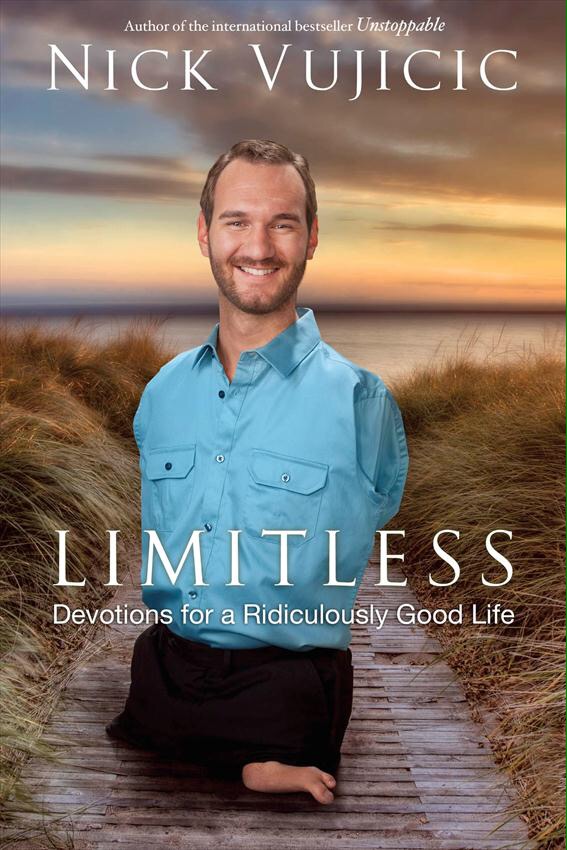
Somewhere along the way, Nick decided to let God out of that box. Nick is now 35 years old, married, travels the world speaking, and directs an organization that helps share the message of hope in the God he let out of his box. I started reading his devotional book, Limitless, this week where in the first day’s reading entitled Free from Limitations he wrote this:

Too often we tell ourselves we aren’t smart enough or attractive enough or talented enough to pursue our dreams. We buy into what others say about us, or we put restrictions on ourselves. What’s worse is that when we consider ourselves unworthy, we are putting limits on how God can work through us! When you give up on your dreams, you put God in a box.

From Nick’s quote, we can see three ways to let God out of any box where we’ve decided he belongs.

Don’t Give Up

Giving up is another one of those easy-to-do human things. What if we looked at giving up as putting God in a box? What if we stopped exercising our finite power in such a life-sucking way resulting in squelching the infinite power of God? For some other cases in point, consider the following people who didn’t give up:

  • Noah
  • Esther
  • Joshua
  • Daniel
  • Martin Luther
  • Abraham Lincoln
  • Alexander Bell
  • Winston Churchill
  • Martin Luther King Jr.
  • Jesus

How their lives and those impacted by their decisions would have been changed had God stayed in their box!

Are you considering giving up? On your marriage? On your education? On your faith? On your passion? Tell God, “It’s all yours. I’m not giving up. Show me what it’s like to let you out of my box.”

(Blog continued tomorrow)

The Worst Case of Being Misunderstood

Ever been misunderstood? I’m not asking have you ever had a misunderstanding. I’m talking about being mislabeled, mischarged, or mispegged to the point that trust was broken. In some cases, these events lead to years of damage and loss, such as years in prison for being accused falsely. If it’s been that bad for you, that’s rough. I can’t relate to that depth of being misunderstood. But I can tell you this, that’s not the worst case of being misunderstood. No, the worst case happened a few millienia ago.

The worst case of being misunderstood happened to God. Yes, that’s right. And just like the case usually is, it was because of a lie. The lie led to mistrust. The mistrust led to the worst decision known. And God and his creation have been suffering ever since. Yes, that’s right. You have been suffering because God was misunderstood.

You’ve probably guessed where this happened. If not, here’s a hint. The lie had to do with becoming like God. (Now that’s a whopper of a lie.) The lie caused Adam and Eve to lose trust in God’s character. The choice to believe that lie in essence said to God, “You can’t be trusted.” The first person to ever be misunderstood created those who made him feel misunderstood.

So here you are. Either being misunderstood right now or thinking about when it’s happened to you in the past. Find comfort in these thoughts:

  • God is the one person in the world who does get you, all of you.
  • God knows what it feels like to be misunderstood. It started soon after he created us and has never stopped.
  • God found a way to offer reconciliation to those who misunderstood him. You can do that too, most likely. But remember, just like his offer, yours may or may not be accepted.
  • God’s character wasn’t impacted by his being misunderstood. At his core, he is love. Strengthen your core with love.
  • God continues to do his work. So can you. Being misunderstood is not your identity. Your identity is found in your Creator. Don’t believe the lie that started this whole thing.