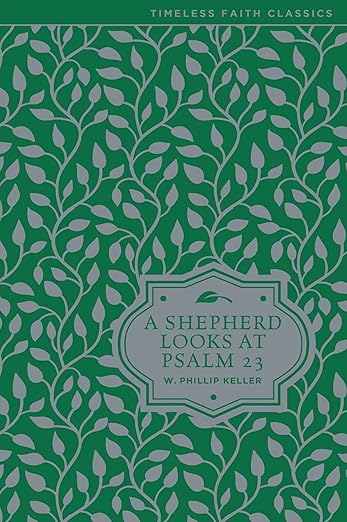
The Shepherd Beside Us

(By Guest Blogger Dawn Van Beck)

Let’s talk sheep.

Jesus talks a lot about sheep. Throughout most of the book of John, chapter 10, He speaks of sheep as an analogy for His people, His followers.

Therefore, Jesus said again, “I tell you the truth, I am the gate for the sheep. All who ever came before me were thieves and robbers, but the sheep did not listen to them. I am the gate; whoever enters through me will find pasture. The thief comes only to steal and kill and destroy; I have come that they may have life, and have it to the full.” (John 10:7-10)

A shepherd guards the gate to keep wolves out. He guides his flock to green pastures where they find their supply of life. Jesus illustrates how He is the gatekeeper and the good shepherd for each of us. He guards and protects us (His sheep) from danger. He leads us to places of abundance where we find nourishment, comfort, and peace. Resting in the pasture God provides, we find a permanent state of enjoying all we need to live the full, abundant life He desires for us.

Now, you may be thinking this all sounds great and wonderful, but are you and I really being compared to sheep? Is this good or bad? Hmmmmm.

The prophet, Isaiah, suggests we all are “like sheep” and “have gone astray;” “each of us has turned to our own way” (Isaiah 53:6). Research suggests that sheep tend to wander off from the flock and become lost, giving them a common, negative description. Therefore, we assume they are dumb, stupid.

Sheep get a bad rap.

I have a feisty Dachshund named Lilly, who obeys me, most of the time.

She stops what she’s doing when I admonish her. She comes running when I call out her name. She sits at attention and listens for my direction. Lilly is not always successful in her efforts to follow me though. She has her own will. She sometimes wanders off or gets sidetracked, or even lost (mostly due to any nearby lizard diversion). Overall, despite her lizard distractions, Lilly has a sincere intent to please and obey me.

Reflecting on our likeness to sheep, my Lilly comes to mind. I am her gatekeeper, protecting her from harm. I am her shepherd, leading her to sources of sustenance and comfort. Even though she occasionally becomes preoccupied with lizards (and goes astray), she follows me, because . . . she knows my voice.

Jesus speaks again, providing an action step on our part.

My sheep listen to my voice; I know them, and they follow me (John 10:27).

If we desire to be led, we must listen to our leader.

Sheep are not dumb. They are dependent. And they know the voice of their shepherd.

A flock of sheep has a dependent relationship with their shepherd. They require guidance to identify the proper fields to graze in. Given they are easy targets, they need protection from swift, aggressive wolves. Sheep can live with little worries because they enjoy the direction, protection, and strength of their shepherd who leads them so they can thrive.

We, too, are dependent, which is most definitely not a weakness or defect, but rather, a blessing.

How glorious it is to rest under the direction and protection of our shepherd, Jesus. He leads us to lush pasture where there is fulfilling refreshment and shelter from the elements. He does not keep us on a leash (like I do with Lilly) but allows us to freely roam, provided we remain within reach of His voice.

How do we hear His voice?

  • Confess. Eliminate any sin barriers that may prevent you from hearing God’s voice.
  • Read the Bible. Reading Scriptures helps you discover God’s promises and who He is.
  • Pray. Your prayer conversations provide intimate communication with God.
  • Get Quiet. Cut out the noise in your life so you are ready to listen and hear God.

We must trust our leader, Jesus, and listen attentively to His voice. This is how God will lead us to the richest and safest of life-giving pastures.

——

Dawn Van Beck is an author and speaker passionate about helping women discover the redemptive power of God’s forgiveness so they may walk in the freedom of Christ. She has authored several short story collections, which include fiction romance and inspirational stories, along with two children’s books. Her first non-fiction book for Christian women, Deliver Me: Ditching Your Shame and Embracing God’s Freedom, is soon to be published. 

Chewing on the Door

I’ve mentioned that my word for 2025 is REST. To share more, here’s my journal entry from 1-1.

Five years ago I was very focused on the practical rhythm of rest. Nothing wrong with that. It led me to this season.

’25 seems to be a year where I get to focus on the emotional and spiritual reality of rest.

Let things come. Don’t try to build the door. Address the door that opens. Don’t force your way through the door.

Trust Jesus when he said, “I am the door.”

Appreciate what’s at your feet. Running to what you see elsewhere or hoping to find isn’t rest.

The following day I chatted some with my spiritual director about these thoughts. He responded, “Looks like you need to keep chewing.”

In that chewing, I invited some other folks to join me in posting about this “I AM” statement. Tomorrow I’ll share one of those.

I’m still chewing.

Photo by Xiangkun ZHU on Unsplash

Lay It Down Day(s)

In the Christian world, Sunday is a special day. It’s a day set aside for several reasons, depending on which lane of Christianity you’re following. I’ve been pondering this since before my alarm was set to go off this morning. I’m thinking in some ways Sundays aren’t necessarily special. More on that later.

This week had peaks and valleys. If I’m not paying attention, I can relive the valleys to the point the peaks are forgotten. That’s what I was dealing with to start the day-and I wasn’t even out of bed.

Before the alarm sounded, God and I had a talk. (SIDENOTE: A definition for prayer that I read yesterday described prayer as what happens when you pay attention. It’s okay if you stop to chew on that.) In thinking about heading to church this morning, we landed on this mindset: Everything the last six days have offered did not have to dictate how I showed up to this day. In fact, for the day to be what it’s intended, start by laying down whatever isn’t needed for the day.

What did that include?

  • Unresolved conflict
  • Confusion
  • Unanswered questions
  • Unmet expectations
  • Disappointment

To be clear, by laying it down we didn’t say these things don’t matter. Act like the week was just one big peak experience. Nothing truthful about that.

Laying it down meant don’t let it consume this day. If Sunday is going to be what it’s meant to be, I decided I didn’t need to carry those valleys into it. Today didn’t have to be a valley. The valley could have a small peak.

My word for the year is rest. I’m finding more and more that rest is a state of mind. Rest is possible in the valley just as much as it is atop the peak. It has to be chosen. That doesn’t make the valley disappear, nor does it mean the valley magically lights up. It means my body, mind, and spirit don’t have to hurry finding the path out of the valley. Chances are probably greater if I enter the church doors having already laid things down I will receive what God knows I need. I might even be able to help someone else lay something down.

Which leads me back to Sundays being special. Sure, it’s the day of gathering. But imagine if the other six days of the week were considered just as opportunistic. What if every day was a Lay It Down day? What if God and I had a similar talk every morning before standing up for my first step? I’m guessing that paying attention effort would result in more day’s intentions transpiring, valley or peak.

Roots

Roots have been on mind this week. Led me to two interesting exchanges.

Today I was introduced to Safiya Sinclair on an episode of Everything Happens. The episode title, Rewriting Roots, peaked my interest. The question that made me sit up in my chair was, “When did you first know your words were so powerful?”

That question reminded me of another question. In my spiritual direction conversation this week, I was asked something similar. We were discussing purpose and vocational alignment. The question was something like, “What do you look for to let you know you are on the right path?”

Safiya and I were forced to go back in time. The question was about roots. She answered by telling about her mother’s pivotal role in connecting her to poetry = Roots. I answered by sharing about a grounding exercise to write a personal mission statement my first semester in seminary = Roots.

You want to know about someone’s rise to success, to understand what makes them tick? Question them about their roots.

You want to self-assess if you are fulfilling your calling, if you are growing as you wish, if the seeds you’re planting matter? Go back to your roots.

Photo by Zach Reiner on Unsplash

Top 3 2024 Word of the Year Songs

The first year I chose a word for the year was 2020. It’s an exercise I’ve grown to appreciate. If you have yet to consider it, here are a few blog posts about it:

https://mountainmodernlife.com/word-of-the-year/

https://www.fillingthejars.com/word-for-the-year/

My 2024 word was “courage” for which I created a playlist. At one time the playlist had over 20 songs. Last month as we edged closer to year end, I began deleting songs as a way of keeping focus. And in a fun way, unintentionally, I got down to the top three songs on the list that spoke the most to me along this theme. So I thought I’d share them with you.

To share them, here’s the playlist and videos of each song. Take Courage!

Sealing Hope for ’25

Recently gave my Kindle away. Just lying around, it was time to give it a new home.

When I was looking through the library I had built on it before deactivating it, there was one book that I knew I’d want to find a way to keep. GOOD NEWS: It’s on Hoopla!

If you’ve been following this blog for any amount of time, this book will most likely sound familiar. Why? Because since 2016 I’ve read it every year. I just finished the ’24 reading. It may be the last time I hold to an annual commitment to read it. No doubt, I glean relevant takeaways each time I read it. And, interestingly, with each reading, I also observe personal growth based on the lens of my reading and my responses.

Paul David Tripp’s Awe is the book. This reading, chapters 7, 10, and 13 received the most highlights. Chapter 10, “Worldview,” is always a great reminder of how to look at current circumstances:

Your idea of God will never be either accurate or stable if you’ve arrived at it by trying to figure out what he is doing in the situations in your life…when you wear the glasses of Isaiah 40 you can understand yourself, others, meaning and purpose, right and wrong, identity, morality history, and the future properly.

Chapter 13, “Work,” I’ve blogged about before. What stood out today was Tripp’s many references to rest, which is my word for 2025.

Success is not about accruing power but about resting in God’s power…Awe of God teaches me that, by grace, my life of work can now be an expression of rest and not worry.

Chapter 7, “Complaint,” is consistently corrective, which oddly can be encouraging. The meat of the chapter discusses five questions that Tripp says steal or seal our hope; Tripp believes we answer these questions every day:

  • Is God good?
  • Will God do what he promised?
  • Is God in control?
  • Does God have the needed power?
  • Does God care about me?

I encourage you to sit with these questions this week. They may renew your awe for what’s happened in ’24. They may seal your hope for what’s going to happen in ’25.

Photo by Kelly Sikkema on Unsplash

Making Sure Not to Forget

Caught another intriguing episode of Everything Happens. The title: Living with the End in Mind. Kate’s guest: Dr. Kathryn Mannix, palliative care physician and cognitive behavioral therapist.

One story Dr. Mannix relayed towards the end of the conversation was a detailed account of a cancer patient, a mother expressing deep worry about what her death would mean for her children. In a very specific notion of what it would mean for her daughter to be motherless, she said “they’ll be nobody to tell her about periods.”

These types of worries and thoughts became their work. One tool they devised to deal with them was by keeping a worry book.

This is another really great technique. So every time her thought monster gave her another thing to worry about, instead of worrying about it, because worry is our way of making sure we don’t forget to deal with something. If you get a little worry book, you just write it down and say “okay, gotcha, thanks. Bye. You can go now because I’ve captured it.” And next time I have worry time, which is my appointment with myself once a week to sit down and look at my list of things that I mustn’t forget to worry about. Sometimes when you look at the list, you can see three of them that actually, I was obviously having a really bad day that day because they are just not worth worrying about. Just cross those ones right out. And that still leaves me with a few. So which couple shall I tackle today? And so it moves us from being at the mercy of all difficult thoughts. To being the person who’s choosing when and how to think about those difficult thoughts.

How did you like that definition of worry: our way of making sure we don’t forget to deal with something?

I relate. Not that I keep a book, but I’ve found that choosing when and how to think about difficult thoughts is freeing. And dare I say holy.

Why holy? It seems to align with a portion of the Sermon on Mount found in Matthew. Here’s the portion I’m thinking about:

25 “I tell you, do not worry. Don’t worry about your life and what you will eat or drink. And don’t worry about your body and what you will wear. Isn’t there more to life than eating? Aren’t there more important things for the body than clothes? 26 Look at the birds of the air. They don’t plant or gather crops. They don’t put away crops in storerooms. But your Father who is in heaven feeds them. Aren’t you worth much more than they are? 27 Can you add even one hour to your life by worrying?

28 “And why do you worry about clothes? See how the wild flowers grow. They don’t work or make clothing. 29 But here is what I tell you. Not even Solomon in all his royal robes was dressed like one of these flowers. 30 If that is how God dresses the wild grass, won’t he dress you even better? Your faith is so small! After all, the grass is here only today. Tomorrow it is thrown into the fire. 31 So don’t worry. Don’t say, ‘What will we eat?’ Or, ‘What will we drink?’ Or, ‘What will we wear?’ 32 People who are ungodly run after all those things. Your Father who is in heaven knows that you need them. 33 But put God’s kingdom first. Do what he wants you to do. Then all those things will also be given to you.

I’m not suggesting it would be appropriate, even empathetic, to quote these verses to someone pondering their death. What I am saying is the principal of kingdom living that says, “God knows what I need. He knows what everyone in my life needs right now. And my not being here won’t change that. It’s hard to keep that thought first. But it’s possible. And the thoughts that keep me from doing that need to be captured. When I do that and the more I do that, God is free to give me what I need right now, and free to give those I’m worried about what they need now…and the next day…and the next day… and the next day…

If you find yourself in a place where God isn’t free to give you what you need, maybe a worry book would be a great gift to yourself for Christmas or the New Year…so you don’t forget to deal with something…so God can.

Photo by Freddy Castro on Unsplash

Discovering Who You Really Are

Wednesday I asked a pastor a theological question worded something like this: “There’s two views on this topic. Which one do you take?”

I’ve experienced two reactions to this question: “How much time do you have” or “Really? That’s what we’re doing right now?” His rolled eyes didn’t match his answer.

I see a tension between both of those. So I see both of them in Scripture, and sometimes I just have to say you can’t answer that tension… I think we need to just to leave that tension there than trying to answer it, because Scripture doesn’t answer the tension.

“That tension can’t be answered. Just leave it there.”

His response was worded unlike any other. Even if pastors acknowledge the tension and would like to avoid it, no one has expressed their view like this. Bottom line: it’s okay to not have the answer. It’s actually better for peace and rest to not force one for any reason.

Continuing to chew on his answer I find it refreshing, particularly when applied to other tensions society revels over debating and dividing over. Millions of dollars and minutes are wasted over tensions that just need to be left alone.

The pastor’s reply modeled this beatitude: “Blessed are the peacemakers for they shall be called children of God.” In his paraphrase The Message, Eugene Peterson wrote “that’s when you discover who you really are and your place in God’s family.”

Here’s to resting in our place in God’s family!

Photo by Eric Prouzet on Unsplash

Eternal Fences

I’ve had fences on my mind. Apparently, they have permanent residence and need to be managed.

This is my way of understanding a season I’ve recently emerged from, a season I always seem to have a foot in. I call it the what’s next season.  That question keeps a firm grip on my brain, if I let it. And that’s where the fences come in.

Sometimes I recognize it; sometimes I don’t. The temptation to look over the fence. The temptation isn’t necessarily about looking for greener grass. It’s more like, “What’s over there? If it looks good, should I find a way over there? Should I be looking for a gate? Looking at the field I’m in, there’s probably a better one on the other side of part of this fence, right? I just got to keep looking. Seek and find.”

While chewing on these questions this week during a prayer moment, a connection was made that made me say, “Well that’s interesting.” The connection was to a verse from Ecclesiastes, a book containing a look at forever fences. Here’s that verse:

He has made everything appropriate in its time. He has also set eternity in their heart, without the possibility that mankind will find out the work which God has done from the beginning even to the end. -Ecclesiastes 3:11 NASB

Oddly, my mind relaxed. The connection: Because eternity is placed in my heart, I am always going to be tempted to look over the fence. And I’m not alone in that. Every human asks, “What’s next? Is this it? There’s got to be more, right?” We ask it in different ways, seek the answers from different sources, but we ask the same questions.

The lessons that seem to be on repeat during a what’s next season are 1) Embrace Now and 2) Balance Anticipation. As I thought about these lessons, another uplifting passage came to mind. It’s from an equally encouraging chapter, this time from the New Testament. Hebrews 11 contains a roster of fellow fence gawkers who are described as sharing another top of mind focus. Check out verses 13-16:

13 All these people were still living by faith when they died. They didn’t receive the things God had promised. They only saw them and welcomed them from a long way off. They openly said that they were outsiders and strangers on earth. 14 People who say things like that show that they are looking for a country of their own. 15 What if they had been thinking of the country they had left? Then they could have returned to it. 16 Instead, they longed for a better country. They wanted a heavenly one. So God is pleased when they call him their God. In fact, he has prepared a city for them.

You see why fences have been on mind? It’s actually good stuff. At the end of it, I find myself in excellent company, both in the past and the present. I say the present because these thoughts led me to three songs that I gravitate toward when eternity is on my mind.

So at the close of this month, this week, this Thanksgiving weekend, I encourage you to take 11 minutes, stare at the eternal fence, and listen to these fellow “longers for a better country.”

Photo by Marie Martin on Unsplash

Huddle Up, Planners!

Hey Planners! Huddle Up!

You’ve been on my mind this week. 2024 has not been kind to you. I feel it with you. In this huddle, let’s acknowledge a few things.

First of all, we’re not alone. We all get it. That trip you had planned for the second week of October turned out to be a totally different trip. And not only that, the work event two weeks prior that had been on the calendar since January had to be cancelled. That event was supposed to help you feel like you weren’t losing your mind due to Debby’s rudeness. Seriously, three’s enough.

Second, whatever happened to the answer to not failing is having a plan. That’s what they tell us. “Failing to plan is planning to fail.” You had a plan to retire in that house. You had a plan to grow your business. You had a plan to provide for generations in your family. You thought it was The Plan. Were you wrong?

Driving home from church this morning I wondered, “What character in the biblical narrative could planners relate to? Someone who probably felt like they were doing everything right, had lived as surrendered as possible, and yet felt like their foundation crumbled.”

I can’t say for certain she was a planner, but the person that made me stop rolling through the profiles was Mary, Jesus’ mother. It’s mind blowing to consider the change of plans she navigated, how many times she felt the earth shake.

  • The pregnancy and marriage phase
  • The parenting phase
  • The empty nest phase
  • The losing a child not once but twice phase

I can’t imagine anything about her life felt normal.

Normal. That’s the word I said to God this morning on my drive to church. Which made me laugh and spew, “Why do I get caught up in expecting normal? Who am I to demand whatever that means?”

Planners, hear this. The security and peace you seek in the black and white of the bullet points of your 5-year-plan isn’t permanent. When it turns into gray or is completely erased, the stark reality of eternity is brought back into focus. And it’s good for us.

Don’t hear me dismiss the emotions of confusion and disappointment and frustration and anger. Those are normal. It’s not recorded; but in her humanity, I imagine Mary walked through all of those too.

Fortunately for her, Jesus was with her. Fortunately for us, just like her when he left her the second time, he doesn’t leave us alone when our plans disintegrate.

Did you hear that? He hasn’t left you. He’s with us in this huddle. And as only he can do, he’s simultaneously elsewhere working on our eternity.

Yes, it’s earthshaking to not see what’s next, to be yanked back into considering eternity. It’s disturbing to feel like you messed up so bad that recovery isn’t possible, that what’s in front of you is all there is. So let me remind you.

He sees it all.

He holds the world.

He is in the rebuilding business.

His plan is in tack.

Here’s what I want to offer you. I’m not going to break this huddle. Instead, I invite you to stay here as long as you need. Sit down if you need to. Lie down even. Put your body in a position that best says, “I’m not going to take another step until you show me which direction. I know because you are big enough to work on the eternal that you have what I need in the present. Your plan is mine. It’s enough. I’m with Mary. No matter how many times the earth quakes and my plans shatter, I am blessed that you know me, see me, stay with me, and let me call you mine.”

Photo by Mark Vihtelic on Unsplash