The Autonomy Problem

(For regular readers of this blog, this entry will not be like others. It is not indicative of future entries. Allow me this one and done, please. For first-timers, you’re welcome to follow along for future posts with the same expectations.)

I am a Christian. My father was an Independent Baptist minister (to be clear, that didn’t make me a Christian; that choice was my own). For all 50 years of my life, I’ve been a member of Baptist churches-the first 25 in Independent Baptist (IB) churches, the second 25 in Southern Baptist (SB) churches. At age 29, I took my first church staff position. In these last 21 years, I have served three SB churches in associate minister roles. These churches have varied in weekly attendance from 60 to 1,600. Over my lifetime, my church experiences have included seven IB and SB churches in Alabama, Georgia, and Florida. Much like being blessed to be an American, I have been blessed God has granted me this history.

Recent SB news hasn’t been pretty; that’s being nice (to be clear, I will not be including links to any news stories or responses from others in this post. Google is your friend). My pastor tweeted this week that he is “heartbroken over the tragic events in our SBC family.” I haven’t asked him this question, but I’m pretty sure if asked if this is the first time his church experience has broken his heart, he’d say no. That’s my answer. Chances are, that’s the majority’s answer. Why is that?

The exhaustive answer to that question would take a series of blogs. I’m only in for one post, remember? So I’m going to zero in on just one, which was actually brought up in a response to my pastor’s tweet. And it’s been an answer for me since I was 12 years old. The answer to why my heart has continued to go through a cycle of being broken and mended is autonomy.

So we’re all working with the same understanding, autonomy is defined as self-governing, free from external control or influence, independent. All IB and SB churches exist under this theological conviction. Is it the right or wrong conviction, some are asking? My answer is, that’s the wrong question. The conviction has been chosen. Frankly, if you don’t like the conviction, consider other churches that have another conviction. The better question I raise is this: how can every Baptist church improve its autonomous state?

It’s easy to point fingers at the other guy, the other church, the other president or professor or minister like you’re the Monday morning quarterback who knows how they could have been held in check. Before we do that, let’s take our eyes off the news and our mobile devices and consider how our local autonomy is going. That starts in every church member’s heart, then moves to their home, and then to their church. Why? Because we all are bent toward autonomy. We all desire to be self-governing, free from external control, and independent. That’s a problem. I know it is for me. Chances are, it is for you also.

Start there. With you. Then your household. Then your church. Ask yourself better questions. 

  • How much is God in charge?
  • How dependent am I on God?
  • Where am I allowing other Christians to speak into my life?
  • How should we best keep each other in check?
  • Where am I tempted to be independent from God and others? How could I address that problem of autonomy?
  • How open am I to accountability in all arenas of my life? How can I establish it?

Scripture tells us to guard our hearts. I believe we need to avoid more broken hearts by guarding them against the autonomy problem.

This is my opinion, one answer to why. I understand the autonomy of one person’s blog. Feel free to offer accountability.
Get to the Doctor!

Psalm 19 is full, rich, and worth meditation. Verses 12-13 jumped out at me this morning.

Who perceives his unintentional sins? Cleanse me from my hidden faults. Moreover, keep your servant from willful sins; do not let them rule me.

Did you notice the two types of sin he acknowledges? Unintentional and willful. That’s worth chewing on.

We all have a pretty good idea what our willful sins are, if we are honest. Many of them start with our tongue: slandering, gossiping, lying, or stretching the truth for our benefit. Others stay hidden from others in our minds and hearts, but they aren’t hidden to us. These types of sin are easy to address because we are aware of them.

But what about those unintentional sins? How are we supposed to address or acknowledge what we can’t see? 

May I suggest thinking of these sins as blind spots. If you were experiencing strange spots in your vision, what would you do? You’d probably go to the doctor, right? Because of his experience and knowledge, he could explain to you why your vision is spotty. 

What if the difficulty in your emotional/mental/spiritual life is hidden from your view? If you knew what it was or how to address it, you would do it, right? So when we can’t figure it out on our own, we have options similar like going to the eye doctor:

  • Pray these two verses
  • See a counselor or therapist
  • Go to church
  • Lean on a friend/mentor
  • Get connected to a small group

These are just a start. I would say that they could/should also be moved from optional status to non-optional status. If we want to stay clear of experiencing blind spots, ongoing connection with others desiring the same thing is the best place to be. Don’t wait for the blind spots to rise. Expect them. Position yourself in places where they can be seen, and you can receive the answers you cannot see for yourself. Get to the doctor!

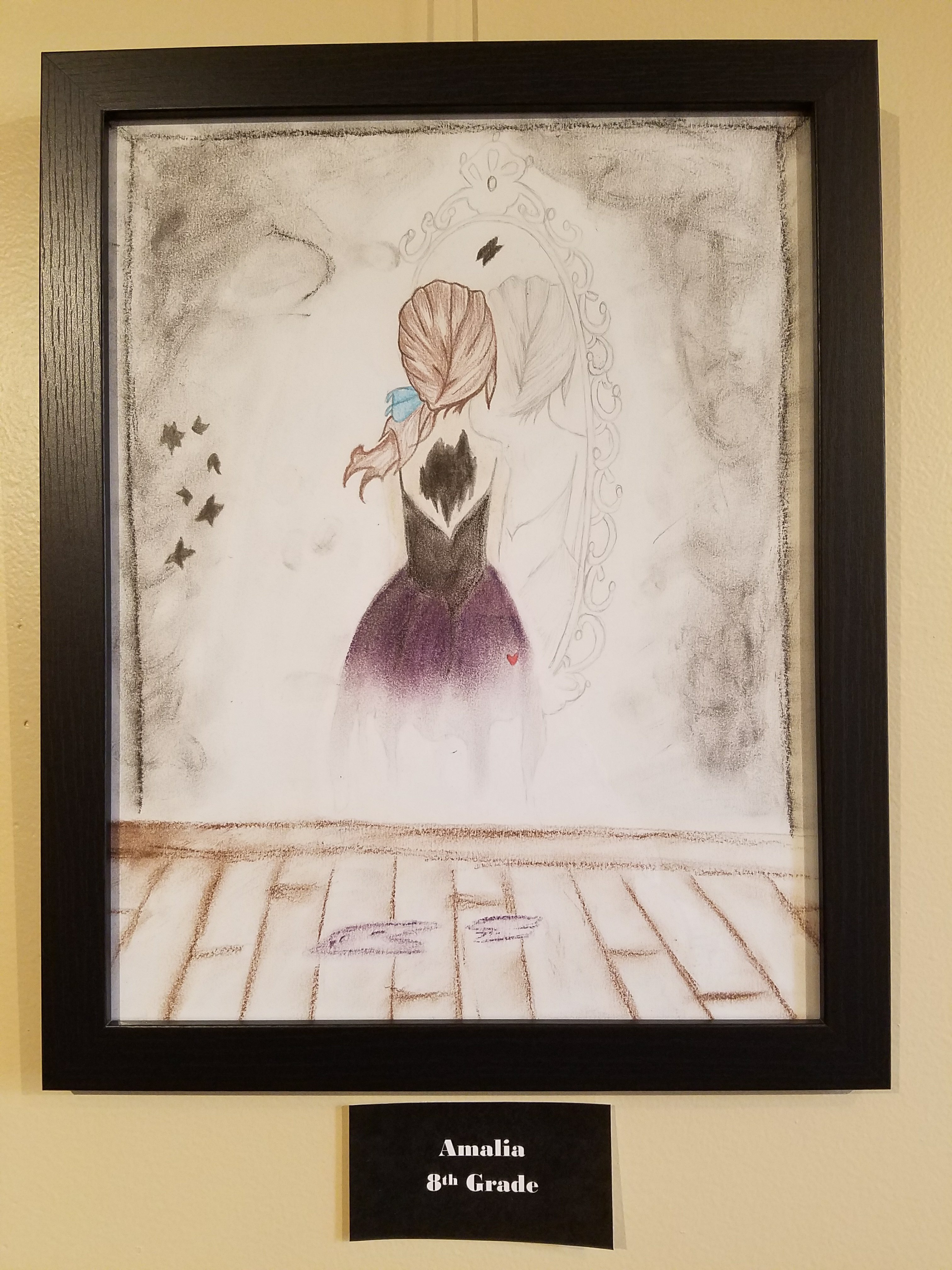
The Butterfly Effect, according to an 8th grader

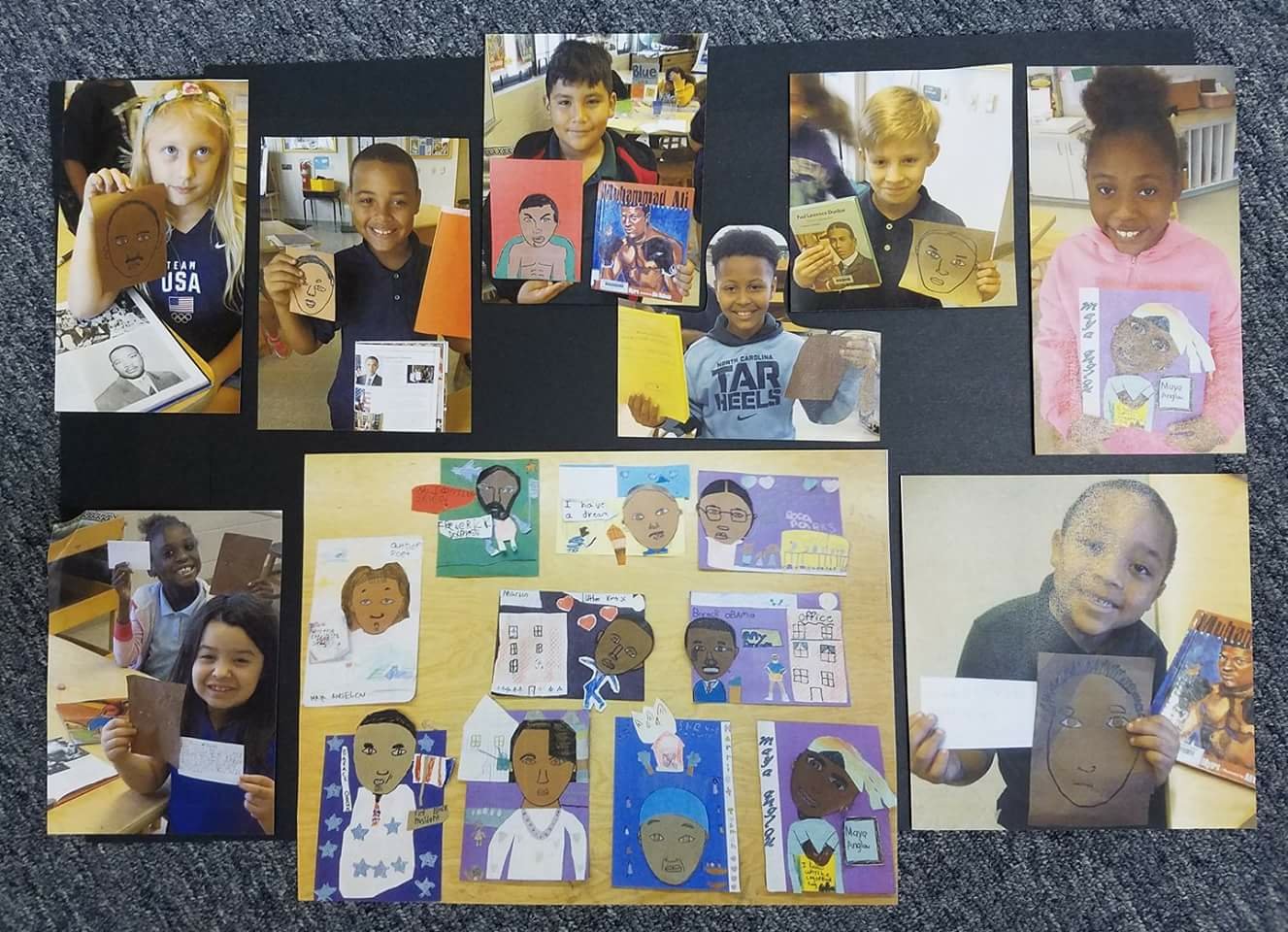
Amalia is her name. She hadn’t really thought about the story she was telling, until she was asked. At least that’s what she said. But when she started answering, she voiced an important story. The story is found in her drawing.


Amalia said the story is about a broken girl who made a choice that has made her “unfixable.” She summed it up by her definition of the butterfly effect. I had my definition of that term, but I wanted to know hers. So I asked. And she answered, “One choice you choose can change everything in your life.” She’s certainly right.

Amalia didn’t know because we just met today, but I’ve been thinking along those lines a bit lately. My thoughts have been less about life-altering decisions and more about day-to-day decisions, which of course can lead to life-altering ones. All your “yeses” mean something to you, about you. Every “no” speaks to who you are and what you value. And each of both of those impact everyone in your world. Like it or not, they leave a wake that is its own butterfly effect.

Thank you, Amalia, for this visual reminder. To hear our full conversation about this drawing , visit https://www.facebook.com/firstpassage/

Didn’t See That Coming

In my experience, if you ask God a curious “I want what you want” question, he is happy to reply. And he often surprises you with his answer. And I believe he enjoys whispering to your heart, “Bet you didn’t see that coming.”

When I opened the winter issue of Facts and Trends a few months ago, I read about an Arkansas church that has a unique approach to engaging their community through the arts. The Article (see pages 16-19) describes their intentionality of establishing an art gallery in their new building as an avenue to connect worship and community. After reading it, I had a “Hmmmm…” moment. 

That moment was a connection between the answer to an earlier question (see It Started With a Question) and another question, “Where could this go?” The connection was the expansion of a one-time showing of work from Ballard students to an ongoing gallery that involved all facets of our community. No, I didn’t see that coming.

So I did two things. I called the church in Arkansas. Then I visited the Arts Center. Between those two things, we felt equipped and eager to follow what God seemed to be up to. Long story short, we now have a gallery that will continue to go after wanting what God wants. And pretty much all I can say is, “God did this.”

How might you incorporate curiosity into your prayer life?

What area of your life needs a “I want what you want” attitude adjustment?

When’s the last time you could only answer, “All I can say is, ‘God did this'”? What if you prayed for it to happen again?

How might you prepare to receive what you don’t see coming?

Shout Out to Miami

This time last weekend, these lovely people were together in Miami.


We left Friday 9am, returned Sunday 6pm. Our mission for the weekend was to serve two ministry partners, City Church and Florida Baptist Children’s Homes. 


Friday afternoon Pastor Tommy gave us a tour of City Church’s facility, where we prayed for them and their work before heading over to Miracle Mile to engage the community to introduce people to this new church opportunity in their neighborhood. 

Saturday we spent most of the day at the Miami campus of Florida Baptist Children’s Homes where we provided lunch, talked with the house parents and kids, and assisted in cleaning up. What a memorable visit!

Here are a few of our takeaways from this weekend mission trip to minister to our southern Floridians:

  • They are open to an invitation to church
  • They recognize how impactful faith can be in their lives
  • Having a pastor who is committed to making roots in a community is needed and has potential for long-term impact
  • Churches of all languages are needed in South Florida
  • We have an obligation to continue to embrace foster children and those ministering to them
  • Immediate response to a spoken need goes a long way in showing you heard them, you are for them, and so is God

We see you, Miami! 

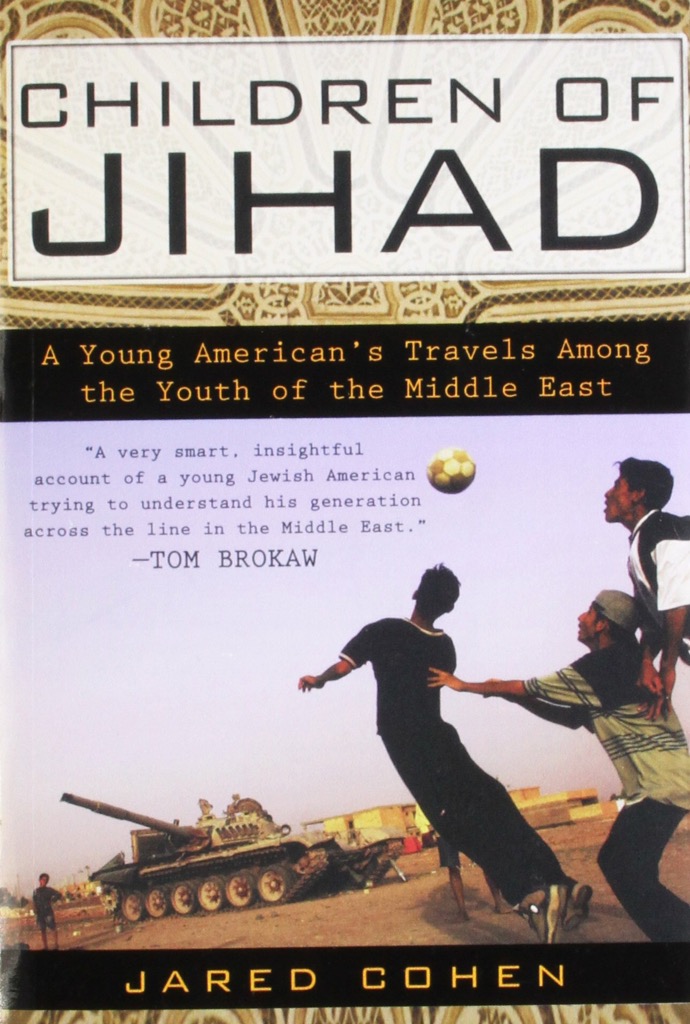
Children of Jihad (book review)

The library is my friend. These days it’s because of the audio books available there-“there” meaning the Manatee Central Library just blocks from the church office.

My routine so far this year has been to get an audio book, listen to it while driving around town, return it as soon as I’m done and immediately get a new one. In selecting a new one, I am content to take the first one that grabs my attention. 

The last one to grab my attention was entitled Children of Jihad. I’m guessing it got my attention because of my recent travels to the Middle East. This writer, Jared Cohen, had travelled there-much more deeply than I had or probably will and for completely different reasons. The cd jacket cover said Cohen’s reason was to try to understand the spread of radical Islamic violence by researching Muslim youth. Attention grabbed.

Published in 2007, this book recounts Cohen’s travels for a few years starting in 2004. Cohen was 23, a Rhodes scholar wanting to learn about global affairs by witnessing them firsthand. His travels took him through Lebanon, Iraq, and Syria. He visited villages, cities, universities, and even unknowingly drove through the heart of an insurgency war zone landing him in Mosul.

His tales are mind blowing, mind shifting, and even mind altering. He reveals a perspective that only comes from firsthand encounters and perspectives. He challenges, like any good journalist, both sides of the story. In this case, the one side of the story includes the locals he met while the other side includes those back at Oxford and in his home state of Connecticut. 

Again, I haven’t travelled like Cohen. My encounters in the Arab community have been in the bubble of ministry here in the States and in one country where Cohen didn’t include his research. But I agree with his assessment. We don’t have all the story if all we know is what we see on American news. We are not being respectful to the citizens of the Middle East and their relatives around the world when we lump them all under the same profile. We should lower ourselves and engage them to really appreciate their personal story and to respect them as we respect ourselves.

This book will cause you to pause. To rethink. To revisit. Maybe even to confess. If you care to do such developmental work, Children of Jihad can be a tool for you.

It Started With a Question

The question came last summer. I was searching for something. But it wasn’t really for me. And maybe that’s why the answer was so good.

My job as assistant pastor at a church is not normal. (Everyone said, “Amen!”) No need to get into all the possible answers to the wrong question here, so suffice it to say my job makes me ask myself a lot of questions. Last summer I asked the same question I’ve asked myself for several summers; but I was looking for something different, something deeper. And that’s why the core question I was really asking was this: “How can we go deeper?”

“We” referred to our church. “Go deeper” referred to our relationship with our ministry partner, Ballard Elementary School. This relationship has existed for five or so years. It’s very healthy, even admired by other churches and schools in our county. But that doesn’t mean it doesn’t need evaluating and tweaking and improving. So to do these three things, we ask questions.

This time I got an answer that I hadn’t received before. Looking back, I believe the answer came because we weren’t asking how to improve an existing program but opening the question up by looking for other options, avenues, and pathways yet unexplored. The answer was revealing, refreshing, and certainly unexplored. That answer was, “What about connecting with the art teacher?” I dove in.

Long story short, we met and now are walking a path that is unlike anything either have experienced before. Students and their families are creating lifelong memories because an assistant pastor and an art teacher are collaborating on their behalf. And this collaboration has opened the door to a whole new ministry of the church in the form of an art gallery. Didn’t see that coming (more on that in an upcoming blog)!

But how can you see something coming when you don’t ask the question? 

How can you expect a different result when you keep asking the same question? 

How can go you deeper when you only ask questions about the surface? 

What could start in your corner of the world by asking the right question? 

What if you started by asking, “How can we go deeper?”

June’s Jordan Journey

Here is our final team member’s note about her journey to Jordan.

img-20180418-wa00361200846697.jpg

On our trip I learned just how spoiled we are and how we take things for granted – so unappreciative and selfish.

I saw people with faith, love, and hope with a little of nothing that showed hospitality and welcomed us with open arms-thankful for what little they had and keeping their eyes on the Lord with hope.

When we think about faith like a mustard seed, I saw that firsthand in our home visits the church set up for the refugees where they could come together for the hope needed to carry on.

I worked with children that were far behind in learning and not allowed to attend public schools, and women with skills but could not go to work like we can.  I saw how important the church school and women’s center and in-home visits are to those hurting refugees.  It’s hard to put into words; just something you have to see to appreciate and understand the great need.

Something much needed that we all can do is pray!  Prayers for their families, health needs, visas to be able to go to another country and get settled-just to know they’re not forgotten.  The children need to be in school, women need a place to use their skills and feel self-worth, men need jobs to care for their families.

In all it was a very humbling, heartbreaking experience-an eye opener as I could see how we take things for granted but thankful for the opportunity to go, see, and do.  Praise God!

-June Hartlaub

Sherry’s Jordan Journey

Here is a second team member’s note about her journey to Jordan.

img-20180418-wa00801637683989.jpg

My recent journey was truly a journey of love and miracles.  When I told my family that I wanted to go to Jordan their reaction was, “No way.”  It is hard to explain why as a retired grandmother I felt God was calling me to take this leap of faith and following His lead. I have no visible talent-can’t sing (but I can make a joyful noise), can’t do physical work, but I can and do have a huge capacity for love.  And God had a plan for me and my love.

While we were there, my time was spent at the Women’s Center and on home visits.  Let me tell you about the Women’s Center. The center offers women the opportunity to come together to learn crafts to perhaps sell them and earn a little money, but more importantly it gives them the chance to fellowship with one another and with us.  I met so many beautiful and wonderful women who are just like us in so many ways, but are so much stronger, happier, funny and joyful.  One Syrian woman absolutely blew me away in every way; but perhaps the most heart breaking way was her answer when I asked her where she wanted to go. Most people said Canada, Australia, or perhaps Brazil; but her answer was she wants to go home, back to Syria.

See, we are all basically the same; we want to be home.  And perhaps many of the beautiful, wonderful people God gave me the blessing of meeting may not get to go home until we are all home with Jesus in heaven.

-Sherry Morrow

Bob’s Jordan Journey

Our team that went to Jordan had a life-impacting journey. Here is one member’s note about his journey.

img-20180418-wa00161158138559.jpgOn my first Syrian refugee home visit, I choked back tears as I listened to heart- wrenching stories of their lives. I began to wonder how I would make it through the next 10 days. I wondered if my being there was a mistake. Then God began to show me hope! These people who have no material possessions have everything in Jesus Christ. They have faith that I can only pray to have someday. That faith, that God is in control, gives them hope for tomorrow and a better life.

I went to Jordan to be a blessing, but as God would have it I was blessed. Truly a humbling experience that I am grateful for.

-Bob Sagrilla