Four Corners Quad Keyah Series Lesson #4

The day before I flew to New Mexico I got a massage. Mike keeps me ready to run.

In our conversation I told him I had prepared for this race series better than I had since 2012. That’s how well I knew I had trained. I set goals and met them all. Nothing left to do but run.

Lesson #4: Prepare the best possible. But accept you can’t control everything.

For example, Race #1, starting temperature, 37F. Race #2, starting temperature, 25F. Race #3, starting temperature, 12F. But hey, no precipitation.

Next: At the start of Saturday’s race they announced a change in the course. Not that I really knew the difference, but still. Running down the side of a steep canyon to start the race was not what I had in mind. But hey, the easier course meant I finished 20 minutes faster than Friday.

Then came Sunday. More on that later. Suffice it to say, it was a day I’ll not soon forget. Pretty sure I’ve never been that cold. But hey, the rental car heater was amazing.

This is life. Prepare the best you can for the test and your nerves rattle your memory. Prepare the best you can for your wedding day and people turn out to be unreliable. Prepare the best you can for retirement and a diagnosis changes everything.

Part of the best preparation is accepting there is no way you can control all things. You can control your preparation. You can also control your response to what you can’t control. 

SUGGESTION: Purposefully place yourself in new or uncomfortable situations. Try a new route to work. Try a new recipe with your dinner guests. Go for a run in the rain. Let the kids decide where to go for dinner. 

With some practice, 2024 could be the year you accept it’s impossible to control it all.

Four Corners Quad Keyah Series Lesson #3

The race courses for Friday and Saturday were pretty much the same. Saturday we basically ran Friday’s course backwards minus the climbing. Much to my relief, day two was a lot easier. My quads said, “Thank you very much!”

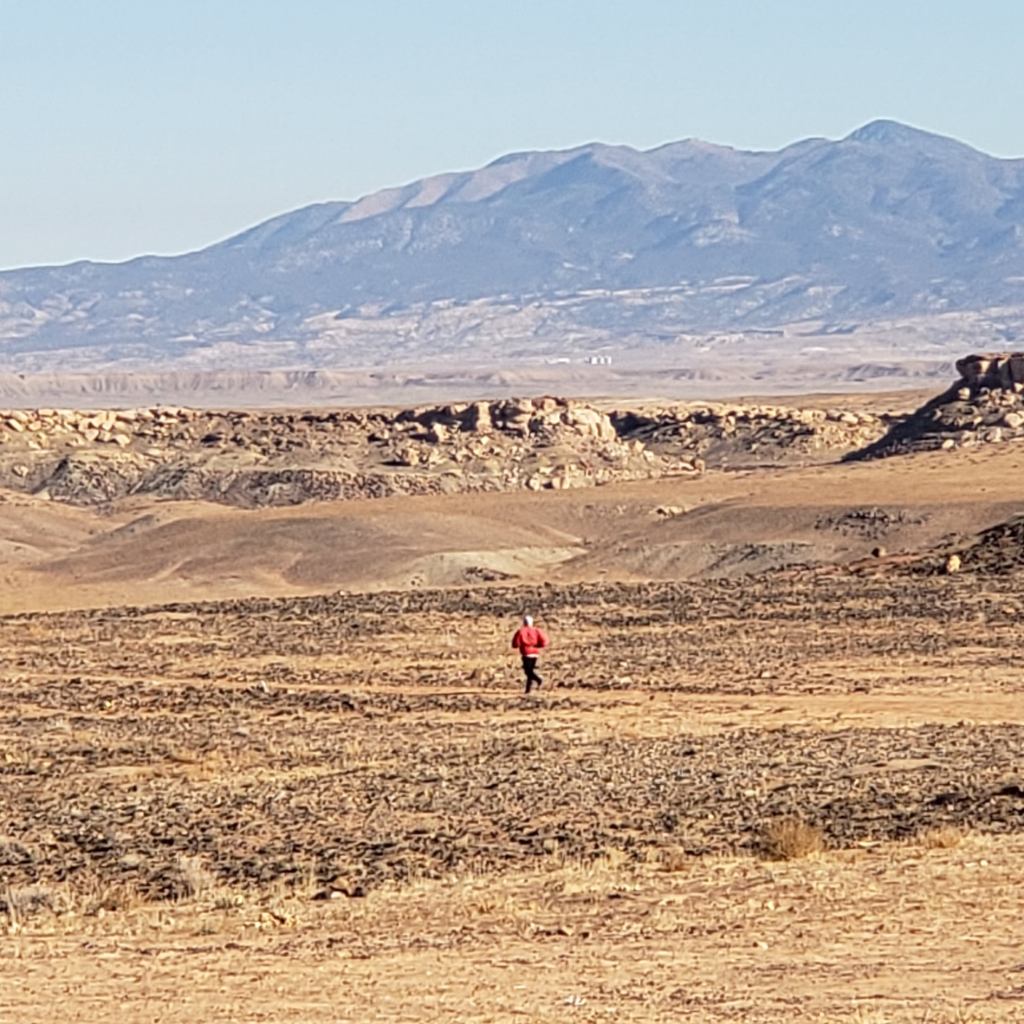
Don’t get me wrong-the paths were still narrow, and the declines were still steep. In fact, some of the twists had so little margin off the side you were best to walk than run. Otherwise, you’re the coyote flying off the side of the canyon while the road runner meeps along.

Lesson #3: Know your lane and your strengths. Don’t expect the same results when you’re out of them.

Canyons are cool for runners who can train properly. That doesn’t describe Florida runners. Even when you run on trails in Florida, they are flat. 

I had already figured that I should expect to run at least a minute slower per mile on average running on trails versus roads. I had hoped that I could average finishing each half in 2:20. 

Day 1: Not only were we running on trails…hold up. You ran when you could. There were some spots that were too steep or too twisty to run. I saw in the first mile my hopes were not going to be realized. The only thing to do was adjust.

Being outside your strengths does not mean you are destined to fail. You do not have to quit. Adjust and keep moving. You can finish, just not the way you envisioned.

Learning your lane and discerning your strengths is incredibly valuable. One way to do those two things is to press on when you find yourself in another lane with your weaknesses glaring. 

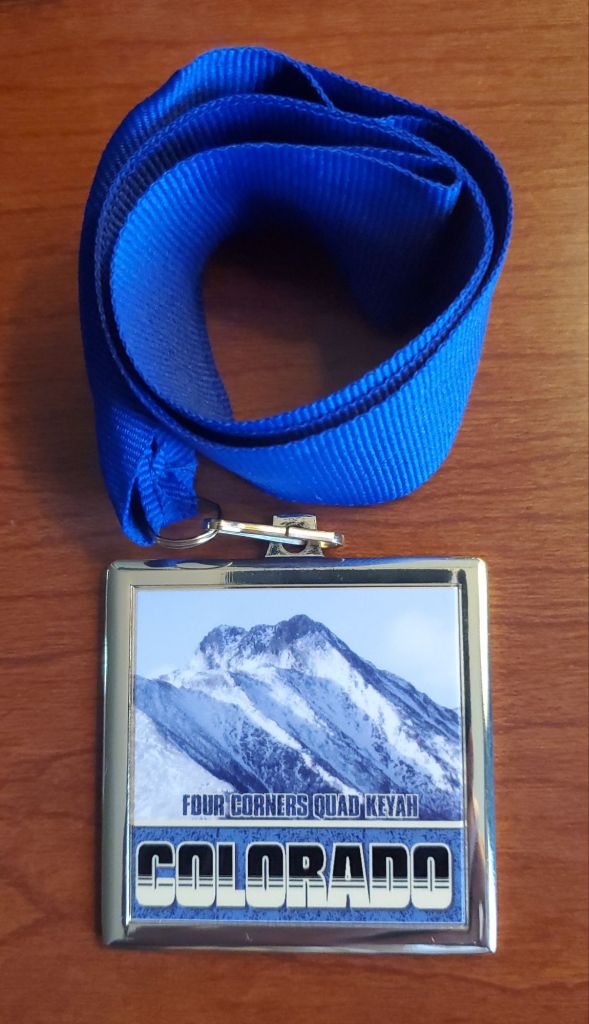
Relax. It’s part of growth. At the finish line, you’ll get a medal that whispers, “You grew today. Congratulations!”

Four Corners Quad Keyah Series Lesson #2

To get to the Four Corners Monument where this race series was staged, I chose to fly into Albuquerque then drive four hours to Colorado. This being my first time in New Mexico, that drive was quite breathtaking. It felt like I was on some amusement park ride. One scene after another left me saying “Wow” over and over again.

Roughly an hour into the drive, I started sneezing. At first I didn’t think much about it. But when I was sneezing about every three minutes, I was puzzled. I’ve had allergic reactions in the past that started like this, but this made no sense.

The next two hours were miserable. Short version: I used every available tissue in the rental car and stopped to get some allergy meds. Nothing was working.

Until, I put on a toboggan cap. Seriously, it was like magic. This Southern boy only had a toboggan in his bag assuming it would come in handy when potentially running in sub-20 degrees. Who knew it was necessary while riding in the car? (The toboggan was swag from running in Naperville, IL, by the way.)

Lesson Number 2: Never underestimate the impact of exposure. Left unaddressed, illness results.

There are many reasons we experience exposure. Ignorance-ours and the other party. Inexperience-mostly ours. Pride or Curiosity-100% ours. Manipulation-purposeful other parties, some intentionally harmful. 

Some are very subtle. You hardly notice what’s happening. Some are gradual, so they appear unnoticeable. Others-like sneezing attacks-leave little doubt something’s wrong. 

From my experience, whenever the exposure is revealed the sooner the response the better. Just like learning to respect the cold’s effect to exposed skin, awareness of all exposures requires swift response. Repeated small exposures are like paper cuts; over time they add up. All the harmful exposures to our senses matter. And every exposure matters.

As for the large exposures that leave traumatic canyons, they cannot be ignored or considered irrelevant. Reality, they won’t be. They will find a way to be addressed. The injury requires healing by something more than a beanie.

I have a new respect for my toboggan cap. I also have a deeper appreciation what it means to be exposed.

Four Corners Quad Keyah Series Lesson #1

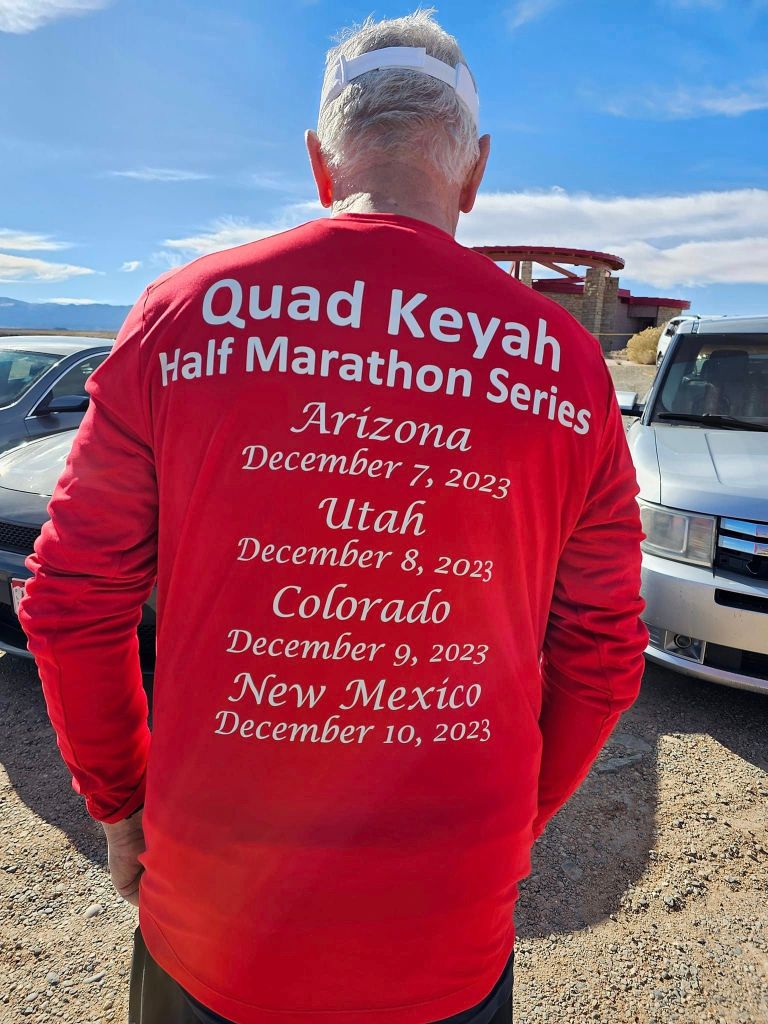
December 8-10 was another three-in-a-row race trip to check off three western states: Utah, Colorado, and New Mexico. Texting with a friend about it, I mentioned I have lessons from the trip. I’ve come up with six that I’ll share in separate posts.

Number 1: Single lane running paths test all the fruits of the spirit, in addition to grace.

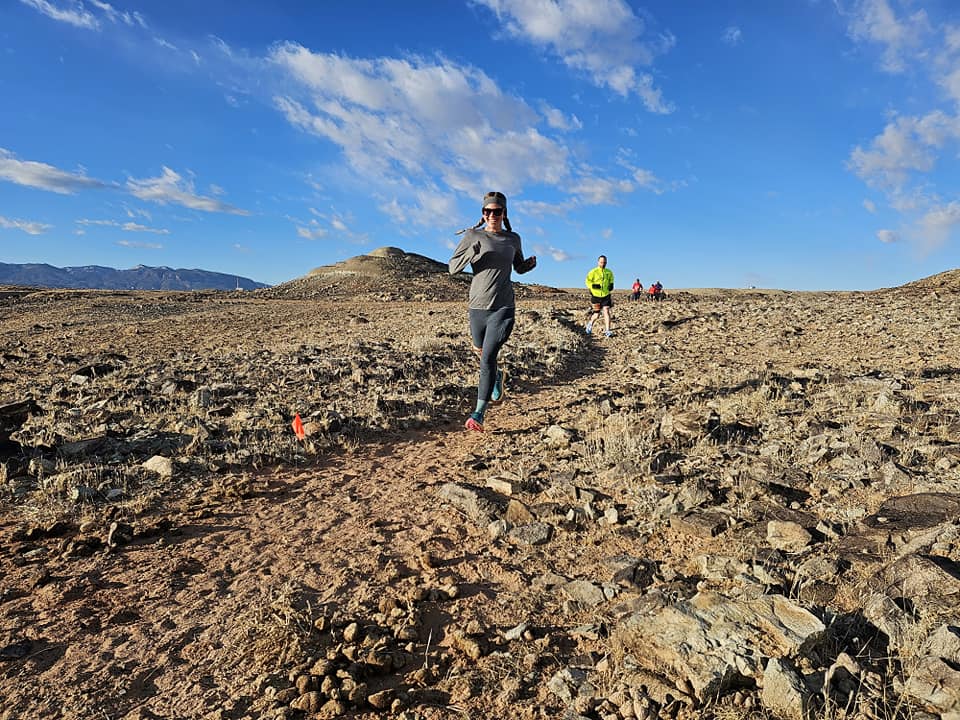
Truth be told, I didn’t conduct major research about the courses. I read what was posted on the race series website, which was pretty basic. So imagine my surprise when on the first course right out of the gate we were basically running single file down a rocky, windy path into a canyon. WAKE UP CALL! What in the world have I signed up for?

These Florida legs weren’t trained for this. But more challenging was the mind game going on when I realized I was trapped behind runners whether I wanted to be or not. There was no safe, nice, respectful way around slower runners, better yet, walkers who had no intention of running. That’s a recipe for frustration.

And this was mile 1 of a three-day, 39.3-mile journey. Let the self-talk begin.

In this case, the self-talk was mostly in the line of, “Pace yourself…You’ve got miles to go…Does it really matter how long it takes?…Surely the whole course can’t be like this, right?”

Thankfully, no. The course was a loop course. To complete the half marathon, you had to run the course 3 1/2 times. So after the first loop, you knew what to expect. For me that meant, “Now I can relax.”

First loop challenge: Keep my frustration in check and don’t take it out on anyone. How did I achieve that? I literally had to think less about myself and more about those around me. Were I to be a jerk, selfish, or impatient would cause someone serious injury due to the rocky, steep, windy path we were navigating.

We’ve all been there. Stuck. Frustrated. Surprised. Stressed. How in the world did I get in this position? In those moments, on those paths, we have the choice to look out for those around us or to be all about ourselves. Choice 1: Lean in to how we want others to treat us (follow the Spirit’s lead); Choice 2: Be self-absorbed demanding everyone to get out of our way (ignore the Spirit’s lead).

Choice number one results in everyone staying safe, feeling respected, and enjoying the journey. Choice number two, somebody’s getting hurt-probably a lot of some bodies.

I’ve seen enough and made enough wrong choosing. Thankfully, on this Friday morning in Utah, we all made the right choice. We passed the test and got the medal to show for it.

Cherishable Remarks

As a musician, I’ve received many comments and opinions about my abilities, people’s taste, etc., over the years. Church folk love to “bless” musicians with unsolicited opinions.

The two most head scratching came as a result of listeners feeling like they needed to tell me something after being moved during a Sunday service or if they’ve not seen me in a few years and wanted to inquire “where are you now?”

The latter scenario has often included some version of “If you don’t use your talents, God will take them from you.” They, usually older ladies with a need to set me straight, mean well, I suppose. But their well meaning has yet to be motivational.

But the one that seemed most odd was this one: “You missed your calling.” More than once, I’ve been told this because my current job title didn’t include “Worship,” “Music,” “Choir,” or “Pianist.” There really isn’t a response to that comment worth offering, but it seems rather obvious that somehow in the last hour it’s possible I didn’t.

December 1st I got several comments that erased, or at least, countered such past comments. Interestingly, they didn’t follow a church service. The event was a Friday night Christmas fundraising dinner. Throughout the evening, four coworkers joined me to share songs-some familiar, some new, all celebrating the beginning of the season.

Three memorable conversations followed. One gentleman reminisced about his mother’s playing and how he wished he had learned to play. Another man wanted to introduce me to his wife, a long-time piano teacher, who noticed elements of our performance that only a pianist would commend. No judgment. Pure appreciation.

But the one that I’ll most remember came from an unexpected source. Another coworker that I had no idea had any musical past offered this response: “You have inspired me to get out my piano.”

Whatever talent you have, it’s inevitable your sharing of it will draw remarks. Let the judgments go. Cherish and hold those that encourage you to share again.

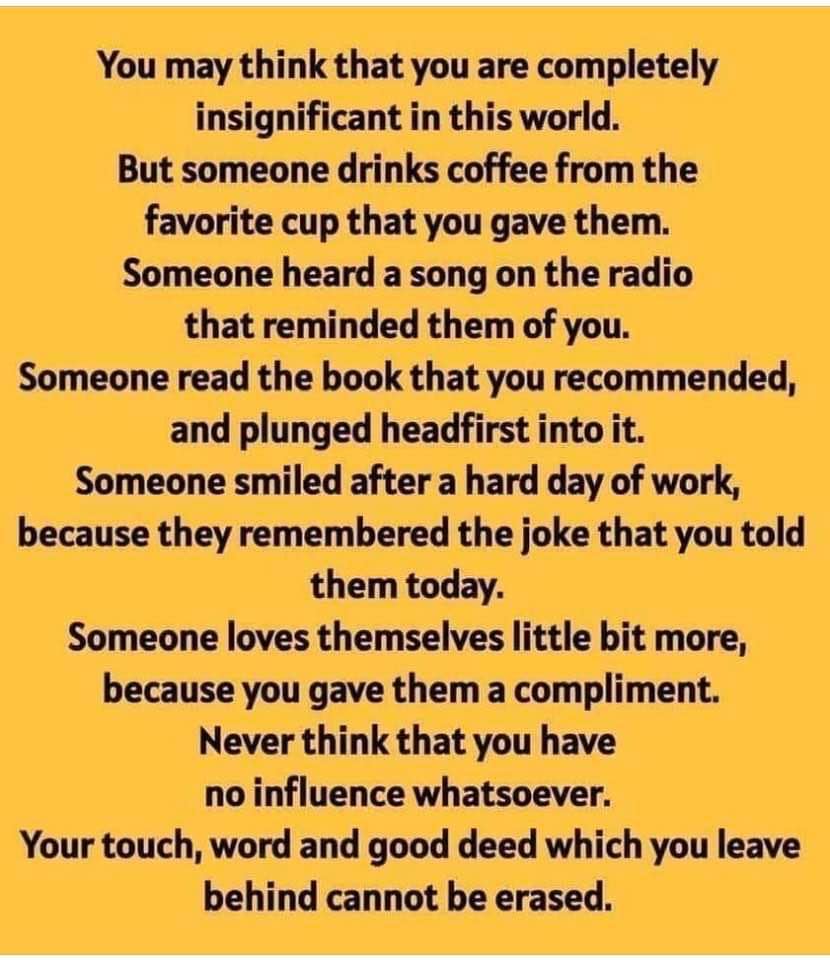
(A graphic copied from a friend’s Facebook post)

Photo by Alan Liu on Unsplash

Lesson on Southwest Flight #1061

First announcement shared when we boarded Southwest Flight #1061 in Sarasota bound for Houston: “Warning: Rough Flight Ahead. No services will be provided by the crew.”

Second announcement shared as we sat on the plane: “Update: Delayed due to military training over the Gulf of Mexico. Restricted airways require us to submit new flight plans.”

Third announcement shared before we left 40 minutes late: “The new route is longer, but we’ll get you there as soon as possible.”

Fourth announcement shared midflight: “Due to the current smooth ride, the crew will be able to serve drinks.”

Experience: Smooth Flight arriving only 30 minutes later than scheduled.

Lesson: Some delays produce better journeys.

Photo: Setting sun sky somewhere between Houston and Albuquerque

13 Quotes from Faith Beyond Belief

Just finished reading another book that’s delivered richness.

It reads like a podcast transcript. When they say a conversation, they mean it. So it’s refreshing in that way.

The 22 chapters feel like episodes. They don’t necessarily connect one to the next, but they definitely weave the thread of faith and spirituality.

Rather than critique or review the book, I choose to share these quotes for your meditation:

“Love your neighbor as yourself” means be aware that you and your neighbor are one.

The Creative Meaning of Life

The answer I would give the agnostic: if you cannot see [accepting unity with God] yet, you don’t have to accept it. Wait until you experience it. It is not a dogmatic principle we want to impose on you. We only want to say that millions of people experience it. You can too. Open yourself to it.

The Epic Discovery of Self

You have a “vibe.” What do you want to transmit? Bitterness, dissatisfaction, loneliness, or understanding, warmth, and love? None of that requires any great achievement. It simply happens in the way I live my life.

A decision in favor of something is also a decision to let go of something.

“Fear not!” means “take courage, and take anxiety as it comes!”

Calling, Courage, and Fear (this chapter alone is worth checking out this book; so much to digest on the subject of anxiety and courage)

When someone says she doesn’t believe in God, I ask: which god don’t you believe in?

On the Temptation to Want to Possess the Truth

Prayer warms what is frozen and hard into living water.

We fulfill God’s will when we forgive on earth as God forgives in heaven.

The “Our Father” and God’s Trustworthiness

Many people are afraid of death because they have not lived. Unlived life is hard to let go. Those who live deliberately can also let go.

On the Mortal and the Eternal

I cannot explain why there is suffering, but I can influence how I meet it.

Suffering and Reconciliation

Humility is the appropriate attitude by which to accept oneself with one’s strengths and weaknesses.

Transformation is the result of a crisis.

Spiritual Growth

Despite all the deviations, we can say that if the church did not exist, our society would be essentially colder.

What is the Christian’s Focus?

Five Questions To Nurture Culture

Today I was honored to be interviewed by leaders from one of our nonprofit partnering agencies. After answering the list of questions, I was asked if I had anything else to share. Here’s what I said:

The one thing I’d like to comment on is the culture of your organization. There are many words-all good-that come to mind. First, your team is united. You are all on the same page and seem to enjoy working together. Two other words that come to mind are passionate and caring. You deeply go after your mission, and your clients feel cared for. This was clear at your last event. But the word that most describes your culture is joy. It’s always present. It’s felt. Whoever’s responsible for maintaining this culture, they are doing a great job.

Culture has been on my mind the rest of the day. Every organization has a culture. There are many questions to make sure it’s the culture you want to experience and to display. If you have any part of creating that culture, consider the answers to these five questions:

  • What is the culture we aspire to maintain?
  • Is that the culture we have?
  • How do the employees know about this aspiration?
  • Who are the keepers of the culture?
  • When and how do we evaluate the culture?

Start here. Be willing to add to it. Watch what happens when you nurture culture.

Photo by Hannah Busing on Unsplash

Learning to Walk in the Dark (book review)

I enjoy a writer who makes you think, or at least presents something ordinary unordinarily. Barbara Brown Taylor is definitely in this category.

In this second of her books I’ve read she gives you a different approach to thinking about darkness.

One beautiful way she does this is by showing you the value of darkness in biblical stories. She says the night sky was a key player in Abraham’s decision to trust God when he was told to “count the stars.” She spends a great amount of words on Moses’ encounters with God in the dark.

The God of Moses is holy, offering no seat belts or other safety features to those who wish to climb the mountain and enter the dark cloud of divine presence. Those who go assume all risk and give up all claim to reward. Those who return say the dazzling dark inside the cloud is reward enough.

Chapter 2, The Fear of the Lord

As you can imagine, much of the book addresses the emotions that come from fearing the dark. She believes that’s actually an indicator of something going on inside of us.

Our comfort or discomfort with the outer dark is a good barometer of how we feel about the inner kind.

Chapter 3, Hampered by Brilliance

A fascinating approach to her research for the book included cave exploration. With aid from professionals, she spent time sitting in the dark in caves and exploring portions of caves that demanded she address her fears. One takeaway: new life starts in the dark.

Whether it is a seed in the ground, a baby in the womb, or Jesus in the tomb, it starts in the dark.

Chapter 6, Entering the Stone

A spiritual book about darkness is most likely not complete without a chapter on the dark night of the soul. Taylor’s coverage is exhaustive from both sides of the topic as well as from the individual to the communal. The most helpful section was her description of the difference between faith and belief. Sharing about her observations as a college professor, she gives this distinction about questions college students are asking or are being asked:

When I listen to college students talk about faith, beliefs are what interest them most: Do you believe in the virgin birth? Do you believe that Jesus died for your sins? Do you believe that only Christians go to heaven? No one asks, “On what is your heart set?” No one asks, “What powers do you most rely on? What is the hope that gives meaning to your life?” Those are questions of faith, not belief. The answers to them are not written down in any book, and they have a way of shifting in the dark.

Chapter 7, The Dark Night of the Soul

I’ve already suggested this book to a few folks-one running friend who avoids running in the early morning hours, one coaching client who feels distant from God. Whether you are struggling with physical or spiritual darkness, I’d encourage you to give this book a read. See what you learn.

The Unhappiness We Create

Jacques Lusseyran (1924-1971) was a blind author, professor, and leader of the French Resistance in WWII. At age 19, Lusseyran was arrested and spent nearly 15 months in the Nazis’ Buthenwald concentration camp. When the U.S. army arrived, Lusseyran was one of roughly 30 survivors of a transport of 2,000 French citizens.

In this collection of Lusseyran’s essays, he recounts becoming blind at age seven, reactions to societal progression, and observations from Buthenwald.

Essay #1, “The Blind in Society,” is his revelation that after his blindness he became aware of an inner light. Here’s one illustration of his observation of that light:

When I was overcome with sorrow, when I let anger take hold of me, when I envied those who saw, the light immediately decreased. Sometimes it even went out completely. Then I became blind. But this blindness was a state of not loving anymore, of sadness; it was not the loss of one’s eyes.

In the final essay, “Poetry in Buchenwald,” Lusseyran shares the power of poetry. His sharing of poetry with fellow prisoners brought hope and happiness. From that, he had this to say about unhappiness:

Unhappiness comes to each of us because we think ourselves at the center of the world, because we have the miserable conviction that we alone suffer to this point of unbearable intensity. Unhappiness is always to feel oneself imprisoned in one’s own skin, in one’s own brain.

I share these two thoughts to record them for future reference. I also share them in hopes that we move more toward love to eliminate the unhappiness we create in ourselves.