Two Values of The Rich

I follow a page on Facebook called Becoming Minimalist. I wouldn’t call myself a minimalist, but the posts on the page are compelling. They certainly align with my values.

Last weekend I joined the ranks of those who no longer have a DVD or CD collection. Thank you, Goodwill. They have enriched my home by accepting my once treasured collections. In addition to these two collections, they now own all my clocks and about half my library.

Why are these collections gone? Am I making room for other collections? No. Am I downsizing? No.

Some would call it decluttering or minimizing. All I’m doing is getting rid of things that no longer enrich my life. And in a sense, my life is being enriched even further.

One of the latest Becoming Minimalist posts grabbed my attention in any odd connecting way. It was a guest blog post that was more for readers with large clothing collections. Not that I’d say I fit in that category, but I have gradually been doing the same with clothes-not replacing, just decreasing.

The blog writer was Julia Ubbenga of Rich in What Matters. The topic of her post addressed simplifying life by repeating outfits. In her list of 10 reasons, check out the enriching values of #9:

9. More reminders of how little you need to be happy

Owning a repeatable, small wardrobe constantly sends you the message that contentment can be found in less. A glance at your curated closet prompts thoughts like: “I need so much less than I thought I did to be happy.”

I’m much less likely to buy on impulse or waste time scrolling in search of my next purchase when these thoughts infiltrate my mind every morning. My sense of gratitude also increases the more I remember life truly is better with less.

“10 Reasons Repeating Outfits Will Simplify Your Life”

Contentment. Gratitude.

It wasn’t a goal that I woke up with one morning. “To increase my contentment, I’m going to get rid of stuff.”

What is a goal is to pursue contentment. If that pursuit leads to real treasure, so be it.

What is a goal is to be more grateful. If that pursuit leads to an awareness of how rich I already am, so be it.

There Was a Curtain There?

My understanding of spiritual disciplines has been exposed as limited in the last few weeks. A thread of three interactions pulled back the curtain.

Depending on who you’ve read or what denomination you’ve participated in, any teaching on spiritual disciplines containing a list most likely included any or all of these:

  • meditation
  • prayer
  • fasting
  • study
  • simplicity
  • solitude
  • submission
  • service
  • confession
  • worship
  • guidance
  • celebration

This list is from Richard Foster. The article where you can find this list includes several more. Seems a lot to master. One could see why many just don’t bother. Daunting.

The first peek behind the curtain came when a lunch conversation mentioned Rob Bell’s teaching that everything is spiritual. I hadn’t heard his name is years and wasn’t familiar with his book by that exact title. I read the Kindle sample and checked out a few videos (here’s one). Bottom line: Goes to reason if everything is spiritual, then all disciplines are spiritual.

Not long after that, Chuck DeGroat pulled the curtain back further when I read this in his book:

Disciplines place us in relationship-with Christ and within a community of wounded healers. The discipline of a disciple is to follow-that is, to walk in the shadow of Christ, to learn his ways, to struggle together when difficulties arise, to laugh and to cry. This is how friendship with God unfolds, as a relationship between two persons deeply committed to each other in covenant love. This relationship cannot be reduced to a mere practice or ritual, but it certainly involves practice and ritual-the give and take required in any relationship.

Toughest People to Love, Chapter 8

These two lead-ins prepared my mind to completely receive the final one. In a conversation on this subject and how to freshen them up, out of nowhere the question was asked, “Have you looked at blogging as a spiritual discipline?”

Fully exposed.

Funny. I wasn’t aware there even was a curtain.

Glad it’s been removed.

Photo by Gwen King on Unsplash

2 Viewpoints to 4AM Shoulder Taps

Looks like it’s becoming a weekly event. Last week I posted about a 3AM conversation that I wasn’t looking for. This week it was a 4AM shoulder tap. At least I got in one more snoozing hour this time.

This tap was a legit conversation starter. No dream prompt. More like, “You know that nudge you felt today when you said you hated something? Let’s talk about that.”

We talked. I received insight on the nudge, a view that was new and potentially life-giving. I shared it with a few buddies by text a few hours later and moved on. Sorta.

On my run, I thought about this whole early morning “let’s talk” thing. Rather than only view it from a standpoint of inconvenience, I asked myself how else to view it. Two answers emerged.

The first answer had to do with brain activity while we sleep. More than once, I’ve read about one thing the brain does while we sleep is store memories. In an article “Slumber Reruns: As We Sleep, Our Brains Rehash the Day,”  Nikhil Swaminathan wrote:

Your brain doesn’t take a rest when you do. While you slept last night, regions of your brain may well have been going over the events of the previous day in a process that could be related to consolidating memories, a team of researchers at the University of Arizona (U.A.) in Tucson says. In fact, the review may be taking place at several times the speed by which the experiences took place when you were alert.

November 19, 2007

In an earlier article from 2003, Sarah Graham wrote that the brain “organizes and stows memories formed during the day while the rest of the body is catching zzz’s.”

These thoughts gave me the imagery of the Holy Spirit pausing my brain’s organizing task to say, “Hold on. Can we talk about this one before it’s filed away?”

Which led me to answer #2.

If there’s one thing I value most about God’s relationship with his children it’s his 24/7 access. And aren’t we spoiled? We love it. No other relationship offers it. But somehow, we can get put off when he wants to start a conversation, and “Now’s not a good time.” That whole “Let it go to voicemail” response shouldn’t apply to this relationship.

Now that’s an awareness. It’s a corrective viewpoint that could be stated, “When I have unlimited access, who am I not to reciprocate?”

Hopefully, if this trend continues, my responses will be less about me and more about us. My brain is just doing it’s job, and shoulder taps are welcomed anytime.

Photo by James Wheeler on Unsplash

Making It Right

@AdamMGrant

People who are unwilling to admit their mistakes are unable to learn from them. Acknowledging yesterday’s error is a prerequisite to correcting it today and preventing more tomorrow. When we get it wrong, arrogance insists “I was right.” Humility says “I want to make it right.”

7/30/23

Saw this tweet this morning. Decided to share how this played out for me, quite literally, not once but twice yesterday.

Yesterday morning, a female running friend shared her reservations about running early in the morning when it’s still dark. My immediate response was about how great it is to run in the peace and quiet. “Find a route that’s well lit, and you’ll love it.” Early this morning I realized what I had done. I hadn’t listened to her fear of being attacked. In essence, I had dismissed her. Sitting in that acknowledgment, I remembered another female running friend’s Instagram posts encouraging women to look at self-protection items to have on them when they’re active outdoors. I made it correct today by texting my friend to say I didn’t want to dismiss her fears and forwarded those posts to her.

Runners, if this rings true with you, check out this website: https://goguarded.com/

Yesterday evening, I saw a church’s FB post that didn’t sit well with me. I sent the link to one like-minded friend with no comment. We went back and forth with general comments a couple of times before they got too specific. The last comment was a “tell me more” request which I had to stop myself. Why? In the moment, I didn’t choose words to explain why. I just felt like nothing more needed to be said.

In one light, this was a private text message between friends. Was harm done? Not much, if any. In another light, who am I to place myself in the position of prophet or judge about a church that I don’t attend, haven’t sat in any leadership meetings, and am in no position to state any facts about the contents of that post. Was harm done? There could have been, in our spirits and in any other person’s who we decided to draw into the circle. I can’t say I’ve always practiced restraint. Too often, social media reactions lead to mistakes which can create an avalanche of wrongdoing. It’s on us to correct it today and prevent more tomorrow.

Thanks, Adam Grant, for the reminder to make it right. Heard!

Photo by Gilles Lambert on Unsplash

The Best Book I’ve Read This Year

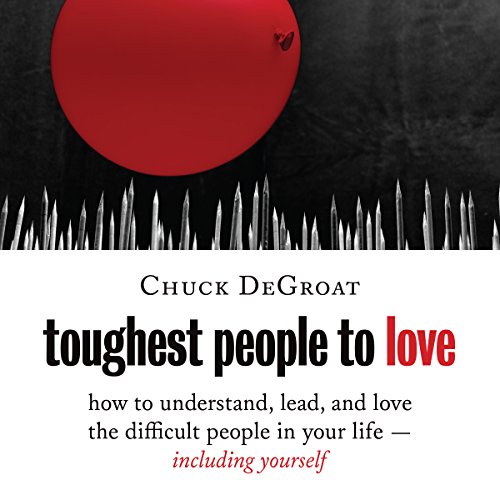
Finished the most meaningful book I’ve read this year. I’m glad to have followed the breadcrumbs to be introduced to Chuck DeGroat. Toughest People to Love (2014) is the first of his books I chose to read.

There are many things to appreciate about his style of writing.

  • He makes it clear where he’s going
  • He balances instruction with stories
  • He provides solid references
  • He gets to the point
  • He scored points with me by referencing Dr. Curt Thompson several times

It’s not lost on the reader that DeGroat chose to include “love” in the book title. He comes across as wanting that for you and for the people in your life.

We’re not called to make people feel bad or guilty. We’re called to lead them to an honest appraisal of themselves, which in turn leads to honesty before God and others.

Chapter 5, Loving the fool: when relationships turn ugly

It’s not a gooey love that he’s after. He means it when he asks for honesty. DeGroat achieves truth and love as an author, showing a great balance as a former pastor and a professor.

Consider the fragmented, dualistic thinking of the modern world. Often psychologists see depression merely as a neurochemical problem that needs to be fixed with medication and therapy. And too often pastors spiritualize psychological maladies that may require further expertise…Compassion does not ignore the truth. It enters into it, wrestles with it. It requires a solidity and strength of relationship with others which endures even in times of extraordinary difficulty.

Chapter 6, Growing through pain: the gift of the dark

Part three of the book is likely the part that will most deeply speak to readers. The three chapters focus on personal growth, and he mentions the concept of wholeheartedness (he has another book by this title, by the way; on my “to read” list). His clarity on the divided heart from a biblical view leaves no question as to what that means and why it needs to be addressed.

One glaring symptom of the divided heart is exhaustion…To be whole, we need to be healed, and this takes a lifetime.

Chapter 7, Living with wholeness: rest and resiliency in the leader’s life

For leaders, he saved the best for last in chapter 8, Growing into leadership maturity: self-care and the art of shadow-boxing. He describes five disciplines that involve “practice and ritual-the give and take required in any relationship.” He also gives the following description of American culture, one that I firmly agree with:

I’ve heard many criticize American culture, and even American Christians, as self-consumed. I beg to differ. I see people who are afraid of themselves.

If you fall in any of the following categories, I encourage you to read this book:

  • People who know they could love better
  • People who are leaders in any capacity
  • People who can’t figure out how to love a significant other
  • People who aren’t satisfied with their current capacity to love
  • People who enjoy the works of Dan Allender, Curt Thompson, Richard Rohr, Eugene Peterson, David Benner, and Henri Nouwen

Sacred Space

What is it about 3AM? God seems to enjoy waking me up from some whopper of a dream around this time, and off my mind goes. And my first thought is, “You know I’m trying to sleep here, right?”

This morning’s dream was fuzzy, but not. The main storyline was that a man had been told he had 24 hours to live. He wasn’t lying in a hospital bed. He hadn’t been in a tragic accident. Somehow he knew this was true, and he was working through letting everyone know.

He was sitting on a chair in the center of a room. People were coming and going from the room. It had the feeling of a wake, but the person wasn’t in a coffin. He was alive, still available for visitors to say, show, do whatever they wanted in the time they had.

And that’s the observation I had just made when I woke up. No one was rushed. Time seemed to not matter while it also ticked away. As he continued to contact people to share his news, people arrived to visit and say goodbye. But no one was panicked or hurried. The mood in the room was peaceful, almost sacred.

There could be many takeaways from this scene. The one that stood out to me at 3AM was the preciousness of space. It’s a gift when we receive it. It’s a gift when others protect it for us. It’s a gift that God offers to us probably more often than we think. It’s certainly a gift when we live in peace, without panic or hurry.

May we honor our spaces. May we recognize the sacred and sit in it as long as possible.

Photo by Matthew Henry on Unsplash

“No Thanks, Well-Meaner”

This afternoon I had one of those “Huh…I never thought of it that way” moments.

I was describing to someone why it’s never worked out for me to pursue a particular job. Over the years many folks have encouraged me to pursue it, and I even came relatively close to it once. As I was telling this story, these words came out of my mouth: “It just never felt right. You know, sorta like trying on Saul’s armor.”

I stopped talking for a second to let that sink in, more for me than the guy listening. In my head I said, “That’s a perfect analogy. Can’t believe I’ve not made that connection before.”

If you don’t know that reference by the way, or need a refresh, check out 1 Samuel 17. It’s the David & Goliath narrative. Well-meaning Saul outfits shepherd boy David in his own armor. No go. David knew well enough that it wasn’t going to work. He took it all off, and we know how the story ends.

Suppose David ignored “well enough.” Suppose he caved because that’s King Saul. How do you question the king, that you just met? “Who do you think you are?” Suppose he allowed the natural to get in the way of the supernatural. We’d have a whole different story end.

Truth is, many relationships start by well-meaners that knew well enough. Many jobs begin that were never the right fit. Hindsight tells us that, but imagine what’s possible when courage undergirds one’s mindset and convictions so that well enough writes the story.

When we are in tune with God and with our own mind and body, we know well enough. And it’s really just a split second between anyone’s well meaning and our well enough that determines how the story ends.

In preparation for that split second, what if we chose this conviction? “I’m not here in the king’s name. I’m not even here in my name. I’m here in the name of the same God as David’s. Well-meaners, thanks, but no. In this moment, in this battle, in this decision, God’s well enough fits just fine.”

Photo by Nik Shuliahin 💛💙 on Unsplash

A Lesson on Friendship from My Shortest Friendship

Friendships have been the subject of several conversations lately. It’s given me food for thought. But first, a running story.

Running in Naperville, IL., last October, race two of the weekend, we were somewhere around mile 7 of the half marathon. I had just taken a left turn on Ewing St and came upon a pack of runners. They were keeping a good pace which I decided to stick with for a while.

“You look strong,” one of the younger female runners said.

I was a little thrown. My awkward response was, “Thanks.”

She looked at me like, “Seriously. Good job.”

I don’t talk much with other runners during a race, but I decided to engage. I told her I’d ran a half the day before in WI, on my quest to run a race in all 50 states, so I was happy to be doing decently. For her to encourage me about how I was doing was a boost. She seemed to get a boost from a guy who could probably be her father sharing his journey.

We ran probably less than a mile together to the next aid station. I stopped for a drink, and she moved on. She was in my sight for most of the remaining miles. When I crossed the finish line, I found her. We congratulated each other. Our short relationship was over.

I may never forget her. In a small time window, she modeled friendship in numerous ways. The result: now I’m making an effort to be that friend on the race course. No, I’m not a chatter box. But in the right moment, when it looks like someone could use a racing friend, I’m trying to be that friend.

On the clock of our lives, it would be nice to have friends who stick with us for the entire journey, all the miles of our lives. But that’s not how it happens. For reasons of all sorts of nature, friends come and go. We come and go in their lives, vice versa. Some stay for a few miles; others stay for way more than the average. We develop a great pace together, we encourage one another, we do life together for as long as we can.

It’s sad when friends go. Sometimes we get to say meaningful goodbyes. Often times, we miss it; we didn’t see the end coming, and we are left with a loss that, if we allow it, could sideline us for a long time.

Today, my focus is on two things.

The first is to be grateful for those who are running with me right now. Receive all the friendship has to provide.

The second is to be the friend I wish to have. Gift all the friendship has to bless.

The Rich Ones

Letting go is a skill. It could also be called a discipline. It also seems the more one practices it the richer they become.

Letting go of regret increases grace.

Letting go of anger increases peace.

Letting go of pride increases humility.

Letting go of worry increases trust.

Letting go of what could have been improves vision.

Letting go of unmet expectations increases mercy.

Letting go of control increases faith.

Letting go of disappointment increases joy.

Those who know how to let go or at least are growing in this skill and discipline are growing in their wealth.

They are the rich ones.

Photo by Максим Степаненко on Unsplash

There’s a Reason They’re Called Sweet

We all have them. Some have many, or at least they’re told. Some are told they don’t have any, but they know that’s a lie. We all know that lie.

They are those things or moments that are unexplainably easy. Mostly likely, they also bring a sense of unmatched joy and satisfaction.

See if you recognize any of these:

  • Creating a spreadsheet for a new project
  • Hosting a baby shower
  • Coaching your child’s sport’s team
  • Baking for your new neighbor
  • Sitting with the elderly
  • Leading a volunteer team
  • Organizing the family vacation
  • Being on stage
  • Analyzing data
  • Writing thank you notes
  • Grilling for the July 4th block party
  • Sketching what you see at the beach
  • Laying out a floor plan
  • Onboarding new personnel

It’s that thing that when you’re done, people commend you and all you can say is, “That was fun,” or “I love doing it,” or “It just comes natural to me.” And they reply something like, “I can tell,” or “I wish I could do that,” or “Please don’t stop. I love watching you do it. It brings me joy.”

These things, these moments, these skills, these practices are what many like to call sweet spots.

You’re familiar with the term. But, like me, maybe you’ve not actually taken a moment to think about why. That question came to me way to early this morning, but I was glad.

I was glad because otherwise I wouldn’t have had these answers:

  • They’re called sweet because they bring pleasure-to their source, to their user, and to their receiver.
  • They’re called sweet because they have balance-not too much, not too little, just right.
  • They’re called sweet because they produce joy-during the prep, through the delivery, and by the memory.
  • They’re called sweet because they feel effortless-in the right lane, nothing blurred, nothing magnified.

Life can’t always be sweet. With intention, it can certainly be sweeter.

You have sweet spots. There’s a reason you have them.

Know them.

Own them.

Enjoy them.

Photo by Charles Etoroma on Unsplash