Journaling For Beginners, Part 2: 30-Day Challenge

Another approach to journaling is answering a pre-determined set of questions. I’ve come across two this year that I’ve engaged.

The first one I started on Easter Sunday. It was a 30-Day challenge created by Alex Banayan, author of The Third Door.

Now, before you dismiss it thinking you can’t commit to something 30 days in a row, here’s your better option. Think 30 consecutive journal entries. Some missed days along the journey are to be expected and shouldn’t be viewed as failing. I took 40 days. No guilt or shame.

The focus is similar to yesterday’s post-a review of your day. But answering three questions may take a little more time and thought. Here they are:

  • What filled me with enthusiasm today?
  • What drained me of energy today?
  • What did I learn about myself today?

The balance in these questions is healthy. You give yourself an opportunity to engage what fills you, to overcome what drains you, and to grow in understanding yourself.

Banayan encourages this reflection as a final entry following the challenge: Read back over your entries to identify patterns for all three questions. That exercise will take some time. No rush. I didn’t do that in one setting, by the way. Took one question at a time over a couple of days.

What I liked about this challenge was that it led to progress. If you’re wanting more from your journaling than reflection, this challenge is for you.

Photo by Jac Alexandru on Unsplash

Journaling for Beginners, Part 1: Focus on Wins

In the last month, two younger men have asked how to start journaling. Love it. Speaks to many things about their approach to life and their desire to grow.

When I said something akin to, “There’s no right way to journal; you’ll figure out what works best for you,” they both pretty much responded, “Not helpful.”

To be helpful, I shared this approach that I started in January after reading Dan Sullivan and Dr. Benjamin Hardy‘s The Gap and The Gain: The High Achiever’s Guide to Happiness, Confidence, and Success. Bottom line: Focus on Daily Wins.

The exercise is simple. At the end of the day, within the hour before going to bed, write down three wins from the day. This effort has many possible positive outcomes: better sleep, grateful mindset, acknowledging progress, and fostering happiness.

To increase your gain more, a deeper step is to write down three wins to achieve the next day. No more than three. This focus has the potential to improve setting priorities and increasing productivity.

No matter your age or season of life, I’m guessing trying this approach to journaling for the next month could be fruitful, maybe even life changing. After 15 years of this practice, here’s how Dan Sullivan describes its impact:

I go to bed feeling excited about the next day. I wake up the next morning excited. Oftentimes, what happens is I have wins bigger than the three I had imagined the night before.

If you’re struggling in your journaling discipline, give this focus a try. You are already winning. Take note.

Photo by Kelly Sikkema on Unsplash

Let’s Talk

Started listening to a new audio book, In the Shelter by Padraig O Tuama. In chapter one he asked an interesting question about prayer, one I’ve not heard worded this way before. “Where is it that we are when we pray?”

It’s a different way to challenge one’s emotional and mental approach to prayer.

We are often in many places. We are saying to ourselves, “I should be somewhere else,” or, “I should be someone else,” or “I am not where I say I am.” In prayer, to begin where you are not is a poor beginning.

To begin where you are may take courage or compromise or painful truth telling; whatever it takes, it’s wise to begin there. The only place to begin is where I am.

Not where you want or feel you ought to be. This could mean rather than naming your present state-confused, frustrated, hurt, angry, lonely, unhappy, etc.-you ask for where you want to be or where you feel it is your duty to be-fulfilled, joyful, connected, healed, satisfied, understood, peaceful, etc.

Not in many places. We can often pray about what has happened, what we fear is going to happen rather than what is happening in this moment. We can be drawn to focus on the past or the future to the point that the present is ignored, maybe even avoided. The result that we aren’t even intending can be distance, even creating space for drifting to begin.

I believe what he’s encouraging is twofold. One is raw honesty. The other is naked vulnerability.

Prayer that is honest and vulnerable, not pious or fake, says to God, “I’m here. I believe you are too. Let’s talk.”

Photo by Fallon Michael on Unsplash

Monks, Nuns, and Celibacy

I listened to Kathleen Norris’s book The Cloister Walk this week. Fascinating.

A highlight was Chapter 13, an honest look at her 10 years of relationships with celibate men and women.

In them the strengths of celibacy have somehow been transformed into an openness that attracts people of all ages, all social classes. They exude a sense of freedom.

She acknowledges her own struggle to understand how this can be, yet rejects culture’s prejudice take on reasons for celibacy.

As celibacy takes hold in a person over the years, as monastic values supersede the values of the culture outside the monastery, celibates become people who can radically assess those of us out in the world, if only because they’ve learned how to listen without possessiveness, without imposing themselves. With someone who is practicing celibacy well, we may sense that we are being listened to in a refreshingly deep way. And this is the purpose of celibacy. Not to obtain an impossibly cerebral goal mistakenly conceived as holiness, but to make oneself available to others, body and soul. Celibacy, simply put, is a form of ministry.

Natural tendency is to reject what we don’t understand or aren’t willing to be open to accept as necessary.

Ministry is a choice.

Availability is a choice.

Listening is a choice.

Our obedience to God’s choices for us won’t always be understood or accepted by others. Jesus actually told us to expect this to happen, to follow calling, to be about the Father’s work.

It’s necessary for transformation, for freedom.

Be strong in your obedience. Your body and soul will thank you. So will other’s.

Photo by Nikhil Singh on Unsplash

Sabbath Beauty

My Friday night journal entry included a weekend/Sabbath commitment/exercise. Look and make note of beauty for 48 hours.

Of all the observations, these were the four most notable, counting down to #1.

#4

Papa Cleve’s Jamaican ice cream in Miami is legit. The two flavors I chose were Oreo Cheesecake and Coffee. Check out this video: https://www.facebook.com/share/v/15j1T2e8GL/

#3

Came across this song by Benjamin William Hastings. Added to my 2025 Rest playlist. I couldn’t find a “story behind the lyrics.” I have strong suspicions, but I’ll let you listen for the message you get.

#2

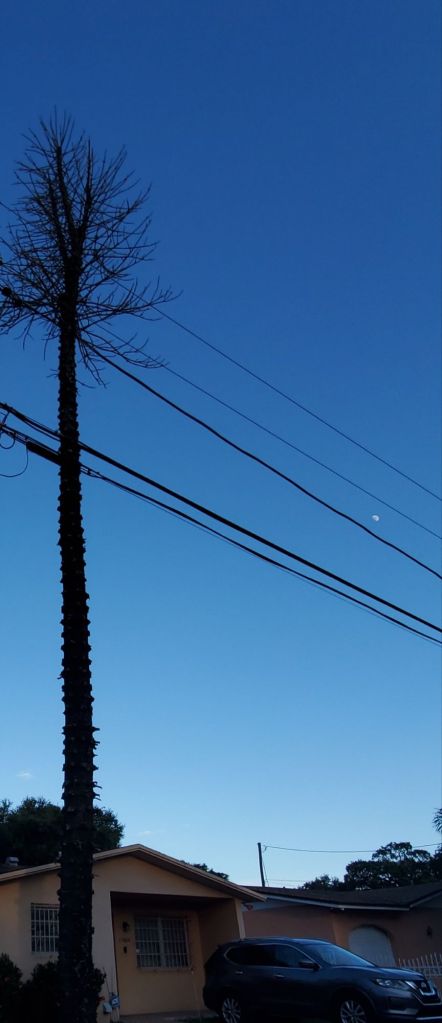
Trees are one of my favorite creations. This one a few blocks from my Airbnb in Miami captured me. I had to drive back by to get a quick photo. It doesn’t do it justice. It looks burnt. I’d like to know it’s story. Whatever it is, the message to me is, “I’m still here.”

#1

No picture or video. Why? It’s what happens when you run without a device.

Yesterday morning the first image of beauty to start my exercise was of a hoverboard rider. We passed one another on opposite sides of Old Bradenton Road around 6:05AM. I don’t even know if he saw me. I heard him before I saw him. I thought he was listening to music. Turns out, he was singing along to it, louder than I could hear it. It was hard to tell what he was saying, but I caught enough to suspect it was a praise song. That’s right. A hoverboarder starting his Saturday on a ride worshipping. How can that not be #1?

Valley/Highland/Grace Friends

I’ve written about friends in previous posts. Nose hair friends. 21st Century friends. Even three types of hard times friends. This morning a new thought bloomed based on the song in this video.

I first heard this song after being pointed to it by a nose hair friend going through hard times. It’s on my 2025 Rest Playlist, which I started my day with today. Because friendship was on my mind, I listened to this song with a different ear and heart.

Here’s the thought that surfaced:

Some friends are better valley friends; some friends are better highlands friends.

I can hear some head scratching. “John, true friends, real friends don’t care about valleys and highlands. They’re in it for all of it.” Heard. But let me tell you my experience.

Back in the early-90s while in my 20s, I had a group of friends that got together often to play card games. Anywhere from 4-6 of us. We were friends mostly through work and church. Some were married, some single. We were very much highlands friends.

Eventually we all parted ways as relationships go, yet we tried to keep in touch. And then, one of the couples got a divorce. In that moment, we were challenged.

I had never experienced friends getting a divorce. For that matter, I’d never experienced anyone divorcing that was close to me. It was foreign territory. An unknown valley that I was more observing than experiencing. And as much as I tried, it was just awkward. The result? These days we’d call it ghosting. I felt a lot of guilt about it.

Forward five years, another couple of church friends got divorced. This time, I knew better, and I was the valley friend they needed. I had grown in what it meant to be a friend through the valley. That experience led me to go back to my first divorced friend and acknowledge I could have been a better friend through his valley.

Here I sit almost thirty years later, and it’s like I’m the opposite-better valley friend than highland friend. And when I listened to this song this morning with my friend evaluator hat on, it was a call to grace.

Grace for myself. Sure, I’d like to be the ideal friend regardless of the space. When I believe I’m not, grant myself grace to grow in whichever land my friend is walking.

Grace for my friends. Sure, I’d like them to be ideal friends regardless of my space. When I’m tempted to say they aren’t, grant them grace to grow in the land I’m walking.

Maybe the lesson isn’t as much about valley and highland friends. It’s about grace granting, to others and to myself. “All the same.”

What You Can Control

Every July, it’s a joy to witness the Hall of Fame Induction ceremony for Major League Baseball. This afternoon’s inductees included Ichiro Suzuki, CC Sabathia, Billy Wagner, Dave Parker, and Dick Allen. Every speech was unique, as one would expect from five distinguished players. But the one who seemed to shine the brightest was Ichiro Suzuki.

Ichiro at the ceremony for his induction into the Mariners Hall of Fame. (Daniel Macadangdang/Seattle Refined)

In their wrap up following his speech, the MLB network hosts were in awe. They celebrated his humor, his speaking in English, and the audience’s amazement and adoration. In stating what they most appreciated about it, one of them captured his message with this statement:

Focus on what you can control.

Even though he was told not to embarrass his home country…even though he didn’t speak English…even though he was told he was too small…he chose to focus on what he could control when starting and throughout his MLB career.

  • Like making sure his spikes were clean
  • Like setting goals rather than focusing on dreams
  • Like not letting team staff lace up his glove and doing it himself
  • Like not making excuses for failure and taking responsibility to improve

Many forces tempt us to focus on the wrong things. Sometimes they succeed. Reaching the goals we are called to requires resisting temptations, whether they’re mental, emotional, physical, relational, or spiritual.

Ichiro admitting having strong doubts in the beginning and along the way of his historic career. The one person he said never doubted him was his wife. She helped him stay focused on what he could control.

May we all pay more attention to what we can control, listen to those closest to us, and resist the temptations to do otherwise.

Attached to God (book review)

Last Fall I read Krispin Mayfield’s Attached to God.

I wrote one post about a lament exercise he outlined, but I never offered my thoughts about the whole book once I finished. Today, I finished rereading it. Time to share.

I’m a little obsessed.

My hunch is that anyone wishing to understand or improve their relationships with humans and with God would also believe Mayfield delivers on the subtitle’s promise of a practical guide. His effort to breakdown attachment science then connect it to one’s relational experience with God produces clarity and hope for any breakdown to be restored.

Of all my highlights, here are three to whet your appetite.

Distance happens in all relationships. (Chapter 1, “The Still Face of God”)

A friend of mine recently made a self awareness by saying, “I guess I live in a fantasy world.” I’d say that’s true for many professing Christians in regards to their beliefs about how close they are expected to feel to God at all times. Mayfield argues human relationship with God is like our other relationships-distance happens.

I was in my 30s before I fully accepting this truth. Many close friends moved and distance happened. It’s normal. That doesn’t provide comfort or easy acceptance, just normalcy. Learning how to respond to distance in a secure way is worth the effort, for you and for the relationship.

Information doesn’t change your beliefs, experience does. (Chapter 4, “Shutdown Spirituality”)

When religious folks get their head around this one, attachment shifts. And it’s a struggle. Why? We are programmed that attending church or a study group is the sole means of establishing beliefs. Any transparent pastor or counselor would most likely agree with Mayfield. They’ve seen how experiences affirm or alter beliefs, in their own lives and in those they serve.

From my experience, this has definitely played out the last 15 years for me. Traveling to other countries, visiting other denominational churches, and dialoguing with Christians on the other side of all kinds of aisles has made me check my beliefs. And yes, some have changed.

In any authentic relationship, there’s room for real talk. (Chapter 10, “The Risk of Trust”)

When people describe what the younger generations are looking for in their attachment to religion and God, the word authentic comes up regularly. I believe age doesn’t matter; we all hunger for it. This 57-year-old does.

RECOMMENDATION: For all your attachment seasons, secure or insecure in any relationships including God, this book deserves space in your library.

Deliver Me (book review)

Meeting writers after you’ve read their book or blog is an interesting experience. My experiences have always been positive. I can’t think of an interaction when I walked away saying, “They weren’t at all what I expected.”

There’s a whole different vibe when you know them before they are published or start a blog. If you thought you knew them well beforehand, you find out pretty quickly that they have layers, stories that have made them the person you know. In many ways, you walk away from reading their work saying, “What a gift they just gave the world!”

That’s my response to reading my friend Dawn Van Beck‘s latest book Deliver Me. Only having crossed paths this last year, we are still learning our layers and stories. Well, I guess I can’t say that as much now since that’s pretty much what Dawn does in this book. And she doesn’t hold back.

Dawn’s raw vulnerability as she addresses regrets, shame, forgiveness, and letting go relays her healing journey to freedom. You can imagine she states many life-giving lessons, but here’s the one that I most appreciated.

That’s what happens when you give God a little-He creates more. (chapter 11, “Releasing the Shackles”)

In describing a dream where she experienced the release from shame and the gift of forgiveness, Dawn paints a clear picture of what I believe she did by writing this book. One belief of mine: I believe she gave more than a little. She gave a whole lot more. And God is creating even more.

Dawn, thank you for giving. Thank you for sharing your story. I pray God continues to create more.

“I Don’t Feel Safe”

In episode 10 of Season 11 of the Being Known podcast, Dr. Thompson named something that I instantly honed in on because I’ve experienced it.

Over the last few years, I’ve experienced several instances where someone explained their reaction to an event or moment with the phrase, “I didn’t feel safe.” That immediately appeared to me like a learned expression, something they’ve been educated as a way to express their reaction. Yet, that phrase in and of itself left me with questions. But they were questions I kept to myself lest I upset the person any further or potentially came across as not hearing them or lacking empathy. Frankly, I walked away wondering how best to respond.

Dr. Thompson explains his opinion about the usage of this phrase in this two-minute clip.

“The reality is I don’t know what you mean when you say you feel unsafe.”

I connected with that statement. It feels like the work of repair is somehow all on the other party, but it doesn’t seem clear where to start. Changing the statement to what is actually being felt instead of what is not being felt makes things clearer for both parties.

I’m curious about your experience of either using this phrase or being on the receiving end of it. How do you respond to Dr. Thompson’s thoughts about it?