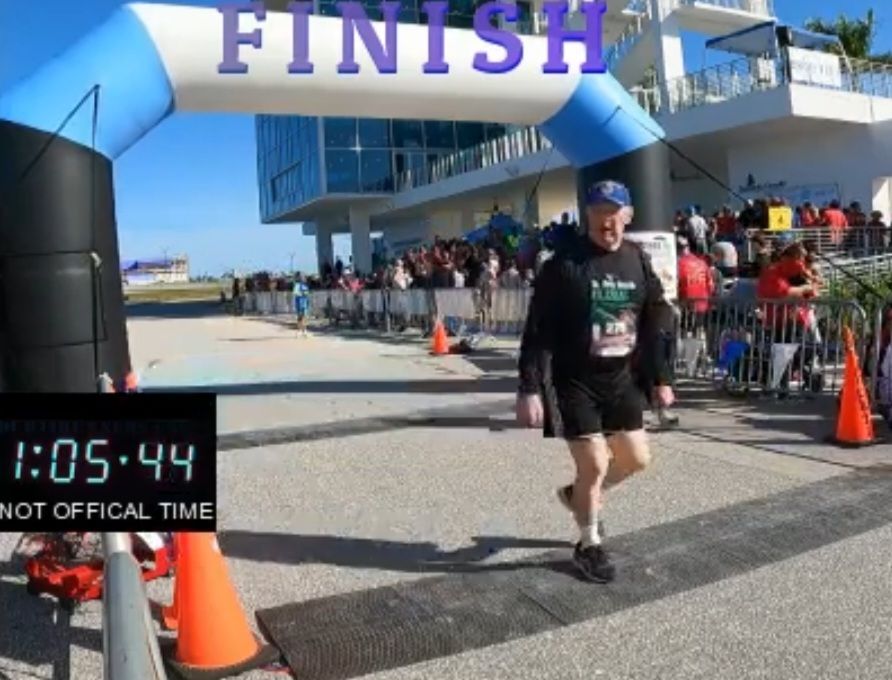
Ran a 5k this morning at the 13th Bridge A Life Superhero Race. This was just my second time at this race, first since 2021 when the event included a 10k for their 10th Anniversary.
Each time I run a 5k I ask myself why. It’s certainly not as taxing as a full marathon, but it’s not my favorite distance. That’s for another post…maybe.
After being at the race for a second time, the answers why this 5k are many.
One: To share about our work at Samaritan Counseling. The tent was busy!

Two: To see what’s possible. Always with goals in mind, I had given myself four lofty goals this week. Managed to achieve one of them: Placed 2nd in Age Group. I’ll take it. (RACE ORGANIZERS: Thanks for including a child’s name on my bib. Thinking of them kept me moving in Mile 3.)

Three: To encourage other runners. Five coworkers also entered the race, and several community partner colleagues were on hand as well.

Four: To be inspired. The oldest male competitor, Bill Welch from Parrish, introduced himself at our tent. He said he enters a 5k every Saturday to support charity. He’s completed over 1,100 races. He’s 86. He took home 3rd place in his age group. Let’s just say it’s going to take over 1,000 races for me to catch Mr. Welch.
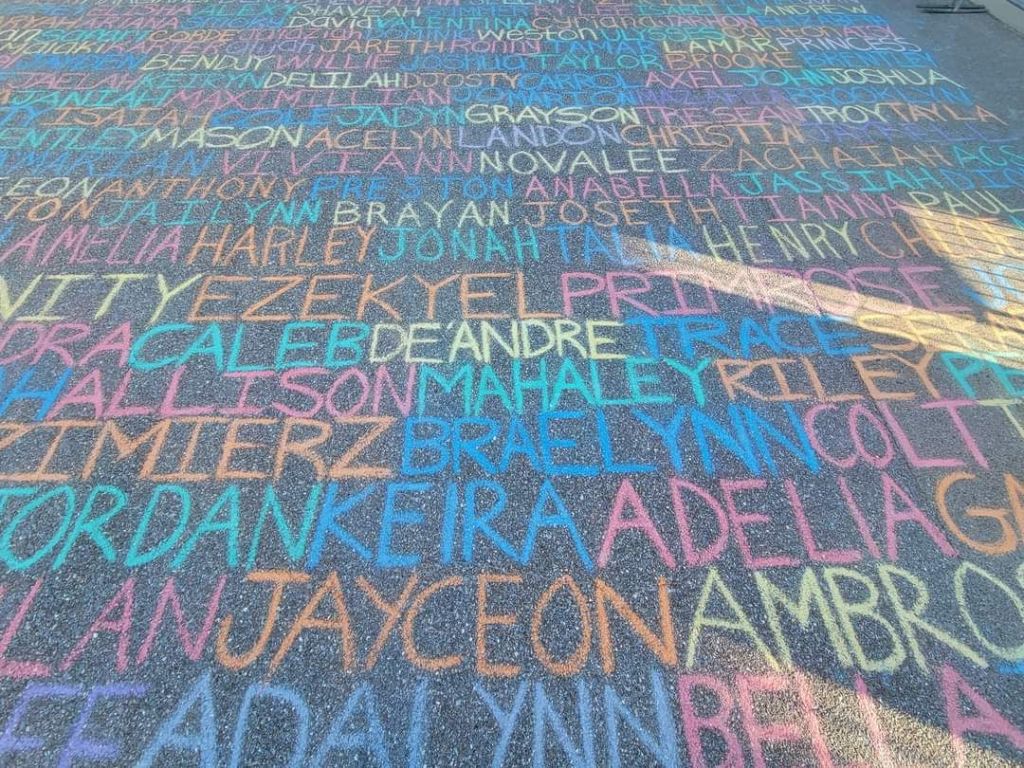
Five: To support Bridge A Life‘s vital work in Foster Care. This event brings awareness to the reality of children in out of home care in Manatee, Sarasota, and DeSoto Counties. This year, nearly 700 names were chalked at the start/finish line.
P.S. Great Job, Bridge A Life! I imagine you feel somewhat like I did at the finish line.
 John Gregory