Attached to God (book review)

Last Fall I read Krispin Mayfield’s Attached to God.

I wrote one post about a lament exercise he outlined, but I never offered my thoughts about the whole book once I finished. Today, I finished rereading it. Time to share.

I’m a little obsessed.

My hunch is that anyone wishing to understand or improve their relationships with humans and with God would also believe Mayfield delivers on the subtitle’s promise of a practical guide. His effort to breakdown attachment science then connect it to one’s relational experience with God produces clarity and hope for any breakdown to be restored.

Of all my highlights, here are three to whet your appetite.

Distance happens in all relationships. (Chapter 1, “The Still Face of God”)

A friend of mine recently made a self awareness by saying, “I guess I live in a fantasy world.” I’d say that’s true for many professing Christians in regards to their beliefs about how close they are expected to feel to God at all times. Mayfield argues human relationship with God is like our other relationships-distance happens.

I was in my 30s before I fully accepting this truth. Many close friends moved and distance happened. It’s normal. That doesn’t provide comfort or easy acceptance, just normalcy. Learning how to respond to distance in a secure way is worth the effort, for you and for the relationship.

Information doesn’t change your beliefs, experience does. (Chapter 4, “Shutdown Spirituality”)

When religious folks get their head around this one, attachment shifts. And it’s a struggle. Why? We are programmed that attending church or a study group is the sole means of establishing beliefs. Any transparent pastor or counselor would most likely agree with Mayfield. They’ve seen how experiences affirm or alter beliefs, in their own lives and in those they serve.

From my experience, this has definitely played out the last 15 years for me. Traveling to other countries, visiting other denominational churches, and dialoguing with Christians on the other side of all kinds of aisles has made me check my beliefs. And yes, some have changed.

In any authentic relationship, there’s room for real talk. (Chapter 10, “The Risk of Trust”)

When people describe what the younger generations are looking for in their attachment to religion and God, the word authentic comes up regularly. I believe age doesn’t matter; we all hunger for it. This 57-year-old does.

RECOMMENDATION: For all your attachment seasons, secure or insecure in any relationships including God, this book deserves space in your library.
Alone Yet Connected

Finished listening to Seeing with the Eyes of the Heart today. One of the last discussion points centered on the reality we all encounter of facing aloneness.

Adyashanti stated he believed almost no one understood Jesus, making him one of the most alone figures in spiritual literature. To explain what he meant, his reply included these thoughts about aloneness.

Engaging spirituality in an authentic way will bring us to encountering our aloneness many, many, many times…Ironically the greatest feeling of belonging comes through these deep and profound encounters with our aloneness. It’s so paradoxical that our greatest sense of belonging comes by going through those doorways of aloneness…We almost always try to do end runs around aloneness, finding surrogates for the experience of aloneness rather than really meeting it…We’re all one. That’s a really great and nice thing. But we all are simultaneously very unique expressions of the one. We all have our very unique journey that is not exactly like anyone else’s…Aloneness, in the ends, leads through the door not only to connectedness but a kind of spiritual autonomy.

I relate.

There is an aloneness on the journey of making your faith yours, not anyone else’s. Think of any faith decision you’ve made to this point that was lifechanging or formative. It came down to you making that choice by yourself. Those decisions, those moments rooted you, grounded you, expanded the territory of your faith, and girded your faith in such a way that it no longer relied on another person’s faith.

Yet, because of that, you now have the strength, the maturity, or the allure to those in your faith community that draws people to inquire how you got it. And the connectedness is more about the kingdom than you. Your aloneness that you walked through, whether you wanted to or not, brightens your image of God. It’s attractive while also preparatory for your next round of aloneness.

These thoughts remind me of this quote:

“Here is the world. Beautiful and terrible things will happen. Don’t be afraid.”  -Frederick Buechner, Beyond Words

Beautiful and terrible await you in aloneness. Don’t be afraid.

Photo by Matt Le on Unsplash

Gracists

Last month I had a conversation that left me with a feeling I didn’t want and, for sure, didn’t see coming. A few weeks later while attending a community event one speaker mentioned moral injury. And that feeling suddenly had a name. Check out this video to learn more about it.

This incident led me to intentionally choose to read several YouVersion devotional plans addressing the topic of racism. One of those was based on David Anderson’s book Gracism. Day 3 of that plan was very helpful, so I want to share this segment from that devotional:

From 1 Corinthians 12, I have identified eight principles or sayings that can guide us as we develop as gracists. These sayings lead us to actions that we can engage in to build bridges across the deepest divides of color, class, and culture. As you meditate on these verses, look for each of the eight sayings listed below.

  1. I will lift you up. “Special honor” means lifting up the humble among us.
  2. I will cover you. “Special modesty” means protecting the most vulnerable among us from embarrassment.
  3. I will share with you. “No special treatment” means refusing to accept special treatment if it is at the detriment of others who need it.
  4. I will honor you. “Greater honor” means God, as a gracist, has given greater honor to the humble.
  5. I will stand with you. “No division” means when the majority helps the minority, and the stronger helps the weaker (gracism), it keeps us from division within the body (an opposite view than normal).
  6. I will consider you. “Equal concern” means having a heart as big for our neighbors as we do for ourselves.
  7. I will celebrate with you. “Rejoices with it” means when the humble, or less honorable, are helped, we are to rejoice with them.
  8. I will heal with you. “Suffers with it” means empathizing with the pain of another and walking empathetically with the injured party.

To connect with that day of the plan, follow this link: Gracism: The Art of Inclusion – Day 3 of 5

Here’s to our collective development as Gracists.

Lay It Down Day(s)

In the Christian world, Sunday is a special day. It’s a day set aside for several reasons, depending on which lane of Christianity you’re following. I’ve been pondering this since before my alarm was set to go off this morning. I’m thinking in some ways Sundays aren’t necessarily special. More on that later.

This week had peaks and valleys. If I’m not paying attention, I can relive the valleys to the point the peaks are forgotten. That’s what I was dealing with to start the day-and I wasn’t even out of bed.

Before the alarm sounded, God and I had a talk. (SIDENOTE: A definition for prayer that I read yesterday described prayer as what happens when you pay attention. It’s okay if you stop to chew on that.) In thinking about heading to church this morning, we landed on this mindset: Everything the last six days have offered did not have to dictate how I showed up to this day. In fact, for the day to be what it’s intended, start by laying down whatever isn’t needed for the day.

What did that include?

  • Unresolved conflict
  • Confusion
  • Unanswered questions
  • Unmet expectations
  • Disappointment

To be clear, by laying it down we didn’t say these things don’t matter. Act like the week was just one big peak experience. Nothing truthful about that.

Laying it down meant don’t let it consume this day. If Sunday is going to be what it’s meant to be, I decided I didn’t need to carry those valleys into it. Today didn’t have to be a valley. The valley could have a small peak.

My word for the year is rest. I’m finding more and more that rest is a state of mind. Rest is possible in the valley just as much as it is atop the peak. It has to be chosen. That doesn’t make the valley disappear, nor does it mean the valley magically lights up. It means my body, mind, and spirit don’t have to hurry finding the path out of the valley. Chances are probably greater if I enter the church doors having already laid things down I will receive what God knows I need. I might even be able to help someone else lay something down.

Which leads me back to Sundays being special. Sure, it’s the day of gathering. But imagine if the other six days of the week were considered just as opportunistic. What if every day was a Lay It Down day? What if God and I had a similar talk every morning before standing up for my first step? I’m guessing that paying attention effort would result in more day’s intentions transpiring, valley or peak.

Countercultural Leaders Worth Listening To

The last two books I’ve read have been authored by Colby Martin, a progressive pastor in California. I’m not going to do a review or respond to his writings except for one observation.

I finished The Shift today. Some who will follow that link may wonder, “Why would you read that book, John?” Here’s a quote giving a hint:

Listening helps us understand, understanding leads to compassion, and compassion opens the way for love. Suddenly, we see others not as our enemies, not as people out to get us, but as people for whom we do not desire suffering. We now feel a longing for their well-being in the same way we hope for our own. We may still not like what they’re saying, and it may still be appropriate to push back, but now you’re engaging in the conversation from a place of love, and that changes everything.

-Chapter “When Progressives Attack”

In this next-to-last chapter, Martin addresses the issue of when progressive Christians attack each other. I already respected him before this chapter; this chapter elevated my respect. Martin isn’t trying to create a war. In fact, he’s challenging those within his ranks to move away from that posture.

I was reminded of reading Senator Ben Sasse’s book Them. Sasse drove home the point, five years ago now, that the challenge in America is we take sides and make enemies of those on the other side.

I’m thankful for leaders who are countercultural in modeling and challenging us to listen to help us understand to grow our compassion to open ourselves in the ways of love.

Small Christian Living

Dear, dear Corinthians, I can’t tell you how much I long for you to enter this wide-open, spacious life. We didn’t fence you in. The smallness you feel comes from within you. Your lives aren’t small, but you’re living them in a small way. I’m speaking as plainly as I can and with great affection. Open up your lives. Live openly and expansively!

2 Corinthians 6:11-13 MSG

Earlier this week the explanation for division amongst Christians that resonated with me was how small we’ve made God…without seeing it. The next morning these three verses were part of my daily devotional reading. Sync.

When believers sing “How Great is Our God” but refuse to drive onto the campus of another church whose theology doesn’t perfectly align with theirs, Paul says, “You fenced yourself in…and God.”

None of us have all the answers. And the second we believe we do, God no longer sits on His throne. He’s lost any signs of “omni” because we’ve lowered him to our image, the reverse of our beginning.

Forgive us.

Forgive us for our reductive pride.

Forgive us for yielding to the temptation to make you in our image.

Forgive us for we know not what we do.

Photo by Ronny Sison on Unsplash

That time Jesus said, “None of your business.”

They could not have looked like promising revolutionary material. That they should see themselves as deliverers of Israel was ludicrous. Their grasp of the meaning of Christ’s death and resurrection was still tenuous and their perception of their future confused.

What was going to happen on the political scene? What role would they play? Seated among the young olive trees they asked him: “Do you plan to restore Israel’s sovereignty?” Many eyes were turned on him.

“None of your business” was the effect of his retort. “That’s God the Father’s affair. He currently organizes the political scene. Your job will be to bear witness to me not only here, but in broadening circles throughout the earth” (see Acts 1:4-8).

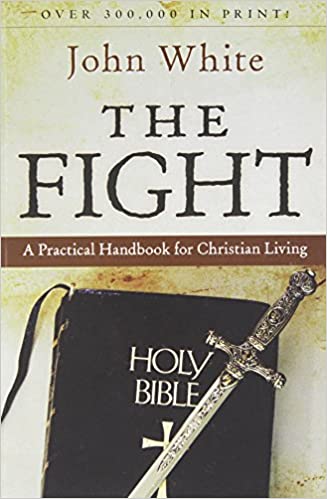
Chapter 4, On Being a Signpost, of The Fight by John White

These three paragraphs start White’s chapter teaching on what it means to bear witness. This “none of your business” interpretation is of verse 7 where Jesus is quoted, “It is not for you to know times or seasons that the Father has fixed by his own authority.”

As I read this, I was reminded of Jeremiah’s letter to the exiles in Jeremiah 29. The receivers of his message were not unlike those hearing Jesus’ message in Acts 1. They had a lot of questions. In their confusion and reaction they were tempted to believe and pursue just about anything, including doing what made sense for self-preservation without yielding to the all-knowing and all-powerful work of God.

American Christians would do well to listen to Jeremiah and Jesus. Our actions and words too often sound like we’ve got it all figured out, like we haven’t really heard what was said. Too often, the voice of God is hushed by our demands and declarations, in essence telling him how to do his job. Too often, we ignore the truth that it’s none of our business.

A Toe-Dip Re:Christian Nationalism

I follow Pastor Jarrod Jones’ blog. His last post expressed his feelings following January 6. The title? No More of This. Pretty well expressed my sentiments.

In the blog, Pastor Jones used the term “Christian Nationalism” three times. This line of content and dialogue isn’t my normal pool, but I’m going to dip my toe in. Why? Because I believe most of my fellow American Christians need to enter the dialogue. And I’d rather not sit this one out.

I felt pretty good about what I understood the term meant, but I decided it would be helpful to read how others-more learned and versed-were defining it. And it wasn’t hard to find their viewpoints. In an article published in December by The Gospel Coalition entitled “Christian Nationalism vs. Christian Patriotism” by Thomas Kidd, Matthew McCullough was quoted to define American Christian nationalism as “an understanding of American identity and significance held by Christians wherein the nation is a central actor in the world-historical purposes of the Christian God.” 

I then found notes from Christianity Today‘s Quick to Listen podcast episode that aired January 13. The episode title was “Christian Nationalism is Worse Than You Think” and featured Paul D. Miller, a research fellow of the Ethics & Religious Liberty Commission. Miller said this: “Christian nationalism is a political ideology about American identity. It is a set of policy prescriptions for what the nationalists believe the American government should do. It’s not drawn from the Bible. It draws political theory from secular philosophy and their own version of history as well.”

These definitions are alarming. They are most alarming to me because they convey what I’ve observed more and more in my own experience in the church. I must add, in the American church. Why the addition? I haven’t traveled much internationally; but in the three nations I’ve visited (Belarus, Jordan, Guatemala), I had the opportunity to visit and attend worship with fellow Christians. On reflection of those visits as I returned to worship in the States, a glaring difference emerged. Those believers love their countries; they are proud to share about their cultures and accomplishments to the visiting American Christians. But that doesn’t lead them to expect what American Christians expect when it comes to politics and freedoms. They seem to know where the line is between worshipping God and worshipping country. For example, the idea of arguing over the placement of national flags in their worship center would be foreign to them and would never reach the pitch of causing permanent division in their church body. So imagine their reaction to seeing the usage of Christian flags in the Capitol’s desecration.

One day following January 6, Relevant, in an article about the rise of Christian Nationalism, recounted the April 2019 shooting in California where 19-year-old John Earnest walked into a synagogue and opened fire, killing one woman and injuring three, because he believed killing Jews would glorify God. We Christians, who love our country but love God more, have the opportunity to set things right, like Reverend Mika Edmundson. Reverend Edmundson is the Presbyterian pastor of the church where John Earnest attended. He expressed after the shooting that his church bore some of the blame for Earnest’s beliefs. “It certainly calls for a good amount of soul-searching. We can’t pretend as though we didn’t have some responsibility for him.”

Church leaders, American Christians, we can’t pretend we don’t have some responsibility for January 6. We can’t pretend any longer.

Photo by Štěpán Vraný on Unsplash

Holy Moments

Finished Book #29 for 2020

The title caught my eye while browsing in a used book store in Dade City in August. One, because it wasn’t a massive book. Two, who wouldn’t want to know the answer to this question.

Kelly gets to his answer in chapter 6, of 15 chapters. This is the lie: Holiness is not possible.

Can’t say I’ve heard that literally stated by anyone, but his message rings true. We generally doubt holiness is possible. Kelly gives several examples. One is this:

The heroes, champions, and saints who have exemplified Christian living for 2000 years did not live holy lives. It is a mistake to step back and look at their lives and say, “She lived a holy life” or “He lived a truly holy life.” And these men and women that we place on pedestals would be the first to admit that they did not live holy lives – they lived holy moments.

The thought of pursuing holy moments is my takeaway from this book. Kelly defines it a couple of ways:

  1. When you open yourself to God.
  2. When you are being the person God created you to be, and you are doing what you believe God is calling you to do in that moment.

Sounds like a practical description of “walking in the Spirit.” His message is the more we create these moments with God’s grace the more holy our lives will be. To live in these moments, Kelly suggests a few litmus test questions:

  1. Will this help me grow in character and virtue?
  2. Does this contradict Jesus’ teachings?
  3. Will this action bring harm to another person?
  4. Lord, what is it that you want most for me and from me in this moment?

He states that God isn’t in the business of tweaking but the business of transformation. Transformation is possible. Each holy moment opens our hearts, minds, and spirits to that possibility. May we have more holy moments.

Taking Jesus Seriously

Started this book today:


Jethani has doodled and produced 72 devotionals based on the Sermon on the Mount (Matthew 5-7).


After reading the first nine, I encourage you to check it out. If you wonder what might be troubling you about followers of Jesus, you might discover it in this book. It’s possible we haven’t taken Jesus seriously enough.