More from Mark Chironna’s “Rising With Hope” devotional
Here are three clips:
Before you pray for God to change your circumstances, ask Him to adjust your way of seeing them. (Day 22, Being and Becoming)
You are not a compartmentalized being, and God has not called you to disregard any part of yourself. (Day 23, Living in Your Body)
When He searches your heart, you can trust His gentleness. He will locate the triggers of your unrest, but His surgery is not only about removing what needs to go. It is also about resuscitating the precious parts of your heart, including the hopeful, creative places that have lain dormant under the weight of oppression and disappointment. He will awaken you to the living soul you were becoming and were created to be–the one who became hidden from sight over the course of time.. (Day 26, God in Your Depths)
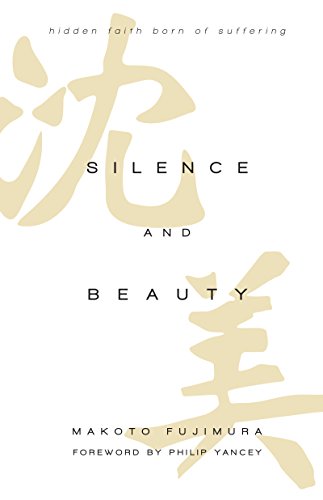
Last March I posted a blog referencing Makoto Fujimura. He’s become a staple for me to follow-podcast episodes, videos, books, etc. A few months ago I started reading his book Silence and Beauty, where he goes in depth to analyze the book I mentioned in the previous blog post and its place in Japanese art and history. I finished reading it on a plane ride Saturday.
I’m glad I took my time reading this book. The slower read allowed for his words and thoughts to breathe and to sink. What I enjoyed most about this form of Fujimura’s art was how he chose to build toward the ending. His final chapter, Mission Beyond the Waves, overflowed with images and challenges that perfectly summarized his message of silence and beauty.
The image that most caught my attention was his imagery and symbolism of falling cherry blossoms. “In Japan of old, cherry blossoms are considered most beautiful when they are falling.” He penned that following this quote by former archbishop of Canterbury Rowan Williams:
Our voyages are all about loss and death. At the moment of our death, which could be any moment, how is my mortality to be made fruitful in the life of another? How may my loss and my suffering become a Word to others? The ultimate question that any of us, or any art, can ask is this: “How may I die generously?”
Meditation on Death
If indeed cherry blossoms are most beautiful when they fall, they are most beautiful when they are broken and completely sacrificed. Fujimura’s challenge is for us all to be generous. Generosity in our faith and in our acts “can be a sacramental act to bridge the divide and brokenness created in society.”
What generous act are you prompted to complete? How can your faith assist you? What beauty is coming when you offer your creations?
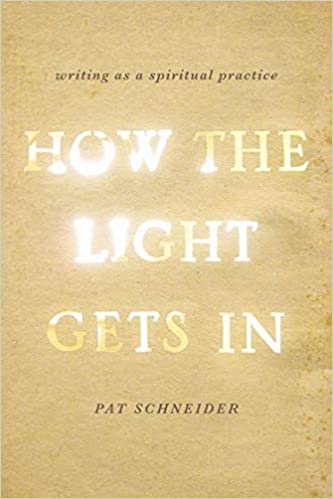
Recently a colleague referenced this book by Pat Schneider:
After doing my usual thing of sampling it on Kindle, I purchased it. (NOTE: “Usual thing on Kindle” means if I’m enticed to highlight while reading the sample, it’s more than likely an eventual purchase.)
At first I wasn’t enticed, but then came these two lines from the same paragraph:
When I achieve true waiting, true listening, something happens that I experience as a gift…If I am made in the image of the creator, then I am myself a creator, and my acts of creating participate in mystery.
That first line grabbed my attention. It aligns with several messages I’ve heard recently, the most recent while driving to Orlando yesterday. (NOTE: To radio DJs, your words carry power.) I’ve lived most of my life feeling like I’ve taken on a burden when someone shares intimate stories with me. I’ve been eased and encouraged lately to see these sharings as gifts, completely altering how I listen and experience the moment.
And that second line, it’s a different way to say what I’ve often told others. We are creators. We are creative. We were created to create. Opening our minds to that truth and expanding our definition of creativity frees us to “participate in mystery.”