Inheritance

Came across this version of Matt Maher’s “Inheritance” yesterday. What a find!

Happy Easter!

Lyrics:

VERSE 1 Right from the very start You had me in Your heart Nothing but dust and yet You gave me life and breath Loved me before I knew For nothing that I could do You wrapped Your Word in flesh What an inheritance

CHORUS You don’t withhold a thing You were the offering I don’t deserve it It doesn’t make sense What an inheritance

VERSE 2 There on a lonely hill 10,000 debts fulfilled Heard in Your final breath Last will and testament Father, Your work is done Now let Your kingdom come Death has been laid to rest What an inheritance

POST-CHORUS 1 Oh, oh, oh What an inheritance

VERSE 3 Spirit of life and truth Filling the upper room Beating within my chest What an inheritance Counsel and closest friend What an inheritance

CHORUS 2 Freely You give to me Freely I will receive I don’t deserve it It doesn’t make sense What an inheritance

Easter Playlist

One thing I’m grateful for is the availability of creating playlists. They are a tool for wellness and many other things.

My Easter playlist is one of my favorites. Usually each year I edit it, typically by adding new songs. I’m not doing that this year. I’m enjoying the familiarity of the existing 20 songs, letting them remind me why this week matters.

Most of the songs were released over a decade ago, and probably half of them never made it to radio. They are hidden gems to my spirit.

I encourage you to check out my playlist for two reasons:

  • To receive the fullness of Easter
  • To consider what could be on your Easter playlist

https://music.amazon.com/user-playlists/d4c45641a1b1432a9c587c183b04c3dfsune?ref=dm_sh_FbW3SbQHcFxAFbobVKMB3Kwk6

Acting Despite the Stone

You know that moment when you read something for the umpteenth time and it feels like the first? That happened to me reading the first three verses of Mark 16. Here they are:

When the Sabbath was over, Mary Magdalene, Mary the mother of James, and Salome bought spices so that they might go to anoint Jesus’ body. Very early on the first day of the week, just after sunrise, they were on their way to the tomb and they asked each other, “Who will roll the stone away from the entrance of the tomb?”

Even though I’d read this multiple times, something jumped out at me clear as day. That something was the order of events.

It wasn’t the first thing on these three ladies’ minds to ask themselves about the stone in the way. No, they bought the spices, set their alarms (although I have a sense they didn’t really need to), and were already headed to the tomb to tend to Jesus’ body before they really pondered exactly how they were going to get in.

I found that very telling. Many times we let the impossible keep us from preparing for it. These ladies didn’t worry about that. Why?

I believe it was because they were so focused on serving Jesus. Literally. The stone in the way didn’t deter them from buying the spices. They could have said, “Uh, what’s the point of spending money on something that I might not be able to use. I’ll just pray about it and hope that stone gets out of the way somehow.”

Instead they bought them, got up early, and headed for the tomb. It seems they had so much faith they were going to get to tend to Jesus that their attitude was, “Somehow, we don’t know how, but somehow that stone will not keep us from getting to him.”

I have a sneaky feeling their question wasn’t one of doubt but one of wonderment. Just how was God going to help them.

It seems that God often does his best work when we let him deal with the impossible while we deal with the possible. They did everything they could to be ready to serve. What did God do? He made sure the obstacle in their way was removed.

The Lesson: Act despite the stone. Avoid letting the impossible paralyze you from living an active life of faith. These ladies would have seriously kicked themselves had they let the question come first.

What they would have missed. I’m thankful for their example of not letting the question of the impossible stifle their actions of faith.

Photo by Katherine Hanlon on Unsplash
Wound’s Intentions

Just finished listening to the final episode of season 6 of the Being Known Podcast. Never disappoints.

Curt said something about the story of Adam and Eve that probably only a psychiatrist would come up with. It had to do with wounds. Here’s the quote:

The intention of God wounding Adam in Genesis 2 is for creating beauty and goodness. The intention of the serpent’s wound to Eve in Genesis 3 was to destroy her.

Dr. Curt Thompson

We wound others. Others wound us. Sometimes we intend beauty and goodness; sometimes we intend destruction. So many things could be said about these truths. But I want to take a different direction. However, here’s an interesting question now in my head about emotional wounds: What were the intentions?

It’s Easter weekend. Yesterday I kept a ritual of watching Mel Gibson’s The Passion. So much realistic wounding in that film.

True to form, Jesus’ enemies, both human and spirit, were after destruction.

True to form, Jesus was after beauty and goodness.

Be encouraged. It’s normal for wounds to take time to heal. It’s normal to hate the wait, to wish the pain away, or to rush happiness. But without the waiting and the pain, the healing isn’t complete.

Jesus, thank you for turning intended destruction into eternal goodness…for the beauty of your wounds…for completing your intentions.

Photo by David Clode on Unsplash

Stuck on Saturday

During the Easter season the last few years, I’ve been drawn to conversations around not rushing to Sunday. We’d rather not sit in the pain or silence choosing to skip ahead to resurrection. Lucky for us in this century, that’s an option.

Sorry for those that lived Easter weekend in real time. Not an option for them. And although it feels like an option for us each Easter weekend, the reality is that much of our life experience feels a lot like waiting for resurrection. Like it’s a really looooooong Saturday.

  • An unraveling marriage
  • A family feud
  • A wayward child
  • A terminal diagnosis
  • An unfulfilled promise

In many biblical accounts we find company with others stuck on Saturday:

  • Abraham’s years of waiting for the promised son
  • Jacob and Esau’s rivalry encouraged by their parents that caused years of generational pain
  • Joseph’s journey through multiple betrayals, even prison time
  • Esther’s quest to save her people
  • Job’s turmoil of loss, grief, and disease
  • David’s numerous interpersonal relationship challenges that seemed unending

Their stories may be so familiar that we forget or fail to see how much we have in common. Their resurrection took much longer than a weekend…weeks, but mostly years. They had to find a way to live stuck on Saturday. Truth is, until eternity is our norm-the ultimate resurrection, we’re all stuck on Saturday. The how-to-live-on-Saturday list is long, but here are my top three, Easter 2022:

Stop trying to make it happen…that’s what Abraham did. What a mess! It’s better to wait for the promise keeper to move the stone than to derail your life attempting to do his job for him.

Remember whose you are…that’s what David did. What a heart! It’s healthy to blurt, wail, lament, and even curse in order to create the space for praise from a sheltered, created, purposed, and everlastingly loved child.

Keep the communication lines open…that’s what they all did. What examples! It’s freeing to lean not on your own understanding by trusting that what is coming on Sunday is something only possible from higher ways and thoughts.

Stuck on Saturday? It’s not fun. Yet the forced gaze on the stone mover is worth it.

Photo by Sincerely Media on Unsplash

Into

Into the normal of a borrowed room the Bread of Life memorialized

His hope remains

Into the fog of the garden the Vine agonized

His connection remains

Into the mockery of the temple the Door submitted

His welcome remains

Into the denial in the courtyard the Good Shepherd understood

His forgiveness remains

Into the torture of the flogging the Way, the Truth, and the Life endured

His love remains

Into the abandonment on the cross the Resurrection and the Life embraced

His victory remains

Into the darkness of the tomb the Light of the World invaded

His promise remains

Photo by Brett Jordan on Unsplash

They Knew Not

The kiss meant to betray honored

The arrest meant to end began

The words meant to charge freed

The stripes meant to wound healed

The crown meant to mock heralded

The cries meant to doom lifted

The cross meant to burden unleashed

The sign meant to accuse declared

The nails meant to torture identified

The sword meant to pierce solidified

The stone meant to secure revealed

The cloth meant to cover displayed

The tomb meant to hide announced

The death meant to squelch ignited

Photo by Ismael Paramo on Unsplash

Pilate Got It Right

I read John 19 this morning, Good Friday. Here are two interesting verses to contrast:

15 They shouted, “Take him away! Take him away! Crucify him!”

Pilate said to them, “Should I crucify your king?”

“We have no king but Caesar!” the chief priests answered.

19 Pilate also had a sign made and put on the cross. It said: Jesus of Nazareth, the King of the Jews.

So many questions. Did the chief priests really mean what they said? Did they really view Caesar as their king? If so, what did they say to the people around them when they spoke about their God, their loyalty to him? Seems contradictory. Feels familiar in 2021 America.

Of course, one could understand from Jesus’ teachings that the chief priests didn’t really get it. When Jesus talked about the kingdom of God, his language and teaching may have even gone over their heads, too. They either didn’t understand it or they rejected it. Either is tragic for them and the people they led. Seems that what we continue to witness happen in religious circles when leaders focus their eyes on the wrong king isn’t anything new.

As a follower of Jesus, to declare allegiance to any created being over their Creator declares citizenship in an earthly kingdom. Some scholars teach that Pilate’s note on his sign wasn’t so much a personal declaration as a statement of charge-that Jesus claimed to be the King of the Jews. Interesting that, regardless of his intent, Pilate-the non-Jew, the one not looking for a Messiah, the one who was simply trying to do justice for the accused man-declared the truth.

May we all on this Good Friday declare that Jesus is King.

Photo by Josh Applegate on Unsplash

This Easter

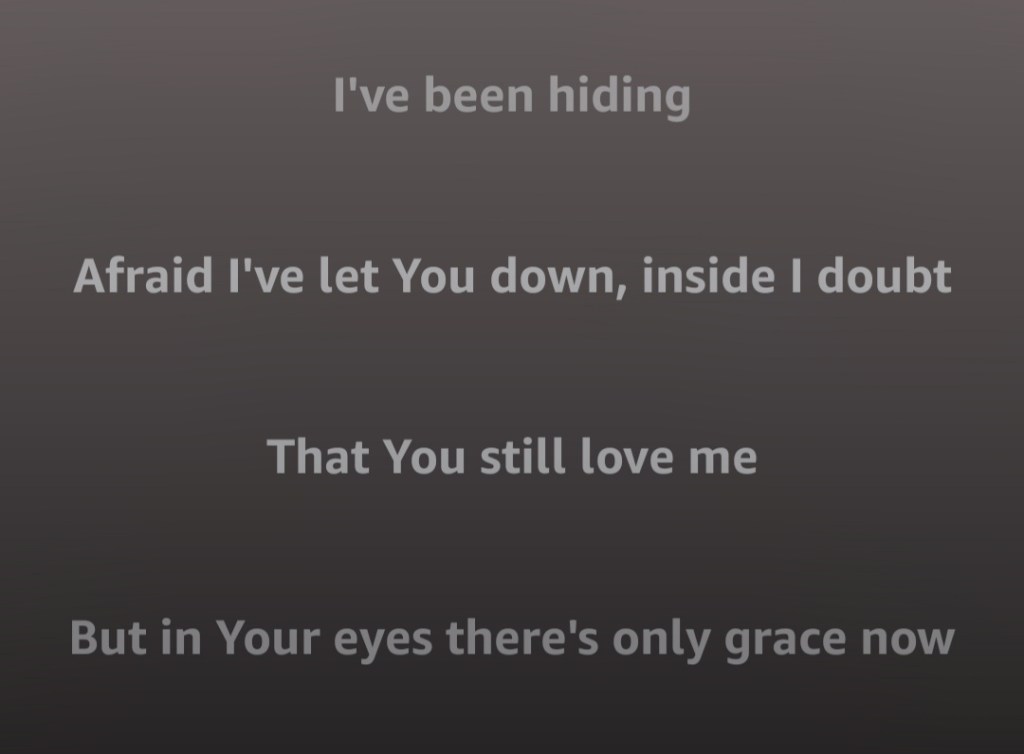
I started this Thursday listening to my Easter playlist. In that, Lauren Daigle’s “How Can It Be” played. These lyrics from verse two stuck in my ears, mind, and heart.

The main reason they stuck is the contrast between the doubting of love and the exchanging of grace. Been on my mind for several weeks now, so these lyrics heard through the lens of Easter stopped me in my morning routine.

That’s what grace does. Makes you pause. Humbles your expectations. Erases your doubts. Brings you back.

May we all pause in humility to be brought back from our wandering through the erasing of our doubts of God’s love this Easter!