The Hollywood Commandments (book review)

While on vacation I caught an interview of a hollywood executive. His infusion of his faith into his work intrigued me. His name was new to me, but I quickly learned that he’s worked on many projects that I’ve watched. His name is Devon Franklin. The interview was old, surrounding the release of a book. When I looked it up on hoopla, it wasn’t available, but another book more recently published was. So I borrowed it to read the rest of my time away.

Franklin has a few agendas in this book. One major one is to dispel the myth that Christians can’t be called to work in the entertainment industry. He respectfully gives illustrations of how he overcame this myth after being taught it and discouraged in his pursuit of his passion to produce life-changing projects.

Success comes from being the distinctive person that God created us to be…The moment you begin to exchange what makes you different for what makes you ordinary because you want to fit in, you give away that which God wants to use to elevate you and take you somewhere extraordinary.

Chapter 8, Your Difference is Your Destiny

A second agenda is to lay out his ten commandments to not only succeed in the entertainment business but in life in general. He’s clear that success isn’t possible without the guidance and daily presence of God in your life. He illustrates from his own journey the importance of prayer, service, understanding God’s view of your talent, and distinguishing between your intuition and God’s.

We don’t get enough experience through the church in trusting our intuition, which is strange because intuition and instinct are really the Holy Spirit at work in us…Originality terrifies people…Prayer helps you determine who is speaking through your intuition, God or you.

Chapter 5, Your Gut is Hiding God

Is this book for everyone? No. But if you’re needing some clarity, even some encouragement on pursuing success in your career with a spiritual mindset, give Franklin a look.

Stop worrying so much about immediate results and start appreciating the process…If you’re going to survive in any field, you just can’t take yourself too seriously. Having a short memory goes a long way.

Chapter 9, Your Amnesia is an Asset

Testing Google

From my front door to the office is 18 miles. Depending on the time of day you drive it, it can take anywhere from 33 minutes to over an hour. I’ve experienced the shortest, the longest, and all the in-betweens.

I typed 33 minutes because at this moment that’s the estimated drive time according to Google maps. I use it quite often in order to find the best route, particularly when my drive is at peak traffic times. That usually means driving home in the afternoon. Here’s a screen shot from my drive this past Tuesday.

I may be the only person (pretty sure I’m not) who looks at that ETA time (5:53) and says to myself, “I better at least get there by that time, or even better, beat it. Game On!” A little motivation and self-competition isn’t bad, right?

What I’ve found is they’re not bad until I create an emotional expectation. And that emotion can turn into thoughts like, “What the heck with these lights? Come ‘on, Manatee County! Fix these lights!” or “People, drive with purpose. Why are we driving 33MPH in a 45MPH zone? Get off my road! I’m on the clock, here!”

On my less emotionally competitive drives, I decide to pay attention and see what I can learn or enjoy. On Tuesday I decided to test Google rather than rant at the lights or other drivers. Often on the drive at any given time Google gives me options. Each option designates the difference of my remaining drive time by reading something like “2 minutes slower” or “Similar ETA.” But unless I look at the map, I have no idea all the options that I have mid-drive. On this 18-mile drive, there are dozens of options. I can ignore them and just follow the original route demanding that it live up to its promise to get me there the fastest, or I can consider other options may not be the fastest but could bring some other unexpected benefit worth the alternate route.

The test basically became how many minutes are lost if I ignore Google and go whatever route I want. Google’s directions aren’t the law; they are suggestions. And on this drive, I ignored them several times, probably three, just choosing whatever option I felt like. The end result-I arrived at the same time Google predicted, 5:53.

There are several possible takeaways from this scene. Go with whatever comes first. But mine is, I have options. Any man-made or man-given map uses the best data available. That doesn’t demand it be followed mindlessly. On the flipside, God’s map doesn’t always make sense or align with the best data nor sit well with my expectations. And that’s where I’ve learned the value of surrendering to options.

Google isn’t God. No other map reigns over his; they don’t have his data. His route will have me arriving at whatever time is best but only in the mind and spirit possible by choosing his option. It’s worth the test.

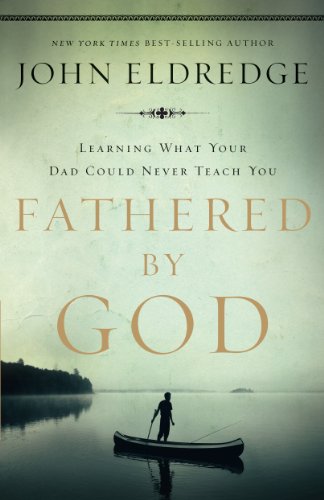
Fathered By God (review)

I took a friend’s recommendation and read John Eldredge’s Fathered By God this week. Much better than I expected.

My friend suggested it for several reasons, but I believe he was prompted by our conversation about men’s seasons of life. There are several authors who’ve taken on this subject. Fathered By God is Eldredge’s take, and it’s worth reading.

The enemy’s one central purpose-to separate us from the Father.

Chapter 3, Boyhood

Guys, you should read it for yourself to see if you agree. But here’s the list of the six stages he walks you through:

  1. Boyhood
  2. Cowboy
  3. Warrior
  4. Lover
  5. King
  6. Sage

The problem of self-identity is not just a problem for the young. It is a problem all the time.

Chapter 8, Sage

For me, the best takeaways were from the last three stages. Not rocket science due to my age. Of those three chapters, King captured me the most. Here are three quotes from the chapter:

I remember Dallas Willard saying once that he believes the whole history of God and man recounted in the Bible is the story of God wanting to entrust men with his power, and men not being able to handle it.

Becoming a king is something we accept only as an act of obedience. The posture of the heart in a mature man is reluctance to take the throne but willing to do it on behalf of others.

One of the big lies of the king stage is the idea that now you ought to know enough to operate out of your own resources. Not true. You will be faced with new challenges, bigger challenges, and the stakes are much higher.

Chapter 7, King

It’s doubtful you’ll agree with everything Eldredge writes, but I’m guessing we’d all agree on this one:

At nearly every stage of our masculine journey, something in us needs to be dismantled and something needs to be healed.

Chapter 9, Let Us Be Intentional

If you’re curious about these stages or you are in need of dismantling or healing, give this book a chance. I’m glad I did.

1 in 117,000,000,000

While praying today, a question came to my mind. How many people have ever lived? Googled it and found some researched answers. Here’s a link to one of them: How Many Humans Have Ever Lived? (visualcapitalist.com)

In the couple of articles I read, it’s agreed the number is over 100 Billion, fluctuating between 105 and 117. I could go in lots of various directions from here, but I’ll land only on this additional stat: that means roughly 7% of all of human history is alive right now.

This question came to me during a personal communion prayer as I thought about the scriptural teaching that Jesus died for all of humanity, past/present/future. One and done. The teaching states beyond his blanket sacrifice he knows each and every one of those he died for. It’s mind-blowing to think about knowing 7 billion people personally enough to count the hairs on their head, at the same moment in time. Add to it the remaining 93% of those who have lived…not to mention those yet to live.

I fear at times Christians get so caught up in their relationship with God that they forget they aren’t the only ones. We cross the line, if we aren’t careful, into genie world. “He loved me enough to die for me and promised to give me what I ask for. How Great is That!”

This question and its answer humbled my heart, filled me with awe, and deepened my love. There are no bounds to God’s love. Yes, he loves me. He also loves the other 117,000,000,000.

“Listen, God” (Part 2)

The next day I was still thinking about the previous day’s all-day conversation and referenced it in a conversation with a former coworker.

While we discussed it, God shared a final word. Adding to his direction to get my eyes off myself, he pointed out, “John, you know how you don’t like to hear people talking over each other and are frustrated when you catch yourself doing it? How about you practice that with me, too?”

He had the final word. Graciously, it was a question. And my “Listen, God” posture was altered.

Left me wondering what a “Listen, God” posture sounds/feels/looks like. Not too hard to imagine, really. Probably sounds similar to a Christmas morning temper tantrum from a six-year-old who just finished opening more gifts than they know what to do with. Probably feels similar to the tightness in a hair stylist’s chest whose client berates them because their work doesn’t match the picture from the magazine. Probably looks like the adult child rolling their eyes at their aging parent whose short-term memory loss has them repeating the same question three times in five minutes.

How God manages to keep a “You’re my son in whom I’m well pleased” posture is beyond my comprehension. That posture transforms mine from “Listen and do what I say” to “I’m glad you’re here. What would you like to talk about?”

Photo by Heike Mintel on Unsplash

“Listen, God” (Part 1)

One night this week, I woke from a dream and felt like I was mid-conversation with God. Not necessarily thrilled at the timing, I engaged for another hour and a half before going back to sleep.

When my body said, “You’re done sleeping,” our conversation picked back up and kept going throughout the day. I shared this with four different people. And pretty much each one of them asked me what God was saying. At that point, I admitted I was doing most of the talking. My tone was very much, “Listen, God. Here’s the deal. I need some things today. And I’m not going to hold back in telling you what they are.”

I got very specific with what I wanted from him before the day ended. I mean really specific. Guess what…I didn’t get anything I asked for. Instead, I got better things, things I really needed.

As I saw what I was receiving, in God-like fashion, He gave me more than I asked for. And when I gave him a chance to speak, this is what he said: “Get your eyes off yourself, John. Can you see that I heard you? Can you see what I’m giving you?”

He really is a good Father. He receives my tone, demands, and attempts to “ask and receive.” Then he responds with loving correction and gifts that show he’s everything he promises to be.

Photo by Social Income on Unsplash

God Has Competition

Here’s a common question I’ve been asked over the years: “I don’t seem to hear from God like many people say they do. Why?”

There could be several answers to that question, but allow me to answer it with a question: “What other voices in your life is God competing against?”

I believe God desires to speak to us, to communicate with us constantly. When we stop to consider who else desires to speak to us, it’s rather eye-opening, explains how important it is to lend our ear to the voices that matter.

To answer the “what other voices” question, here’s a suggestion. Get out a piece of paper or open a digital notetaking app. Make these three headings at the top: Spiritual, Physical, Digital. Then start listing the voices attempting to speak into your life under each heading.

Be brutally honest. For example, don’t avoid listing all spiritual voices that desire to speak into your life. To deny the existence and working of demonic forces actually shows they are ahead of you. Acknowledging their existence provides a means for God to speak to you as your protector and defender.

As for the physical heading, focus on human relationships. Again, be brutally honest. Include the good and the bad voices that have some level of authority in your life. List them all. This list should be pretty lengthy if you consider them all. By the way, go ahead and list yourself. You probably listen to you more than anyone else.

That third category, digital, may seem weird to consider. Basically, all things visual and audio are speaking into our lives simply by their presence. From TV to movies to apps to music to texts to emails to blogs to videos, list them all.

Finished yet? What’s that list look like? How does that help frame God’s competition?

What I have found in my listening for God is the need to silence his competition.

The fewer voices speaking the better odds He will be heard.

The fewer voices speaking the louder His voice seems.

The fewer voices speaking the easier to attune to the one that matters most.

Photo by Hasan Almasi on Unsplash

Mimickry

I’ve been at it for over two years. It’s a slow burn.

When I transitioned to a new job and anticipated working more from home and not having an office, I knew something had to be done. All my books weren’t going to fit on one bookcase at home. So it began. The personal library deconstruction. As the walls enclose, the books are finding new homes.

I’m guessing all book lovers have similar problems. Not only do we buy more than we need nor have room for, we tend to not get around to reading all of them either. I’d guess someone has labeled this a disorder. I mean, chocolate lovers don’t buy boxes of chocolate just to put them on display never to be opened and eventually discarded. At least I don’t. I enjoy what’s inside. The chocolate box, just to be clear.

To address this problem, I’ve continued the deconstruction in two ways. One, if I’ve never read the book and don’t see that I will in the near future, “off with its head (given away in some fashion).” Two, rather than buying new books (Kindle doesn’t count), I’m reading the books I haven’t read and then deciding if it deserves to stay or go.

Occasionally, I encounter deja vu. Happened yesterday. I finished a book, which deserved to stay on the shelf. So I picked out another one I was pretty sure I hadn’t read. Not even sure where I got it, honestly. It’s signed by the author, which most likely explains why it’s still on the shelf. As I’m reading the first few chapters, it reads like a new book-nothing familiar at all. And then, with the light on the page just right, I see faint yellow highlighting. Are you kidding me? I’ve read this book before, even highlighted it, and I don’t remember. Another book lover problem. Actually, there’s several problems in that realization, but let’s move on.

One joy in re-reading a book is your eye, your mind being captured with more. Something you didn’t engage the first time speaks to you the second time. Like re-watching a movie. Here’s the line in this book that captured me:

We mimic the god we serve.

God’s Resting Place: Finding Your Identity In His Peace, by Ron Marquardt

Marquardt explained that our belief of God’s character plays out in how we live. “If I believe God is angry and hard to please, I find myself behaving the same way. If I find Him happy one moment and angry the next, I will soon follow suit.” (p.19) Mind captured.

So I chose to meditate on that in a journal entry. Rather than analyze my mimicry, I decided to make a list of truths I believe about God. This list, certainly not exhaustive, can then serve as a checklist of how I’m mimicking Him:

  • God loves us as we are
  • God sent his son not to condemn
  • God receives us from our wandering
  • God seeks the lost sheep
  • God rests
  • God listens to his children
  • God blesses those who bless him
  • God humbled himself for his creation
  • God keeps his promises
  • God forgives
  • God is faithful
  • God has eternity in mind
  • God gives generously
  • God has compassion
  • God remembers we are dust

Deconstruction leading to deja vu leading to mimickry. Here’s to the slow burn!

Photo: Izabela Zagaja-Florek

Tucson Reflection #4

A little travel trivia for you based on an article by Livability (2016):

  • The average American has visited 12 states.
  • The top five visited states are Florida, California, Georgia, New York, and Nevada.
  • California, Florida, and New York residents have visited fewer states than the typical American.
  • 10% of Americans have never been to a state other than the one they live in.
  • Americans take more than four leisure trips per year.

My Thanksgiving trip of 11 days, counting airports, took me to five states. Looking at these trivia points, it would be foolish of me not to see my life as privileged.

At some point on this trip, maybe on a plane or driving around Tucson, a thought occurred to me. The more I travel to new places the smaller I get. I’m pretty sure it was while I was in Tucson. I’m guessing because Tucson was unlike any other city I’ve visited.

Sure, it is American. Sure, it is modern. Sure, it is multicultural. Sure, it is a University town. Sure, it is picturesque. Sure, it is probably just about anything you’d want a city to be where you live or visit.

Something about Tucson, though, expanded my world and reminded me that the world is quite big. Therefore, I am quite small.

Now, someone might read that and the takeaway would be, “That sounds depressing.” Thankfully, with the worldview I have, my response is the opposite. I’m grateful for the reminder.

Too often my world revolves around me. I’m “bigger” than I really am. Is that because I’m American? Single? Male? White? Privileged? Floridian? Alabama fan? Probably. But it’s also because I’m human, in the lineage of Adam. I fall prey to wanting to be like God.

The smaller we children of Adam see ourselves in comparison to God the better our lives are. We allow the fullness of His presence; we give him more space to reveal he’s bigger. Bigger than us. Bigger than our stuff. Bigger than our circumstances. Bigger than our doubts. Bigger than our fears. Bigger.

On behalf of all the children of Adam, thank you, Tucson! You remind us God is Big!

Photo by REVOLT on Unsplash

Welcome to Egypt!

“Meanwhile, the Midianites sold Joseph in Egypt to Potiphar, an officer of Pharaoh and the captain of the guards.” (Genesis 37:36)

“Then Pharaoh said to Joseph, “Now that your father and brothers have come to you, the land of Egypt is open before you; settle your father and brothers in the best part of the land. They can live in the land of Goshen. If you know of any capable men among them, put them in charge of my livestock.” (Genesis 47:5-6)

No idea what Egyptian road signs existed in 1700BC, but it doesn’t take much to imagine that Joseph and Jacob would have had different emotions if they passed one welcoming them to the country.

Joseph: “What just happened? I don’t want to be here. God, why did you let this happen?”

Jacob: “What is happening? I’m so glad to be here. God, how can I thank you?”

Genesis 37-47 recounts many of the most familiar biblical dramas. Dramas that were foreshadowed in dreams. Dramas that no one saw coming. Dramas with immediate answers to questions. Dramas where silence still lingers.

Our lives aren’t much different.

Rolling along with seemingly no problems, then WHAM! Welcome to hatred, to betrayal, to dysfunction, to lies, to prison, to loss, to loneliness, to misunderstanding, to abandonment, to…..

Or doing the best with what’s been handed to us, then SURPRISE! Welcome to blessing, to grace, to forgiveness, to renewal, to acceptance, to explanation, to honor, to peace, to hope, to…..

We can learn many truths from Jacob and Joseph’s lives. Today, wherever and whatever you’ve been welcomed to, know that God has walked with many of his children through their whams and surprises. He goes to Egypt with you. How do I know? Here are some other verses within these same Genesis chapters:

“The Lord was with Joseph, and he became a successful man, serving in the household of his Egyptian master.” (Genesis 39:2)

“But the Lord was with Joseph and extended kindness to him. He granted him favor with the prison warden.” (Genesis 39:21)

“Israel set out with all that he had and came to Beer-sheba, and he offered sacrifices to the God of his father Isaac. That night God spoke to Israel in a vision: ‘Jacob, Jacob!’ he said.

And Jacob replied, ‘Here I am.’

God said, ‘I am God, the God of your father. Do not be afraid to go down to Egypt, for I will make you into a great nation there. I will go down with you to Egypt, and I will also bring you back. Joseph will close your eyes when you die.’” (Genesis 46:1-4)

Welcome to Egypt! You are not alone!

Photo by Spencer Davis on Unsplash