The Best Book I’ve Read About Forgiveness

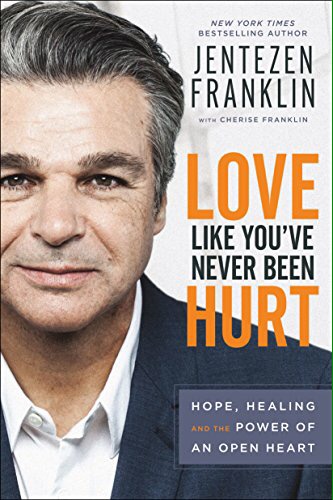
I’ve read a few books on the subject of forgiveness. None of them match the one I just finished.


Alongside her exceptional writing, Leslie Fields makes this subject approachable through transparency and relatability. She doesn’t exploit or overstate. She tells her’s and other’s stories while paralleling them with familiar biblical ones. And although she’s addressing her journey to forgive her father, little of the biblical stories share the same context. The common need is becoming forgivers to the degree we have been forgiven.

The application and “what do I do with this” additional work by Dr. Hubbard makes this more than a well-told story. You have tools to do your forgiveness work. Outcomes or successes aren’t guaranteed, but you have what you need.

Here are seven examples of these ladies’ excellent work:

  • You can’t grow up and be full adults until you can forgive your parents.
  • We are all Jonahs who, in our unforgiveness, question whether we can or want to do the work of building the bridge of forgiveness that gives us the grace to see both good and bad in the one who has wronged us.
  • No other religious faith claims that everything you’ve done wrong can be utterly covered and forgiven by another, by God himself.
  • Sharing and crying with another is much more effective in moving us toward healing than all the crying done alone in our rooms. Talk therapy brings healing and has a positive impact on our brain chemistry.
  • Boundaries are not steel doors slammed in a person’s face, but rather, loving and firm ways of saying no, not now, not here. Setting boundaries honors both people involved by not allowing either one to dishonor the other or the relationship through unacceptable words or actions.
  • We can choose to reclaim our past for good-instead of replaying the same story over and over expecting something to change in the unending repetition. We do this by allowing ourselves to grieve, to mourn, to lament, to remember, to release, to revive, to live on, so that all may be well with our souls.
  • We have made forgiveness too private, too small, and too hard. It is not a feeling we have to conjure up; it is an attitude of humility and love that seeks the good of the other, apart from worth or deserving. It is the living out of a daily decision to extend to others what God has extended first to us.

Hanging Up on God

This week I’m reading through Genesis. Familiar stories. Yet, always new things to see-like watching a movie several times and observing or piecing something together you missed before.

This happened when I read chapters 32-33. If you want, pause reading this and read those two chapters. See what you observe.

Here’s the main thing I got this time: Jacob didn’t know what he didn’t know. Hate it when that happens.

He responded two ways: terror and prayer. Not a bad combo. If balanced. Well, probably should lean more to the latter.

When he heard his brother was coming with 400 men, he was terrified. He immediately got his mind working. But he paused to pray. Good move.

That prayer is a mixed bag. Nothing wrong with the prayer. He expresses his emotions, recognizes his family’s history of following God, reminds God of his promises, and pleas for rescuing from what he’s afraid Esau plans to do. The end. Back to work.

I propose he hung up on God. We’ve all done it. Dialed up, checked in, checked out. A one-way conversation. “Hey God! Here’s my situation. Remember what you said? I’m counting on you. Gotta go.”

Suppose Jacob didn’t hang up. Suppose he paused and listened. Suppose he asked questions like, “What should I do? Will you calm my fears? Am I missing anything? Am I thinking straight?”

Is it not possible that given the opportunity God could have saved Jacob a lot of work and emotional stress? And maybe that whole night of wrestling could have been avoided. And think of the fear he placed on his family. Terror does that when you hang up on God.

Application: When you don’t know what you don’t know, ask God a bunch of questions before you do anything. And wait for the answers. Stay on the phone.

(Photo by Dewang Gupta on Unsplash)

The Flood: A Pandemic Observed

Read Genesis 8-9 today. Three God observations:

  1. “The ark came to rest on the mountains of Ararat.” God was in control, even to the detail of placing the ark where it needed to be. He made sure it rested and stayed put. OBSERVATION: Take care of the ark’s inside. God will take care of the outside.
  2. They were in the ark about a year, mostly waiting on the water to recede. While they waited, God had provided what they needed. Why was this important? Once they entered the ark, nothing was ever the same. The Flood was the pandemic of pandemics. There was no returning to normal.  OBSERVATION: God is God of before, during, and after.
  3. Noah lived 350 years after the flood. Noah’s life lasted 950 years. Scholars estimate the entire ark season of Noah’s life was anywhere from 75 to 120 years-at most 13% of his life. What’s the story of the other 87%? Through the “mundane,” God prepared him, sustained him, and multiplied him. OBSERVATION: God is there for all 100%, from the headlines to the footnotes.

Photo Credit: Unsplash/Cam Adams

“John, take a look at freedom!”

Occasionally God shows you what freedom looks like. If you’re paying attention, it’s more beautiful than a sunrise. It’s soul transformation beaming through human eyes.

Today, I was honored to witness God free his worried, fearful, lonely, grieving, scared, bound, coiled, anxious, tearful, exhausted, and insecure child. All I did was cheer. As the layers unpeeled, they brightened, eased, smiled, bounced, shined; years washed off their face. I don’t remember a transformation so obvious, so instant. 

What made it possible? Trust. Prayer. Safety. Courage. Honesty. Ownership. Confession. Awareness. Desire. Empathy. Calm.

We all wanted it. We all witnessed it. But none more so than the child freed to fly like a released bird from its lonely cage of fear.

Why do I believe in God? Only He could do what I witnessed today.

Photo Credit: Unsplash/Yukari Harada

God’s…Not Mine…Mine (Part 2)

Exercising leads to discoveries. And when it comes to this exercise about responsibility, the discoveries may not feel good at first. Like discovering you really shouldn’t eat the entire quart of ice cream just because you worked out today.

Chances are through this exercise you discovered that you are taking responsibility, trying to own something, that isn’t yours. It’s a common battle for humans to wrestle with God, stealing responsibility. Paul David Tripp says it’s because we are at war between being in awe of ourselves and being in awe of God. When we are losing that battle, we think everything is ours: money, possessions, relationships, career. Contrary to our wants, we win when we let God own what really is his.

That second heading, Not Mine, can be as big a battle as the God heading. When we haven’t won in that heading, forget about winning in this one. Why? Because if I’ve kicked God off the throne taking all the responsibility, it’s going to inevitably spill over into every area of my life. I have all the answers and control. In fact, I believe I want them. Reality is, I’m burdened and miserable. Like Pilgrim trudging uphill bearing his burden.

I have found three things to address when I’ve discovered I’m taking on someone else’s responsibilities. You might say, these are my responsibilities to stay out of “not mine” responsibilities.

  • Trust-Sure, you’ve job searched before; so what’s keeping you from staying out of your spouse’s or child’s searching efforts? You’ve also scheduled employees before; so what’s keeping you from allowing your manager to do it? You’ve been doing this task much longer than your new volunteer; so why are you micromanaging them? Discovery #1: Sometimes we do what’s not ours because we have trust issues. (Proverbs 3:5; Isaiah 55:8)
  • Humility-If I’m having responsibility issues, chances are I’m also having pride issues. Humility is required to allow good failure (yes, that’s a thing). Humility is required for personal and team growth. Ball hogs, dictators, authoritarians, glory-stealers, all losers in general taint outcomes because of pride. Discovery #2: Often we do what’s “not mine” because of our pride. (Matthew 23:12; Ephesians 4:2; Philippians 2:3)
  • Being For-Many of us are recovering tellers; by nature we take “not mine” responsibility by telling what needs to be done. My recovery started a few years ago. One mindset for a recovering teller is to be for others. Parents/bosses/leaders, you can avoid the “not mine” heading by being for your child/employee/volunteer. Not being over, behind, ahead-be for them. Encourage. Celebrate. Cheer. Discovery #3: Everyone benefits when we are all for each other. (Ecclesiastes 4:12)

Those are my three. They may be yours also. What else may yours be?

We’ll address that more in Part 3.

Photo Credit: Unsplash/Elizabeth French

God’s…Not Mine…Mine (Part 1)

I was awake again before the alarm sounded. It’s a thing. Sometimes good, sometimes bad. When it’s good, I focus my mind toward heavenly things before stirring. My body may not want to move, but my mind does. Relate?

I asked God a question regarding responsibility. And I got a pretty clear answer:

John, many things you believe you’re responsible for are things you choose to be responsible for rather than letting the right person be responsible. Often, that person is me.

That’s how my day started. Jolting. Or not.

I actually decided it wasn’t jolting at all. Instead, it was loving, merciful, and freeing. Loving because God owns his responsibility for all things, including me. Merciful because God waits for me to give back what I wrongfully take. Freeing because I, with repentance, get to return to him what’s his.

In that freedom, an exercise came to me. The exercise is quite simple. On a sheet of paper or on a digital note, make three headings: God’s, Not Mine, Mine. Under each heading, list responsibilities. That’s it.

So for example, I’ll list one under each heading. 

  • God’s: Life
  • Not Mine: Other’s Choices
  • Mine: My Choices

This exercise has lots of potential. It could be an exhaustive look at all areas of life, which could be extremely useful. But it could also be isolated to one present challenge, which is where my mind was before the alarm sounded.

Where’s your mind? Find yourself stuck wondering who’s responsible for _______. Could it be you’re stuck under the wrong heading?

We’ll look more at that in parts 2&3.

Happy Exercising!

Photo Credit: Unsplash/Elizabeth French

Questions: Three for God, Three for Us

The media, culture, and environment in which we live has sought to define love as a feeling that lives rooted deep within our emotional character. This could not be farther from the truth when understood through the focused lens of God’s Word. God defines love not in emotional terms but in commitment and covenant. God has self-defined Himself as love and rests His identity in His intention that He will never recant that commitment to humanity nor will He break His own special covenant no matter our propensities toward sinfulness or spiritual rebellion. (-The Pastor’s Wife and The Other Woman)

I started a new book last night. This quote is from a section discussing how our choices regarding our time indicate what is significant to us.

What is significant is more than what feels good. What we know we can count on, what is solid, what has been tested, what has survived fire-that is significant.

When we question our significance to God, here are three questions to ponder:

  1. What promises has He kept?
  2. How has He shown Himself to me recently?
  3. When was the last time He forgave me?

Turning the spotlight on the other person in the relationship, here are three questions for us:

  1. What promises have I made to God?
  2. How am I looking for God each day?
  3. How do I open my heart to God?

The god of comfort

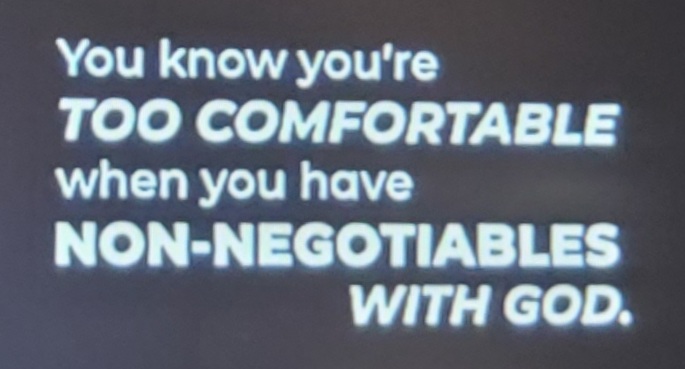
In seeking the direction and power of the Holy Spirit, the man of God must be willing to do whatever the Spirit leads him to do. This means he will probably be led out of his comfort zone.

This quote is another one from the book Uniquely Bivocational that has general meaning for anyone seeking God’s power in their lives. The chapter it is from focuses on how a pastor prepares to share a message. Yet the title, Receiving and Sharing a Word from the Lord, has application for anyone who wishes to speak into other’s lives as led by God.

Here’s how. Take the phrase “the man of God” out of the quote and replace it with the pronoun “I.” See what I mean? “…I must be willing to do whatever…and I will probably be led out of my comfort zone.”

God is limited when we refuse to be willing. God cannot do all he could if we insist on being comfortable. The god of comfort will keep us from experiencing the power of the God we profess, the God we need.

Believer, drop all the “buts” and “what ifs.” Offer your willingness. Embrace the uncomfortable. Prepare to experience God’s power unlike you ever have.

God of My 20’s: 2 Things I Would Tell Myself

(Post #10 in a collaborative series)

Guest Blogger Eric Vorhies

The things that the 35-year-old Eric would tell the 20-something Eric would need a TLDR (too long didn’t read) section. Don’t go to college unless you have to, travel before having kids, don’t eat too many gummies (they will lead to cavities), learn more about leadership, manage your time better with routine and discipline, stop eating dessert after every meal, etc. There are specific reasons for each of these, and for the ones that I did not share. BUT the problem is that the 20-something Eric wouldn’t have really heard these nuggets of wisdom. He was too sure of himself. So, I have narrowed it down to two things that I wish I could tell myself when I was 10, 15, 18, 21, 25, 27, even yesterday: choose your treasure wisely and stop seeing the world in a binary way.

The Treasure We Choose

Jesus tells a parable in Mt 13: 44-46 about people finding something valuable and doing whatever it takes to obtain it. Elsewhere, the Bible tells us that where our treasure is, there our heart will be. Look…the Bible has a lot to say about treasure. So much so, I think I got lost in the things that I treasured. Now, I didn’t treasure ridiculous things. I like movies, playing frisbee, hanging out with friends, and sleeping in…you know, the normal stuff. Those things are important to me; but when I consider the value that my treasure had, it feels empty.

Before you think I am crazy, let me explain. Friendships are good. Relaxing is good. Exercise is good. What I did wrong is nuanced. I regret making those things the goal in and of themselves. When relaxing or friendship becomes the goal, I subtly shifted from serving God to serving myself. Subsequently, those things are then viewed from a self-serving perspective.

Something needed to shift. That’s when I realized just because we treasure something doesn’t mean it has value. To find treasures of value, we have to pursue God to discover what He values and treasure those things. When we do, everything else becomes a by-product of that pursuit. For instance, the more I pursue God, the more I understand His grace and His love for people. Therefore, I serve at my church, I lead a small group, I foster kids, I push myself to become a better parent and husband. And all the while, I have found more peace and patience, deeper friendships, stronger relationships, and a faith that comes from God because I have reached the end of my rope so many times that I have nothing else to do except trust in Him.

So, I would tell myself to treasure things that have real value, relentlessly pursue them, and learn how to merge what you are naturally passionate about with that pursuit.

There Are Two Kinds Of People In This World

Yes/no. Black/white. Right/wrong. True/false. Iphone/android. Are there really only two options for everything? I used to think that in very mathematical terms. If I put in the right information into a solid equation, then I can predict the outcome. If it failed, then I had a bad equation or didn’t have the right information. A better understanding of the variables and their relationships was the solution to the world’s problems. The thing is…the world is messy. It’s messy in such a way that it shouldn’t always be seen as a problem to be solved, but rather a tension to be managed.

Can’t find the perfect person to date? The perfect church? Your dream job? Well, that’s because they don’t exist. That’s a problem you can’t solve. So you manage the tension. I have learned this is the most deeply personal and profound way that I could. Here’s the truncated version: We fostered a teenager. It was amazing for 1.5 yrs. After getting guardianship, she developed mental disorders. I became a parent of a child I never thought I would have. In a nutshell, I have quit judging other parents…and people in general.

That’s what having kids does to a person. See a frazzled woman with a stain on her shirt — yeah, she could be just some unhinged woman, but she’s likely just a mom. Some guy sleeping in church…of course he could be bored out of his mind, or maybe he didn’t get any sleep because his 5-year-old climbed in his bed and was repeatedly kicking him throughout the entire night.

The world is messy. People are suffering and hurting. Some of them do not have the tools or capacity to know how to respond. So, rather than turning from the mess and complexity, the 20-something Eric needs to embrace it. But not as a problem to solve, but as a tension to manage. A tension that will never go away. But it can get better. And when it gets worse, that’s okay too, because I can always get better also.

TLDR

I get it. 20-something Eric would not have listened well through this either. So, the bullet points:

  • Treasure the things that God says have value
  • The world’s messiness isn’t something to be solved but a tension to be managed

Hopefully, the words of 40-something Eric will be more like, “always have ice cream with your pie,” or “it’s ok that you bought that tool for that thing that you never actually fixed because your neighbor got a lot of use out of it.” I just pray to God that these two are burned into my character at this point. Otherwise, I will make some easily avoidable mistakes.

Covid-19 Update: I wrote this before the pandemic. I have learned some new things, but I will spare you…except for this one last one: Wisdom is a depreciating asset. I am glad to have re-read this today because it reminded me to look at the season I am in now with a fresh perspective. So, be open to re-learning something that you already knew.

God of My 20’s: A Hole in My Heart

(Post #5 in a collaborative series)

Guest Blogger Melissa Gurchiek

Wow! God in my 20’s? I was born and raised into a very strong, Christian Methodist family. My grandmother was a strict believer, and my parents were as well. I think I attended every service, dinner, Sunday school, Bible school, and anything else the church offered. After a Billy Graham crusade at a local movie theater, I even had a small 3-person Bible study that the crusade offered with a woman from the church. As a child, I loved memorizing scripture, the youth choir, being an acolyte, and just about anything connected with serving. As a high schooler, I was a “nerd”; but underneath my issues, I had a strong love of what I thought was being a good Christian. I attended UMYF until some joking around by some of my classmates (about Jesus) made me furious and I left never to return.

In college, I came out of my shell in oh, so many ways. I was definitely a late bloomer. I started out by trying to go to church, but sleeping in soon took over. The only time I really worshiped was when I’d go home for the weekend. After graduating, I married and returned to my hometown to teach. My father had passed, so I continued to go to church with my mom, joined the choir, but never found a Sunday school to attend as none seemed to fit me. If it hadn’t been for that connection with the choir and with my mother, I think attending would have been questionable. Being an “everyday” type of Christian really didn’t mean much to me. No devotions or daily prayer. My husband is a non-practicing Catholic, so there was nothing to inspire me at home. There was definitely a hole in my heart that I didn’t recognize.

In my late 20’s, I had my daughter and raised her in my church. She loved it, she was easy. A few years later, I had my son whose father felt didn’t need to go to church if he didn’t want to. I felt like a failure…not able to say prayers before meals, have family devotions like my family did. This continued to haunt me my whole adult life.

Fear not, my son became a Christian man, and my daughter has a deep belief even though she doesn’t go to church. If I were near her, I think it would be different as she doesn’t have the home support, just like I didn’t. In moving to Bradenton, I have finally found that “drink of water” that my soul thirsted for and have found my fulfillment late in life. I guess I was still a late-bloomer….thank God for that!