Black & White & Gray & Neither

My natural mindset nurtured by my upbringing has led me to a lot of work regarding moving away from black and white thinking. Always a work in progress.

My more natural gray-thinking friends and colleagues have been tremendous partners in my growth. But recently, I’ve determined there is another realization to my growth that I’ve never considered.

Here it is: Regardless of whether one thinks naturally black & white or gray, a lack of openness toward the inner work required for growth potentially creates ruptures.

Here’s how Dr. Dena Dinardo explains it:

Explore the value of gray thinking

The final step to managing binary thinking is opening up to the shades in between – the nuance, the uncertainty, the possibility. This is where real growth happens. 

Challenging black and white thoughts and exploring gray thinking (the in-between) allows us to see situations from new angles, which doesn’t just change how we think, but also how we feel and respond. In relationships, this opens the door to deeper understanding, repair, and connection.

This kind of inner work can be difficult to do alone. If you find yourself struggling, consider working with a therapist who can help you develop more flexible and compassionate ways of thinking and relating.

I’m tempted to walk away from relationships lacking mutual desire for growth, willingness to do the work. These are the Neithers. The pain and suffering surrounding Neithers slowly, both physically and/or emotionally, pushes away those working to grow.

May we all embrace our inner work in order to embrace one another…to open the door to deeper…to possibilities otherwise left unknown.

Photo by BoliviaInteligente on Unsplash

Journaling For Beginners, Part 2: 30-Day Challenge

Another approach to journaling is answering a pre-determined set of questions. I’ve come across two this year that I’ve engaged.

The first one I started on Easter Sunday. It was a 30-Day challenge created by Alex Banayan, author of The Third Door.

Now, before you dismiss it thinking you can’t commit to something 30 days in a row, here’s your better option. Think 30 consecutive journal entries. Some missed days along the journey are to be expected and shouldn’t be viewed as failing. I took 40 days. No guilt or shame.

The focus is similar to yesterday’s post-a review of your day. But answering three questions may take a little more time and thought. Here they are:

  • What filled me with enthusiasm today?
  • What drained me of energy today?
  • What did I learn about myself today?

The balance in these questions is healthy. You give yourself an opportunity to engage what fills you, to overcome what drains you, and to grow in understanding yourself.

Banayan encourages this reflection as a final entry following the challenge: Read back over your entries to identify patterns for all three questions. That exercise will take some time. No rush. I didn’t do that in one setting, by the way. Took one question at a time over a couple of days.

What I liked about this challenge was that it led to progress. If you’re wanting more from your journaling than reflection, this challenge is for you.

Photo by Jac Alexandru on Unsplash

Perseverance

Catching up today on one of my favorite podcasts, Being Known.

It’s season 9. They are reviewing chapters from Curt’s latest book, The Deepest Place to deepen our understanding of suffering and the formation of hope.

I hadn’t finished episode 7 on Perseverance, so that’s where I picked up. It was interesting timing.

I’ll post the video for the entire episode for you to view, but here are the lines that spoke most to me:

When we are willing to persevere, we discover over time that we are becoming something different than who we were…It’s often the case that we are not the first to recognize that…Someone else who’s watched us would say we are not the same person.

I love being able to point this out to my friends. They’ll say something that either shows their growth or reveals they have yet to see it. I try to interject my observation to reinforce the work they’ve done, the change they’ve accomplished, and the encouragement to keep going.

Need a shot of reinforcement? Check out the episode.

Behind the Curtain: 3 Questions Leaders Must Ask (Post #2)

(Written by Mark Stanifer, SightShift Certified Coach and founder of Dare2LiveCoaching.com)

You’ll recall from Part 1 of this series that the question being explored is this: “What questions must be answered to ensure your public persona matches your behind-the-curtain private one?” The first question that must be asked is, “Where am I trying to take for me rather than give for others?” There are two more questions a leader must wrestle with in order to ensure alignment between public and private personas.

Let’s return to the account of Jesus in the wilderness and explore the second test.

~~~~

Compromise or Commit

The second test Jesus faced went straight to his values. The tempter was inviting him to compromise. Testing if he would stay committed. Yet Jesus, as our leader example, modeled what his ultimate value was in the way he responded to this second test.

None of us will face stakes as high as what Jesus faced in this test. The tempter was offering him the kingdom of earth. Now, we know the enemy’s pattern from the early pages of the Bible. It is to cast doubt on the authority and trustworthiness of God, to undermine Him and his creation. We should not presume that Jesus wasn’t affected by his offer. The enemy knows how to exploit our humanness.

The second question a leader can ask is this: Where am I compromising, rather than committed to, my values?

It may be helpful here for you to think of values in this way: centered on God and committed to becoming who He made you to be.

The offer Jesus was given was the antithesis to those values: substitute something other than God as the center and deviate from the path of becoming the best and fullest expression of himself. Understanding his test in this light makes it directly relatable to the tests (the refining) that leaders face. How are you answering that question, in the things that seem insignificant and in the things where the significance is great?

You may read that last statement and feel the pressure to double down striving to be good in all things. The intent here is not to heap perfectionistic pressure on you and make the striving any heavier to bear. Relax and let Father’s refining do its good work. Or you may discount the insignificant and focus only on the big things. Recognize, however, that big things always start off as little ones. For you, the growth opportunity is to notice the smaller testing moments and stay committed vs compromising. In both cases, God’s process is refining you to be “mature and complete, lacking nothing.” (James 1:4)

Photo by Mark Duffel on Unsplash

(Post #3 tomorrow)

Role Clarification: It’s Critical

In my years of leadership, one vital item that continues to gurgle to the top determining the health of a team member and ultimately the entire team is role clarification. Just this week, I was reminded again how often simple clarifications are missed and how they impact decisions and conversations.

I was having a second conversation which some would call “hard” with a leader after a first with their colleague. Come to find out, that first one wasn’t necessary, but only because the second one clarified both of these leader’s roles. Totally changed that conversation and explained some odd, head scratching moments over the past two years. I felt bad, but not for long when this leader said, “Yeah, that happens a lot.”

They may be right more than they know. Hopefully in their context they can work to lower that frequency. Speaking of context, there seems to be a common thread of how role clarification gets missed. That thread can be summed up in one word: CHANGE.

If it’s true that change is constant, then it must be true that clarification also needs to be constant. For example…

  • If a team member receives a new title or responsibility, repeated clarification for everyone is necessary. A one-time announcement by email, social media post, or meeting announcement doesn’t suffice. And just stating the title doesn’t cover it. Consider delivering a brief job description, purpose for the title, and who is impacted by this role; it probably wouldn’t hurt to update the organization chart. What may seem like a small change is still change.
  • When a new team member is added (no matter the level), repeated clarification for everyone is necessary, particularly if the position is a new position. One could ask, “So whose responsibility is that?” My opinion, it’s the primary responsibility of the new team member’s immediate supervisor; in the case of their reporting to a board, then the board should own this task. Please avoid making it the new team member’s responsibility to explain why their job was created, what their job is, and what the new organization chart looks like. If that’s how your leadership rolls, you may be looking to refill this position sooner and more often than you’d like. It may seem obvious, but adding new team members is change.
  • When your organization is growing or goes through any major leadership shift, repeated clarification may seem like overkill. But consider this question: How many ripples does growth or a shift create? When you finish the list of all the ripples, that number multiplied by no less than two is how many clarifications are needed to avoid confusion and misunderstanding and their potential fallout. One truth to grab on to-growth is change.

Change equals a clarification need. If that stresses you out as a leader, then this task is most likely not in your wheelhouse. Odds are you know the team member that lives in that wheelhouse. Talk to them soon. It’s critical.

Photo by Austin Distel on Unsplash

An Altar in the World, Meditation #6

On recommendation, I recently read An Altar in the World by Barbara Brown Taylor. It’s subtitled A Geography of Faith. In the spirit of that lane, rather than offer a review I’ve selected my top highlights and will offer a meditation post for each one. Here’s the final quote:

Anything can become a spiritual practice once you are willing to approach it that way-once you let it bring you to your knees and show you what is real, including who you really are, who other people are, and how near God can be when you have lost your way.

Chapter 5, The Practice of Getting Lost

Chapter 5 is a ride. Taylor takes something bane like getting lost to illustrate her point that anything can become a spiritual practice.

I can’t say I get lost on purpose, but I understand her point. Getting lost viewed through the lens of “maybe there’s a reason” certainly requires some discipline and regulation. What I have done on purpose is take new streets, driving or running, just to see what’s on them. This past Saturday, in fact.

I had an event to attend downtown Sarasota Friday night. Instead of driving home to West Bradenton afterwards, I booked an Airbnb just south of downtown. Main reason: to run the Ringling Bridge the next morning. It had been too long, so I felt like it was worth it. Of the overall 7.28 miles of the run, besides the bridge, I had never ran any of those streets. I purposefully returned back a different way than I had approached the bridge. The two best sections of the run was by the Bay on Mound then through and around Payne Park.

I agree with Taylor. Growth happens when you lean in to purposefully embrace the unfamiliar. And whether that unfamiliar was planned or not, your peace and trust are revealed. Who couldn’t benefit from that?

Now I’m remembering running on some very unknown streets in 2012. That summer I took my first international trip, to Belarus of all places. The purpose of that trip wasn’t to run or pleasure traveling, but to teach ESL classes through a supporting church. Many disciplines were bundled together on that trip; they still bring me to my knees, show me what is real, who I am, and who other people are. I may never forget running in that country. It was spiritual.

What practice of yours, if looked at differently, could become spiritual? Grilling? Baking? Fishing? Painting? Ask God to show you the way. May you find a new altar in your world.

10 Endurance Tests

Currently I’m going through a YouVersion reading plan for James 1. The first four days of ten have pretty much focused on this verse:

For you know that when your faith is tested, your endurance has a chance to grow.

James 1:3 NLT

Reading this the other day, it struck me to get specific. For instance, when faith in one area of life is tested it has a chance to grow. To flesh that out, here are ten additions where growth can be experienced by faith testing.

When your faith in your spouse is tested, your endurance as a vow-keeping partner has a chance to grow.

When your faith in your boss is tested, your endurance as a loyal employee has a chance to grow.

When your faith in your children is tested, your endurance as a loving parent has a chance to grow.

When your faith in your parents is tested, your endurance as an honoring child has a chance to grow.

When your faith in your government is tested, your endurance as a contributing citizen has a chance to grow.

When your faith in your company is tested, your endurance as a committed team player has a chance to grow.

When your faith in your church is tested, your endurance as a kingdom-minded citizen has a chance to grow.

When your faith in your investments is tested, your endurance as a focused treasurer has a chance to grow.

When your faith in your friend is tested, your endurance as a reliable presence has a chance to grow.

When your faith in your God is tested, your endurance as an image bearer has a chance to grow.

Photo by Hu Chen on Unsplash

Google Result 40,900,001

I just googled the word journaling and got 40,900,000 results. Guess another result can’t hurt.

These six journals contain my entries from Dec. ’99 to March ’12

In an effort to keep shrinking my library, I discarded six journals today. Hard to do? Not really, particularly since they are more than a decade old. And as tempting as it is for me to flip through the pages, instead I dwelt on the value of what was on the pages versus the exact words.

If you journal, you know the value. If you don’t journal, well there are 40 million web results to consider its value. As for my experience, here’s why I value journaling.

  1. Spiritual. This one is first for a reason. In those six journals, my guess is 95% of the content was from the discipline of journaling while engaging scripture reading. During that time frame, I mostly used the acronym SOAP, written about in The Divine Mentor by Wayne Cordeiro, to complete my journaling discipline. My engagement with God and the Bible took on new depth through the words penned on those pages. Pretty sure there’s not a price tag I could put on that.
  2. Emotional. A lot happened in those twelve years including working at three different churches in various roles, moving to a new city, completing a four-year masters degree, handing off a successful piano competition, becoming an intentional runner, and many other personal and family experiences. Allowing pen and paper to process the emotions of such events is beneficial to the one journaling and to those in their world. The value that is most surprising is how those emotions surface more quickly and more healthily due to the writing discipline.
  3. Mental. As one who believes our minds should be in constant growth, the discipline of journaling is a tool that aids that growth. When united with spiritual and emotional focuses, my mind is transformed. After twelve years of journaling, I know things I didn’t know before, I know things I didn’t know I needed to know, and I deepened my value of knowing both of those things.

How I journal, how often I journal, and how it impacts me continues to evolve. That’s reason enough to keep journaling.

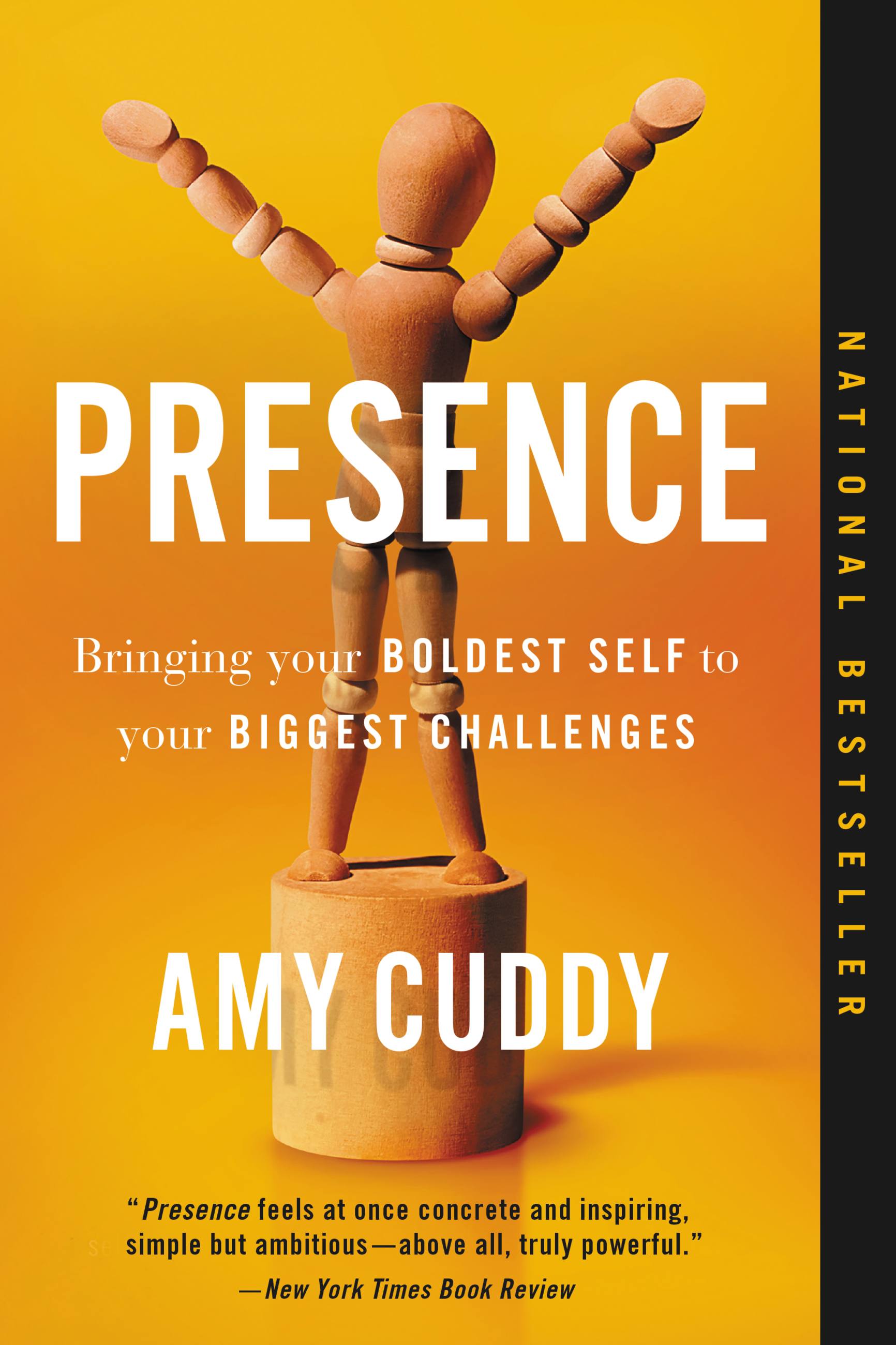
A Few Lines from Presence

I posted about Amy Cuddy’s book Presence on January 31. I finally finished it today. What a great read.

The last two chapters were worth the wait. Chapter ten addresses what she called self-nudging. Here are a few quotes:

Presence is about approaching your biggest challenges without dread, executing them without anxiety, and leaving them without regret. We don’t get there by deciding to change right now. We do it gently, incrementally, by nudging ourselves – a bit further every time.

Focusing on process encourages us to keep working, to keep going, and to see challenges as opportunities for growth, not as threats of failure.

The more you reframe your anxiety as excitement, the happier and more successful you may become.

And chapter eleven captures the point of the whole book. “Fake it till you become it.”

3 Self-Talking Points to Temper IOS

What is IOS? No, it doesn’t have anything to do with Apple. However, you can see people battling it as often as you see Apple products. IOS is a syndrome you have dealt with sometime in your life. People suffer with it on social media, tv shows, in the board room, and at the family reunion. It would be nice if there were a pill or shot for it, but so far, no.

We’ve all dealt with it, particularly in our formative years. When you gave that first book report in 3rd grade, when you got your first job, when you picked your date up for prom-it was heavy. Some people overcome it quickly; others struggle with it all their lives. Overcoming IOS may be a process or could be a defining moment. I had a defining moment my junior year in college and another a few years later that seemed to loosen the grip of IOS. Regardless of its hold on someone, the reality of it being loosened is real and is possible. 

This syndrome is Impressing Others Syndrome. Recognize it? Have you overcome it? If not, your self talk could be a solution. Most likely, your self talk is fear-based, maybe even lies you’ve been deceived to believe. 

So how do we counter those lies, that fear? Overcoming IOS will take addressing it at its roots. Those roots of lies and fears should be countered by our identity and truth as God sees us. The challenge is very personal, testing what we believe and just how true our convictions are. Our self talk should be based on truths that strengthen us to defeat IOS. These three are a great start.

  1. “God loves Me.” He created me and made me who I am. Who I am includes my looks, my abilities, my personality. He knows my history. No one else knows me like he does. His love is unconditional, and my performance and choices do not change it.
  2. “The best motives are eternity-focused.” Checking our motives should be a constant priority. Satan loves to tempt us to be temporally motivated and thereby tell ourselves to focus on things that have little or no eternal worth. When you check this root of IOS, you may discover the main self talk to change.
  3. “I’m a work in progress.” This reality can be personally humbling and also critically diffusing. This also creates in us a teachable spirit which allows us to not live for approval as much as growth. That’s a big difference.

What are you telling yourself? Lies or truths? Fears or convictions? IOS’s grip can be loosened. Ask God for your best self-talking points and be free.