Fully Alive (book review)

I was intrigued enough by The Dignity Index (link to prior post) that I found Timothy Shriver’s book, Fully Alive, on audible. I had no idea what I was in for.

There are so many takeaways. Certainly makes me wish I had a hard copy.

But I’ll narrow down my takeaways under three headings:

  1. Fully Alive is a ten+hour history lesson. The lesson includes the Kennedy family history, highlighting the impact of Rosemary’s challenges. The lesson tells the story behind the founding and development of the Special Olympics. Many other lessons are found; but the one most prevalent is the dignity of all humans and the history of all cultures determining if and how they would recognize every person’s worth.
  2. Fully Alive is a look at the whole of a man. Shriver’s transparency about his maturation, his privilege, his spirituality, and his determination are refreshing. His words inspired me to continue efforts to grow in relationships and purpose. They accomplished the promise to paint a picture of what matters most.
  3. Fully Alive is a spotlight on the human spirit. You are introduced to many examples of this spirit. I’m drawn to three of the Special Olympic athletes: Loretta, Donald, and Daniel. Their spirits are depicted as full of grit, presence, and courage. They overcame many barriers resulting in fearless victory in the face of rejection, misdiagnosis, and death. Their stories, their lives depict what Shriver wants us to pursue, living fully.

Listening to this book during this last month was cathartic. I needed it, but was not aware it would come from listening to this book. If your spirit is in need of revival, you might find it in this book. It’s worth a try.
Fathered By God (review)

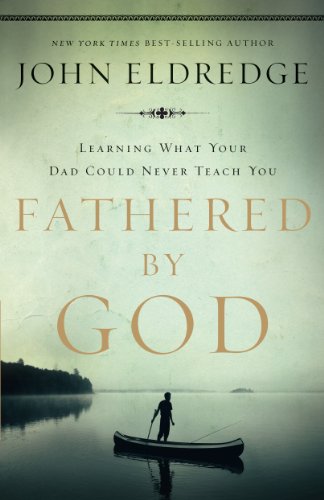
I took a friend’s recommendation and read John Eldredge’s Fathered By God this week. Much better than I expected.

My friend suggested it for several reasons, but I believe he was prompted by our conversation about men’s seasons of life. There are several authors who’ve taken on this subject. Fathered By God is Eldredge’s take, and it’s worth reading.

The enemy’s one central purpose-to separate us from the Father.

Chapter 3, Boyhood

Guys, you should read it for yourself to see if you agree. But here’s the list of the six stages he walks you through:

  1. Boyhood
  2. Cowboy
  3. Warrior
  4. Lover
  5. King
  6. Sage

The problem of self-identity is not just a problem for the young. It is a problem all the time.

Chapter 8, Sage

For me, the best takeaways were from the last three stages. Not rocket science due to my age. Of those three chapters, King captured me the most. Here are three quotes from the chapter:

I remember Dallas Willard saying once that he believes the whole history of God and man recounted in the Bible is the story of God wanting to entrust men with his power, and men not being able to handle it.

Becoming a king is something we accept only as an act of obedience. The posture of the heart in a mature man is reluctance to take the throne but willing to do it on behalf of others.

One of the big lies of the king stage is the idea that now you ought to know enough to operate out of your own resources. Not true. You will be faced with new challenges, bigger challenges, and the stakes are much higher.

Chapter 7, King

It’s doubtful you’ll agree with everything Eldredge writes, but I’m guessing we’d all agree on this one:

At nearly every stage of our masculine journey, something in us needs to be dismantled and something needs to be healed.

Chapter 9, Let Us Be Intentional

If you’re curious about these stages or you are in need of dismantling or healing, give this book a chance. I’m glad I did.

1 in 117,000,000,000

While praying today, a question came to my mind. How many people have ever lived? Googled it and found some researched answers. Here’s a link to one of them: How Many Humans Have Ever Lived? (visualcapitalist.com)

In the couple of articles I read, it’s agreed the number is over 100 Billion, fluctuating between 105 and 117. I could go in lots of various directions from here, but I’ll land only on this additional stat: that means roughly 7% of all of human history is alive right now.

This question came to me during a personal communion prayer as I thought about the scriptural teaching that Jesus died for all of humanity, past/present/future. One and done. The teaching states beyond his blanket sacrifice he knows each and every one of those he died for. It’s mind-blowing to think about knowing 7 billion people personally enough to count the hairs on their head, at the same moment in time. Add to it the remaining 93% of those who have lived…not to mention those yet to live.

I fear at times Christians get so caught up in their relationship with God that they forget they aren’t the only ones. We cross the line, if we aren’t careful, into genie world. “He loved me enough to die for me and promised to give me what I ask for. How Great is That!”

This question and its answer humbled my heart, filled me with awe, and deepened my love. There are no bounds to God’s love. Yes, he loves me. He also loves the other 117,000,000,000.

Balancing Precision and Fluidity

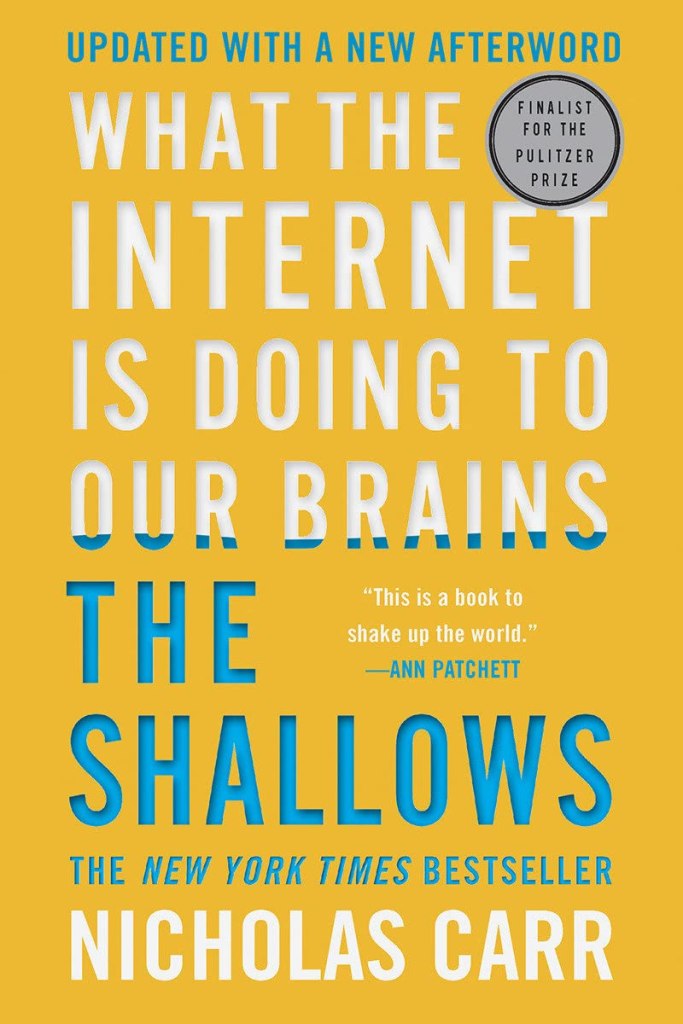
You never know what you’re going to learn by reading a book. Such was the case while reading chapter three in The Shallows by Nicholas Carr.

Chapter Three, “Tools of the Mind,” shares the history and impact of maps, clocks, and language on intellectual development. Carr includes these three in the same technology category, the intellectual technologies. He wrote that maps expanded man’s spatial technology. What maps did for space, clocks did for time.

To describe life before the creation of clocks, Carr quotes French medievalist Jacques Le Goff who said life was “dominated by agrarian rhythms, free of haste, careless of exactitude, unconcerned by productivity.” Hard to imagine such a life. Thinking about it presents a mixture of envy and gratitude.

Carr then shared this bit of history relaying how and why clocks came to be:

Life began to change in the latter half of the Middle Ages. The first people to demand a more precise measurement of time were Christian monks, whose lives revolved around a rigorous schedule of prayer. In the sixth century, Saint Benedict had ordered his followers to hold seven prayer services at specified times during the day. Six hundred years later, the Cistercians gave new emphasis to punctuality, dividing the day into a regimented sequence of activities and viewing any tardiness or other waste of time to be an affront to God. Spurred by the need for temporal exactitude, monks took the lead in pushing forward the technologies of timekeeping. It was in the monastery that the first mechanical clocks were assembled, their movements governed by the swinging of weights, and it was the bells in the church tower that first sounded the hours by which people would come to parcel out their lives.

Like Carr, I don’t share this to make a slam, but to make an observation. Balance is a tricky thing. Some would even say it’s an impossible thing. But like holiness, it’s worth pursuing.

When it comes to time, we can get imbalanced by rigidity and carelessness. We can get lost in the black and white as well as the disregard for parceling and regimentation.

As those seeking to walk in the Spirit, may we follow his lead in the moments when precision is best and when fluidity is lifegiving.

Photo by Aron Visuals on Unsplash

Reading to Understand the War in Ukraine

Last month The Atlantic published an article Nine Books to Read to Understand the War in Ukraine. It moved me to expand my knowledge, to educate myself, and to better respond to other’s opinions on the current crisis.

Any of the recommended books sounded interesting to me. I decided to take a trip to the library and see what I could find. I had my favorites selected, but the reality was I was at the library’s mercy. Unfortunately, they didn’t have copies of most of the books. The book that most interested me that they did have I decided was too long of a read. So I browsed other books with related topics and checked out this one by a professor and former foreign policy analyst, Constantine Pleshakov. Turned out to scratch the itch.

One could certainly read this book faster than I did, but I wanted to sit in it more than just do a quick read. Truthfully, I would probably need to read it several times to fully grasp all the history and political nuances addressed. Yet, I’ve gained so much from this read that otherwise I wouldn’t possess.

My one trip to that area of Europe was ten years ago. I went to Belarus as one of several ESL teachers for a week-long schooling. That glimpse was a blink, but an excellent thumbnail into the mindset of those who face the dilemma between holding on to their past or ferociously determining their future. An individual making that life choice can be stuck for much of their life. Imagine the nth degree reached when it’s an entire nation or region.

For anyone facing that dilemma but more importantly for the leaders and citizens of Ukraine, I share this blessing from Numbers 6:

The Lord bless you and keep you; the Lord make his face to shine upon you and be gracious to you; the Lord lift up his countenance upon you and give you peace.

The vast majority of us base our thoughts about this war on what we read online or hear on the news. I encourage you to do yourself and the Ukrainians a favor-take the time to do your own digging. You’ll benefit more from conducting your own dig that looking in someone else’s hole.

Photo by Marjan Blan | @marjanblan on Unsplash

First 2022 Reads

If my first two reads of 2022 are any indication, I’m in for an education.

Book #1

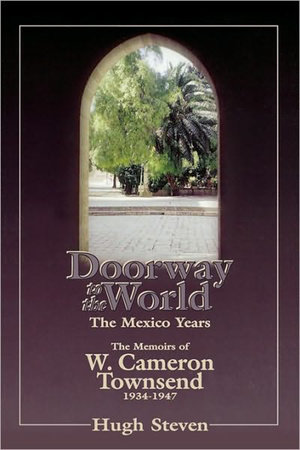
Before reading this book, I knew nothing about the start of Wycliffe Bible Translators and Summer Institute of Linguistics (SIL). It’s quite a story. In this memoir, you learn just how passionate founder Cameron Townsend was and how that passion laid the foundation for one of the largest mission organizations. His vision and commitment led many world leaders to join forces to transform communities. He used what he had and relied on God for what he didn’t have.

Book #2

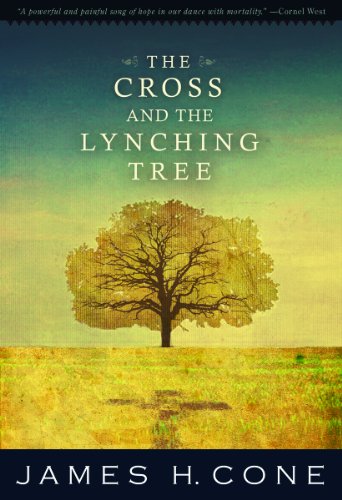
If James Cone only wrote this book for me, it would have been worth his time. I’m thankful for the direction I received to read it. I had no idea what I was going to learn and experience. I learned many things. Much of what I learned gave voice to my mind’s whys I didn’t know I needed to voice and answered my soul’s questions I didn’t know I needed to know. As a white, 53-year-old son of a Baptist preacher, my heart ached and my eyes teared through much of this book. So many what if’s and why not’s simultaneously producing shame and empathy, anger and compassion. My view of American history has changed. My appreciation for suffering has deepened. My belief in Jesus’ sacrifice has solidified.

These two books exemplify why it’s important to read. What are you reading? What education will you give yourself in 2022?