Piano Lessons on Humility

Bored between football and hockey late this afternoon, my surfing led me to a documentary mid-air. It being about a piano, I paused and didn’t move the channel.
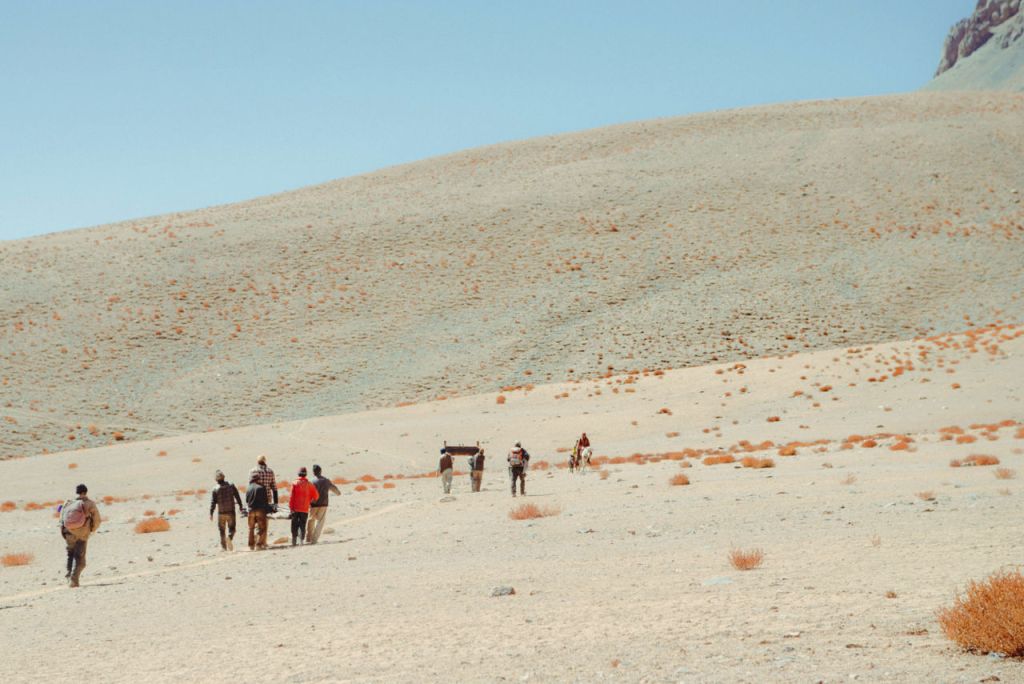
Piano to Zanskar is an award-winning British documentary film which tells the story of Desmond O’Keeffe, also known as Mr Gentle, a 65-year old piano tuner who embarks on an impossible mission.

Facing his future in retirement, “sitting in deck chairs and eating lemon drizzle cake”, Desmond decides instead to take on the most challenging and perilous delivery of his four decade career: transporting a 100 year-old, 80 kilo, Broadwood and Sons upright piano, from bustling London to the remote heart of the Indian Himalayas. 

Setting off from his busy workshop in Camden Town, and enlisting the help of two young and eager apprentices, Desmond’s ambitious destination is a primary school in Lingshed, Zanskar. At 14,000 feet above sea level, it is one of the most isolated settlements in the world. 

At 56 years of age, I continue to receive lessons on humility; they come faster and deeper. Watching this film, I faced several realities of extraordinary privilege my life has afforded that I must stop taking for granted.

  • Grew up in a home with a piano. (As of 2015, one in 3,788 U.S. families owned a piano. That statistic for the world isn’t known.)
  • Received piano lessons at various levels.
  • Earned a degree in music education.
  • Taught piano for seven years.
  • Started a piano competition in the early 90’s, now known as The Greater Jacksonville Federation Piano Competition, that continues today.
  • Have played for thousands of church worshippers in America, Belarus, and Jordan.

God has used pianos to heal me, to touch others, and to lift his name high.

For His sake, may the humility lessons continue.

The 6 overlooked words of Numbers 20

Numbers 20 tells a significant story in Moses’ life. After reading it this week, I believe it actually tells two significant stories. One just overshadows the other.

Both stories changed Moses’ future. The one that gets the most focus is his “not trusting in God enough to honor him as holy in the sight of the Israelites” (v.13) by striking the rock rather than speaking to it to produce water. This decision cost him dearly; he didn’t get to enter the Promised Land.

Before that choice, Moses experienced a normal but ugly thing in life, something he couldn’t control. Death.

In the first month the whole Israelite community arrived at the Desert of Zin, and they stayed at Kadesh. There Miriam died and was buried.

Verse 1

Those last six words jumped off the page. I knew his sister died before Moses and his brother Aaron, but I had never put her death as happening in the same chapter as his future-altering choice.

Unfortunately, those six words are all we have. We don’t know anything else. We’re left to wonder.

  • How did Miriam die?
  • Had their relationship healed from the scene in Numbers 12? (By the way, that’s where we find this statement: (Now Moses was a very humble man, more humble than anyone else on the face of the earth.)
  • How much time passed between verse 1 and verse 2 in this chapter?
  • What level of grief did Moses experience after his sister’s death?

Moses’ story has always intrigued me. These questions will go answered, but they should be infused in our interpretation and meditation of his life. 

  • Is it possible grief influenced this meek man to a choice he didn’t see coming?
  • Considering the unique elements of Moses’ early life (being pulled from his family of origin, conflicting allegiances, father/son relationship), certainly they impacted his development and actions, right? 
  • Death had to be a struggle for Moses considering his history of taking it into his own hands, right?

I’m learning this more and more. Rather than judge the action in the moment, we’d show more care and love to consider what led up to it. Particularly when we are in the dark, a place we often find ourselves in biblical stories. 

All the words matter. I’m doing my best to consider them all.

Photo by Ahmed M Elpahwee on Unsplash

Humble Inquiry (book review)

What a first read for 2024! Not sure how I came across it, but Edgar Schein’s Humble Inquiry is both refreshing and challenging. And I read the first edition not realizing there is a second edition. Wonder what I missed?

We cannot hope to understand and work with people from different occupational, professional, and national cultures if we do not know how to ask questions and build relationships that are based on mutual respect and the recognition that others know things that we may need to know in order to get a job done.

Introduction: Creating Positive Relationships and Effective Organizations

Schein contributed over five decades to the field of organizational health, a good portion of that as a MIT professor. His work was/is countercultural to the mindset of Doing and Telling.

Humble Inquiry is the art of drawing someone out, of asking questions to which you do not already know the answer, of building a relationship based on curiosity and interest in the other person.

Introduction

Schein repeatedly describes relationships with these words: trust, interactive, conversational, building, investing, processing, shared value, and mutual. After chapter 1’s focus on defining humility, chapter 2 shares case examples to which Schein keeps referencing through the remaining chapters. These three statements display the chapter’s nuggets:

Don’t assume that the person with the question has asked the right question.

Accessing your ignorance, or allowing curiosity to lead you, is often the best guide to what to ask about.

Humble Inquiry is behavior that comes out of respect and the desire to improve the quality of the conversation by stimulating greater openness and the sharing of task-relevant information.

Chapter 2, Humble Inquiry in Practice-Case Examples

Chapter 4, “The Culture of Do and Tell,” gives the most countercultural challenge, at least to U.S. readers. He believes the main problem standing in the way of better relationships and conversations is our culture that values task accomplishment more than relationship building. A second problem is asking, in general, is less valued that telling. Schein suggests the key to overcome these problems is Here-and-now Humility, described in chapter 1 as admitting dependence on others.

Schein culminates his work well with the last chapter as a “how to.” He makes a helpful acknowledgement that a culture shift requires unlearning and new learning, which result in two types of anxiety he labels survival anxiety and learning anxiety. The courage to face anxiety can result in beautiful relationships that otherwise wouldn’t surface.

A well-timed Humble Inquiry that launches a conversation that leads to a relationship should be thought of as a thing of beauty. Innovations in how we conduct conversations should be treated as art.

Chapter 7, Developing the Attitude of Humble Inquiry

Anyone in leadership will grow personally and relationally by reading Humble Inquiry. I’d also encourage business/executive coaches to read Schein’s book to sharpen themselves and to resource their clients.

13 Quotes from Faith Beyond Belief

Just finished reading another book that’s delivered richness.

It reads like a podcast transcript. When they say a conversation, they mean it. So it’s refreshing in that way.

The 22 chapters feel like episodes. They don’t necessarily connect one to the next, but they definitely weave the thread of faith and spirituality.

Rather than critique or review the book, I choose to share these quotes for your meditation:

“Love your neighbor as yourself” means be aware that you and your neighbor are one.

The Creative Meaning of Life

The answer I would give the agnostic: if you cannot see [accepting unity with God] yet, you don’t have to accept it. Wait until you experience it. It is not a dogmatic principle we want to impose on you. We only want to say that millions of people experience it. You can too. Open yourself to it.

The Epic Discovery of Self

You have a “vibe.” What do you want to transmit? Bitterness, dissatisfaction, loneliness, or understanding, warmth, and love? None of that requires any great achievement. It simply happens in the way I live my life.

A decision in favor of something is also a decision to let go of something.

“Fear not!” means “take courage, and take anxiety as it comes!”

Calling, Courage, and Fear (this chapter alone is worth checking out this book; so much to digest on the subject of anxiety and courage)

When someone says she doesn’t believe in God, I ask: which god don’t you believe in?

On the Temptation to Want to Possess the Truth

Prayer warms what is frozen and hard into living water.

We fulfill God’s will when we forgive on earth as God forgives in heaven.

The “Our Father” and God’s Trustworthiness

Many people are afraid of death because they have not lived. Unlived life is hard to let go. Those who live deliberately can also let go.

On the Mortal and the Eternal

I cannot explain why there is suffering, but I can influence how I meet it.

Suffering and Reconciliation

Humility is the appropriate attitude by which to accept oneself with one’s strengths and weaknesses.

Transformation is the result of a crisis.

Spiritual Growth

Despite all the deviations, we can say that if the church did not exist, our society would be essentially colder.

What is the Christian’s Focus?

Leadership Success: Learned Before or After?

“It is likely that leadership success, both current and future, will be determined more by the learning that takes place after being given a leadership assignment than by what has been learned prior to it.”

Gene Habecker in The Softer Side of Leadership

Read this quote for the first time this week. It’s made me think and reflect.

I’ve always held the philosophy that what has been learned prior has prepared a leader for success in a new assignment. However, Habecker has made me consider the learning after being in a new position. I believe there are stipulations as to whether this learning leads to success more than prior learning.

STIPULATION #1: What’s the leader’s ongoing approach to learning?

Is it ongoing? Is it plural, meaning it focuses on all areas of life? If the answer to either of these is no, learning is going to be minimal and therefore success will be hindered. Leaders never stop learning.

STIPULATION #2: What’s the leader’s level of humility?

Followers of Patrick Lencioni have heard his repetition on the needed virtue of humility in leadership. Humble leaders in a new assignment will have a greater bend toward learning. They carry a “I haven’t been here before and have a need to learn” posture that paves the way for ongoing learning.

STIPULATION #3: What’s the leader’s inclusion of interpersonal relations learning?

The temptation exists to believe this is a one-time effort. Or that by a certain age there’s nothing more to learn about relationships. Or a resignation to “this is just who I am.” A new assignment will bring new relationships. An ongoing, humble learning posture toward those relationships will be important for successful leadership.

I met a leader this week that I believe understands these stipulations. He is less than a year into an assignment that came with more firsts and surprises than he anticipated. In his late 50’s, he certainly has prior learning. But he is keenly aware it is not enough.

So yes, success for him, for that matter for all of us, will be based on pursuing learning – ongoing, humble, all-inclusive learning.

Photo by Charles Forerunner on Unsplash

Making It Right

@AdamMGrant

People who are unwilling to admit their mistakes are unable to learn from them. Acknowledging yesterday’s error is a prerequisite to correcting it today and preventing more tomorrow. When we get it wrong, arrogance insists “I was right.” Humility says “I want to make it right.”

7/30/23

Saw this tweet this morning. Decided to share how this played out for me, quite literally, not once but twice yesterday.

Yesterday morning, a female running friend shared her reservations about running early in the morning when it’s still dark. My immediate response was about how great it is to run in the peace and quiet. “Find a route that’s well lit, and you’ll love it.” Early this morning I realized what I had done. I hadn’t listened to her fear of being attacked. In essence, I had dismissed her. Sitting in that acknowledgment, I remembered another female running friend’s Instagram posts encouraging women to look at self-protection items to have on them when they’re active outdoors. I made it correct today by texting my friend to say I didn’t want to dismiss her fears and forwarded those posts to her.

Runners, if this rings true with you, check out this website: https://goguarded.com/

Yesterday evening, I saw a church’s FB post that didn’t sit well with me. I sent the link to one like-minded friend with no comment. We went back and forth with general comments a couple of times before they got too specific. The last comment was a “tell me more” request which I had to stop myself. Why? In the moment, I didn’t choose words to explain why. I just felt like nothing more needed to be said.

In one light, this was a private text message between friends. Was harm done? Not much, if any. In another light, who am I to place myself in the position of prophet or judge about a church that I don’t attend, haven’t sat in any leadership meetings, and am in no position to state any facts about the contents of that post. Was harm done? There could have been, in our spirits and in any other person’s who we decided to draw into the circle. I can’t say I’ve always practiced restraint. Too often, social media reactions lead to mistakes which can create an avalanche of wrongdoing. It’s on us to correct it today and prevent more tomorrow.

Thanks, Adam Grant, for the reminder to make it right. Heard!

Photo by Gilles Lambert on Unsplash

Parent, You Are Chosen!

Read Judges 13 this morning and a question came to me. What would it have been like to be Samson’s parents?

Manoah and his wife display such a teachable, humble, surrendered, and reverent spirit. Neither of them give a vibe of bitterness, doubt, or frustration at their lack of having a family yet. Neither of them display disgust at being told that with the promise of a child came a restrictive vow. Nope. Instead they reply with awe and an outlook of being blessed.

No wonder God chose them to be Samson’s parents. Unbeknownst to them, Samson would make some irreverent choices. He would not follow in their steps of humility. His surrender came by force.

Does this mean Manoah and his wife failed as parents? No. There’s where my judgment has gone in the past when reading their story. But it doesn’t seem to be the best view.

Rather than view them through their son’s actions, it seems better to view them through the eyes of the angel of the Lord who interacts with them in this chapter. They appear to be chosen. They definitely were heard. Without question, they experienced blessing through a promise personally delivered by “I Am” and its fulfillment.

God chose them. Just like all uncapable-of-controlling-the-future parents, they were chosen. God saw something in them and said, “You are the right couple to birth the last judge of my chosen people. You have the spirit to stay with me when your son chooses otherwise. I choose you.”

Father, you were chosen to father your children. God knew what he was doing. You can trust him, surrender to him, allow him to teach you.

Mother, you were chosen to mother your children. God saw your spirit. You can trust him, follow him, lean on him to sustain you.

Photo by Julian Hochgesang on Unsplash

God’s…Not Mine…Mine (Part 2)

Exercising leads to discoveries. And when it comes to this exercise about responsibility, the discoveries may not feel good at first. Like discovering you really shouldn’t eat the entire quart of ice cream just because you worked out today.

Chances are through this exercise you discovered that you are taking responsibility, trying to own something, that isn’t yours. It’s a common battle for humans to wrestle with God, stealing responsibility. Paul David Tripp says it’s because we are at war between being in awe of ourselves and being in awe of God. When we are losing that battle, we think everything is ours: money, possessions, relationships, career. Contrary to our wants, we win when we let God own what really is his.

That second heading, Not Mine, can be as big a battle as the God heading. When we haven’t won in that heading, forget about winning in this one. Why? Because if I’ve kicked God off the throne taking all the responsibility, it’s going to inevitably spill over into every area of my life. I have all the answers and control. In fact, I believe I want them. Reality is, I’m burdened and miserable. Like Pilgrim trudging uphill bearing his burden.

I have found three things to address when I’ve discovered I’m taking on someone else’s responsibilities. You might say, these are my responsibilities to stay out of “not mine” responsibilities.

  • Trust-Sure, you’ve job searched before; so what’s keeping you from staying out of your spouse’s or child’s searching efforts? You’ve also scheduled employees before; so what’s keeping you from allowing your manager to do it? You’ve been doing this task much longer than your new volunteer; so why are you micromanaging them? Discovery #1: Sometimes we do what’s not ours because we have trust issues. (Proverbs 3:5; Isaiah 55:8)
  • Humility-If I’m having responsibility issues, chances are I’m also having pride issues. Humility is required to allow good failure (yes, that’s a thing). Humility is required for personal and team growth. Ball hogs, dictators, authoritarians, glory-stealers, all losers in general taint outcomes because of pride. Discovery #2: Often we do what’s “not mine” because of our pride. (Matthew 23:12; Ephesians 4:2; Philippians 2:3)
  • Being For-Many of us are recovering tellers; by nature we take “not mine” responsibility by telling what needs to be done. My recovery started a few years ago. One mindset for a recovering teller is to be for others. Parents/bosses/leaders, you can avoid the “not mine” heading by being for your child/employee/volunteer. Not being over, behind, ahead-be for them. Encourage. Celebrate. Cheer. Discovery #3: Everyone benefits when we are all for each other. (Ecclesiastes 4:12)

Those are my three. They may be yours also. What else may yours be?

We’ll address that more in Part 3.

Photo Credit: Unsplash/Elizabeth French

A Memorable Human Encounter

Once in a while we’re fortunate to have a memorable human encounter. When it happens, I believe we should share it. I had one yesterday.

Actually, several dozen people were present, but I suspect few of them would classify it memorable. We all got to hear a few words from a local leader in sports and education. He shared some life principles as part of a community gathering at our church. His words were well said and presented. He knew what he wanted to say, he said it, and no more. He represented himself and his position honorably.

His words weren’t necessarily his. The majority of what he shared retold what he remembered learning from his grandfather, a Baptist minister. He recalled them with fondness and admiration acknowledging they started the journey he is continuing himself and now works to pass along to students and athletes under his leadership. Everyone listening had a human encounter.

But mine was memorable, not because of what he said but because of what he didn’t say. Until last night, he and I had only communicated through email and voicemail where I extended the invitation to him to come speak and then our prepping for it. In them and through all he shared with me privately and publically last night, not once did he mention his title, his success, his credentials, his history, or his current victories. Only since last night through the wonders of the Internet have I learned there is plenty he could have mentioned. His lack of being about himself was refreshing and honestly unexpected. That shows character. That reveals humility. That deserves memory.


Thank God for this servant leader, Coach Shakir. I’m grateful for this encounter. I pray God blesses his future encounters to continue to be memorable for all the right reasons.