What? We’ve Been Fasting?

Chances are, if you grew up in church, you can count on one hand the number of sermons you’ve heard that mentioned fasting. Church folk like their food, right?

Chances are most likely even higher that any mention of fasting didn’t reference Isaiah 58. That’s what crossed my mind this morning when I read it as part of a Thanksgiving-themed devotional plan. Check out verses 6-12.

Isaiah 58:6-12 NIV
[6] “Is not this the kind of fasting I have chosen: to loose the chains of injustice and untie the cords of the yoke, to set the oppressed free and break every yoke? [7] Is it not to share your food with the hungry and to provide the poor wanderer with shelter— when you see the naked, to clothe them, and not to turn away from your own flesh and blood? [8] Then your light will break forth like the dawn, and your healing will quickly appear; then your righteousness will go before you, and the glory of the Lord will be your rear guard. [9] Then you will call, and the Lord will answer; you will cry for help, and he will say: Here am I. “If you do away with the yoke of oppression, with the pointing finger and malicious talk, [10] and if you spend yourselves in behalf of the hungry and satisfy the needs of the oppressed, then your light will rise in the darkness, and your night will become like the noonday. [11] The Lord will guide you always; he will satisfy your needs in a sun-scorched land and will strengthen your frame. You will be like a well-watered garden, like a spring whose waters never fail. [12] Your people will rebuild the ancient ruins and will raise up the age-old foundations; you will be called Repairer of Broken Walls, Restorer of Streets with Dwellings.

If you’ve been involved in anything mentioned in this passage, SURPRISE! You’ve been fasting.

  • Loosing the chains of injustice = FASTING
  • Feeding the hungry = FASTING
  • Sheltering the poor = FASTING
  • Clothing the naked = FASTING
  • Not turning from your family = FASTING
  • Doing away with finger pointing and malicious talk = FASTING

As we’ve watched many of these actions in our community these last few months, we didn’t use the word fasting to describe them. Two words I did hear were light and healing. If you take this passage to be a promise, imagine what’s coming because of the fasting. Not only will this fasting result in literal repairs of walls and restoration of streets and homes, but it will also shine light and nurture healing as God replies to our cries by saying, “Here I Am.”

Photo by jean wimmerlin on Unsplash
Love As Being

When you lose your ability to care, you lose the thing that makes you human: your heart. –John Sowers, chapter 24 “Love As Being,” Say All the Unspoken Things

At first read, I thought to myself, “I’ve had heartless moments, even a heartless season. How did that happen?”

To be fair to myself, the moments and seasons that come to mind weren’t complete loses of caring. They’re better described as misdirected, distracted, or too much in the weeds that I forgot the big picture. And by big picture, I’m thinking more about all the relationships in a setting versus a select one or two.

So how did that happen?

Selfishness. There was a moment I upstaged some dear friends. I was so caught up in my own story that I lost sight of their story. Thankfully, they didn’t lose their heart.

Demanding Justice. There was a season I was determined to right a wrong. No one asked me to; no one gave me permission. Thankfully, that season came to an end before I lost heart.

Abusing Power. There was a moment I carved a wound with a hasty decision. In that moment, I chose perfection over mercy. Thankfully, that scar reminds me what power can do to my heart.

The chapter title of Sowers’ quote is worth noting. The less I care about doing and more about being the more loving I am.

Thanks for saying the things, John Sowers.

Photo by Isaac Quesada on Unsplash

Justice Must Be Foundational

Righteousness and justice are the foundation of your throne; faithful love and truth go before you. Psalms 89:14 CSB
This week I along with some friends completed a youversion reading plan by Dr. Tony Evans answering the question “What is Biblical Justice.”  A couple of thoughts stood out to me:
  • There is no clear and right definition of justice that excludes God.
  • Biblical justice encourages freedom through affirming accountability, equality, and responsibility by linking the spiritual to the social realm.
The last devotional referenced this verse from Psalm 89. I’ve read it many times over the years, but never has its words been more powerful than when considering the topic of justice. The imagery of the throne of God being built on a foundation of justice is transformational. Before fulfilling his mission for which he left that throne, Jesus gifted one last act of justice by caring for the repentant thief, this while dying unjustly. That’s justice found in one’s foundation. As a citizen of God’s kingdom, I must align myself with that foundation. In order for the King to reign in my heart, mind, and soul, justice must be sought and preserved. That’s possible if it’s in my foundation. Photo Credit: Unsplash/Mirko Blicke

“Self,…”

Fear is exhausting. Well, at least misplaced fear can be. Proper fear can actually provide joy and comfort.

Several people have commented how that in spite of being slowed down since March they still feel tired, maybe even more so. Perhaps fear is to blame.

I started a new book this afternoon, Note to Self: The Discipline of Preaching to Yourself by Joe Thorn. His book contains 48 devotionals written as notes to “Self,” reminders of what you know based on Scripture. Note #3, entitled “Fear,” includes these thoughts:

Worldly fear will lead you to toe party lines, compel you to try to live a safe life, and lead you to so prize the good gifts of God that they mutate into idols.

Your possessions can go up in flames, but you have treasure in heaven and stand to inherit the kingdom. Your reputation may be sullied, but you are justified in Jesus. You may be rejected by those who you admire, but you are accepted by God. You may be hated, but your Father in heaven loves you with an undying love.

The fear you need to maintain and cultivate is a fear of God, for in it you will discover wisdom and develop strength that enables you to persevere in faith to the end.

Somewhere in those reminders may you find rest from fear, whether you’re fighting your own or burdened by other’s.

What if you wrote your own note to self? What reminders would it include?

Photo Credit: Unsplash/Melanie Wasser

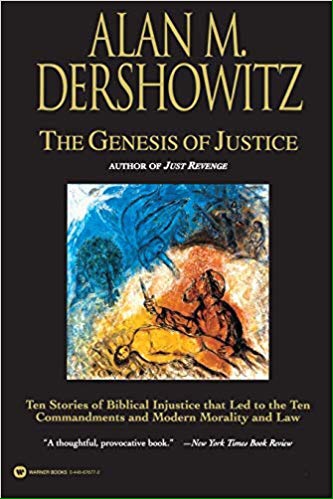
Think You Know All About Genesis? (A book review)

Whatever you know about Alan Dershowitz, if you’re like me, it’s not from reading his books. So when I came across this one, I was quite intrigued. About the only thing we have in common is we both have benefitted by living in homes who taught us the value of the Bible.

His upbringing in Judaism and his practicing of law tremendously frame his view of God, man, and the Bible. He most definitely has a biblical worldview. Does that mean all biblical worldviewers would agree with his interpretations of Genesis? Pretty sure you know the answer to that question.

My opinion: that should not keep one from reading another’s integrated and exhaustive presentation of their interpretation, in particular if their frame is one you do not have. That explains why I valued this reading. I grew because of Dershowitz’s work. That’s enough for me.

If these nine quotes make you think even a hint differently about Genesis, here’s your sign to choose growth:

A God who can admit that His mind has been changed by mere humans is a truly great teacher. (referencing God and The Flood)

The God who invites Abraham to argue with him about justice is a God who encourages rational discourse. The God who rebuked Job for trying to understand an obvious injustice is a God who promotes unthinking fundamentalism. One of the beauties of the Bible is that even its God speaks in different voices over time.

The entire book of Genesis is about the early development of justice in human society…The Genesis stories all take place before the advent of formal rules of law… Viewing Genesis as a book about the development of justice before the existence of a formalized legal system helps to explain why the narrative is so much about crime, sin, deception, revenge, punishment, and other bad actions.

For all of his trickery, Jacob never tries to deceive God. He bargains with him, even wrestles with him, but he’s always straight with God. The result is that God blesses Jacob with leadership, but makes him understand that the wages of deception are deception.

Like much of the earlier narratives of Genesis, the Joseph story shows us what it was like to live in a world without a legal system – a world in which those with high status could, with impunity, falsely accuse those of lower status. It shows us the need for a system of justice in which all stand equally before the law and those accused of a crime have a fair opportunity to challenge the evidence against them and demonstrate that it was planted, false, or mistaken. It leads inexorably to the later biblical rules against favoring in judgment either the rich or the poor.

The common law of Judaism is that it is not only permissible, it is obligatory to argue even with God about a proposed injustice. Humans can argue with God, but they cannot refuse to obey a direct order from Him. (referencing God and Abraham)

Had the Torah-the great law book-simply begun with a list of rules, the reader would wonder about the basis for the rules. Some of them appear eminently logical, but the others cannot be understood without reference to the experience of the Jewish people.

If the book of Genesis tells the story of the developing legal system-ad hoc rules, common law, statutes, and so on-then Sinai does not represent so dramatic a break with the past. It is a culmination of a process begun in the garden of Eden and continued with Cain, Noah, Abraham, Jacob, Dina, Tamar, Joseph, and the other actors in opening narratives of the Bible.

The Bible uses stories of injustice to teach about the need for justice…The story of Genesis will continue until the end of humankind.

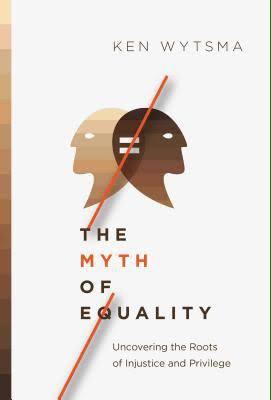
The Myth of Equality (Book Review)

I just finished reading a book that I didn’t know I needed to read.

I wasn’t looking for it. Had it not been given to me, I most likely wouldn’t even know about it.

Why did I need to read it? 

  • Because I didn’t know what I didn’t know. The first part informed me about the story of race.

Racism in the United States is worse than we thought, its lasting consequences are more significant than we think, and our responsibility is greater than we’ve been taught…There are many things that can only be seen through eyes that have cried.

  • Because I needed to see this subject through the lens of God’s kingdom. The second part took me deeper into the truth of equality.

If every person is made in the image of God, then stereotypes lead us down a dangerous path…Racial equality and fairness is not just a good thing but an ideal that we must work toward if we are to fully realize Christian obedience, national justice, and individual flourishing.

  • Because I needed to know about my privilege. The final part challenged me to listen and learn, lament, confess, and lay down.

White privilege doesn’t mean your life isn’t hard. It means if you are a person of color, simply by virtue of that, your life might be harder…If any part of justice matters then all of justice should matter.

Most likely, you didn’t know about this book before reading this post. You need to look for it. You need to read this book.

The God Who Brings You Out

I’m reading through Leviticus. If you’ve never read it or it’s been a while, consider giving it a read. It is a rich book. For example, here’s a thought from chapter 19:

“I am Yahweh your God, who brought you out of the land of Egypt.” ‭‭Leviticus‬ ‭19:36‬ ‭HCSB‬‬

This declaration comes in the middle of several admonishes regarding stealing, treating foreigners nicely, respecting family and the elderly, and conducting business fairly. These follow the beginning statement God told Moses to share with the Israelites: “Speak to the entire Israelite community and tell them: Be holy because I, Yahweh your God, am holy.” Leviticus‬ ‭19:2‬ ‭HCSB‬‬

When they were in Egypt, they endured injustice as foreigners, were forced to disrespect family members, and certainly were on the receiving end of unfair business. God wants them to remember that this is what He rescued them from, this is what He is not for, and this is what they need to resist.

God brings us out, rescues us, sets us apart to be like him. Do you remember where He found you and brought you out? It may be worth a prayer to say, “Thank you, God. Thank you for bringing me out. My desire is holiness. Continue to take out of me what you brought me from.”