“Why Not” > “What If”

I’ve worked part-time for the last two years for Chemistry Staffing as a candidate interviewer. If I thought I knew anything about interviewing before then, I learned quickly I had more to learn.

In a recent staff meeting, the leadership team shared a mindset shift that I completely found refreshing and certainly gracious. Already leaning this direction, the alignment was immediate.

Mindset Shift: “Why Not” ➝ “What If” 

Moving away from disqualifying too quickly and leaning into curiosity:

Old posture: New posture

“Why not move this person forward?” “What if this could work?”

Examples:

  • Experience: “He only has 6 years, not 10.” → What if his 6 years included higher complexity than average?
  • Education: “She doesn’t have a master’s.” → What if her teaching and theology are stronger than most grads?
  • Age: “He’s 32; we wanted 40+.” (pick the age, vice versa) → What if he brings energy and innovation beyond his years? What if she has plenty left in the tank?
  • Compensation: “They’re at $75k; we can’t afford them.” → What if they’d take less for the right fit?

Key takeaway: Stay open-handed in early conversations. Gather more information. Avoid prematurely filtering out strong potential fits.

How this is an improvement:

  • Less transactional > more relational
  • Less arrogant > more humble
  • Less rigid > more flexible
  • Less closed > more open
  • Less judgmental > more gracious
  • Less about the interviewer > more about the interviewee

CHALLENGE: Put yourself in both seats. What’s your current mindset? What shifts would you like to pursue?

Photo by Mina Rad on Unsplash

A Good Name

Left this morning for my first 2024 race trip. Checking off three states between Friday and Monday.

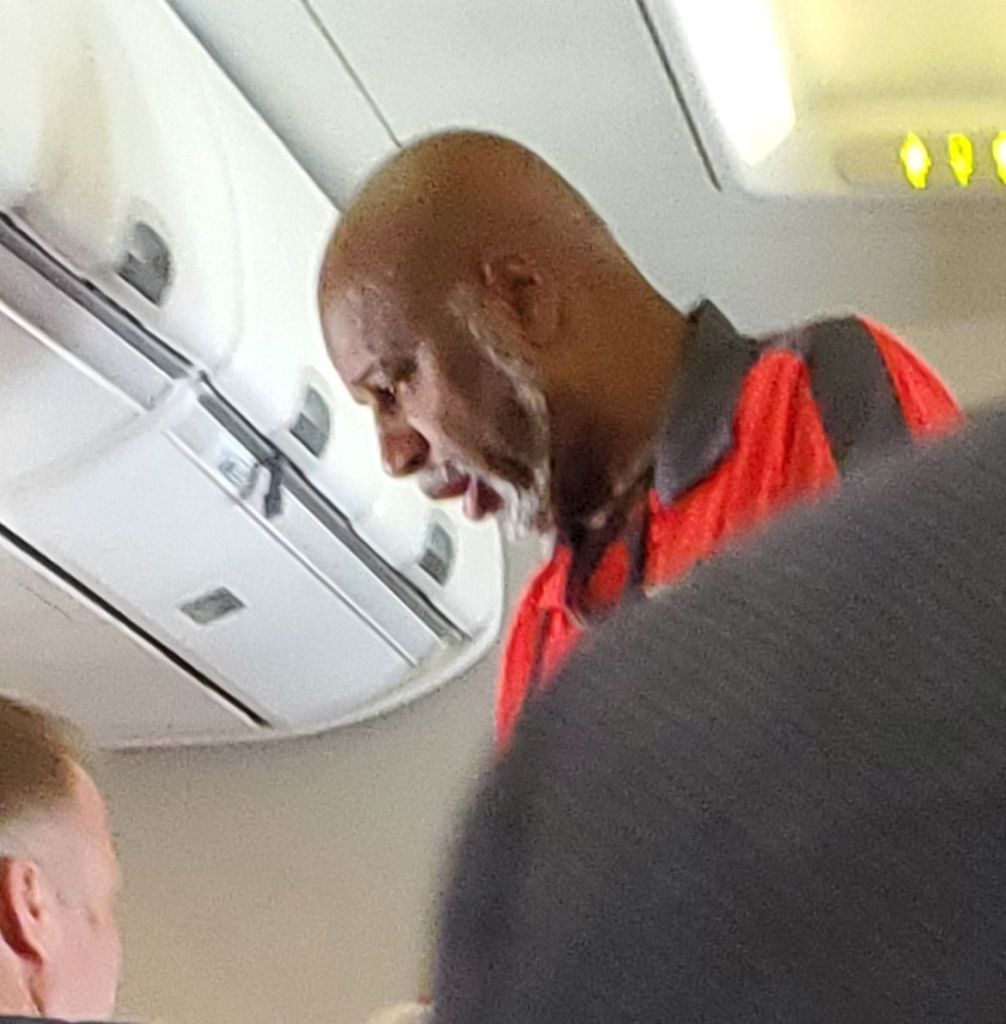
I pretty exclusively fly Southwest. And I want to give a shoutout to this guy.

Lead Flight Attendant,
Flight 4811 from MDW to TUL

From what I observed, a lunch conversation with him would be fun. He’s got a story or two, no doubt.

But my shoutout is due to his leading a flight in a way I’ve never witnessed. Here are six ways he did it.

  • It was his cabin. There was no question who was in charge.
  • He set the tone. There was no question about how any craziness would be addressed.
  • He cared more than usual. He asked and reasked passengers about their wants and needs unlike any flight attendant I recall.
  • He balanced firmness with laughter. Firmness first,  followed by plenty of relaxed engagement.
  • He led a unified crew. They followed his lead and appeared to respect and enjoy each other.
  • He was comfortable in his own skin doing things his way. He knew how he wanted things to go and enjoyed doing it.

It wasn’t appropriate as we deplaned, but I wanted to tell him employees like him give Southwest a good name. More importantly,  for all the people he’d say he represents, he gives all of them a good name.

Well done, Sir!

Behind the Curtain: 3 Questions Organizations Must Ask (Post #2)

I grew up a PK. For those outside of church world, PK stands for preacher’s kid.

In addition to growing up in a preacher’s home, I also spent over 20 years serving on church staffs. There are many interesting dynamics to being on a church staff, but I believe one of the keys to organizational health behind the curtain has to be relationships.

In my dad’s day, the prevailing thought was pastors didn’t make friends in their churches. I hear that thought, but I never accepted it for myself. More and more, this seems to be the choice. Reality is, either way you live, it’s going to come with some challenges. But that’s true about all relationships, right?

Building on the first question about values to ensure your public persona matches your behind-the-curtain private one, it seems you must answer this question about your team: How are you building community in your organization?

Community is all about relationships. A healthy community invests in one another, cares for one another, listens to one another, trusts one another, celebrates one another, challenges one another, and commits to one another. If any of these actions are what you claim to do for your customers, it has to be going on in your team also. Community requires intention. It has to be pursued.

Leaders, to engage this question further, here are four more questions for your team to discuss:

  • In our hiring process, how much attention is given to community health?
  • What have we done in the last six months to build community?
  • How well does our team pursue community by growing in understanding one another?
  • Who’s really in charge of the community behind the curtain?

May your community behind the curtain shine in front of it.

Photo by Windows on Unsplash

Behind the Curtain: 3 Questions Organizations Must Ask (Post #1)

Mark wasn’t wrong. In January I observed an exchange between two organizations that led me down a rabbit hole in my brain. It ended with me posing this question: What questions must be answered to ensure your public persona matches your behind-the-curtain private one? Mark agreed to tackle this from a leadership angle (see posts March 10-12); my task is to address the organization angle.

Before throwing out the first question, I need to throw credit to one of my favorite leadership podcasts. The Table Group’s podcast entitled At The Table is worth your following. Patrick Lencioni’s team asks and answers leadership questions every week that challenge leaders and their organizations. Subscribe to it now!

Wednesday as I waited in the lobby of a local nonprofit waiting for a meeting, I noticed a framed image of their values. It caught my eye mostly because of the Hebrew words. I was curious. If you’re curious, here’s the list of ten:

I’ve gotten to know one of their VP’s over the last eight months. He’s relatively new in town and therefore new to his team. We haven’t gotten to know each other well enough for me to inquire, but I wonder how his interview process went compared to his reality of being on the job. You know what I mean, right? It seems more often than not the hiring process doesn’t really pull back the entire curtain.

Which leads me to question #1: Are we all for the same things, really?

Doing the work to solidify the organization’s values is important. Equally important is protecting them. Through the hiring process, alignment on values needs to be top of mind. Periodically, probably routinely, values need to be restated in leadership meetings. It wouldn’t hurt to find creative ways to check if all team members can state them.

This matters for one huge reason. If you say in front of the curtain that you stand for something but rarely discuss it behind the curtain, eventually those on the other side will find out. Your words must be more than lip service.

Leaders, to engage this question further, here are four more questions for your team to discuss:

  • When’s the last time we checked our values as a team?
  • How are we evaluating our values?
  • How well are we listening to people on both sides of the curtain in evaluating our values?
  • What uncomfortable conversations do we need to have about our values?

May your words behind the curtain match your words in front of it.

Photo by Riccardo Annandale on Unsplash

Behind the Curtain: 3 Questions Leaders Must Ask (Post #1)

(Written by Mark Stanifer, SightShift Certified Coach and founder of Dare2LiveCoaching.com)

“What questions must be answered to ensure your public persona matches your behind-the-curtain private one?”

John posed that question to me recently. While he didn’t elaborate on where it came from, knowing John there was an experience that led to him asking himself that question first. And then he followed his curiosity, wondering how others would answer it. In this article, I approach the question from a leadership lens. But, in truth, what follows applies to anyone who wants to fully be who they were created to be.

In thinking about that question, I couldn’t help but consider some very public and horrendous examples of where leaders displayed public personas that were very different than the one behind the curtain. Mark Driscoll, Bill Hybels and Ravi Zacharias come to mind immediately. Despite any positive impact these leaders had, it is now obvious that what was behind the curtain did not match the image on public display.

These are just three negative examples. The splashy and traumatic ones that make the news. There are countless others, as well as countless examples of where the public and private personas did match. Although they don’t make the news, no doubt you’ve experienced both.

So what makes the difference? What are the ingredients that lead to congruency in the personas of some and not others? What can we draw from the failures, and not just the epic and public ones, that will help us avoid similar outcomes? I’m going to borrow a line from C.S. Lewis’ opening forward to his book, Mere Christianity, here. There are “far more, and more talented, authors already engaged in such matters” as to the numerous differences between leaders who are congruent or not in public and private personas.

Instead, let’s return to the original curiosity of what questions can help lead to congruency for the leader.

The Temptation of Jesus

In Luke 4:1-13, the gospel writer describes the testing of Jesus in the wilderness. The importance of the experience Jesus had immediately before this — his baptism and the Father’s affirmation of Jesus’ identity — cannot be overlooked when considering the wilderness account of chapter 4. Jesus knew who he was and where he was going before facing the test of the wilderness. That was the foundation that allowed him to pass the test.

Yet, in the testing, we see a glimpse of what all leaders face. Jesus, as a man, was subject to the same temptations we face. Paul affirms this in 1 Corinthians 10:13. The Message version says this, “No test or temptation that comes your way is beyond the course of what others have had to face.” Including Jesus.

James 1 also talks about testing and trials and temptation. It’s helpful here to think of these words as describing a process of refining, so we can be “mature and complete, lacking nothing” (v4). In other words, the tests and temptations which life brings are opportunities the Father uses to help us become the fullest and best expression of who He wants us to be.

Although likely obvious, it is worth stating that the congruency of public and private persona to which we’re aspiring in this article is one in which the leader’s example is loving God and loving others. Christ-like. And with Jesus as the example, we find in his wilderness temptation three questions a leader can ask to help pass their own tests. To help keep the visible persona aligned with the behind-the-curtain persona.

Take or Give

The first test Jesus faced came after a 40-day fast. Jesus was hungry. The account in Luke 4:2 says so. It is not true to the text or Jesus’ humanity to believe otherwise. Jesus’ tempter surely understood that; otherwise the first question would have been different. There is no doubt that Jesus desired food. But in that moment, his desire for food was not greater than his desire to be grounded in who he was, who the Father said he was.

The first question a leader can ask is this: Where am I trying to take for me rather than give for others?

Jesus had the authority and the power to do what the tempter was suggesting. He had the desire for food; anyone fasting for only a few meals know that same desire. He had the means. He had the motive. And now had an opportunity. Yet he resisted the temptation. He passed the test and was refined in the process, because he chose not to take for himself.

This isn’t to say that desires should be denied or ignored. Hunger, left unfulfilled, doesn’t give life. Desire is natural, and God ordained. But when desire is not channeled by the grounding of one’s identity it will result in the choice to take rather than give. The consequences of taking for oneself could be small or they could be significant. Think of David and what his desire did to Bathsheba and Uriah and the ripple effect on his kingdom and impact as the leader.

Motive is important here. It’s what makes the difference between cooperating with the testing (refining) process and pushing against it. This first question helps the leader uncover the motive surrounding the desire — Is it for me and my gain or for the benefit of others?

Photo by Tim Marshall on Unsplash

(Series continued tomorrow)
Blog Series: Behind the Curtain

No matter the organization you choose to analyze, there’s an understanding every one doesn’t see all the stuff. There are things not seen or known by the public and, often, not the majority of those engaged in the organization (staff, volunteers, etc.). Some call it seeing behind the curtain.

Others refer to as organizational politics. I’m not a fan of that label, but it’s understandable why people use it. And therein lies what we’re really analyzing-people.

The stuff behind the curtain is actually the actions/interactions of organizational leaders. How do they get along? How do they manage themselves? Is there a mirror anywhere, and who’s responsible for its use?

It seems healthy, thriving organizations care about what’s behind the curtain as much as, if not more than, the other side. A couple of weeks ago in watching a young organization I wondered to myself what it would take for it to be one of those organizations for the long haul-an organization whose public persona matches what’s behind the curtain.

I invited my friend Mark Stanifer to join the wondering by sending this question: What questions must be answered in order for what’s behind your organization’s curtain to match your public persona? The result is a blog series that we’ve co-authored.

Mark’s contributions focus on questions for leaders; mine focus on questions for the leadership team.

Keep watch for Mark’s first post.

Photo by Kelly Sikkema on Unsplash

Role Clarification: It’s Critical

In my years of leadership, one vital item that continues to gurgle to the top determining the health of a team member and ultimately the entire team is role clarification. Just this week, I was reminded again how often simple clarifications are missed and how they impact decisions and conversations.

I was having a second conversation which some would call “hard” with a leader after a first with their colleague. Come to find out, that first one wasn’t necessary, but only because the second one clarified both of these leader’s roles. Totally changed that conversation and explained some odd, head scratching moments over the past two years. I felt bad, but not for long when this leader said, “Yeah, that happens a lot.”

They may be right more than they know. Hopefully in their context they can work to lower that frequency. Speaking of context, there seems to be a common thread of how role clarification gets missed. That thread can be summed up in one word: CHANGE.

If it’s true that change is constant, then it must be true that clarification also needs to be constant. For example…

  • If a team member receives a new title or responsibility, repeated clarification for everyone is necessary. A one-time announcement by email, social media post, or meeting announcement doesn’t suffice. And just stating the title doesn’t cover it. Consider delivering a brief job description, purpose for the title, and who is impacted by this role; it probably wouldn’t hurt to update the organization chart. What may seem like a small change is still change.
  • When a new team member is added (no matter the level), repeated clarification for everyone is necessary, particularly if the position is a new position. One could ask, “So whose responsibility is that?” My opinion, it’s the primary responsibility of the new team member’s immediate supervisor; in the case of their reporting to a board, then the board should own this task. Please avoid making it the new team member’s responsibility to explain why their job was created, what their job is, and what the new organization chart looks like. If that’s how your leadership rolls, you may be looking to refill this position sooner and more often than you’d like. It may seem obvious, but adding new team members is change.
  • When your organization is growing or goes through any major leadership shift, repeated clarification may seem like overkill. But consider this question: How many ripples does growth or a shift create? When you finish the list of all the ripples, that number multiplied by no less than two is how many clarifications are needed to avoid confusion and misunderstanding and their potential fallout. One truth to grab on to-growth is change.

Change equals a clarification need. If that stresses you out as a leader, then this task is most likely not in your wheelhouse. Odds are you know the team member that lives in that wheelhouse. Talk to them soon. It’s critical.

Photo by Austin Distel on Unsplash

The First Guy Through the Wall

AMC is currently showing Moneyball in its rotation. My world usually stops when it’s on. It brings me joy.

Watching it last night, this scene particularly stood out. Some would say it’s the best scene in the movie. Hard to say. But there is a great line in this scene I’d like to chew on.

“The first guy through the wall, he always gets bloody. Always.”

For those unfamiliar with the movie’s story, this scene is toward the end of the movie. The character Brad Pitt plays is the General Manager for the major league baseball team the Oakland A’s. He’s just led them through a historic season that began a shift in the sport. For that matter, in many sports.

How did he do that? He integrated math and science into the operations of running a baseball team. He was the first to do it. And he paid dearly for it. He got bloody.

In an earlier scene, he is challenged by the guy he brought in to lead this change. When he started traded players that didn’t make sense to the average baseball executive, he was warned that it wouldn’t be popular. This clip is the end of that exchange.

Leaders, one could say if you don’t have some blood on you something’s wrong. “What are we doing here?” If you’re looking at the wall wondering if it’s worth it, check your questions. They may not be the right ones.

Being the first leader through the wall takes courage. Take a few steps back and start running.

Humble Inquiry (book review)

What a first read for 2024! Not sure how I came across it, but Edgar Schein’s Humble Inquiry is both refreshing and challenging. And I read the first edition not realizing there is a second edition. Wonder what I missed?

We cannot hope to understand and work with people from different occupational, professional, and national cultures if we do not know how to ask questions and build relationships that are based on mutual respect and the recognition that others know things that we may need to know in order to get a job done.

Introduction: Creating Positive Relationships and Effective Organizations

Schein contributed over five decades to the field of organizational health, a good portion of that as a MIT professor. His work was/is countercultural to the mindset of Doing and Telling.

Humble Inquiry is the art of drawing someone out, of asking questions to which you do not already know the answer, of building a relationship based on curiosity and interest in the other person.

Introduction

Schein repeatedly describes relationships with these words: trust, interactive, conversational, building, investing, processing, shared value, and mutual. After chapter 1’s focus on defining humility, chapter 2 shares case examples to which Schein keeps referencing through the remaining chapters. These three statements display the chapter’s nuggets:

Don’t assume that the person with the question has asked the right question.

Accessing your ignorance, or allowing curiosity to lead you, is often the best guide to what to ask about.

Humble Inquiry is behavior that comes out of respect and the desire to improve the quality of the conversation by stimulating greater openness and the sharing of task-relevant information.

Chapter 2, Humble Inquiry in Practice-Case Examples

Chapter 4, “The Culture of Do and Tell,” gives the most countercultural challenge, at least to U.S. readers. He believes the main problem standing in the way of better relationships and conversations is our culture that values task accomplishment more than relationship building. A second problem is asking, in general, is less valued that telling. Schein suggests the key to overcome these problems is Here-and-now Humility, described in chapter 1 as admitting dependence on others.

Schein culminates his work well with the last chapter as a “how to.” He makes a helpful acknowledgement that a culture shift requires unlearning and new learning, which result in two types of anxiety he labels survival anxiety and learning anxiety. The courage to face anxiety can result in beautiful relationships that otherwise wouldn’t surface.

A well-timed Humble Inquiry that launches a conversation that leads to a relationship should be thought of as a thing of beauty. Innovations in how we conduct conversations should be treated as art.

Chapter 7, Developing the Attitude of Humble Inquiry

Anyone in leadership will grow personally and relationally by reading Humble Inquiry. I’d also encourage business/executive coaches to read Schein’s book to sharpen themselves and to resource their clients.

Leadership Success: Learned Before or After?

“It is likely that leadership success, both current and future, will be determined more by the learning that takes place after being given a leadership assignment than by what has been learned prior to it.”

Gene Habecker in The Softer Side of Leadership

Read this quote for the first time this week. It’s made me think and reflect.

I’ve always held the philosophy that what has been learned prior has prepared a leader for success in a new assignment. However, Habecker has made me consider the learning after being in a new position. I believe there are stipulations as to whether this learning leads to success more than prior learning.

STIPULATION #1: What’s the leader’s ongoing approach to learning?

Is it ongoing? Is it plural, meaning it focuses on all areas of life? If the answer to either of these is no, learning is going to be minimal and therefore success will be hindered. Leaders never stop learning.

STIPULATION #2: What’s the leader’s level of humility?

Followers of Patrick Lencioni have heard his repetition on the needed virtue of humility in leadership. Humble leaders in a new assignment will have a greater bend toward learning. They carry a “I haven’t been here before and have a need to learn” posture that paves the way for ongoing learning.

STIPULATION #3: What’s the leader’s inclusion of interpersonal relations learning?

The temptation exists to believe this is a one-time effort. Or that by a certain age there’s nothing more to learn about relationships. Or a resignation to “this is just who I am.” A new assignment will bring new relationships. An ongoing, humble learning posture toward those relationships will be important for successful leadership.

I met a leader this week that I believe understands these stipulations. He is less than a year into an assignment that came with more firsts and surprises than he anticipated. In his late 50’s, he certainly has prior learning. But he is keenly aware it is not enough.

So yes, success for him, for that matter for all of us, will be based on pursuing learning – ongoing, humble, all-inclusive learning.

Photo by Charles Forerunner on Unsplash