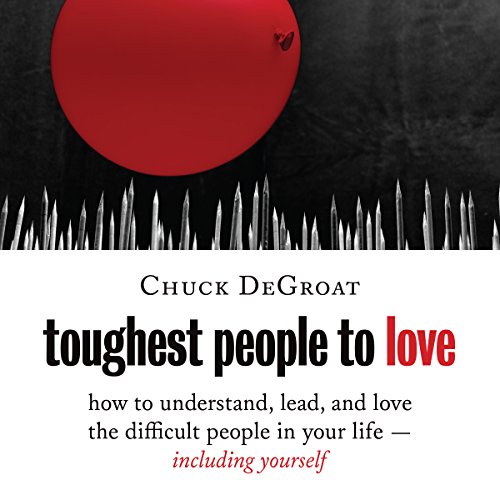
Finished the most meaningful book I’ve read this year. I’m glad to have followed the breadcrumbs to be introduced to Chuck DeGroat. Toughest People to Love (2014) is the first of his books I chose to read.
There are many things to appreciate about his style of writing.
- He makes it clear where he’s going
- He balances instruction with stories
- He provides solid references
- He gets to the point
- He scored points with me by referencing Dr. Curt Thompson several times
It’s not lost on the reader that DeGroat chose to include “love” in the book title. He comes across as wanting that for you and for the people in your life.
We’re not called to make people feel bad or guilty. We’re called to lead them to an honest appraisal of themselves, which in turn leads to honesty before God and others.
Chapter 5, Loving the fool: when relationships turn ugly
It’s not a gooey love that he’s after. He means it when he asks for honesty. DeGroat achieves truth and love as an author, showing a great balance as a former pastor and a professor.
Consider the fragmented, dualistic thinking of the modern world. Often psychologists see depression merely as a neurochemical problem that needs to be fixed with medication and therapy. And too often pastors spiritualize psychological maladies that may require further expertise…Compassion does not ignore the truth. It enters into it, wrestles with it. It requires a solidity and strength of relationship with others which endures even in times of extraordinary difficulty.
Chapter 6, Growing through pain: the gift of the dark
Part three of the book is likely the part that will most deeply speak to readers. The three chapters focus on personal growth, and he mentions the concept of wholeheartedness (he has another book by this title, by the way; on my “to read” list). His clarity on the divided heart from a biblical view leaves no question as to what that means and why it needs to be addressed.
One glaring symptom of the divided heart is exhaustion…To be whole, we need to be healed, and this takes a lifetime.
Chapter 7, Living with wholeness: rest and resiliency in the leader’s life
For leaders, he saved the best for last in chapter 8, Growing into leadership maturity: self-care and the art of shadow-boxing. He describes five disciplines that involve “practice and ritual-the give and take required in any relationship.” He also gives the following description of American culture, one that I firmly agree with:
I’ve heard many criticize American culture, and even American Christians, as self-consumed. I beg to differ. I see people who are afraid of themselves.
If you fall in any of the following categories, I encourage you to read this book:
- People who know they could love better
- People who are leaders in any capacity
- People who can’t figure out how to love a significant other
- People who aren’t satisfied with their current capacity to love
- People who enjoy the works of Dan Allender, Curt Thompson, Richard Rohr, Eugene Peterson, David Benner, and Henri Nouwen


 John Gregory