3 Losses Worth Counting

I resumed listening to Everything Happens this week after referring it to a friend. Always superb.

At the end of episode 8, season 15, Kate made this statement:

The places we come from, the people we love, the losses we carry, they shape us. They shape how we endure, how we hope, how we begin again.

“The losses we carry” struck me. I imagine because that describes some of my experience the last six months. These losses caught me by surprise-I didn’t see them coming. Well, sorta, but not in the way they came.

As I thought about them, a curious thought crossed my mind. “What if, in the effort of naming things, I counted my losses?” It wasn’t a “cut my losses and move on” thought. Rather, it was, “I believe there could be some value in reviewing them, determining what may have caused them, and defining the lessons learned.”

Somewhat like Seph Schlueter’s song Counting My Blessings, but the opposite.

Through this lens, here are three losses that have shaped my year that I’m happy to count:

Losing what I didn’t need-trust in the wrong people. Losing trust is always hard. I’ll go out on a limb to say that’s universal. But however long it takes, we can endure, find hope, and begin again. It took me a couple of months this time. And one key to endurance was leaning in to those who’ve proven they are the right people to trust.

Losing what I’d misplaced-hope in the wrong object. This one is on me. And it’s pretty universal also. We often find ourselves falling for what we can see becoming the object of our hope. If you can see it, it can become your hope bank. But when the wakeup alarm sounds, I see it as a notice to run back to the right object of hope and begin again.

Losing unhealthy emotions-anger for what can’t change. These emotions are everywhere, continuously on display, even celebrated. Exhausting. Disruptive. Gap-widening. They are not to be endured. They can be acknowledged, then I’ve found it best to begin again by working toward the grace to forgive myself for choosing them and averting my mind, heart, and body to gaze, consume, and maybe even fake healthy emotions until they take root and restore hope.

Loss seems harder and harder while aging. Maybe the lack of counting them is to blame. Here’s to better balance. Count it all.

Photo by Hisham Yahya on Unsplash

Burden Management

I was thinking the other day about burdens. Sometimes we know about them; sometimes we’re unaware. More about that in a moment.

As I thought about this, I recalled one of the most memorable images I’ve witnessed while running a race. Believe it or not, it was a runner wearing an Eiffel Tower replica. No kidding.

Frenchman Michel Bach

According to a 2016 article, Mr. Bach has ran in over 200 races around the world. Occasionally he “dons the Eiffel Tower to stand out and embrace his Frenchness.” I don’t recall which race I ran where I saw him (seems like it was either New Orleans or Little Rock), but I was at a loss for words. I believe donning a patch or tattoo of the flag would suffice, but that’s just me.

There are seasons we are well aware of the burdens we have donned. They may have been our choice; they may have been chosen for us. We adjust. We manage. We embrace. When the season is over, we take our learnings and enjoy the lighter season ahead.

Then there are moments where we suddenly awaken to the reality we’ve been carrying a burden without any knowledge when we acquired it. Here’s one that I became aware of a few years ago: Ungrieved Loss. I tell you, that awareness lives out the phrase “knowing is half the battle.”

So how do we wake up to these burdens? I don’t have all the answers to that question, but here are some guesses.

  • Your last sad moment might be a start.
  • What causes your heart heaviness?
  • What’s something you obsess over that is out of your control?
  • What if you asked your closest friend what burdens they believe you carry?
  • Finally, name that thing you know needs to be drawn into the light.

You know, Michel might be on to something. It’s possible he dons a burden he’s aware of in order to bring to light one that’s in the dark. Extreme? Maybe. I’m guessing he lives a lighter life than the rest of us.

Here’s to the pursuit of better burden management, the known and the unknown.

It Will Be

Today is World Mental Health Day. And unintentionally, this afternoon I finished a book on the subject of overcoming grief. As I reflected on the book, the intersection of those two moments didn’t go unnoticed.

Pastor Wright gifted his book to me about this time last year. It’s his personal story of moving through the grief journey after losing his 32-year-old son in an accident. Knowing that context, it’s not a book you just read for fun.

It sat on my desk for much of the year, waiting for the right time to read it. I can’t say what that trigger was, but it came. Sixty-five chapters later, I’m glad it came now. I could make a lengthy list of reasons why, but here are a few:

  • Just last week I sat with a couple who will soon be experiencing the second anniversary of their son’s passing. Listening to them, it feels like it was only last week. Pastor Wright’s book helped me help them. And now I’m passing the book on to them for their journey to hope.
  • Speaking of sitting and listening, although I knew this already, this book has shown me how much room I have to grow in being empathetic. It’s probably true we never arrive at showing empathy right all the time, but I’m not where I want to be either.
  • I may not be where I want to be in the empathy realm, but I can say that I am much better in the grieving realm. In the last year, I’ve engaged grief-some by force and some by choice. Embracing communal grief due to the pandemic and other happenings along with the loss of a friend to suicide has deepened my appreciation and desire to let grief do its work.
  • In June I blogged about Ungrieved Loss. As I read this book, I engaged my own ungrieved losses. Some as far back as childhood and some as fresh as 2021. Some I didn’t know needed grieving; some were top of mind.

What I believe with Pastor Wright is that those who mourn are comforted. The timing will be what it will be, but it will be. On this October 10, if you find yourself in the throes of grief, know that hope is possible. And I echo Pastor Wright’s prayer to end his book:

Dear God, it was only through the dark night that we came to find your light. Had we not stumbled through the cold dark, we would not have come to the warmth of your hearth with frozen hands and hearts. We are grateful for your comfort especially as we have experienced your love through those who have journeyed with us. May your grace and compassion fill us. May we sense your hand in ours. May your tears blend with ours. May we be willing to walk alongside others. Thank you for the promise that one day you will wipe away our tears and that death and mourning will be no more. Amen.

Loss Ungrieved

Every loss in life deserves an appropriate season of grieving, whether you’ve lost your favorite person or you’ve lost your favorite pen. Grieving is a way in which we take the emotional upheaval and bring it up to the Lord…If we don’t let emotions up and out before God, those emotions internalize. They give us physical, psychological, and spiritual problems.

-Terry Wardle

Wardle calls these problems ungrieved losses. I heard him say this today in a podcast episode with ChurchPulse Weekly Conversations. It took me a long time to learn this, but I can definitely tell you he’s right.

Sure, we all grieve differently. But grieve we must.

Sure, we all attach in different degrees which determines our level of loss. But lose we do.

I didn’t grow up grieving well. And the biggest opportunity to improve came at age twelve (still growing up) when my father died. And for at least the next twelve years, I needed to let it up and out. The only avenue I took was the piano. I see it now, but I didn’t know it then that the hours I spent at the piano were hours of grieving.

What I know now that I didn’t know then was the sooner you grieve the better, the sooner you allow the emotional upheaval the better. Healing begins. The weight lightens as you name the loss, acknowledge the emotions attached, then invite God into your grief (read this blog post by Joshua Reich).

In the last year, we’ve all lost. Have you considered naming your losses? I encourage you to name them. They may feel obvious and unnecessary to name, but you may be surprised the longer you sit in them the more you have to name. And those internalized emotions will start rising, inching up and out.

Fear. Loneliness. Sadness. Disappointment. Confusion.

Meanwhile God doesn’t move. He stays with you. He begins to touch and heal your wound-that loss ungrieved.

Photo by Yanna Zissiadou on Unsplash

Loss & Pain & Redemption

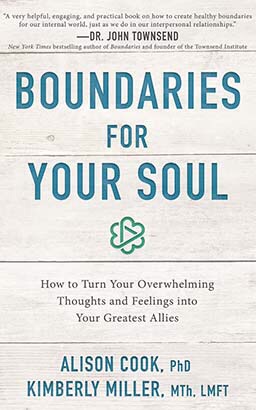
About a month ago, I walked through a situation that I could only explain with one word: sad. So when I came to chapter 11 entitled “Boundaries with Sadness” in the book I’m reading (Boundaries For Your Soul), I was ready. 


Of my many highlighted quotes in the chapter, this was the most helpful:

It’s helpful to think of the causes of sadness in three categories: sadness as a response to the loss of something good, the loss of something bad, and the loss of what might have been.

Categories one and three I get and I’ve used to befriend my personal sadnesses recently. But category two tilted my head…until I read Maria’s story. 

Maria, a bright woman, dated an abusive, addicted man for four years. When asked, “What keeps you from leaving?” she answered honestly, “I don’t want to face the pain.” She had given four years of her life to loving someone who had hurt her repeatedly. A part of her didn’t want to accept the reality that she had wasted so much time on a destructive, dead-end relationship. So she was choosing the pain she knew over the pain she didn’t know – and was missing an opportunity to move forward with her life.

I instantly understood category two. Choosing the pain we know can be crippling. Most likely we don’t know this is what we are doing until someone or some happening makes it clear to us. The strength and comfort when we allow the Spirit of God to assist us in facing that unknown pain is worth embracing to free us to move forward and start over. 

However long it takes, the freed life-found by trusting God to help us face the unknown pain-awaits us. Rather than run from the sadness, we should turn into it. Why? Here’s a final quote from the chapter:

Pain becomes redemptive when it causes you to draw near to God and experience his power.

Who Gets the Blame?

Had a bad day recently? In your life, what’s the hardest day you ever survived?

It’s hard to imagine a day much worse for anyone than the one described in Job 1. By the end of the chapter, Job had received four messages by surviving servants of four, life-shattering events. Between these events, Job lost 11,000 sheep, donkeys, camels and oxen as well as all ten of his children. 

That’s a lot to lose in one day. Overwhelming. One would probably want retaliation or at the least some explanation. Surely there is an explanation, someone to hold accountable. However, even if he knew, he didn’t have any resources to do anything about it. So what did Job do. Here’s what the last verse of the chapter says:

“Throughout all this Job did not sin or blame God for anything.” ‭‭Job‬ ‭1:22‬ ‭HCSB‬‬

How is that possible? How does one lose everything and not sin? How does one react purely to devastation?

The answer is found in the relationship Job and God enjoyed before this overwhelming day. They regularly communicated giving Job the strength to live “blameless and upright.” God described Job to Satan as “one who fears me and shuns evil.”

This is the answer to why Job said after receiving these messages, “The Lord gave, and the Lord has taken away.” Job never claimed ownership of his stuff, and he never blamed God for doing wrong by him. He recognized God had blessed him with it and had now allowed it to be taken away. And he chose to say, “Blessed be the name of the Lord.”

Thankful for Re- (2)

Everyone experiences loss; it’s part of life. To live trying to avoid loss is futile, even unrealistic. However, not all losses are the same. 

For the purpose of this blog, let’s categorize losses in life under two headings: uncommon and common. Uncommon loss refers to loss that is traumatic, unforeseen, you might even say unnatural. The events of loss in Orlando in the last week are in this category. It’s difficult to imagine being thankful for uncommon types of loss. Common loss, on the other hand, refers to loss that can be expected, foreseen, you might say natural to life. Common losses include financial investments, jobs, relationships for various reasons including death to illness and natural causes. Once you’ve grieved a common loss, it is most definitely possible to be thankful for the loss. How might that look, being thankful for loss?

With a loss comes the opportunity to fill the space vacated. A door is open. A chance for re– to occur (see blog Thankful for Re- 1)

  • When a home is lost due to fire, you can be thankful for the chance to rebuild. Ask Job.
  • When hope is lost due to a leader leaving, you can be thankful for the chance to rethink the mission. Ask Peter.
  • When your whole world seems lost due to God’s judgment for man’s actions, you can be thankful for the chance to rewrite history. Ask Noah.
  • When your future plans are lost due to your husband’s death, you can be thankful for the chance to redirect those plans. Ask Ruth.
  • When a friendship is lost due to jealousy and mental instability, you can be thankful for the chance to redefine friendship. Ask David.

In your common loss, look for the open door. Look for the re-. Be thankful for the re-.

What common loss have you grieved and can now find the re- to be thankful for? What got you to that place of thankfulness?