Heavenly 4-Year-Old Heart

Last year I started working part time for a church staffing agency. It’s quite an interesting opportunity to meet candidates from all over the United States. They are in that “wonderful” season of ministry job searching. Been there, done that. So it’s easy to relate to their emotions and thoughts.

Yesterday I was interviewing a candidate for a position where the church has included this statement in the profile of the lead pastor they hope to join their team to be sent out to plant a church: “A pastor is one who has the mind of a scholar, the heart of a child, and the skin of a rhinoceros.”

I’ve enjoyed sharing this with the candidates and asking them where they believe they fit in those three images. This candidate totally embraced the sentiment and spoke honestly. His answer about the heart of a child had all the things. Read below.

I have been watching my 4-year-old closely for the past couple of years, and there was something that stood out to me last year. Just this absolute, like unconditional love that she has for every single person around her. Every single person, you know.

Like, at some point in time something gets ingrained in all of us that there’s social economic classes. There’s racial classes. There’s all this kind of stuff, and I’m just watching my 4-year-old daughter, like she doesn’t care about any of that. All she cares about is, “Do I get to hang out with my friends today.”

No matter what family background they have, or no matter, you know, what their skin color is, anything like that. She doesn’t even care whether or not they believe the same thing that she believes, at this point. And there’s just something that is so heavenly about that that I 100% agree. And I would love to be more like my daughter in that sense, that I can just see people, and we’re like, “Cool. How do I love you well, today?” 

Photo by Jonas Kakaroto on Unsplash

Blessed are the (Reggae) Peacemakers

Monday night I had a conversation on my mind that was going to begin my Tuesday. I asked myself, “How do I want to show up?” And one of the Beatitudes was the answer.

Blessed are the peacemakers, for they will be called children of God.

Matthew 5:9

Then I wondered if I could find a song based on this verse that had relatable lyrics to this anticipated conversation. In my music search, I found it. Not only that, it was reggae, which I enjoy. Check out this YouTube video of the recording.

Artist Osmond Collins

“Hold your peace and let love reign.”

13 Quotes from Faith Beyond Belief

Just finished reading another book that’s delivered richness.

It reads like a podcast transcript. When they say a conversation, they mean it. So it’s refreshing in that way.

The 22 chapters feel like episodes. They don’t necessarily connect one to the next, but they definitely weave the thread of faith and spirituality.

Rather than critique or review the book, I choose to share these quotes for your meditation:

“Love your neighbor as yourself” means be aware that you and your neighbor are one.

The Creative Meaning of Life

The answer I would give the agnostic: if you cannot see [accepting unity with God] yet, you don’t have to accept it. Wait until you experience it. It is not a dogmatic principle we want to impose on you. We only want to say that millions of people experience it. You can too. Open yourself to it.

The Epic Discovery of Self

You have a “vibe.” What do you want to transmit? Bitterness, dissatisfaction, loneliness, or understanding, warmth, and love? None of that requires any great achievement. It simply happens in the way I live my life.

A decision in favor of something is also a decision to let go of something.

“Fear not!” means “take courage, and take anxiety as it comes!”

Calling, Courage, and Fear (this chapter alone is worth checking out this book; so much to digest on the subject of anxiety and courage)

When someone says she doesn’t believe in God, I ask: which god don’t you believe in?

On the Temptation to Want to Possess the Truth

Prayer warms what is frozen and hard into living water.

We fulfill God’s will when we forgive on earth as God forgives in heaven.

The “Our Father” and God’s Trustworthiness

Many people are afraid of death because they have not lived. Unlived life is hard to let go. Those who live deliberately can also let go.

On the Mortal and the Eternal

I cannot explain why there is suffering, but I can influence how I meet it.

Suffering and Reconciliation

Humility is the appropriate attitude by which to accept oneself with one’s strengths and weaknesses.

Transformation is the result of a crisis.

Spiritual Growth

Despite all the deviations, we can say that if the church did not exist, our society would be essentially colder.

What is the Christian’s Focus?

The Unhappiness We Create

Jacques Lusseyran (1924-1971) was a blind author, professor, and leader of the French Resistance in WWII. At age 19, Lusseyran was arrested and spent nearly 15 months in the Nazis’ Buthenwald concentration camp. When the U.S. army arrived, Lusseyran was one of roughly 30 survivors of a transport of 2,000 French citizens.

In this collection of Lusseyran’s essays, he recounts becoming blind at age seven, reactions to societal progression, and observations from Buthenwald.

Essay #1, “The Blind in Society,” is his revelation that after his blindness he became aware of an inner light. Here’s one illustration of his observation of that light:

When I was overcome with sorrow, when I let anger take hold of me, when I envied those who saw, the light immediately decreased. Sometimes it even went out completely. Then I became blind. But this blindness was a state of not loving anymore, of sadness; it was not the loss of one’s eyes.

In the final essay, “Poetry in Buchenwald,” Lusseyran shares the power of poetry. His sharing of poetry with fellow prisoners brought hope and happiness. From that, he had this to say about unhappiness:

Unhappiness comes to each of us because we think ourselves at the center of the world, because we have the miserable conviction that we alone suffer to this point of unbearable intensity. Unhappiness is always to feel oneself imprisoned in one’s own skin, in one’s own brain.

I share these two thoughts to record them for future reference. I also share them in hopes that we move more toward love to eliminate the unhappiness we create in ourselves.

The Best Book I’ve Read This Year

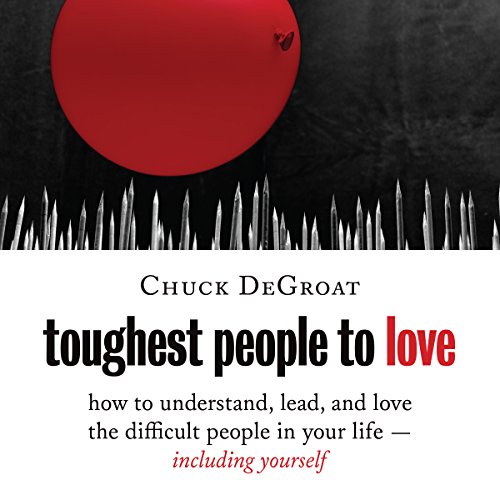
Finished the most meaningful book I’ve read this year. I’m glad to have followed the breadcrumbs to be introduced to Chuck DeGroat. Toughest People to Love (2014) is the first of his books I chose to read.

There are many things to appreciate about his style of writing.

  • He makes it clear where he’s going
  • He balances instruction with stories
  • He provides solid references
  • He gets to the point
  • He scored points with me by referencing Dr. Curt Thompson several times

It’s not lost on the reader that DeGroat chose to include “love” in the book title. He comes across as wanting that for you and for the people in your life.

We’re not called to make people feel bad or guilty. We’re called to lead them to an honest appraisal of themselves, which in turn leads to honesty before God and others.

Chapter 5, Loving the fool: when relationships turn ugly

It’s not a gooey love that he’s after. He means it when he asks for honesty. DeGroat achieves truth and love as an author, showing a great balance as a former pastor and a professor.

Consider the fragmented, dualistic thinking of the modern world. Often psychologists see depression merely as a neurochemical problem that needs to be fixed with medication and therapy. And too often pastors spiritualize psychological maladies that may require further expertise…Compassion does not ignore the truth. It enters into it, wrestles with it. It requires a solidity and strength of relationship with others which endures even in times of extraordinary difficulty.

Chapter 6, Growing through pain: the gift of the dark

Part three of the book is likely the part that will most deeply speak to readers. The three chapters focus on personal growth, and he mentions the concept of wholeheartedness (he has another book by this title, by the way; on my “to read” list). His clarity on the divided heart from a biblical view leaves no question as to what that means and why it needs to be addressed.

One glaring symptom of the divided heart is exhaustion…To be whole, we need to be healed, and this takes a lifetime.

Chapter 7, Living with wholeness: rest and resiliency in the leader’s life

For leaders, he saved the best for last in chapter 8, Growing into leadership maturity: self-care and the art of shadow-boxing. He describes five disciplines that involve “practice and ritual-the give and take required in any relationship.” He also gives the following description of American culture, one that I firmly agree with:

I’ve heard many criticize American culture, and even American Christians, as self-consumed. I beg to differ. I see people who are afraid of themselves.

If you fall in any of the following categories, I encourage you to read this book:

  • People who know they could love better
  • People who are leaders in any capacity
  • People who can’t figure out how to love a significant other
  • People who aren’t satisfied with their current capacity to love
  • People who enjoy the works of Dan Allender, Curt Thompson, Richard Rohr, Eugene Peterson, David Benner, and Henri Nouwen

1 in 117,000,000,000

While praying today, a question came to my mind. How many people have ever lived? Googled it and found some researched answers. Here’s a link to one of them: How Many Humans Have Ever Lived? (visualcapitalist.com)

In the couple of articles I read, it’s agreed the number is over 100 Billion, fluctuating between 105 and 117. I could go in lots of various directions from here, but I’ll land only on this additional stat: that means roughly 7% of all of human history is alive right now.

This question came to me during a personal communion prayer as I thought about the scriptural teaching that Jesus died for all of humanity, past/present/future. One and done. The teaching states beyond his blanket sacrifice he knows each and every one of those he died for. It’s mind-blowing to think about knowing 7 billion people personally enough to count the hairs on their head, at the same moment in time. Add to it the remaining 93% of those who have lived…not to mention those yet to live.

I fear at times Christians get so caught up in their relationship with God that they forget they aren’t the only ones. We cross the line, if we aren’t careful, into genie world. “He loved me enough to die for me and promised to give me what I ask for. How Great is That!”

This question and its answer humbled my heart, filled me with awe, and deepened my love. There are no bounds to God’s love. Yes, he loves me. He also loves the other 117,000,000,000.

Running Blind

The other morning I woke up before the alarm and decided I might as well get up and run. Out the door before 6, it was still dark. Roughly 3/4 of a mile out, running in the bike lane through my neighborhood, I approached a clump of something in the lane. As I got closer and a passing car’s lights lit up the lane, I figured out it was a dead possum. Roughly 20 yards later I stepped over a dead armadillo. Then within just yards I had to maneuver around two huge palm branches crossing the lane. Within that same patch, cars timely passed so I could see and not do something stupid.

Thinking about it later, I remembered this verse I’d read and journaled about recently from I John 2:11.

“Those who hate a fellow believer are in the darkness and walk around in the darkness; they do not know where they are going, because the darkness has blinded them.”

Ever noticed how hate makes you do stupid things. Even while you’re doing them your mind is saying, “What is going on? I don’t want to do this. Where is this coming from?” Sometimes it’s not until much later, after you’ve totally blown it, that you figure it all out. Then you have to humble yourself, or at least you have the choice, and admit what was driving your outrageous actions.

Thank God for the light of love. It reveals the dead stuff, guides you to a better path, and helps you avoid roadkill and debris.

Choose it. Run in it. The alternative – running blind – can be quite costly.

(FB post from 8/27/2011)

Photo by Kouji Tsuru on Unsplash

The Soul Of Shame (book review)

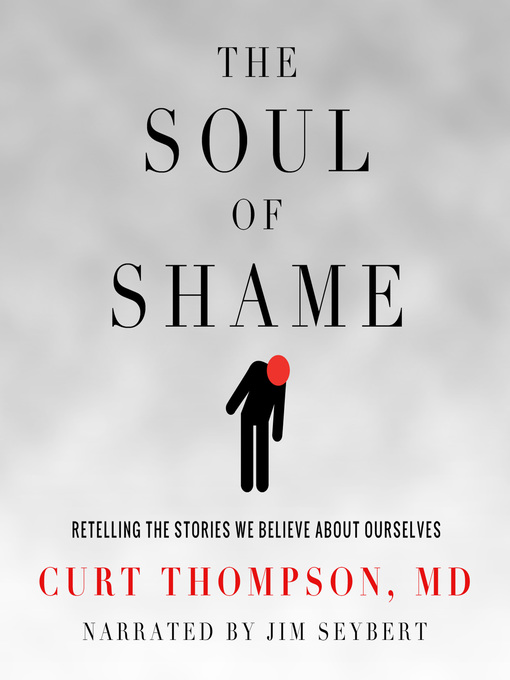
I first mentioned Dr. Curt Thompson’s blog Being Known over a year ago in this post: https://johngregoryjr.com/2021/04/25/storytelling-finding-joy/. After listening to the majority of the episodes and hearing references to his books, I finally got around to reading one. Thanks to hoopla, I just finished The Soul of Shame.

Like the podcast, this book is one to be revisited. Like the podcast, it’s not over your head. Like the podcast, it breathes life into its consumer.

We become what we pay attention to.

Chapter 2, How Shame Targets the Mind

If my highlights are an indicator, apparently my attention got stronger as I moved from chapter to chapter. The first four chapters build the case for the universality of shame’s reach. Then starting with chapter five, Thompson explains shame’s role in the biblical narrative, how it impacts our own narrative, and the remedies that produce redemption.

Honest vulnerability is the key to both healing shame-and its inevitably anticipated hellish outcome of abandonment-and preventing it from taking further root in our relationships and culture…To be human is to be vulnerable…God is vulnerable in the sense that he is open to wounding. Open to pain. Open to rejection. Open to death.

Chapters 5 & 6

Thompson declares that shame pushes us into isolation to keep us from pursuing being human, being vulnerable. To counter shame’s work, Thompson encourages us to understand our cloud of witnesses (Hebrews 11-12), pursue nurturing communities, and renew our vocational creativity.

We will not be rid of shame this side of the new heaven and earth; rather, we grow in our awareness of shame in order to scorn it…There is no more significant place for us to counteract shame than in those venues where we spend most of our waking hours. In these places we are called to be agents for creating goodness and beauty, but these are the very places where shame is more than willing to do its most effective work.

Chapters 7 & 8

A word to the church: Thompson believes “the family of God is the crucible in which we learn what real family is about and in which the what and how of education is ideally imprinted into our souls, transforming both our life in our biological families as well as all that we learn about our world and our place in it.” The church gets the opportunity to help people choose between shame and love.

I encourage you, especially if you are in a place of influence and leadership, to read The Soul Of Shame. Shame won’t like you for it. Your soul will.

Love Is All Around

I have nine nieces and nephews through the marriages of my three sisters. As of last Saturday, five of them are married. Niece Emily married Connor-the first opportunity I’ve had to be present as an uncle.

The word blossom was used often by the minister and others who voiced words of blessing and prayers over Emily and Connor. Surveying our family, those there and those elsewhere, I like to think the blossoming of love in our family has already happened. What continues to happen is the pollination of love.

Their parent’s love blossomed over 25 years ago. The result of that love is more than a fuller flower. It is a field of flowers. It is love multiplying. Some of those flowers may be still little buds waiting to blossom into marriage. Yet they get to experience the love from all the other flowers in the family field.

The view from this bachelor’s flower in the field is unlike the rest of the family’s. Like any other unmarried person, I’m tempted to believe the whispered lie that I haven’t found love yet. To that I say, lift up your eyes. There’s love all around. The widowed great grandmother and the yet-to-be-married have love.

In their maids of honor speech, Emily’s two sisters joked the three have become two. They also said they welcomed Connor as a brother. They haven’t lost love; they’ve gained love. They aren’t without love; they have received more love.

Into

Into the normal of a borrowed room the Bread of Life memorialized

His hope remains

Into the fog of the garden the Vine agonized

His connection remains

Into the mockery of the temple the Door submitted

His welcome remains

Into the denial in the courtyard the Good Shepherd understood

His forgiveness remains

Into the torture of the flogging the Way, the Truth, and the Life endured

His love remains

Into the abandonment on the cross the Resurrection and the Life embraced

His victory remains

Into the darkness of the tomb the Light of the World invaded

His promise remains

Photo by Brett Jordan on Unsplash