When the Body Says No (Book Review, Pt. 2)

After reading the bulk of Mate’s research and arguments, I was ready to take in the final three chapters, particularly #17 and #19.
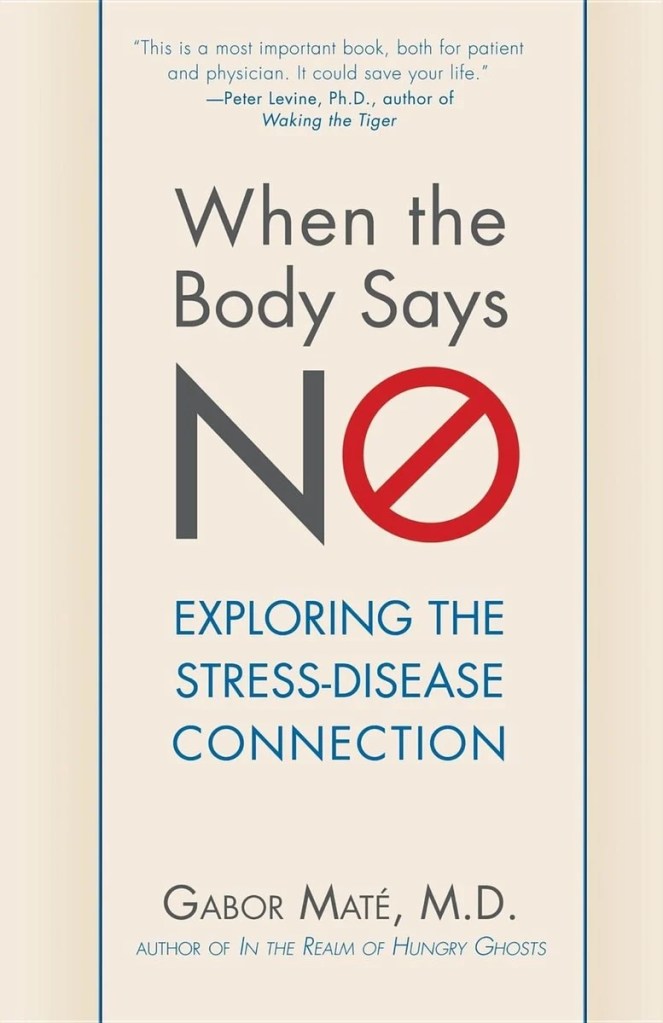
Chapter 17 is entitled “The Biology of Belief,” coined from Dr. Bruce Lipton. Dr. Lipton defines the biology of belief as the process where early experiences condition the body’s stance toward the world and determine the person’s unconscious beliefs about themselves in relationship to the world. Mate shares eight of these unconscious beliefs that control behaviors of defense or growth. He ends the chapter encouraging anyone overloaded with stress induced by these beliefs.

If we would heal, it is essential to begin the painfully incremental task of reversing the biology of belief we adopted very early in life. Whatever external treatment is administered, the healing agent lies within. The internal milieu must be changed. To find health, and to know it fully, necessitates a quest, a journey to the centre of our own biology of belief. That means rethinking and recognizing–re-cognizing: literally, to “know again”–our lives.

For those who may resist this last quote because it sounds void of spirituality, Dr. Mate addresses that in chapter 19, “The Seven A’s of Healing.” Although I have to say, “knowing again” sounds very salvific.

The final A of healing Mate describes is affirmation. Following his outline of the importance of creativity and connectivity, he wraps up the book with this:

Many people have done psychological work without ever opening to their own spiritual needs. Others have looked for healing only in the spiritual ways-in the search of God or universal Self-without every realizing the importance of finding and developing the personal self. Health rests on three pillars: the body, the psyche, and the spiritual connection. To ignore any one of them is to invite imbalance and dis-ease.

May rest and balance be yours.

When the Body Says No (Book Review, Pt. 1)

After several recommendations and references, I have read Dr. Gabor Mate’s When the Body Says No. Even more than after reading The Wisdom of Your Body, I value the connection of mind, body, and spirit.

The two significant beliefs Mate drives are how deeply stress impacts the body and how counterintuitive emotional repression is to the health of any human.

Much of the stress Mate shares from his patient’s stories stem from their relationships.

The nature of stress is not always the usual stuff that people think of. It’s not the external stress of war or money loss or somebody dying; it is actually the internal stress of having to adjust oneself to somebody else. -Chapter 6, “You Are Part of This Too, Mom”

These stories include mostly family relationships. In chapter 15, “The Biology of Loss,” Mate reveals just how encompassing the consequences can be.

It is intuitively easy to understand why abuse, trauma or extreme neglect in childhood would have negative consequences. But why do many people develop stress-related illness without having been abused or traumatized? These persons suffer not because something negative was inflicted on them but because something positive was withheld.

Much of the research on major illnesses like cancer, ALS, Alzheimer’s, and autoimmune diseases, Mate says, reveals how destructive repressed emotion is. For example, here’s a note from chapter 7, “Stress, Hormones, Repression and Cancer”:

In numerous studies of cancer, the most consistently identified risk factor is the inability to express emotion, particularly the feelings associated with anger. The repression of anger is not an abstract emotional trait that mysteriously leads to disease. It is a major risk factor because it increases physiological stress on the organism. It does not act alone but in conjunction with other risk factors that are likely to accompany it, such as hopelessness and lack of social support.

When my father died from cancer at the age of 40, no one discussed these types of factors. The only ones my 12-year-old ears heard regarded eating and work habits. Makes me ask many questions that I’ll never know the answers.

Mate doesn’t have all the answers, of course, but he does offer some hope in the final three chapters, which I’ll share in a second post.

3 Losses Worth Counting

I resumed listening to Everything Happens this week after referring it to a friend. Always superb.

At the end of episode 8, season 15, Kate made this statement:

The places we come from, the people we love, the losses we carry, they shape us. They shape how we endure, how we hope, how we begin again.

“The losses we carry” struck me. I imagine because that describes some of my experience the last six months. These losses caught me by surprise-I didn’t see them coming. Well, sorta, but not in the way they came.

As I thought about them, a curious thought crossed my mind. “What if, in the effort of naming things, I counted my losses?” It wasn’t a “cut my losses and move on” thought. Rather, it was, “I believe there could be some value in reviewing them, determining what may have caused them, and defining the lessons learned.”

Somewhat like Seph Schlueter’s song Counting My Blessings, but the opposite.

Through this lens, here are three losses that have shaped my year that I’m happy to count:

Losing what I didn’t need-trust in the wrong people. Losing trust is always hard. I’ll go out on a limb to say that’s universal. But however long it takes, we can endure, find hope, and begin again. It took me a couple of months this time. And one key to endurance was leaning in to those who’ve proven they are the right people to trust.

Losing what I’d misplaced-hope in the wrong object. This one is on me. And it’s pretty universal also. We often find ourselves falling for what we can see becoming the object of our hope. If you can see it, it can become your hope bank. But when the wakeup alarm sounds, I see it as a notice to run back to the right object of hope and begin again.

Losing unhealthy emotions-anger for what can’t change. These emotions are everywhere, continuously on display, even celebrated. Exhausting. Disruptive. Gap-widening. They are not to be endured. They can be acknowledged, then I’ve found it best to begin again by working toward the grace to forgive myself for choosing them and averting my mind, heart, and body to gaze, consume, and maybe even fake healthy emotions until they take root and restore hope.

Loss seems harder and harder while aging. Maybe the lack of counting them is to blame. Here’s to better balance. Count it all.

Photo by Hisham Yahya on Unsplash

Show Up & Show Support

A shoutout to Bakersfield Behavioral Healthcare Hospital!

They had an exhibit table at the Honor Run at Hart Memorial Park yesterday. The table rep explained why they were there.

I told my husband, “You have a hard job, and you deal with a lot of stress. We understand and are here to show our support and make our services available to all first responders.”

As colleagues in the field, it was a reminder of two things:

  • Even when you may not think it matters, show up. Exhibiting at a Saturday morning race isn’t fancy or sexy, but it says to the community, “We’re here for you.”
  • Regardless of working on opposite sides of the country, show support. It took just a few minutes to walk over to the the table and say, “Thanks for being here. It matters.”

Honoring Tiny Achievements

Along with back to blogging, I’ve renewed listening to podcast episodes. If I were so inclined, I’d post on a regular basis responses to these episodes. But rather than burden myself with that task, I most often choose to point you to them. But not this time. This episode is too rich. Here’s the first of three responses to a timely episode of Everything Happens.

In Kate‘s conversation with Parker Palmer entitled Standing in the Gap, he shares a twist on journaling worth exploring. Rather than narrow it down, here’s the portion of the transcript for you to hear Parker’s description:

I was talking with this therapist who said, what I want you to do in the midst of this despair you have about being nothing and nobody and of no use, a worm, I want you to start keeping a journal. And I just, you know, drew whatever energy I could and did the fair imitation of a depressed blow up which isn’t a real blow up because you just don’t have the energy for a real blow up. But I said, are you out of your mind? I can’t write a sentence. I can’t read a page. I get lost in the very act of trying to articulate a thought or absorb it sort from the outside. He said, well, I’m not talking about a lengthy discursive journal. I’m talking about a journal of tiny achievements. And I said, what does that mean? And he said, well, for example, you told me that you were finally able to get up at 10:30 this morning, having spent most of the night and morning just in a darkened bedroom hiding under the covers. He says, write that down in the journal. You also you also told me that today you were able to get out on your bike, which is your preferred mode of exercise, because you don’t have to talk to anybody when you’re on a bike. And in this state, you’re incapable of even a simple conversation with a neighbor. You were able to ride your bike for ten minutes. Write it down. Tomorrow, start a new page with a new date. What you’re going to find, if you are faithful to this simple, this journal of tiny achievements, you’re going to find that you’re getting up a little earlier from time to time. You’re going to find that you’re riding your bike a little longer from time to time. The day’s going to come when things are going to start feeling a little more normal from time to time. The pattern of depression is sawtooth. It’s sometimes better, sometimes worse, day in and day out. Now, I was a guy for whom an achievement was writing a new book, selling 100,000 copies, getting great reviews, being invited to give talks and workshops all over the country. That’s how I spent 40 plus years of my life. These didn’t seem like achievements at all. But I today, to this day, in good mental health and in times when things are a little dark, I have recalibrated my sense of what an achievement is, and I embrace myself over much smaller achievements. And at age 85, when I probably don’t have another book in me and I don’t have a lot of post-COVID travel in me, this is probably as important as it was to honor my tiny achievements as it was when I was in deep depression. It’s a tool. And for me, it worked.

Parker has journeyed through several bouts of clinical depression. This suggestion from his therapist has turned into a life-changing, long-lasting practice. He called it a tool. That it is.

I’d also call it a blessing. Why? My last conversation with my spiritual director resulted in my awareness of needing to revive a gratitude exercise I’d abandoned. It’s a tool that helps keep me focused on the best things. It’s grounding. That’s a blessing. I imagine acknowledging tiny achievements also a blessing. Often times, my statements of gratitude seem tiny as well. But boy do they offer recalibration. Seriously, sometimes it’s good to just be grateful for toothpaste and soap. Tiny things usher in humility.

Thank you, Parker Palmer, for encouraging me to not only be grateful for tiny things, but to also honor tiny achievements.

So here we go from the first half of my Sunday:

  • Stopping to get gas before the light came on
  • Retrieving a shopping cart out of the Winn Dixie parking lot bushes so the buggy guy had one less to corral
  • Saving over 30% on groceries (A big shoutout to the inventor of BOGOs…huge achievement)
  • Out of bed after the first alarm…no snooze button today
  • Posting for a second day in a row
  • Not giving in to the temptation to respond to divisive Facebook posts

I encourage you to utilize Parker’s tool before the end of the day. May you find value and peace in your honoring.

Photo by Markus Spiske on Unsplash

Be The One To Transform Lives

Today starts an incredible philanthropic event for the region where I live in Florida. The event is a fundraiser for over 700 nonprofits that serve multiple counties. The online event will raise millions of dollars, all made possible by the generosity of two foundations: Community Foundation of Sarasota County and The Patterson Foundation. You can read all about it on the event website: Giving Challenge.

Samaritan Counseling Services of the Gulf Coast, where I am the Community Care Director, is fortunate to be one of these nonprofits. 2024 marks Samaritan’s 25th anniversary. We celebrated last month at our annual luncheon and received tremendous support. We are grateful to have this opportunity to broaden our reach so that more folks can help support Samaritan’s mission to instill hope and transform lives through providing professional mental health services.

Samaritan’s goals for this 24-hour event include $25,000 and 160 donors. I invite you to be part of transforming lives by giving your gift on my personal fundraising page. Every gift between $25-$100 will be matched. We serve thousands of individuals and families each year. Your gift today will support the transformation that happens every day in our offices as our counselors walk with their clients. Thank you for considering joining our team to transform a life.

The event opens at Noon today and is open through Noon tomorrow (EST). Here’s the link to give: https://www.givingchallenge.org/p2p/335581/john-gregory-0540a77e-08ce-4982-bd2a-6140d0f10f39

In the Ditch

This week I toured a new residency for a nonprofit whose mission is to provide homeless women and men with mental health challenges a hope for the future. Second Heart Homes is the name of this Sarasota-based nonprofit.

The facility my colleague and I toured-the first residence in their program designed for women-just opened in December. At the moment, three clients are in the program; the facility will eventually be prepared to house 12 women.

My first visit in one of Second Heart’s Homes was in the fall of 2020. I revisit that first tour every time I enter a new residence. Each visit in each residence breathes new life into everyone in the room. Why? Because their is love and hope in each heart and smiles on each face.

Yet, the reality remains that behind that smile is a heart and mind with wounds waiting to be healed. Steps have been taken to start the healing, but the journey has just begun.

This hit home as I heard a simple illustration about one of the new clients in the women’s facility. Although she’s been there for several weeks…although she was friends with one of the other women before moving in…although she no longer has to rely on the Salvation Army for shelter each night, she has to have lights on and her purse is under her pillow while she sleeps.

Take a moment. Imagine what’s behind these necessities.

The image of a purse under a pillow stuck with me. Many thoughts went through my mind, so many to chew on. The one that I most appreciated was this: Thank God someone got in the ditch for this lady.

True empathy cares about not just providing a pillow but what it might be used to protect. True empathy gets in the ditch.

Photo by Annie Spratt on Unsplash

It Will Be

Today is World Mental Health Day. And unintentionally, this afternoon I finished a book on the subject of overcoming grief. As I reflected on the book, the intersection of those two moments didn’t go unnoticed.

Pastor Wright gifted his book to me about this time last year. It’s his personal story of moving through the grief journey after losing his 32-year-old son in an accident. Knowing that context, it’s not a book you just read for fun.

It sat on my desk for much of the year, waiting for the right time to read it. I can’t say what that trigger was, but it came. Sixty-five chapters later, I’m glad it came now. I could make a lengthy list of reasons why, but here are a few:

  • Just last week I sat with a couple who will soon be experiencing the second anniversary of their son’s passing. Listening to them, it feels like it was only last week. Pastor Wright’s book helped me help them. And now I’m passing the book on to them for their journey to hope.
  • Speaking of sitting and listening, although I knew this already, this book has shown me how much room I have to grow in being empathetic. It’s probably true we never arrive at showing empathy right all the time, but I’m not where I want to be either.
  • I may not be where I want to be in the empathy realm, but I can say that I am much better in the grieving realm. In the last year, I’ve engaged grief-some by force and some by choice. Embracing communal grief due to the pandemic and other happenings along with the loss of a friend to suicide has deepened my appreciation and desire to let grief do its work.
  • In June I blogged about Ungrieved Loss. As I read this book, I engaged my own ungrieved losses. Some as far back as childhood and some as fresh as 2021. Some I didn’t know needed grieving; some were top of mind.

What I believe with Pastor Wright is that those who mourn are comforted. The timing will be what it will be, but it will be. On this October 10, if you find yourself in the throes of grief, know that hope is possible. And I echo Pastor Wright’s prayer to end his book:

Dear God, it was only through the dark night that we came to find your light. Had we not stumbled through the cold dark, we would not have come to the warmth of your hearth with frozen hands and hearts. We are grateful for your comfort especially as we have experienced your love through those who have journeyed with us. May your grace and compassion fill us. May we sense your hand in ours. May your tears blend with ours. May we be willing to walk alongside others. Thank you for the promise that one day you will wipe away our tears and that death and mourning will be no more. Amen.

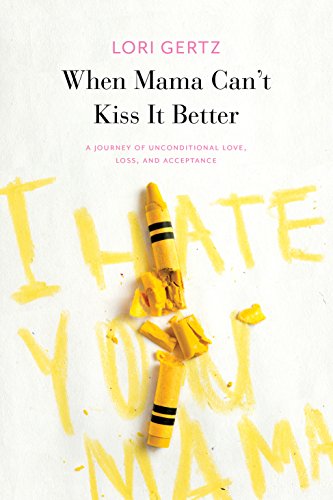
Lessons from “When Mama Can’t Kiss It Better”

Finally finished book #6 for the year.

And did I learn a lot. The challenges this family dealt with due to adopting a child eventually diagnosed with FASD (Fetal Alcohol Spectrum Disorder) and RAD (Reactive Attachment Disorder) are astonishing. How this played out through the adoption, health care, and education systems sheds light on the many challenges of families trying to love and care for their mentally ill children.

This story is a good reminder of three lessons:

You never know what is going on in a stranger’s life. You may witness something you think you understand, but it’s impossible to know the full story.

Media can get it wrong also. Just because the headline says it doesn’t make it true.

Grace goes a long way. Give it as much as you need it.