When you lose your ability to care, you lose the thing that makes you human: your heart. –John Sowers, chapter 24 “Love As Being,” Say All the Unspoken Things
At first read, I thought to myself, “I’ve had heartless moments, even a heartless season. How did that happen?”
To be fair to myself, the moments and seasons that come to mind weren’t complete loses of caring. They’re better described as misdirected, distracted, or too much in the weeds that I forgot the big picture. And by big picture, I’m thinking more about all the relationships in a setting versus a select one or two.
So how did that happen?
Selfishness. There was a moment I upstaged some dear friends. I was so caught up in my own story that I lost sight of their story. Thankfully, they didn’t lose their heart.
Demanding Justice. There was a season I was determined to right a wrong. No one asked me to; no one gave me permission. Thankfully, that season came to an end before I lost heart.
Abusing Power. There was a moment I carved a wound with a hasty decision. In that moment, I chose perfection over mercy. Thankfully, that scar reminds me what power can do to my heart.
The chapter title of Sowers’ quote is worth noting. The less I care about doing and more about being the more loving I am.
Following my last post, everyone lives in a perpetual state of not knowing what they don’t know. Inside of that bubble comes moments when we learn something we’d rather not know. Is it just me, or do those things make you wish you could unlearn them? And, doesn’t it seem like it’s happening more and more, almost daily?
Seven chapters later in Joshua, I’m guessing Caleb could relate with these two questions. His conversation with Joshua was 45 years after learning something very costly. It cost many men he knew their lives. Caleb was promised he wasn’t included in that result, yet he lived with knowing so much that I imagine he struggled knowing.
Knowledge brings choices. I prefer that thought over the thought that knowledge is power. Both can be true; but looking through Caleb’s 45-year hindsight, I lean toward his model of making righteous choices versus abusing bestowed power with his knowledge.
CHOICE #1: Knowledge doesn’t make you king.
Caleb may have been tempted to envy Joshua or to disrespect his predecessor, Moses. He didn’t, I believe, because he made the choice not to pursue a physical position of authority just like he didn’t assume one in his spiritual life. Caleb was not the king of his life. His choice led him down a long, hard, unchosen path resulting in generational blessings no other man with his knowledge received.
CHOICE #2: Knowledge doesn’t dictate direction.
Realistically, Caleb could have taking a direction in an attempt to act on what he knew. Yet, year after year after year, he chose to submit to a direction that must have seemed avoidable and sorrowful. What kept that choice in tact was a promise, a promise that sustained and grew his strength around each turn to his final destination.
CHOICE #3: Knowledge does offer servanthood.
Another guess I have about Caleb is that he viewed life as a gift. Life didn’t owe him. It didn’t owe him power or guarantee him ease. This view of life molded him into a servant. He allowed it. He welcomed it. He embraced it. That’s why 45 years later he reaped a servant’s reward.
When we know what we don’t want to know, may be all be drawn to Caleb’s choices. For the long haul. For everyone’s future. For the promised land. For the Promise Keeper.
Someone might say, “Maybe the first question isn’t how, but does He.”
To answer that one, most folks would give examples illustrating their “yes” or “no.” I’m a “yes.”
My “yes” has had the usual answers through my spiritual journeying years. They include prayer, creation, spiritual texts, and other people. Oh, and one more, dreams.
In my early church history, dreams weren’t high on the list. What I mean is, teachers didn’t give them much attention. That was for various reasons. So as a young follower, I didn’t give it much thought. Then as an adult when others have mentioned visions or dreams as means of God speaking to them, it felt like a foreign language. It came across as very real and personal for them, so it left me feeling left out.
The first time I recall believing God had spoken to me through a dream was in 2005. I remember it very vividly. Both the dream and the message I received. I no longer felt like an outsider. Since that experience, I often wake from a dream with a notion to pause and listen. And when there’s a message, it’s pretty obvious. It happened two nights ago.
This post isn’t written to share the message (If you know me and want to know about it, reach out to me). I’m sharing these thoughts for one main reason. I believe the answer to “does God speak” and “how” are found in the heart of each created man and woman. Creators commune with their creations. The challenge we have is returning the favor. Sometimes from boredom, emotional hurt, doubt, discontent, impatience, expectations, or arrogance, we disconnect from all the communion avenues with our Creator. Which offers this counter question posed to the mirror: “Am I plugged in?” Like the first question about IT issues, “Did you check the power cord?”
My experience has led me to believe if I’m not hearing from God it’s not His fault. It’s on me to check all the power cords.
Last weekend we traveled to New Orleans to run the Rock ‘n’ Roll race. Unless you hibernate in your hotel, you see and therefore learn a lot in New Orleans. I’ve never been disappointed visiting New Orleans.
As for seeing and learning in New Orleans, a visit there should include taking in great food. We made it a point to not eat at the same place twice. Not necessarily hard to do, but certainly fun to achieve. Here’s the food establishments we visited during our stay:
We ate just about anything you could ask for: crawfish, shrimp and grits, crab, gumbo, pasta, burgers, pizza, chocolate, ice cream, and beignets. No regrets.
Boil Seafood House
I can only imagine the challenges these owners and employees have survived during the pandemic. This race, an annual event, wasn’t even held last year. And who knows how many others were canceled. So to be open and surviving is a testament to their commitment to their business and their customers.
We Floridians came to town somewhat clueless to the continuing COVID protocols in place in New Orleans. We learned real quick. Not in a rude way, but it was clear we were not at home. Mask mandates required us to mask up everywhere we went. No problem. Happy to comply. In some places, vaccination proof was required; we knew this as a requirement to enter the race expo. No problem. Happy to comply.
What was interesting to see was how the employees of these ten food businesses went about treating their customers while holding to these protocols. 9 out of 10 were excellent experiences. Regardless of their choosing to uphold the protocols or choosing to require vaccination proof, these employees treated their customers with excellent respect and warmth as they worked under unusual circumstances.
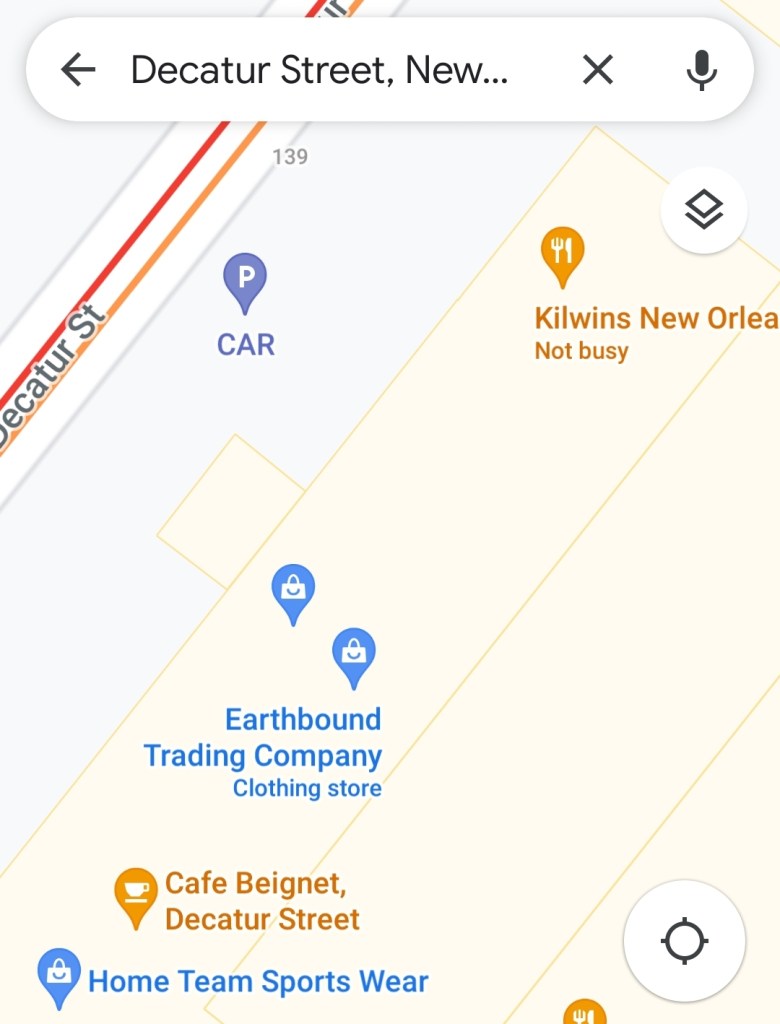
Our best experience was at Kilwins on Decatur Street. It was Sunday afternoon, and my friend wanted a shake. Google told us the closest shake available was Kilwins, so we headed there. We passed Cafe Beignet on our way there and decided it was time to get some beignets as well, after Kilwins. The next 10 minutes was a lesson in customer service.
If you know me, a “no” to ice cream is rare. But I was saving room for beignets. Even the chocolate was not tempting me in Kilwins. We already had our share from Leah’s Pralines, so I didn’t enter Kilwins with a shopping mindset. Just taking it in. We were not greeted at the door by anyone checking proof of vaccination. What we were greeted with was employees behind the counter welcoming us in the store, “Welcome to Kilwins!” My buddy ordered his shake, while I eyed the chocolate. Nicey, behind the counter, asked if I needed any help. I said, “No, just looking.” She offered to give me a fudge sample. Do you think I said no? After that sample of her favorite, she asked if I saw another fudge I’d like to sample. Well, I had to admit I didn’t need a sample. I had been hooked into buying a chunk of Toasted Coconut Fudge, simply because it sounded intriguing. Plus, Nicey lived up to her name. We walked out of Kilwins happy shake and fudge customers expecting to enjoy more happiness in beignet land.
We went from the best customer experience to the worst customer experience in what felt like another city, but only two stores apart. Not to bore you with the details, but suffice it to say one Cafe Beignet employee was determined to have things her way when it came to COVID protocols to the point customers did not feel welcomed. We were thankful for outside seating.
In that ten minutes in New Orleans, we saw and learned a few things about customer service, about how to treat one another during challenging times, about power, about treating others the way you want to be treated.
To the 90% of New Orleans businesses that made our trip amazing, thank you. We remember our time with you as minutes well spent, minutes we were seen and heard, minutes you thought more about us than you did yourself. Keep giving your customers great minutes!
Book #1 for 2021 done. And it was a good choice to kick it off.
It’s time to let God heal you. It’s time to let God restore you. It’s time to let God do a mighty work.
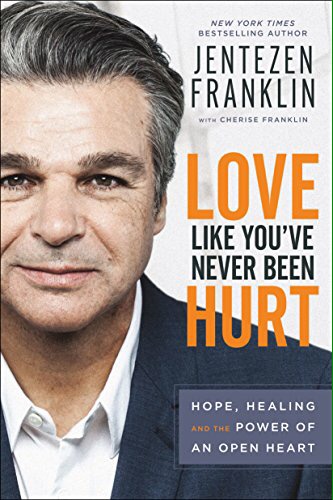
Franklin takes the first half of the book to define and describe love.
Don’t speak to the fool in others; speak to the king in them.
Chapter four, “Stop Keeping Score and Start Losing Count,” by title alone moves you in the right direction. He had this to say about Jesus’ work on forgiving:
Before he could leave this earth, Jesus had to forgive those who were torturing him, those who were mocking him, those who were blaspheming him. This was important because God’s hands will not touch spirits that do not release forgiveness. Wherever you release forgiveness, you release the power of the Spirit of God.
For several chapters, Franklin focuses on the family. Why? Perhaps because it’s the place where we learn about love and also where we are most prone to be hurt by it.
You cannot be so spiritual that you neglect natural things. And you cannot be so natural that you neglect the spiritual things. God’s will is somewhere between Martha’s kitchen and Mary’s altar.
The final three chapters address one’s love relationship with God. He argues that the enemy’s goal is to create distrust. And what happens often is instead he pushes us to pray more, to run to God, and to increase our faith-particularly when we love like we’ve never been hurt.
Recently someone shared how being included in an invite to a Bible reading plan on YouVersion had impacted them.
I grew a lot from being part of those groups. Because I haven’t been able to attend church since October since I started working Sundays, being asked to be a part of a group reading plan meant a lot to me and gave me a way to grow and to stay connected.
Hearing that was great. But it also convicted me. Here’s why.
I’ve gotten so used to inviting folks to things that when I heard my friend say this I realized that I had lost appreciation of a simple invitation’s impact. Invitations carry power.
The Power of Worth – “I believe you belong.”
The Power of Inclusion – “I want to include you.”
The Power of Remembrance – “I thought about you.”
The Power of Value – “I think you have something to contribute.”
The Power of Connection – “I would like to stay in contact with you.”
The Power of Observation – “I realize this might be something you‘d like.”
We’ve all been on the receiving end of an invitation. We can relate to its power as a receiver. What if we balanced the power by extending invitations?
Want to go to lunch?
Want to go to a movie?
Want to join my _______ group?
Want to bring your family over?
Want to discuss what’s on your mind?
Will you be my guest?
These days we may feel powerless. I’m guessing this is a simple way to exercise personal power that we still own.
What invitation power could you share before the end of this day?
In seeking the direction and power of the Holy Spirit, the man of God must be willing to do whatever the Spirit leads him to do. This means he will probably be led out of his comfort zone.
This quote is another one from the book Uniquely Bivocational that has general meaning for anyone seeking God’s power in their lives. The chapter it is from focuses on how a pastor prepares to share a message. Yet the title, Receiving and Sharing a Word from the Lord, has application for anyone who wishes to speak into other’s lives as led by God.
Here’s how. Take the phrase “the man of God” out of the quote and replace it with the pronoun “I.” See what I mean? “…I must be willing to do whatever…and I will probably be led out of my comfort zone.”
God is limited when we refuse to be willing. God cannot do all he could if we insist on being comfortable. The god of comfort will keep us from experiencing the power of the God we profess, the God we need.
Believer, drop all the “buts” and “what ifs.” Offer your willingness. Embrace the uncomfortable. Prepare to experience God’s power unlike you ever have.
Two weeks ago I received an email from a stranger. It was Thursday after a rather trying Wednesday. The email was from a daughter who had an urgent request. Her 86-year-old father was dying from liver cancer, living alone in Bradenton while she and her brother lived in other states. A few weeks earlier she and her husband had visited her dad and had brought him to church that Sunday. I had spoken that Sunday; therefore her reason to reach out to a stranger with her request.
It was a simple request…Go visit her dad and talk to him about spiritual things. Truthfully, my first thought was, “I’m doing my best to keep up with what’s already on my to do list. I’m drained, but I’ll try to go by.” As it turned out, her dad Frank lived less than two miles from me. I told myself, “There’s no excuse to not go by on your way home.”
Today, four visits later, I’m so glad I did. What a genuine, rich spirit! We could have visited for hours each time, but his strength required short visits. Thursday we said goodbye. His children came to take him with them for his final earthly trip before his eternal trip.
This interaction is on my mind for many reasons, but one has to do with the reading plan I started this week on @youversion. Author Brittany Rust penned a seven-day plan entitled Pouring Into Others When You Feel Empty. Day two’s devotional included this thought:
Through the power of the Holy Spirit, you are stronger than you know. Helping others isn’t always easy, but it’s necessary to stretch the limits of your capacity to discover the limitless strength found in God. God has made you capable of bearing the burdens of others–will you open yourself up to be used by Him to do so?
The verse she connected to her devotional was from Romans:
“Now we who are strong have an obligation to bear the weaknesses of those without strength, and not to please ourselves.” Romans 15:1 CSB
There are days we don’t feel strong. On those days, God often gives us an opportunity to meet a “Frank.” My prayer is that I don’t miss anymore Holy Spirit moments, that I choose to bear the weaknesses of those who need to be served, and that I reject to please myself in order to serve future “Franks.”
And Abraham went early in the morning to the place where he had stood before the Lord. And he looked down toward Sodom and Gomorrah and toward all the land of the valley, and he looked and, behold, the smoke of the land went up like the smoke of a furnace. So it was that, when God destroyed the cities of the valley, God remembered Abraham and sent Lot out of the midst of the overthrow when he overthrew the cities in which Lot had lived. – Genesis 19:27–29
In this familiar passage, Moses describes the destruction of Sodom and Gomorrah from Abraham’s perspective. Abraham rises early on the morning God brought sulfur and fire down upon the evil cities, returning to the place he had stood before the Lord a day earlier. He then looks down on the valley where these sinful cities once stood. Instead of a crowded civilization, the entire region had filled with smoke and fire.
It occurs to me that even though Lot and his family are safe and sound, this scene had to be very sad, even crippling in a way. Abraham most likely does not realize his nephew had been rescued, so his initial look toward the valley probably caused him grief and pain. I think we can all identify with this. Who among us has not felt the pain and fear, at least momentarily, that something terrible has happened to someone we love?
I believe that Verse 29 gives us one of the most important lessons we can learn from Sodom’s destruction: “God remembered Abraham,” …, “and sent Lot out.” We can understand from the greater context that Abraham’s interceding prayer saved Lot. It was not Lot’s own goodness but rather Abraham’s boldness in prayer on the behalf of Lot that saved him. “God remembered Abraham.” Isn’t it wonderful that God remembers bold prayers?
Consider also that if God remembered Abraham, how much more will He remember the prayers of His Son? The Lord Jesus Christ can “save us to the uttermost” because He continually intercedes for all those with faith in Him. This makes me want to shout and sing praises to His name!
Consequently, he is able to save to the uttermost those who draw near to God through him, since he always lives to make intercession for them. Hebrews 7:25



 John Gregory