Let’s Talk

Started listening to a new audio book, In the Shelter by Padraig O Tuama. In chapter one he asked an interesting question about prayer, one I’ve not heard worded this way before. “Where is it that we are when we pray?”

It’s a different way to challenge one’s emotional and mental approach to prayer.

We are often in many places. We are saying to ourselves, “I should be somewhere else,” or, “I should be someone else,” or “I am not where I say I am.” In prayer, to begin where you are not is a poor beginning.

To begin where you are may take courage or compromise or painful truth telling; whatever it takes, it’s wise to begin there. The only place to begin is where I am.

Not where you want or feel you ought to be. This could mean rather than naming your present state-confused, frustrated, hurt, angry, lonely, unhappy, etc.-you ask for where you want to be or where you feel it is your duty to be-fulfilled, joyful, connected, healed, satisfied, understood, peaceful, etc.

Not in many places. We can often pray about what has happened, what we fear is going to happen rather than what is happening in this moment. We can be drawn to focus on the past or the future to the point that the present is ignored, maybe even avoided. The result that we aren’t even intending can be distance, even creating space for drifting to begin.

I believe what he’s encouraging is twofold. One is raw honesty. The other is naked vulnerability.

Prayer that is honest and vulnerable, not pious or fake, says to God, “I’m here. I believe you are too. Let’s talk.”

Photo by Fallon Michael on Unsplash
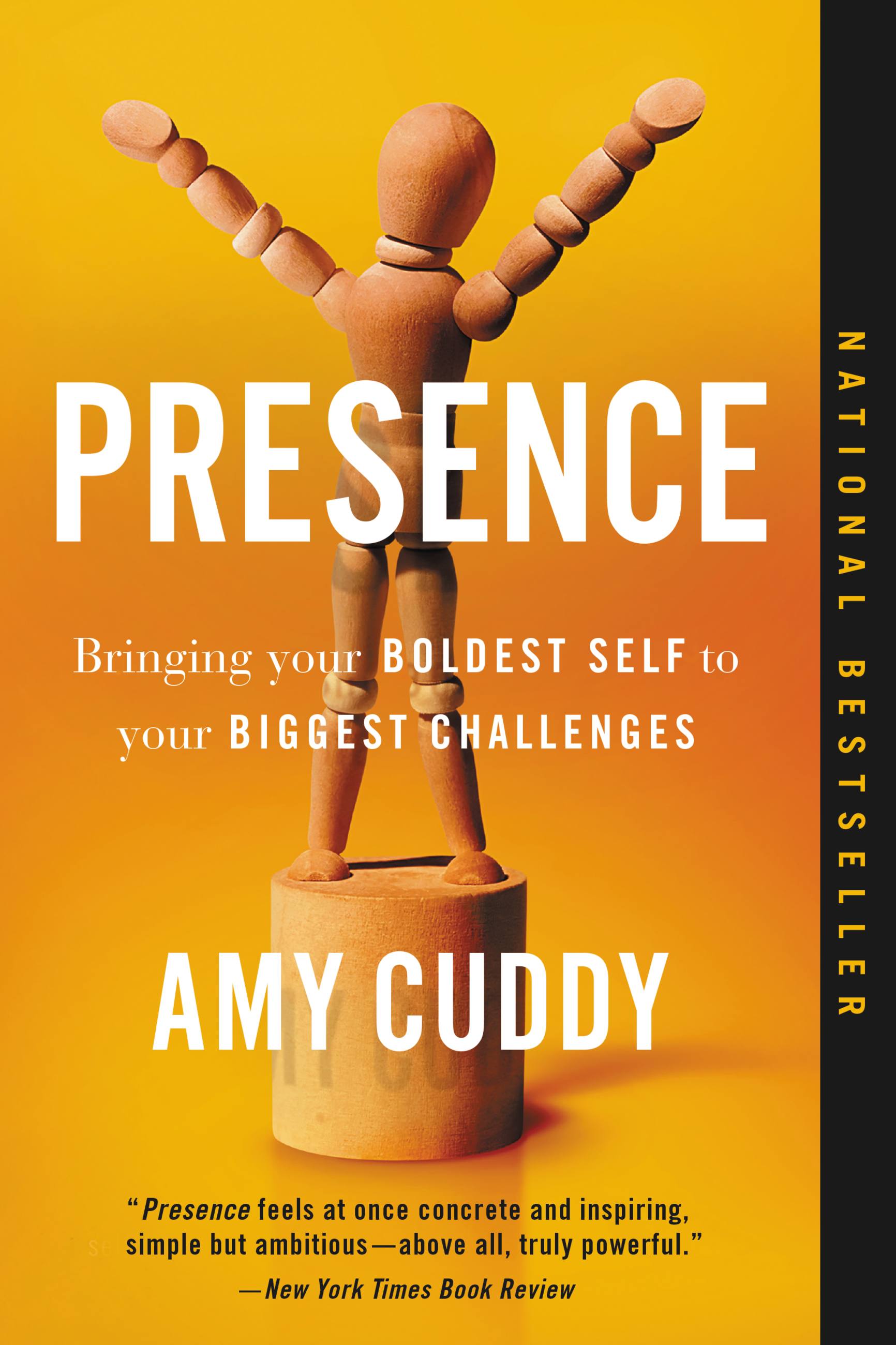
A Few Lines from Presence

I posted about Amy Cuddy’s book Presence on January 31. I finally finished it today. What a great read.

The last two chapters were worth the wait. Chapter ten addresses what she called self-nudging. Here are a few quotes:

Presence is about approaching your biggest challenges without dread, executing them without anxiety, and leaving them without regret. We don’t get there by deciding to change right now. We do it gently, incrementally, by nudging ourselves – a bit further every time.

Focusing on process encourages us to keep working, to keep going, and to see challenges as opportunities for growth, not as threats of failure.

The more you reframe your anxiety as excitement, the happier and more successful you may become.

And chapter eleven captures the point of the whole book. “Fake it till you become it.”

A Time for Preaching and Listening

I came across Amy Cuddy‘s book while browsing in Barnes & Noble. The cover intrigued me.

I ho-hummed through the first two chapters. Then came #3, “Stop Preaching, Start Listening.” Highlighter activated. And mostly because of the illustrative work she retold of Boston minister Reverend Jeffrey Brown. Follow this link to his Ted Talk.

His story of turning around gang violence in Boston in the 1990’s definitely brings light to the definition of presence. You could say that he defines presence as simply showing up. But how you show up is what Cuddy emphasizes with this statement:

When we meet someone new, we quickly answer two questions: “Can I trust this person?” and “Can I respect this person?” In our research, my colleagues and I have referred to these dimensions as warmth and competence respectively.

She ties warmth and trust together, competence and respect together. And whether we realize it or not, we first check a new acquaintance’s trustworthiness before their competence. Yet, when people are asked which they’d rather be seen as, most choose competent. Cuddy believes that desire can lead to costly mistakes.

To avoid that mistake, she encourages us to focus on the value of listening. Here are five reasons why:

  1. People can trust you.
  2. You acquire useful information.
  3. You begin to see other people as individuals-and maybe even allies.
  4. You develop solutions that other people are willing to accept and even adopt.
  5. When people feel heard, they are more willing to listen.

In order to get somewhere with the gang members, Reverend Brown had this attitude: The youth have to be looked at not as the problem but as partners. How much farther might we get in all life’s arenas if we adopted this mindset? In our families, in our offices, in our courtrooms, in our churches, in our schools, in our legislative bodies, in our town halls, in our social media posts, in our spotlight moments, in our journalism, in our prayers?

There is a time for preaching and a time for listening. How much further might we get if we honored those times?