Four One Liners from The Shack

Hullabaloo is not a party I enjoy. So forgive me if I’m eight years late to The Shack conversation (referring to the movie; 18 years since the book publication).

My free evening in Las Vegas was not going to be about hullabaloo either. So I turned on the TV for the first time in four days to see what I could find to watch. Up popped The Shack. It was time.

Papa (Octavia Spencer) and Mack Phillips (Sam Worthington) in “The Shack.” (Photo Credit: Jake Giles Netter) 

As the story unfolded, I was drawn to all the one liners; so I started this draft to share the ones that got my attention the most. Here are those four.

“Don’t forget we love each other.”

Nan, the wife, said this to Mack, her husband. He was withdrawn, and she wanted to find a way to reach him. This was a good reminder for those who are tempted to isolate when dealing with pain. Remember that people love you…and that you love them.

“Love always leaves a mark.”

God said this to Mack. Mack was expressing doubt and lack of trust in God’s love due to all the pain in his life. He learned that he was judging God, blinding him from just how much God loved him and everyone in his life, even the ones who had hurt him. This line was God expressing the extent of his love for Mack.

“You have no idea how much I’m doing right now.”

Mac was trying to make a joke about what God was doing. And his judgment brought this response. What a reminder! Our finite minds find it hard to comprehend exactly what all is going on in the universe and God’s part in it. Our humility grows when we consider the magnitude of that work.

“Does what I do really matter?”

This was Mack’s question toward the end of the movie. It caught my attention because it somewhat seemed to come out of left field. Yet, anyone floundering in their pain would most likely eventually ask this question. Purpose has a way of healing wounds.

Yes, one could dislike the movie and the book for theological reasons. Being late to the party, I’m choosing to listen and grow, one line at a time.

Roots

Roots have been on mind this week. Led me to two interesting exchanges.

Today I was introduced to Safiya Sinclair on an episode of Everything Happens. The episode title, Rewriting Roots, peaked my interest. The question that made me sit up in my chair was, “When did you first know your words were so powerful?”

That question reminded me of another question. In my spiritual direction conversation this week, I was asked something similar. We were discussing purpose and vocational alignment. The question was something like, “What do you look for to let you know you are on the right path?”

Safiya and I were forced to go back in time. The question was about roots. She answered by telling about her mother’s pivotal role in connecting her to poetry = Roots. I answered by sharing about a grounding exercise to write a personal mission statement my first semester in seminary = Roots.

You want to know about someone’s rise to success, to understand what makes them tick? Question them about their roots.

You want to self-assess if you are fulfilling your calling, if you are growing as you wish, if the seeds you’re planting matter? Go back to your roots.

Photo by Zach Reiner on Unsplash

An Altar in the World, Meditation #6

On recommendation, I recently read An Altar in the World by Barbara Brown Taylor. It’s subtitled A Geography of Faith. In the spirit of that lane, rather than offer a review I’ve selected my top highlights and will offer a meditation post for each one. Here’s the final quote:

Anything can become a spiritual practice once you are willing to approach it that way-once you let it bring you to your knees and show you what is real, including who you really are, who other people are, and how near God can be when you have lost your way.

Chapter 5, The Practice of Getting Lost

Chapter 5 is a ride. Taylor takes something bane like getting lost to illustrate her point that anything can become a spiritual practice.

I can’t say I get lost on purpose, but I understand her point. Getting lost viewed through the lens of “maybe there’s a reason” certainly requires some discipline and regulation. What I have done on purpose is take new streets, driving or running, just to see what’s on them. This past Saturday, in fact.

I had an event to attend downtown Sarasota Friday night. Instead of driving home to West Bradenton afterwards, I booked an Airbnb just south of downtown. Main reason: to run the Ringling Bridge the next morning. It had been too long, so I felt like it was worth it. Of the overall 7.28 miles of the run, besides the bridge, I had never ran any of those streets. I purposefully returned back a different way than I had approached the bridge. The two best sections of the run was by the Bay on Mound then through and around Payne Park.

I agree with Taylor. Growth happens when you lean in to purposefully embrace the unfamiliar. And whether that unfamiliar was planned or not, your peace and trust are revealed. Who couldn’t benefit from that?

Now I’m remembering running on some very unknown streets in 2012. That summer I took my first international trip, to Belarus of all places. The purpose of that trip wasn’t to run or pleasure traveling, but to teach ESL classes through a supporting church. Many disciplines were bundled together on that trip; they still bring me to my knees, show me what is real, who I am, and who other people are. I may never forget running in that country. It was spiritual.

What practice of yours, if looked at differently, could become spiritual? Grilling? Baking? Fishing? Painting? Ask God to show you the way. May you find a new altar in your world.

An Altar in the World, Meditation #5

On recommendation, I recently read An Altar in the World by Barbara Brown Taylor. It’s subtitled A Geography of Faith. In the spirit of that lane, rather than offer a review I’ve selected my top highlights and will offer a meditation post for each one. Here’s quote #5:

To become fully human means growing gentler toward human weakness. It means practicing forgiveness of my and everyone else’s hourly failures to live up to divine standards.

Chapter 7, The Practice of Living with Purpose

What Taylor is describing in the paragraph containing this quote is her view of loving God and neighbor as oneself. She calls that the vocation of becoming fully human. These thoughts are two of the six she offers to explain what she means. They are all examples of living with purpose.

What if we all were working toward growing more gentle?

What if we all were empathetic toward other’s weaknesses?

What if we all were forgiving toward failures, including our own?

What if we all were after the glory of God?

What if we all were becoming fully human?

Photo by freestocks on Unsplash

Where’s the Door?

Earlier this week I found myself in a place familiar to all of us. I wouldn’t call it buyer’s remorse, not even decision regret. Probably more like, something’s not right, so a step back seems like a good idea.

When we find ourselves in these places, one of the best things we can do is stop talking only to ourselves and divulge our thoughts to someone else. Even if they don’t do anything but listen, we often get some perspective or different focus that uncovers a better viewpoint.

Within 24 hours of doing that, I came to a realization. What was really at play was there wasn’t an issue at all, other than I was looking for a way out. Rather than admit my own sabotaging, I was making a few small things one large thing. And then this thought smacked me in the head…

It’s not hard to find the door in the room.

So many times I’ve tried to leave the room before it was time. If you have that pattern, then you know what it’s like to be looking for the door but not know that you are. And when you’re looking for it, it’s pretty easy to find.

There are quite a few questions we can ask ourselves once we have this awareness. Truth be told, sometimes the right answer is to leave the room. More times than not our timing is off, and there are reasons to stay that we would rather not bother with or tell ourselves we don’t have the energy for. Here are three questions I asked myself this week once I realized I was asking, “Where’s the door?”

Why am I looking for the door? If this isn’t the most important question, it’s got to be pretty close. An honest answer will clarify if the search should continue. My honest answer told me to stop looking.

Who’s in the room? That might seem like an odd question, but it’s founded in the idea of grounding. When we notice the faces of everyone in the room, we are forced to pause and consider what leaving the room means to everyone, not just ourselves. Again, sometimes the person that needs the most consideration in the room is us, but leaving everyone else out of our consideration reveals an issue that most likely has little to do with being in the room with these people.

Why am I here? This question is a perfect follow up to who’s in the room. As we consider everyone in the room, a natural viewpoint to bring clarity is founded in purpose. Several times I knew I was supposed to leave a room even though others in the room disagreed. They believed my purpose wasn’t done, but I knew otherwise. TRUTH: It’s only time to leave when your purpose is done. If your purpose isn’t done, stop looking for the door.

Photo by Dima Pechurin on Unsplash

“You’ve No Idea”

(Luke 22:15 MSG)

Three years in the making by your time

Eternity of anticipating by my time

Maybe just another meal from where you sit

Undoubtedly my most important from where I sit

A moment to remember the past in your heart

A moment to embrace the future in my heart

A flurry of questions through your mind

A calming of purpose through my mind

Confusing challenges for your spirit

Surrendered offerings for my spirit

Everything about this moment you’ve no idea

Before, now, and after I’ve every idea

(Photo by James Coleman on Unsplash)

I’m Here To…

Around mile 2 of my run this morning, I passed a runner who was struggling. And I might add, it’s December 31st and 70F at sunrise, so understandable. I feel you.

But what really caught my eye was his shirt. I hadn’t seen one, but maybe you have. Here’s an example:

Gave me a chuckle. And gave me something to think about the rest of my run.

Was that guy actually making a statement about his running? Or was it “just” the first shirt he grabbed?

Was his apparent struggle to be running supported by his shirt? Or was it a declaration a day early of 2022?

Whatever the case, this statement aligns with how we often show up. And it mostly has to do with that second word. That four-letter word says quite a bit. And it often says, much like a familiar bumper sticker, “I’d rather be somewhere else.” So maybe in that runner’s case, “I’d rather be sitting on my lanai, drinking another cup of coffee, watching College Game Day!”

In the spirit of improving how we show up, let me throw out a couple of suggestions.

One, drop the word “just” anytime you’re making a statement about why you’re anywhere. Whatever amount of tongue biting is involved (been there), stay silent until you can state why you’re there without sounding like you don’t want to be.

Second, on a deeper level in the spirit of New Year’s Eve, how about editing this statement to declare how you desire to show up? “I’m here to __________.” How do you fill in the blank this coming Monday at 8AM? What best completes that sentence for your hopes for the first month of 2022? The first quarter? The entire year?

Declare to yourself, to God, and to whoever else that would benefit, “I’m here to __________.”

Here’s to showing up with purpose in 2022!

Too Comfortable?

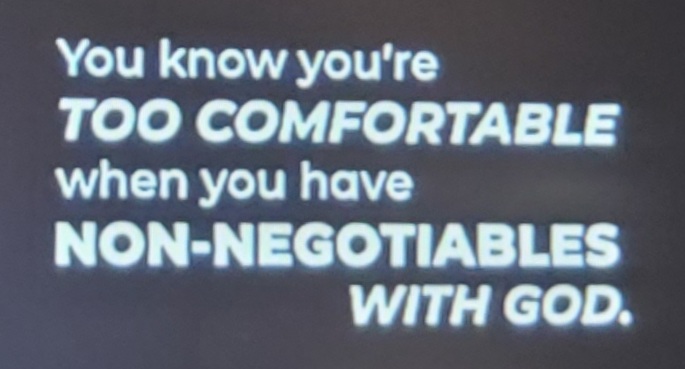
This quote is a screenshot from a Sunday morning message given this past week by Pastor Jordan Easley of First Baptist Church, Cleveland, Tn. He’s in a sermon series entitled “How the Church Acts.” In this message, he addressed that the church is to be made up of people who live with purpose. It wasn’t a message that churchgoers haven’t heard before, but this statement shed a different light on the message.

What is a non-negotiable anyway? My words-something that a person won’t budge about. For instance, I’m an Alabama fan-not going to budge on that one. I don’t eat brussels sprouts-pretty sure that’s not going to change. You get the point.

So when it comes to churchgoers, how is it possible that they have non-negotiables? According to Pastor Easley, it’s possible because they’ve become too comfortable. He wasn’t necessarily referring to being too comfortable in our lifestyle; he’s referring more to our view of God, our relationship with the Giver of Life both now and forever.

This statement made me think the rest of the day. Made me question what non-negotiables I may have. Made me wonder if I could be drawn to making some and what would be the result. Made me wonder enough that I’m sharing it with you.

Non-negotiables won’t exist in heaven. Makes me want to eliminate them today.

Make a Difference

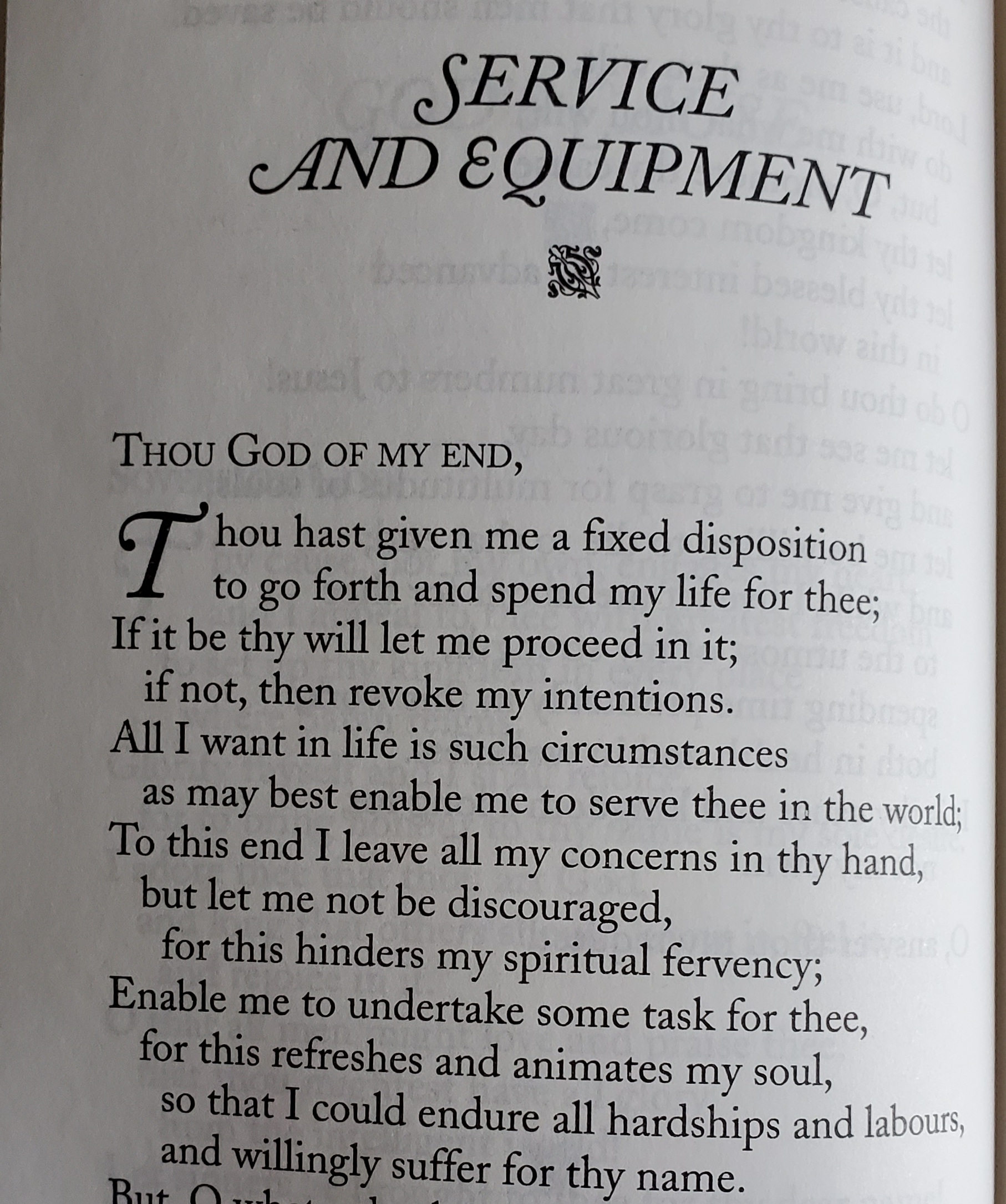
Recently I was given a book of Puritan Prayers and Devotions entitled The Valley of Vision.

This photo is an excerpt of the prayer I read before sitting down to my desk to start work this Monday morning.

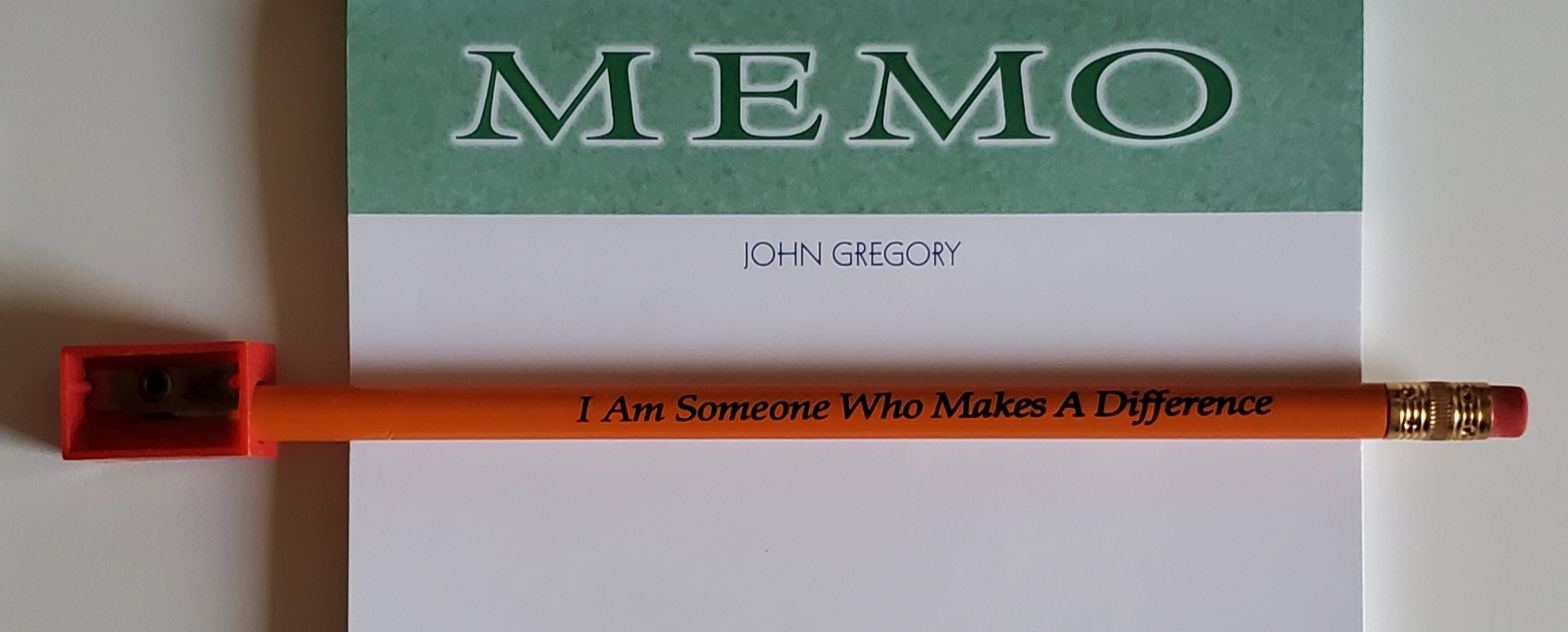
Only a few minutes in, I went to find a pencil in my collection of unused writing utensils. The first one I grabbed had the engraving “I Am Someone Who Makes A Difference.”

I saw a connection that we could all use. May we all pray to submit ourselves to make a difference in our God-given disposition. May we walk, therefore, confidently, purposefully, and observantly to make a difference.

3 Things That Matter

In this read of Ravi Zacharias’s The Grand Weaver, three things stood out to me. They, like all eight chapters in the book, discuss what matters.


Your disappointments matter

In chapter two, he wrote this about the end of life:

One of three things will happen to your heart: it will grow hard, it will be broken, or it will be tender.

He looks at the lives of David, Job, and Habakkuk to illustrate the importance of communion with God to carry us through pain, to make us “tender by that which makes the heart of God tender.” God’s presence is more essential than answers.

Your calling matters

In chapter three, these three statements can breathe life into any searcher:

When your will becomes aligned with God’s will, his calling upon you has found its home.

God often reinforces our faith after we trust him, not before.

No follower of Christ does secular work.  We all have a sacred calling.

Your worship matters

Chapter eight may be the best chapter you’ll ever read about worship. In it, he discusses the five main components of worship taken from the book of Acts: the Lord’s Supper, teaching, prayer, praise, and giving. This line speaks deeply to why worship matters:

When worship and praise lose their focus and purpose, the finite finds the Infinite boring and the creature finds the Creator insufficient.

Tenderness matters.  Trust matters.  Worship matters.