Gracists

Last month I had a conversation that left me with a feeling I didn’t want and, for sure, didn’t see coming. A few weeks later while attending a community event one speaker mentioned moral injury. And that feeling suddenly had a name. Check out this video to learn more about it.

This incident led me to intentionally choose to read several YouVersion devotional plans addressing the topic of racism. One of those was based on David Anderson’s book Gracism. Day 3 of that plan was very helpful, so I want to share this segment from that devotional:

From 1 Corinthians 12, I have identified eight principles or sayings that can guide us as we develop as gracists. These sayings lead us to actions that we can engage in to build bridges across the deepest divides of color, class, and culture. As you meditate on these verses, look for each of the eight sayings listed below.

  1. I will lift you up. “Special honor” means lifting up the humble among us.
  2. I will cover you. “Special modesty” means protecting the most vulnerable among us from embarrassment.
  3. I will share with you. “No special treatment” means refusing to accept special treatment if it is at the detriment of others who need it.
  4. I will honor you. “Greater honor” means God, as a gracist, has given greater honor to the humble.
  5. I will stand with you. “No division” means when the majority helps the minority, and the stronger helps the weaker (gracism), it keeps us from division within the body (an opposite view than normal).
  6. I will consider you. “Equal concern” means having a heart as big for our neighbors as we do for ourselves.
  7. I will celebrate with you. “Rejoices with it” means when the humble, or less honorable, are helped, we are to rejoice with them.
  8. I will heal with you. “Suffers with it” means empathizing with the pain of another and walking empathetically with the injured party.

To connect with that day of the plan, follow this link: Gracism: The Art of Inclusion – Day 3 of 5

Here’s to our collective development as Gracists.

Let’s Seek a Better Understanding

Last week I was given a book to read. Each page has grabbed me, but none like the start of chapter five, “Defending Slavery at the Onset of the Civil War.”

Let me share a few lines.

As historian Mark Noll has written, no single individual characterized the conflict better than Abraham Lincoln. When Lincoln was inaugurated for his second and very brief term as president in 1865, a Union victory was on the horizon. Robert E. Lee would formally surrender at Appomattox, Virginia, just a month later. Rather than gloat about his military success, Lincoln’s address struck a somber and reflective tone: “Both {Union and Confederacy] read the same Bible and pray to the same God, and each invokes His aid against the other…The prayers of both could not be answered. That of neither has been answered fully”…Throughout the conflict, Christians of both the Union and the Confederate forces believed that God was on their side.

This startled me. Change a few elements of the storyline, and I feel like he’s describing today’s America.

We should be startled. We should not be divided.

We should be humbled. We should not be puffed up.

We should be listening. We should not be yelling.

In his review of Tisby’s call to repentance, Daniel Williams ended with these words:

Racial reconciliation, Tisby argues, won’t occur without confession of sin and repentance from white Christians—a repentance that some Reformed churches have already started to model, but which hasn’t yet occurred en masse. With God’s grace, it can occur. For those seeking a better understanding of what this confession and repentance might entail, Tisby’s book offers a helpful guide.

History does not have to be repeated. Let’s seek a better understanding.

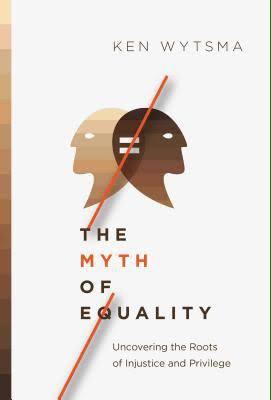
The Myth of Equality (Book Review)

I just finished reading a book that I didn’t know I needed to read.

I wasn’t looking for it. Had it not been given to me, I most likely wouldn’t even know about it.

Why did I need to read it? 

  • Because I didn’t know what I didn’t know. The first part informed me about the story of race.

Racism in the United States is worse than we thought, its lasting consequences are more significant than we think, and our responsibility is greater than we’ve been taught…There are many things that can only be seen through eyes that have cried.

  • Because I needed to see this subject through the lens of God’s kingdom. The second part took me deeper into the truth of equality.

If every person is made in the image of God, then stereotypes lead us down a dangerous path…Racial equality and fairness is not just a good thing but an ideal that we must work toward if we are to fully realize Christian obedience, national justice, and individual flourishing.

  • Because I needed to know about my privilege. The final part challenged me to listen and learn, lament, confess, and lay down.

White privilege doesn’t mean your life isn’t hard. It means if you are a person of color, simply by virtue of that, your life might be harder…If any part of justice matters then all of justice should matter.

Most likely, you didn’t know about this book before reading this post. You need to look for it. You need to read this book.