Hello Darkness, My Old Friend (book review)

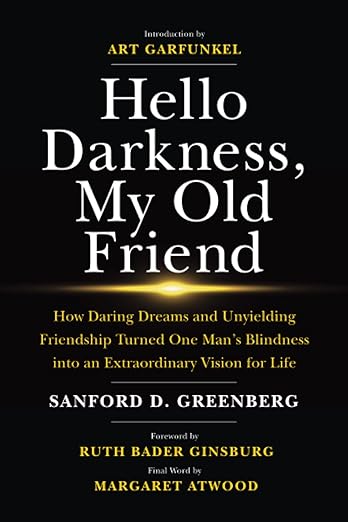
First, I want to think my friend Megan for gifting this book to me. And I’m going to regift it as suggested.

You’re not alone if the name Sanford Greenberg is new to you. After reading his memoir, I suggest taking the time to get to know him.

His life is triumphant in numerous ways, most notably the journey of taking the tragedy of going blind and living life to the fullest in spite of it. How he accomplished finishing college and going after other degrees is one thing. But continuing to dream big and go hard in all areas is equally inspiring.

Knowing I’m regifting the book, I didn’t do any highlighting. Out of many elaborative thoughts and quotes, I’d like to share just one from chapter 14, “The Start of Something Big.”

I was bitten by some kind of bug. Once someone gets his or her resolve up and running, and gets it focused in a direction, it is hard to put on the brakes. In a word, there is momentum. Also, aggressive work habits form. For us blind people, it is especially hard to hold back because we are always concerned about security. Like those who survived and prospered long after the Great Depression but could never shake the habit of stockpiling food and cash for a rainy day, we never feel comfortable, in our guts, about sitting back and saying ‘Okay, that’s it. I’ve done enough.’

Sitting back. It seems to be an art form of sorts. Or at least some form of discipline that some do naturally and others work hard to pursue.

Security. It seems to be more and more pursued yet less and less attained.

Greenberg’s journey of learning to sit back and where to find security led him to this conclusion: “The only worthwhile things in the world are people and ideas.” These drove him to an extraordinary life that may have only been possible due to overcoming tragedy, striving for the light.

I’m richer for having read Sanford Greenberg’s memoir. I’m glad we met.

If it’s doubtful you’ll read it, enrich yourself by watching this video about his lifelong friendship with Art Garfunkel.

2023 Library

For a sixth year I have followed a self-developed reading strategy with the objective to read broader. The goal: read books falling under diverse headings. This strategy is still working for me, particularly this year-the richest year of reading in a while.

For the curious, here is the library of 22 books including avenue of reading:

  • Against the Pollution of the I by Jacques Lusseyran (hoopla)
  • All That I Dread by Linda White (kindle)…the five titles by Linda White in the list are a series of fictional books
  • An Altar in the World by Barbara Brown Taylor (hoopla)…my favorite book on the list
  • The Awakened Brain by Dr. Lisa Miller (hard copy)…most thought-provoking book on the list
  • Awe by Paul David Tripp (kindle)…an annual read
  • Faith Beyond Belief by David Steindl-Rast and Anselm Grun (hoopla)…most engaging book on the list
  • The Fear That Chases Me by Linda White (kindle)
  • Finding God in the Waves by Mike McHargue (hoopla audio)…most compelling book on the list
  • Freedom Journeys: The Tale of Exodus and Wilderness across Millennia by Rabbi Arthur Waskow and Rabbi Phyllis Berman (hoopla)
  • Holy Hygge by Jamie Erickson (hard copy)…the best big idea book on the list
  • Jesus Wept by Bruce Marchiano (hard copy)
  • Learning to Walk in the Dark by Barbara Brown Taylor (hoopla)
  • My Darkest Night by Linda White (kindle)
  • Prayers for Freedom by Bruce Wilkinson (hoopla)
  • Rich in Heaven by Chris Mackey (hoopla)
  • Silence and Beauty by Makoto Fujimara (hoopla)
  • Solo by Stephen Smith and Peter Ivey (kindle)…most practical book on the list
  • South by Ernest Shackleton (hoopla)
  • Toughest People to Love by Chuck DeGroat (hoopla)…most helpful book on the list
  • When Evil Finds Us by Linda White (kindle)
  • Winter Flight by Linda White (kindle)
  • The Wisdom of Your Body Hillary McBride (hoopla)

NOTE: If you’re not familiar with hoopla, check it out: https://www.hoopladigital.com/
5 Steps to Customize Your Own Year-Long Bible Reading Plan on YouVersion

(updated from 1/21/23 post)

A year’s commitment to anything can sound daunting. I imagine that’s the feeling most people have when they consider committing to a 365-day Bible reading plan.

Besides that, most of those plans are designed to take you through the entire Bible. A worthy goal to pursue at least once in life. Yet, the challenge to get that done in a year can be tempting to ditch.

I completed one of those plans once on YouVersion…in about 3 years. See the point.

It took me that long because I choose to take my time. And I like to veer off track. If I want to campout in Jonah longer, I do. If I’m intrigued by a theme in Romans, I’ll take a break from the plan and complete other plans covering that theme…as many as I want as long as I want. Coloring outside the lines.

But the idea of reading a portion of the Bible every day does not mean you have to read the entire Bible in any set amount of time. All it means is placing a priority, developing a rhythm in your day that includes reading the Bible. Whenever you do it, how long you do it, where you do it, that’s entirely up to you. And, for those other rule breakers, what you read is also entirely up to you.

For quite a while, I’ve been using YouVersion reading plans. A nice thing that’s possible is customizing a year-long reading plan. Want to give it a try? Here are five steps.

  1. Determine to Make a Daily Commitment. Pretty obvious, but if you aren’t resolved to it, you won’t make it to December 31st. Sure, you might miss a day here or there. Understandable. Give yourself some grace and think about the fact that odds are you’ve got 5 minutes to give to this commitment and missing it a couple of times doesn’t make you a loser. If you are in, move on to step 2.
  2. Decide on a Theme. There’s a popular trend that’s replacing making New Year’s Resolutions. Instead of setting goals and aspirations, you choose a word that you’d like to guide you for the year. Not sure about that, check out this podcast episode to learn more. I started this in 2020. Each year I’ve utilized it differently, more broadly. This year, that word is what I’m using to customize my Bible reading. My word for 2024 is courage. Know your theme? Move on to step 3.
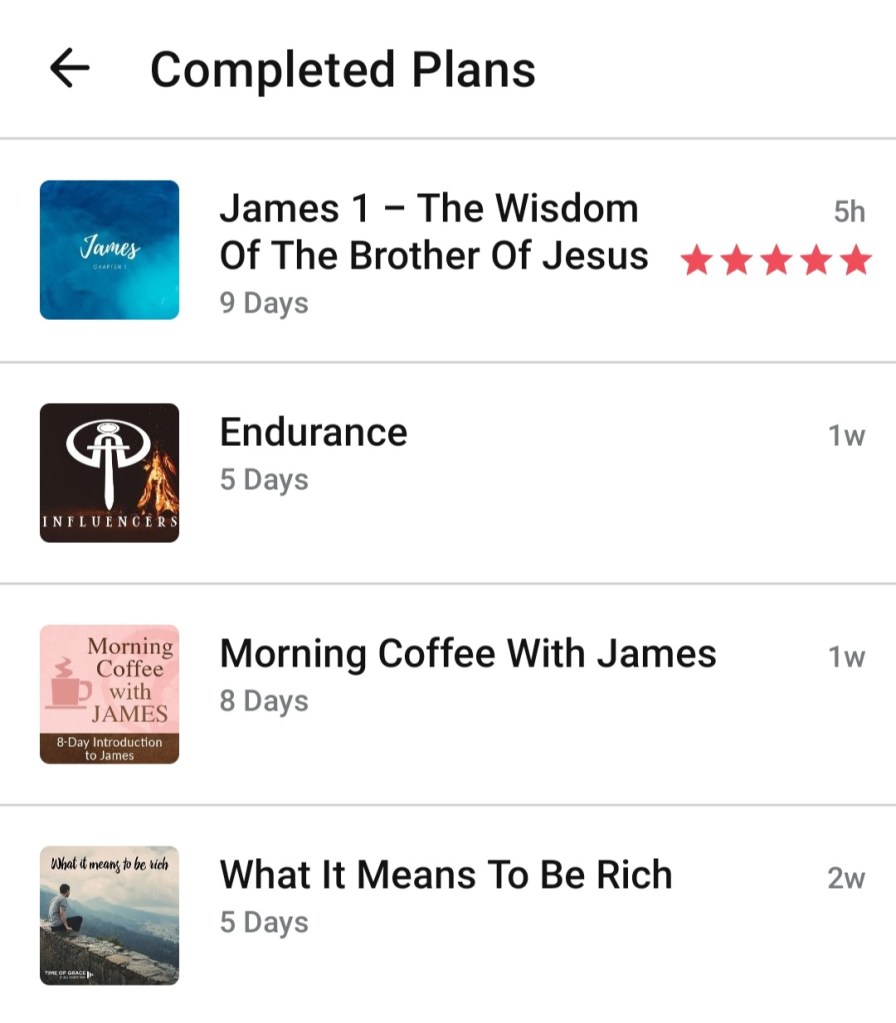
  3. Search Plans. On the YouVersion app (download it now if you haven’t already), you can search for reading plans simply by typing in a word. Most likely, dozens of reading plans are available. You’re ready for step 4.
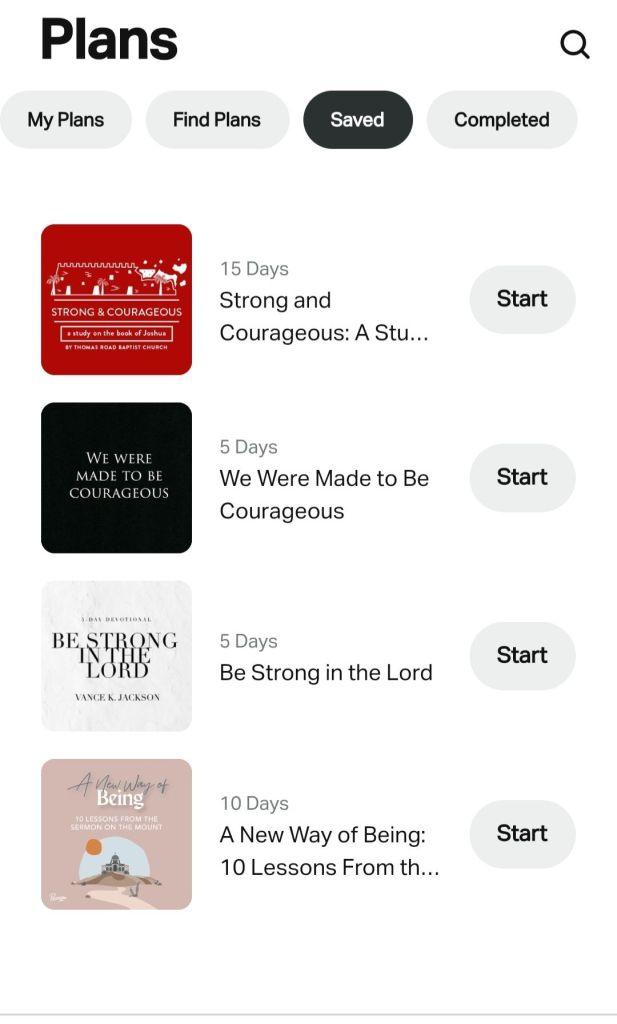
  4. Save for Later. On each plan description, you have two choices: sample and save for later. Sample allows you to check out any day of the plan. I do that to get an impression if I think I’ll complete it. If I think so, then I save it for later. You don’t have to start the plan when you find it. I’m not worrying about saving enough plans that equal 365 days, by the way. I just saved the ones that looked interesting to me for now. At the moment, I’ve saved enough plans to get me into February (total up the days for each plan to see how many days you’ve already covered). Saved at least one plan? Final step is next.
  5. Follow the Thread. As you read each plan, some verse/story/character will stand out, grab your attention. Take note. Follow that lead to search for other plans to save for later. For instance, since I did my initial plan saving, the book of 1 Peter has gotten my attention. Adding reading plans can feel very fluid and interactive.

That’s it. This approach proved worthwhile and meaningful last year. If it ain’t broke…

5 Steps to Customize Your Own Year-Long Bible Reading Plan on YouVersion

A year’s commitment to anything can sound daunting. I imagine that’s the feeling most people have when they consider committing to a 365-day Bible reading plan.

Besides that, most of those plans are designed to take you through the entire Bible. A worthy goal for sure-I believe one that should be set and achieved at least once in life. Yet, the challenge to get that done in a year can be tempting to ditch, say, around Numbers 22 (just a random guess…nothing scientific…or biased against whatever happens in that chapter and book).

I completed one of those plans once on YouVersion…in about 3 years. See my point.

It took me that long because I choose to take my time. And I like to veer off track. If I want to campout in Jonah longer, I do. If I’m intrigued by a theme in Romans, I’ll take a break from the plan and complete other plans covering that theme…as many as I want as long as I want. I color outside the lines.

But the idea of reading a portion of the Bible every day does not mean you have to read the entire Bible in any set amount of time. All it means is placing a priority, developing a rhythm in your day that includes reading the Bible. Whenever you do it, how long you do it, where you do it, that’s entirely up to you. And, for those other rule breakers, what you read is also entirely up to you.

For quite a while, I’ve been using YouVersion reading plans. And for the first time this year, I’ve decided to use them to customize a year-long reading plan. It’s already added richness to my reading. Want to give it a try? Here’s how I’m doing it.

  1. Determine to Make a Daily Commitment. Pretty obvious, but if you aren’t resolved to it, you won’t make it to December 31st. Sure, you might miss a day here or there. Understandable. I have already. Give yourself some grace and think about the fact that odds are you’ve got 5 minutes to give to this commitment and missing it a couple of times doesn’t make you a loser. If you are in, move on to step 2.
  2. Decide on a Theme. There’s a popular trend that’s replacing making New Year’s Resolutions. Instead of setting goals and aspirations, you choose a word that you’d like to guide you for the year. Not sure about that, check out this podcast episode to learn more. I started this in 2020. Each year I’ve utilized it differently, more broadly. This year, that word is what I’m using to customize my Bible reading. My word for 2023 is rich (maybe more on that later). Know your theme? Move on to step 3.
  3. Search Plans. On the YouVersion app (download it now if you haven’t already), you can search for reading plans simply by typing in a word. When I typed in rich, dozens of reading plans were available. You’re ready for step 4.
  4. Save for Later. On each plan description, you have two choices: sample and save for later. Sample allows you to check out any day of the plan. I do that to get an impression if I think I’ll complete it. If I think so, then I save it for later. You don’t have to start the plan when you find it. I’m not worrying about saving enough plans that equal 365 days, by the way. I just saved the ones that looked interesting to me for now. At the moment, I’ve saved enough plans to get me through April (total up the days for each plan to see how many days you’ve already covered). Saved at least one plan? Final step is next.
  5. Follow the Thread. As you read each plan, some verse/story/character will stand out, grab your attention. Take note. Follow that lead to search for other plans to save for later. For instance, since I did my initial plan saving, the book of Luke and the chapter of 1 Chronicles 29 have gotten my attention. Adding reading plans for those has increased my initial plan list by five plans adding 53 days. Feels very fluid and interactive.

That’s it. I’m convinced this approach is going to continue to prove worthwhile and meaningful. By the end of the year, I anticipate remembering more, appreciating more, and embracing more of the Bible. I’ll be more rich.

By the way, I just looked up Numbers 22. That’s where a donkey talks. You might want to check it out. Not sure what thread that starts, but have fun.

2022 Library

For a fifth year I have followed a self-developed reading strategy with the objective to read broader. The goal: read books falling under six headings. This strategy is still working for me.

For the curious, here is the library of 20 books including avenue of reading:

  • Ambiguous Loss by Pauline Boss (kindle)
  • Awe by Paul David Tripp (kindle)…an annual read
  • The Crimean Nexus by Constantine Pleshakov (hard copy)
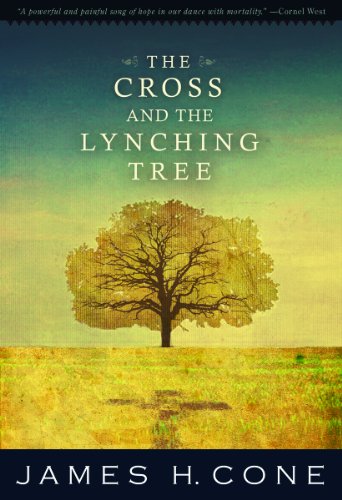
  • The Cross and the Lynching Tree by James H. Cone (kindle)…the most thought-provoking book on the list
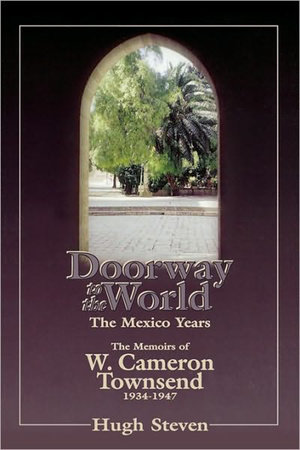
  • Doorway to the World by Hugh Steven (hard copy)
  • The Doubting Disease by Joseph W. Ciarrocchi (kindle)
  • Fathered by God by John Eldredge (hoopla)…the most surprising book on the list
  • The Fight by John White (hoopla)
  • God’s Resting Place by Ron Marquardt (hard copy)
  • The Hollywood Commandments by Devon Franklin (hoopla)
  • The Journey: Finish Strong by Lee Ann Martin (hard copy)
  • Sermons for All Seasons by Bruce Porter (hard copy)
  • The Shallows by Nicholas Carr (kindle)
  • Shame by Josh Roggie (hoopla)
  • Shame, Guilt, and Surviving Martin Bryant by Karen Collyer (hoopla)
  • Shame Nation by Sue Scheff (hoopla)
  • Silence by Shusaku Endo (hard copy)
  • Solo by Stephen Smith & Peter Ivey (kindle)…the most practical book on the list
  • The Soul of Shame by Curt Thompson (hoopla)…my favorite book on the list
  • Try Softer by Aundi Kolber (hoopla)…the most helpful book on the list

NOTE: If you’re not familiar with hoopla, check it out: https://www.hoopladigital.com/
Mimickry

I’ve been at it for over two years. It’s a slow burn.

When I transitioned to a new job and anticipated working more from home and not having an office, I knew something had to be done. All my books weren’t going to fit on one bookcase at home. So it began. The personal library deconstruction. As the walls enclose, the books are finding new homes.

I’m guessing all book lovers have similar problems. Not only do we buy more than we need nor have room for, we tend to not get around to reading all of them either. I’d guess someone has labeled this a disorder. I mean, chocolate lovers don’t buy boxes of chocolate just to put them on display never to be opened and eventually discarded. At least I don’t. I enjoy what’s inside. The chocolate box, just to be clear.

To address this problem, I’ve continued the deconstruction in two ways. One, if I’ve never read the book and don’t see that I will in the near future, “off with its head (given away in some fashion).” Two, rather than buying new books (Kindle doesn’t count), I’m reading the books I haven’t read and then deciding if it deserves to stay or go.

Occasionally, I encounter deja vu. Happened yesterday. I finished a book, which deserved to stay on the shelf. So I picked out another one I was pretty sure I hadn’t read. Not even sure where I got it, honestly. It’s signed by the author, which most likely explains why it’s still on the shelf. As I’m reading the first few chapters, it reads like a new book-nothing familiar at all. And then, with the light on the page just right, I see faint yellow highlighting. Are you kidding me? I’ve read this book before, even highlighted it, and I don’t remember. Another book lover problem. Actually, there’s several problems in that realization, but let’s move on.

One joy in re-reading a book is your eye, your mind being captured with more. Something you didn’t engage the first time speaks to you the second time. Like re-watching a movie. Here’s the line in this book that captured me:

We mimic the god we serve.

God’s Resting Place: Finding Your Identity In His Peace, by Ron Marquardt

Marquardt explained that our belief of God’s character plays out in how we live. “If I believe God is angry and hard to please, I find myself behaving the same way. If I find Him happy one moment and angry the next, I will soon follow suit.” (p.19) Mind captured.

So I chose to meditate on that in a journal entry. Rather than analyze my mimicry, I decided to make a list of truths I believe about God. This list, certainly not exhaustive, can then serve as a checklist of how I’m mimicking Him:

  • God loves us as we are
  • God sent his son not to condemn
  • God receives us from our wandering
  • God seeks the lost sheep
  • God rests
  • God listens to his children
  • God blesses those who bless him
  • God humbled himself for his creation
  • God keeps his promises
  • God forgives
  • God is faithful
  • God has eternity in mind
  • God gives generously
  • God has compassion
  • God remembers we are dust

Deconstruction leading to deja vu leading to mimickry. Here’s to the slow burn!

Photo: Izabela Zagaja-Florek

First 2022 Reads

If my first two reads of 2022 are any indication, I’m in for an education.

Book #1

Before reading this book, I knew nothing about the start of Wycliffe Bible Translators and Summer Institute of Linguistics (SIL). It’s quite a story. In this memoir, you learn just how passionate founder Cameron Townsend was and how that passion laid the foundation for one of the largest mission organizations. His vision and commitment led many world leaders to join forces to transform communities. He used what he had and relied on God for what he didn’t have.

Book #2

If James Cone only wrote this book for me, it would have been worth his time. I’m thankful for the direction I received to read it. I had no idea what I was going to learn and experience. I learned many things. Much of what I learned gave voice to my mind’s whys I didn’t know I needed to voice and answered my soul’s questions I didn’t know I needed to know. As a white, 53-year-old son of a Baptist preacher, my heart ached and my eyes teared through much of this book. So many what if’s and why not’s simultaneously producing shame and empathy, anger and compassion. My view of American history has changed. My appreciation for suffering has deepened. My belief in Jesus’ sacrifice has solidified.

These two books exemplify why it’s important to read. What are you reading? What education will you give yourself in 2022?

2021 Library

For a fourth year I have followed a self-developed reading strategy with the objective to read broader. The goal: read books falling under nine headings. This strategy is still working for me.

For the curious, here is the library of 21 books (Look at that! 21 in ’21! Totally coincidental…or was it?) including avenue of reading:

  • The Greatest Motivational Tool by Rod Olson (hard copy)
  • Simplifying Coaching by Claire Pedrick (kindle)…best book on coaching I’ve read in a while
  • The Color of Compromise by Jemar Tisby (hard copy)…most challenging book in this library
  • Presence by Amy Cuddy (hard copy)…book with best takeaway, “Fake It ‘Til You Become It.”
  • Hope Rising by Casey Gwinn & Chan Hellman (kindle)…favorite book in this library
  • Opening Up by Writing It Down by James Pennebaker & Joshua Smyth (kindle)
  • Now Hope by Paul De Jong (kindle)
  • Into the Silent Land by Martin Laird (kindle)…most surprising book in this library
  • Baca by Valerie Hyer (hard copy)
  • Unfinished Business by Lee Kravitz (audio)
  • When Mama Can’t Kiss It Better by Lori Getz (kindle)
  • The Journey by Lee Ann Martin (hard copy)
  • The Red Badge of Courage by Stephen Crane (hard copy)
  • Love Like You’ve Never Been Hurt by Jentezen Franklin (kindle)
  • Prepare by J. Paul Nyquist (hard copy)
  • Sound Doctrine by Bobby Jamieson (hard copy)
  • Awe by Paul David Tripp (kindle)…I read this annually
  • Don’t Give the Enemy a Seat at Your Table by Louie Gigilio (kindle)…favorite Christian living book in this library
  • How the Light Gets In by Pat Schneider (kindle)…second favorite book in this library
  • Heartbreak to Hope by Samuel Wright (hard copy)
  • Another Gospel by Alisa Childers (kindle)

3 Questions to Refresh Your Bible Reading

If you’re reading this post, you most likely fit into two categories:

  1. You read the Bible regularly, or at least try, and know that at times you need a “pickmeup.”
  2. You have yet to really figure out how to make Bible reading a thing you do.

Guess what…God knows it and understands. Yet, I’ll paraphrase Max Lucado, God sees where you are but isn’t content to leave you there. So when it comes to Bible reading, God desires for you to enjoy communing with him through his words to you.

Whether you are flowing along completely satisfied in your approach to Bible reading, or if you try one more devotional plan that leads to “failure” you are done with it, or you’re indifferent about it, indulge me to encourage you to consider asking yourself these three questions the next time you open your Bible.

  • Who am I when I approach the Bible?

I’m not suggesting you have to flash your official birth certificate heavenward to remind your Creator that you are his handiwork. He knows you, trust that. But do you know your spiritual identity? What if that’s how you approached the Bible? 

Rather than the father of four who wants out, you are God’s son who needs advice, courage, wisdom. 

Rather than the wife of Mr. Grumpy Pants, you are God’s daughter who needs empathy, forgiveness, patience. 

Rather than the employer who wrestles with growing your business, you are God’s servant who wants direction, guidance, blessing. 

When you open the Bible, what might happen if you engaged it with your heavenly identity over your earthly title?

A note to those in category #2: If your answer to who you are is something like Skeptic, Doubter, Curious, First-Timer, or anything that sounds unacceptable to those church-goers, it’s worth repeating. God knows you. He wrote the Bible for you, too.

  • What question focuses my reading?

Once you’ve landed on who are you, then it’s time to figure out why you are reading the Bible. If your answer is because I’m supposed to, let’s go ahead and admit this-that ain’t cuttin’ it. Legalism leads to exactly where you are.

You have to have a reason with purpose that says, “I know God sees me where I am, and I’m not content staying there either.” With that in mind, word a question that will give your heart and mind direction. 

For example, “As a child of God, what is God saying to me?” Or, “As a follower of Jesus, how does this apply to me today?” Or, “As a believer seeking transformation, what steps of growth are possible?” Or, “As a skeptic, what hope do I see in these words?” Or, “As a first-timer, what can I learn about God?” Or, “As a doubter, how does God show himself?”

Once you’ve worded that question, post it somewhere in your eyesight every time you open your Bible. Maybe it’s on a post-it. Maybe it’s at the top of a notepad. Maybe it’s on your computer screen. Write this question in your heart as well as in your vision.

  • Which part of the Bible allures me?

Now that you know who you are and what question is guiding your heart and mind, here’s where I believe freedom shows up. Your entry into heaven isn’t based on did you read the entire Bible or any other works orientation. Free yourself from any system that enslaves you. If you feel God guiding you to read from Genesis to Revelation, fantastic. But if you find yourself stuck in the dull drums, give yourself the freedom to sit as long as you want where you are getting the most from it. God isn’t abusive. He may be corrective as a Good Father and Shepherd, but when you know who you are and why you’re reading his word, all his words can fulfill you. Choose to read where God leads you and feast as long as you want.

One last note for those in Category #2: If you don’t know how to answer this question, here’s a suggestion. Go to the New Testament and try one of the first four books. Most people like to start with the Gospel of John.

God promised that when we seek him we will find him. May these questions assist you in finding God.

(This post was prompted by a coaching session. If you have yet to receive the benefits of a coaching relationship in your life, let this be a testament to what’s possible.)