Leadership Success: Learned Before or After?

“It is likely that leadership success, both current and future, will be determined more by the learning that takes place after being given a leadership assignment than by what has been learned prior to it.”

Gene Habecker in The Softer Side of Leadership

Read this quote for the first time this week. It’s made me think and reflect.

I’ve always held the philosophy that what has been learned prior has prepared a leader for success in a new assignment. However, Habecker has made me consider the learning after being in a new position. I believe there are stipulations as to whether this learning leads to success more than prior learning.

STIPULATION #1: What’s the leader’s ongoing approach to learning?

Is it ongoing? Is it plural, meaning it focuses on all areas of life? If the answer to either of these is no, learning is going to be minimal and therefore success will be hindered. Leaders never stop learning.

STIPULATION #2: What’s the leader’s level of humility?

Followers of Patrick Lencioni have heard his repetition on the needed virtue of humility in leadership. Humble leaders in a new assignment will have a greater bend toward learning. They carry a “I haven’t been here before and have a need to learn” posture that paves the way for ongoing learning.

STIPULATION #3: What’s the leader’s inclusion of interpersonal relations learning?

The temptation exists to believe this is a one-time effort. Or that by a certain age there’s nothing more to learn about relationships. Or a resignation to “this is just who I am.” A new assignment will bring new relationships. An ongoing, humble learning posture toward those relationships will be important for successful leadership.

I met a leader this week that I believe understands these stipulations. He is less than a year into an assignment that came with more firsts and surprises than he anticipated. In his late 50’s, he certainly has prior learning. But he is keenly aware it is not enough.

So yes, success for him, for that matter for all of us, will be based on pursuing learning – ongoing, humble, all-inclusive learning.

Photo by Charles Forerunner on Unsplash

The Best Book I’ve Read This Year

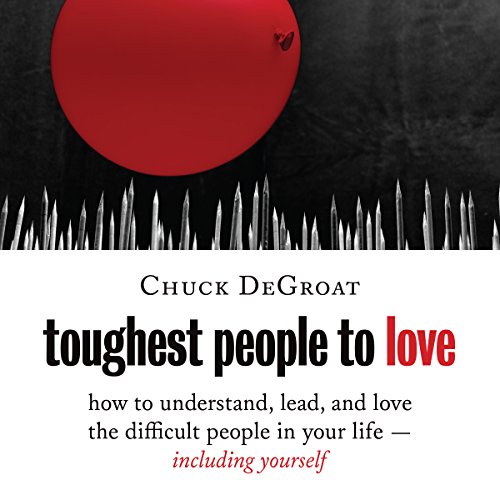
Finished the most meaningful book I’ve read this year. I’m glad to have followed the breadcrumbs to be introduced to Chuck DeGroat. Toughest People to Love (2014) is the first of his books I chose to read.

There are many things to appreciate about his style of writing.

  • He makes it clear where he’s going
  • He balances instruction with stories
  • He provides solid references
  • He gets to the point
  • He scored points with me by referencing Dr. Curt Thompson several times

It’s not lost on the reader that DeGroat chose to include “love” in the book title. He comes across as wanting that for you and for the people in your life.

We’re not called to make people feel bad or guilty. We’re called to lead them to an honest appraisal of themselves, which in turn leads to honesty before God and others.

Chapter 5, Loving the fool: when relationships turn ugly

It’s not a gooey love that he’s after. He means it when he asks for honesty. DeGroat achieves truth and love as an author, showing a great balance as a former pastor and a professor.

Consider the fragmented, dualistic thinking of the modern world. Often psychologists see depression merely as a neurochemical problem that needs to be fixed with medication and therapy. And too often pastors spiritualize psychological maladies that may require further expertise…Compassion does not ignore the truth. It enters into it, wrestles with it. It requires a solidity and strength of relationship with others which endures even in times of extraordinary difficulty.

Chapter 6, Growing through pain: the gift of the dark

Part three of the book is likely the part that will most deeply speak to readers. The three chapters focus on personal growth, and he mentions the concept of wholeheartedness (he has another book by this title, by the way; on my “to read” list). His clarity on the divided heart from a biblical view leaves no question as to what that means and why it needs to be addressed.

One glaring symptom of the divided heart is exhaustion…To be whole, we need to be healed, and this takes a lifetime.

Chapter 7, Living with wholeness: rest and resiliency in the leader’s life

For leaders, he saved the best for last in chapter 8, Growing into leadership maturity: self-care and the art of shadow-boxing. He describes five disciplines that involve “practice and ritual-the give and take required in any relationship.” He also gives the following description of American culture, one that I firmly agree with:

I’ve heard many criticize American culture, and even American Christians, as self-consumed. I beg to differ. I see people who are afraid of themselves.

If you fall in any of the following categories, I encourage you to read this book:

  • People who know they could love better
  • People who are leaders in any capacity
  • People who can’t figure out how to love a significant other
  • People who aren’t satisfied with their current capacity to love
  • People who enjoy the works of Dan Allender, Curt Thompson, Richard Rohr, Eugene Peterson, David Benner, and Henri Nouwen

“No Thanks, Well-Meaner”

This afternoon I had one of those “Huh…I never thought of it that way” moments.

I was describing to someone why it’s never worked out for me to pursue a particular job. Over the years many folks have encouraged me to pursue it, and I even came relatively close to it once. As I was telling this story, these words came out of my mouth: “It just never felt right. You know, sorta like trying on Saul’s armor.”

I stopped talking for a second to let that sink in, more for me than the guy listening. In my head I said, “That’s a perfect analogy. Can’t believe I’ve not made that connection before.”

If you don’t know that reference by the way, or need a refresh, check out 1 Samuel 17. It’s the David & Goliath narrative. Well-meaning Saul outfits shepherd boy David in his own armor. No go. David knew well enough that it wasn’t going to work. He took it all off, and we know how the story ends.

Suppose David ignored “well enough.” Suppose he caved because that’s King Saul. How do you question the king, that you just met? “Who do you think you are?” Suppose he allowed the natural to get in the way of the supernatural. We’d have a whole different story end.

Truth is, many relationships start by well-meaners that knew well enough. Many jobs begin that were never the right fit. Hindsight tells us that, but imagine what’s possible when courage undergirds one’s mindset and convictions so that well enough writes the story.

When we are in tune with God and with our own mind and body, we know well enough. And it’s really just a split second between anyone’s well meaning and our well enough that determines how the story ends.

In preparation for that split second, what if we chose this conviction? “I’m not here in the king’s name. I’m not even here in my name. I’m here in the name of the same God as David’s. Well-meaners, thanks, but no. In this moment, in this battle, in this decision, God’s well enough fits just fine.”

Photo by Nik Shuliahin 💛💙 on Unsplash

Who’s Your Alvin?

Yesterday I met Alvin. Alvin is a medical assistant. I was in his office for an exam.

At the start, he had that moment where he was trying to create conversation, somewhat to see if his patient would talk. Did I need to talk or not, you know, that awkward avoidance of silence that we try to fill. He wouldn’t know that I wasn’t looking for conversation. It was 8AM. But I honored his efforts.

One way I did that was to ask about the very faint music I heard. His replied, “Oh, it’s Christian music. I have to have it playing.”

That’s all it took. When I said I thought I recognized the music, he felt released to go down the church conversation. I let him guide the conversation, inquire whatever he wanted, express his thoughts, etc.

How would I have known that he’d land on the topic of how challenging the job of being a pastor is? He described his observations about people having no idea the things pastors have to deal with, how scrutinized they are, the stress they deal with, and that they rarely seem to be able to relax.

Then he said this: “My pastor and I have a pretty close relationship that I’m grateful for. And our family makes a point to make our home a safe place for him and his family. I’ll call him up and invite them over just to give them a place to be themselves and hopefully release some stress. We don’t talk about church stuff. Our family wants to make sure we do what we can to support the pastor and his family.”

I’m just smiling on the inside and saying to myself, “He has no idea who he’s talking to.” Then he asked what I thought about it. I decided to answer that I’m a preacher’s kid. He busted out laughing. “Well, I don’t have to tell you. You’ve seen it all, from the inside.” I left it at that.

I was Alvin’s first patient. I left thinking he’d had a good start to the day. I know I had. Why? I witnessed a man not only seeking to live a holy life given a chance to express his faith but also to model what many people need in their lives. Many people, particularly anyone in a leadership position, need safe people. The safe people they need have no agenda other than to honor them, respect them, accept them as human beings, and support them in ways they may not even know or acknowledge they need.

But let’s be real. Everyone needs safe people. Everyone needs an Alvin. And we all have the chance to be an Alvin.

Who’s your Alvin?

Whose Alvin are you?

Photo by Tyler Nix on Unsplash

God Has Competition

Here’s a common question I’ve been asked over the years: “I don’t seem to hear from God like many people say they do. Why?”

There could be several answers to that question, but allow me to answer it with a question: “What other voices in your life is God competing against?”

I believe God desires to speak to us, to communicate with us constantly. When we stop to consider who else desires to speak to us, it’s rather eye-opening, explains how important it is to lend our ear to the voices that matter.

To answer the “what other voices” question, here’s a suggestion. Get out a piece of paper or open a digital notetaking app. Make these three headings at the top: Spiritual, Physical, Digital. Then start listing the voices attempting to speak into your life under each heading.

Be brutally honest. For example, don’t avoid listing all spiritual voices that desire to speak into your life. To deny the existence and working of demonic forces actually shows they are ahead of you. Acknowledging their existence provides a means for God to speak to you as your protector and defender.

As for the physical heading, focus on human relationships. Again, be brutally honest. Include the good and the bad voices that have some level of authority in your life. List them all. This list should be pretty lengthy if you consider them all. By the way, go ahead and list yourself. You probably listen to you more than anyone else.

That third category, digital, may seem weird to consider. Basically, all things visual and audio are speaking into our lives simply by their presence. From TV to movies to apps to music to texts to emails to blogs to videos, list them all.

Finished yet? What’s that list look like? How does that help frame God’s competition?

What I have found in my listening for God is the need to silence his competition.

The fewer voices speaking the better odds He will be heard.

The fewer voices speaking the louder His voice seems.

The fewer voices speaking the easier to attune to the one that matters most.

Photo by Hasan Almasi on Unsplash

Every Circle Grace

Grace is an interesting topic. In my years in the church, the focus of grace has mostly been on the grace we receive from God. Rightly so. And during this Lenten season, it deserves top of mind.

Devoted followers of Jesus’ teachings believe we are to give what we receive. Everything we receive from God we are to pass on. Love. Mercy. Forgiveness. Faithfulness. And even Grace.

My observation is we tend to gift grace in various degrees. Some people give themselves plenty of grace…much more than they give to others. Some people disproportionately give their family members grace in comparison to others-some more, some less. One amazing observation that stands out more and more is the grace people in the church give to themselves compared to the grace they give people outside the church. Again, it goes both ways. Some people give better grace to their fellow churchgoers while others give better grace to those outside the church.

For better or worse, I’m the latter. For the record, neither is correct. Grace is to be shared with all people equally.

Looking at Jesus’ relationship circles, we observe supernatural grace giving. He gave Peter as much grace as he gave the woman at the well. He shared his grace equally with Nicodemus and Judas. His mother and Pilate both received appropriate grace. What an example he left us.

I most often fail at giving grace to those in my closest relationship circles. That awareness provides growth opportunity so whether in the next hour I engage a stranger in the store, a friend on the phone, or a colleague in the office, my grace is for every circle.

Jesus practiced every circle grace. His resurrection power says, “So can I.”

Our Batons

This morning I listened to a student pastor speak on the importance of being for the next generation. He used the analogy of passing off a baton in a relay race. His last point was an encouragement to not waste your weakness-meaning your past brokenness, your inabilities, or your inexperience do not disqualify you from being on the track, being part of passing off your baton to the next generation. You can carry a baton and pass it on.

Got me to thinking about the actual baton. What is the baton we are passing off? Is it just a broad view of a way of life? What if each one of us knew in more detail what the baton is that we are carrying? I believe we have our own unique baton that we can pass off to countless others throughout life.

Many things come to mind for me. I have a baton of music that I have passed on in many ways. I have the baton of church leadership that is still running its course. I have a baton of living a contented single life. One could say I have a baton of running that I occasionally pass on.

Those are skills and experiences. We could, and I believe we should, consider our spiritual batons also. These spiritual batons are the core of who we are, how we live. We run with the baton of faith, surrender, peace, hope, love, mercy, humility, kindness, patience-what Paul calls the fruit of the Spirit.

Another thought about our unique baton could include the life challenges that God has used to mature us. These could be anything from experiencing loss of jobs, finances, relationships to seasons of doubt, distance, or disconnect. All of these things make up the baton that we are carrying.

What if we held tight enough to our unique baton making sure we don’t drop it but loose enough to let God keep molding it? What if we passed on these batons as often as we are prompted to while we are living rather than only after we die? What if we lived more for what we relay than what we grip?

You might have to get a wheelbarrow for all those batons. But imagine the impact when your race is over and your batons are still in the race.

Photo by Jonathan Chng on Unsplash

What’s Left

God is still the God of what’s left. -Jentezen Franklin, Love Like You’ve Never Been Hurt


This quote is in chapter 11, “Fight for Your Family.” Franklin’s point is that whatever the status of one’s family there’s still something left. Now is the time to let God be God of whatever’s left. Encouraging. Hope-filled.

How ’bout we broaden the story? Like…

  • God is still the God of what’s left of your company
  • God is still the God of what’s left of your marriage
  • God is still the God of what’s left of your friendship
  • God is still the God of what’s left of your finances
  • God is still the God of what’s left of your church
  • God is still the God of what’s left of your neighborhood
  • God is still the God of what’s left of your government
  • God is still the God of what’s left of your health
  • God is still the God of what’s left of your education
  • God is still the God of what’s left of your parenting
  • God is still the God of what’s left of your career
  • God is still the God of what’s left of your retirement
  • God is still the God of what’s left of your life

Wordlessly

Harvey Kanter’s recent book on leadership, Choosing to Lead, is my current read. If you want a practical, straightforward, fairly quick read on leadership, give this book a look.

I just finished chapter 13 entitled Decisiveness. Two thumbs up. His main illustration is a familiar one, the 2009 event of Flight 1549 leaving LaGuardia and crash landing in the Hudson River-a scrutinized decision by Captain Sully Sullenberger. Here’s an excerpt from the chapter:

The entire scenario from the first bird strike to the initial impact of a water landing took just under 3 1/2 minutes to play out. Relying on their training to save everyone on board, the response of Captain Sully and his crew was to act decisively. In a much later interview Sullenberger said, “…he worked sometimes wordlessly with his first officer, Jeff Skiles, in dividing urgent chores despite never having flown together before… ‘We were able to collaborate wordlessly,’ Sullenberger said, ‘I didn’t have time to direct his every action… You have to deal with the most time critical things first… Situational awareness is the ability to see the entirety of the forest, but knowing at any given moment which tree is the most important one.'”

When I read that, one word struck me-wordlessly. Both of these men brought all of themselves to the situation resulting in a terrific outcome-wordlessly.

Sounds pretty unrealistic to expect all our relationships to reach such a high level. But here’s what’s not unrealistic-working to show up ready to be that for others whom God has put me in relationship. I cannot control how they show up. But I am completely responsible for bringing all of myself, ready to respond wordlessly.

God of My 20’s: Understanding Connectivity

(Post #9 in a collaborative series)

Guest Blogger Rick Howell

I felt the call of God into the ministry at the ripe young age of 17. While I obediently began to make decisions consistent with this understanding of God’s direction for my life, I thought it was the dumbest thing God could do. I was active in a small Baptist Church that only had two staff members: a pastor and a choir director. I knew I couldn’t sing; therefore, my calling must be to be a pastor. The problem with this, from my perspective, was that there was very little that I saw my pastor do that I thought I would either be good at or enjoy. Nevertheless, to the best of my understanding I proceeded forward. After getting married, my new bride and I moved to Louisville, Kentucky, to begin my pastoral preparation at Southern Baptist Theological Seminary. I was 22 years old. Through the course of the next five years, God used a variety of circumstances to guide my journey to places I did not even know existed when Debbie and I packed the U-Haul and headed north. At a certain point in my ministerial formation, I experienced a crisis of self and faith that, I would learn one day, was complicated by my misunderstandings of myself, God, and our relationship. Fortunately, for me, Southern had an arrangement with a local counselor with whom I began to meet. This counseling relationship became a vital tool of the Holy Spirit to begin to attend to some very unhealthy dimensions of my relationship with God and with myself. This exploration of self and God was at times very painful, but also life giving. I began to experience a deepening intimacy with God that would have not been possible if I had maintained my previous perspectives. Ever so gradually, I began to wonder if my particular God-given gifts and talents were intended for a ministry of pastoral counseling rather than the pastorate. As my calling began to be clarified and focused, God’s idea originally communicated eight years earlier became much less dumb. Isn’t it interesting how that transformation occurred?

My relationship with myself and God continues to grow and become, now 32 years later. I have come to understand that God is not nearly as concerned about my productivity as my connectivity. Staying grounded to myself enhances my willingness to be connected to God as I am clearly aware of my longing for God. Staying grounded to God, being reminded of God’s deep desire to hang out with me, enables me to be honest in my self-assessment thereby improving my relationship with myself. From time to time, I experience unhealthy remnants of my immature understanding of myself and God. I get caught up in impressing God with my activity or achievement. While these vestiges continue to disrupt my journey, I am committed to my own healing. God is patient, kind, and clear as I encounter these setbacks. God’s calm voice keeps calling me back. “Be still and know that I am God.”

At the same time and as a result of God’s calling on my life, I have had the privilege of serving God by walking alongside of people who are loved by God, for whom God desperately desires healing and wholeness. Through the years I have discovered that I am not unique, as it is common for folks to need a safe relationship with whom they can explore themselves, God, and their relationship. Perhaps this familiar human journey is what The Holy Scriptures is referring to when we are told to “Work out our own salvation in fear and trembling.” Relationships (with self, God, and others) are like bottles of Ketchup. It doesn’t matter how full they look from the outside; it takes a lot of work to get anything out of them.