Four Lifegiving Messages Following Four Sadness Journeys

One final takeaway from Richard Rohr’s The Tears of Things was this: Sadness is a journey to be embraced and valued.

Rohr’s connecting sadness as the avenue the prophets took to move from anger to compassion painted this reality. Sad is not something to “not be.” Instead, sadness is a normal, valid, and, therefore, valuable emotional journey to be completed, to be processed. If the journey isn’t taken, a compassionate life may never be found.

Following Rohr’s teaching, here are four lifegiving outcomes from the sadness journeys of four Old Testament prophets:

Isaiah wrote this after a sadness journey over social injustice:

But those who hope in the Lord will renew their strength. They will soar on wings like eagles; they will run and not grow weary, they will walk and not be faint. – Isaiah 40:31

Jeremiah shared this after his sadness journey over covenant breaking:

“For I know the plans I have for you,” declares the Lord, “plans to prosper you and not to harm you, plans to give you hope and a future.” – Jeremiah 29:11

Habakkuk declared this after his sadness journey over suffering caused by evil:

The Sovereign Lord is my strength; he makes my feet like the feet of a deer, he enables me to tread on the heights. – Habakkuk 3:19

Zephaniah promised this after a sadness journey over abandonment of God’s ways:

The Lord your God is with you, the Mighty Warrior who saves. He will take great delight in you; in his love he will no longer rebuke you, but will rejoice over you with singing. – Zephaniah 3:17

CHALLENGE: Think back to the completion of your sadness journey. What lifegiving message do you now have? Where could you share it? Who might be in need of it while they go through their sadness journey?

Photo by Ingo Doerrie on Unsplash
Loss & Pain & Redemption

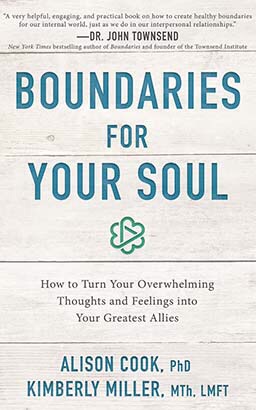
About a month ago, I walked through a situation that I could only explain with one word: sad. So when I came to chapter 11 entitled “Boundaries with Sadness” in the book I’m reading (Boundaries For Your Soul), I was ready. 


Of my many highlighted quotes in the chapter, this was the most helpful:

It’s helpful to think of the causes of sadness in three categories: sadness as a response to the loss of something good, the loss of something bad, and the loss of what might have been.

Categories one and three I get and I’ve used to befriend my personal sadnesses recently. But category two tilted my head…until I read Maria’s story. 

Maria, a bright woman, dated an abusive, addicted man for four years. When asked, “What keeps you from leaving?” she answered honestly, “I don’t want to face the pain.” She had given four years of her life to loving someone who had hurt her repeatedly. A part of her didn’t want to accept the reality that she had wasted so much time on a destructive, dead-end relationship. So she was choosing the pain she knew over the pain she didn’t know – and was missing an opportunity to move forward with her life.

I instantly understood category two. Choosing the pain we know can be crippling. Most likely we don’t know this is what we are doing until someone or some happening makes it clear to us. The strength and comfort when we allow the Spirit of God to assist us in facing that unknown pain is worth embracing to free us to move forward and start over. 

However long it takes, the freed life-found by trusting God to help us face the unknown pain-awaits us. Rather than run from the sadness, we should turn into it. Why? Here’s a final quote from the chapter:

Pain becomes redemptive when it causes you to draw near to God and experience his power.