For a while now, part of my weekends is listening to the latest episode of 20 The Countdown Magazine.
The song at #7 this week has been on the countdown for 27 weeks. That says something.
The lyric that said something to me this morning was “I’m bruised but I’m not destroyed.” Based on 2 Corinthians 4:9, it seems like a relatable image to how many people in our community feel today.
I suppose it depends on their definitions of bruised and destroyed.
By the dictionary, bruised means damaged or wounded by or as if by being struck; destroyed means put an end to the existence of (something), defeat (someone) utterly, ruin (someone) emotionally or spiritually.
It’s hard for me to imagine most don’t feel bruised. It’s easy to imagine that many do feel destroyed.
I can’t say I align completely with the mindset behind this song. But I do hope for everyone, whether feeling bruised or destroyed, they will find peace that where they find themselves today is not the end. Fear and shame do not have to reign. Keep calling out from your woundedness. Healing and restoration await.
After reading Curt Thompson’s The Soul of Shame, I determined to find other books on the topic of shame. I found several and chose to read Shame Nation by Sue Scheff next. What I thought I was going to learn and what I ended up learning were not the same, to my advantage.
The title implied one thing in my mind. By the time I got into chapter two, I realized Scheff’s focus was on the epidemic of online hate. Through the first five chapters of section one “The Rise of Shame Nation,” Scheff gives great detail to exemplify exactly what’s at stake when it comes to digital shame. Some of it I knew, but I quickly learned I didn’t know enough. That section alone is worth the read. In the following three chapters of section two “Preventing and Surviving an Onslaught,” Scheff gives all of us much needed wisdom that could curb disasters and literally saves lives.
Your online behavior should be the best reflection of who you are off-line, but so many of us don’t live up to that ideal.
Chapter 3, I Can’t Believe They Posted That!
But what I found most helpful was the final section, “Beyond the Shaming.” Scheff gives several illustrations of people who’ve taken their online shaming experience and turned in into purpose, action, and healing for themselves, their community, and beyond. An amazing resource listing at the end of the book contains 40 examples, the majority I had never heard of. The ones that stood out to me include…
The results of online shame and hate hit home in April in our area when a 12-year-old died by suicide due to cyberbullying. After leading a response to a request to equip parents against bullying of their students, I’m convinced we cannot talk about this epidemic enough. Scheff has given parents, educators, counselors, and community leaders more than enough knowledge to respond to and change their community from one of shame and hate to one of kindness and compassion. I encourage you to add this book to your library.
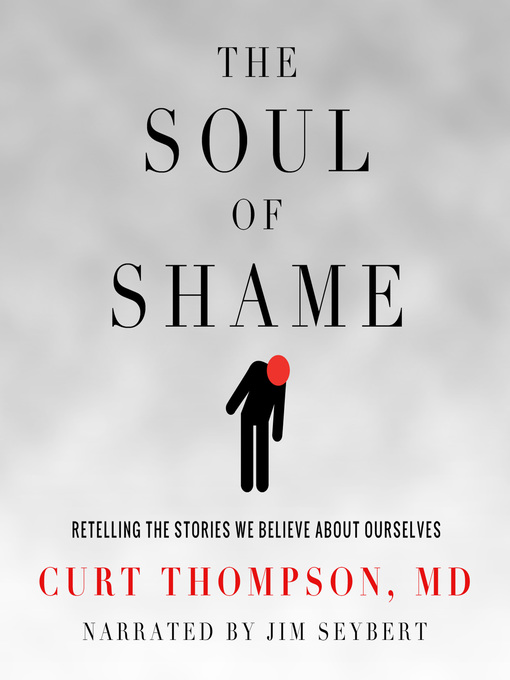
I first mentioned Dr. Curt Thompson’s blog Being Knownover a year ago in this post: https://johngregoryjr.com/2021/04/25/storytelling-finding-joy/. After listening to the majority of the episodes and hearing references to his books, I finally got around to reading one. Thanks to hoopla, I just finished The Soul of Shame.
Like the podcast, this book is one to be revisited. Like the podcast, it’s not over your head. Like the podcast, it breathes life into its consumer.
We become what we pay attention to.
Chapter 2, How Shame Targets the Mind
If my highlights are an indicator, apparently my attention got stronger as I moved from chapter to chapter. The first four chapters build the case for the universality of shame’s reach. Then starting with chapter five, Thompson explains shame’s role in the biblical narrative, how it impacts our own narrative, and the remedies that produce redemption.
Honest vulnerability is the key to both healing shame-and its inevitably anticipated hellish outcome of abandonment-and preventing it from taking further root in our relationships and culture…To be human is to be vulnerable…God is vulnerable in the sense that he is open to wounding. Open to pain. Open to rejection. Open to death.
Chapters 5 & 6
Thompson declares that shame pushes us into isolation to keep us from pursuing being human, being vulnerable. To counter shame’s work, Thompson encourages us to understand our cloud of witnesses (Hebrews 11-12), pursue nurturing communities, and renew our vocational creativity.
We will not be rid of shame this side of the new heaven and earth; rather, we grow in our awareness of shame in order to scorn it…There is no more significant place for us to counteract shame than in those venues where we spend most of our waking hours. In these places we are called to be agents for creating goodness and beauty, but these are the very places where shame is more than willing to do its most effective work.
Chapters 7 & 8
A word to the church: Thompson believes “the family of God is the crucible in which we learn what real family is about and in which the what and how of education is ideally imprinted into our souls, transforming both our life in our biological families as well as all that we learn about our world and our place in it.” The church gets the opportunity to help people choose between shame and love.
I encourage you, especially if you are in a place of influence and leadership, to read The Soul Of Shame. Shame won’t like you for it. Your soul will.
When’s the last time you recall a conversation where a question was asked and the person replied, “Wow! That’s a good question”? I’ve been on both sides of that, and mostly likely you have also. Those are life-giving conversations.
Elijah had one of those conversations with God in 1 Kings 19. In this case, Elijah got asked this question, not once but twice: “What are you doing here?” Similar to God questioning Adam and Eve in the Garden and to Jesus asking Peter the same question three times, this conversation was a learning moment, one that gave direction to a wandering child of God.
Is there shame in wandering? I’m guessing if there were God wouldn’t bother showing up to ask us a question. He doesn’t show up because he’s lost or doesn’t know the answer. He’s showing up for our benefit. The answer to his question is for our learning, our misdirection, and our relationship with him.
Are you wandering? Are you lacking direction? Elijah had walked 40 days and nights and entered a cave where this conversation happened. What if you gave God that much attention or space so that you could have a life-giving conversation? What would it take to put yourself in position to hear when God asks you a question?

 John Gregory