The Third Door (book recommendation)

Took a 24-hour jaunt to GA to celebrate our mother’s 88th birthday this weekend. Alex Banayan rode along through audible.

I feel like I’m late to the Alex Banayan party. So nothing elaborate to share. Follow the link to his website; it’s all there. And go ahead and follow him on instagram. Worth it.

Two thoughts:

  1. Don’t read the book. Listen to it. SO MUCH MORE MEMORABLE AND IMPACTING!
  2. If you’re my age (57) or older, stop worrying about the generations coming behind you. Yes, their world is different, but God isn’t. CHEER THEM ON!

Roots

Roots have been on mind this week. Led me to two interesting exchanges.

Today I was introduced to Safiya Sinclair on an episode of Everything Happens. The episode title, Rewriting Roots, peaked my interest. The question that made me sit up in my chair was, “When did you first know your words were so powerful?”

That question reminded me of another question. In my spiritual direction conversation this week, I was asked something similar. We were discussing purpose and vocational alignment. The question was something like, “What do you look for to let you know you are on the right path?”

Safiya and I were forced to go back in time. The question was about roots. She answered by telling about her mother’s pivotal role in connecting her to poetry = Roots. I answered by sharing about a grounding exercise to write a personal mission statement my first semester in seminary = Roots.

You want to know about someone’s rise to success, to understand what makes them tick? Question them about their roots.

You want to self-assess if you are fulfilling your calling, if you are growing as you wish, if the seeds you’re planting matter? Go back to your roots.

Photo by Zach Reiner on Unsplash

Leadership Success: Learned Before or After?

“It is likely that leadership success, both current and future, will be determined more by the learning that takes place after being given a leadership assignment than by what has been learned prior to it.”

Gene Habecker in The Softer Side of Leadership

Read this quote for the first time this week. It’s made me think and reflect.

I’ve always held the philosophy that what has been learned prior has prepared a leader for success in a new assignment. However, Habecker has made me consider the learning after being in a new position. I believe there are stipulations as to whether this learning leads to success more than prior learning.

STIPULATION #1: What’s the leader’s ongoing approach to learning?

Is it ongoing? Is it plural, meaning it focuses on all areas of life? If the answer to either of these is no, learning is going to be minimal and therefore success will be hindered. Leaders never stop learning.

STIPULATION #2: What’s the leader’s level of humility?

Followers of Patrick Lencioni have heard his repetition on the needed virtue of humility in leadership. Humble leaders in a new assignment will have a greater bend toward learning. They carry a “I haven’t been here before and have a need to learn” posture that paves the way for ongoing learning.

STIPULATION #3: What’s the leader’s inclusion of interpersonal relations learning?

The temptation exists to believe this is a one-time effort. Or that by a certain age there’s nothing more to learn about relationships. Or a resignation to “this is just who I am.” A new assignment will bring new relationships. An ongoing, humble learning posture toward those relationships will be important for successful leadership.

I met a leader this week that I believe understands these stipulations. He is less than a year into an assignment that came with more firsts and surprises than he anticipated. In his late 50’s, he certainly has prior learning. But he is keenly aware it is not enough.

So yes, success for him, for that matter for all of us, will be based on pursuing learning – ongoing, humble, all-inclusive learning.

Photo by Charles Forerunner on Unsplash

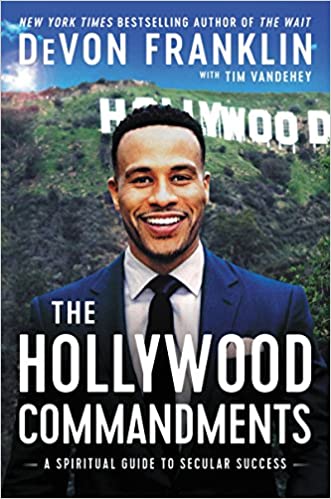
The Hollywood Commandments (book review)

While on vacation I caught an interview of a hollywood executive. His infusion of his faith into his work intrigued me. His name was new to me, but I quickly learned that he’s worked on many projects that I’ve watched. His name is Devon Franklin. The interview was old, surrounding the release of a book. When I looked it up on hoopla, it wasn’t available, but another book more recently published was. So I borrowed it to read the rest of my time away.

Franklin has a few agendas in this book. One major one is to dispel the myth that Christians can’t be called to work in the entertainment industry. He respectfully gives illustrations of how he overcame this myth after being taught it and discouraged in his pursuit of his passion to produce life-changing projects.

Success comes from being the distinctive person that God created us to be…The moment you begin to exchange what makes you different for what makes you ordinary because you want to fit in, you give away that which God wants to use to elevate you and take you somewhere extraordinary.

Chapter 8, Your Difference is Your Destiny

A second agenda is to lay out his ten commandments to not only succeed in the entertainment business but in life in general. He’s clear that success isn’t possible without the guidance and daily presence of God in your life. He illustrates from his own journey the importance of prayer, service, understanding God’s view of your talent, and distinguishing between your intuition and God’s.

We don’t get enough experience through the church in trusting our intuition, which is strange because intuition and instinct are really the Holy Spirit at work in us…Originality terrifies people…Prayer helps you determine who is speaking through your intuition, God or you.

Chapter 5, Your Gut is Hiding God

Is this book for everyone? No. But if you’re needing some clarity, even some encouragement on pursuing success in your career with a spiritual mindset, give Franklin a look.

Stop worrying so much about immediate results and start appreciating the process…If you’re going to survive in any field, you just can’t take yourself too seriously. Having a short memory goes a long way.

Chapter 9, Your Amnesia is an Asset

A Few Lines from Presence

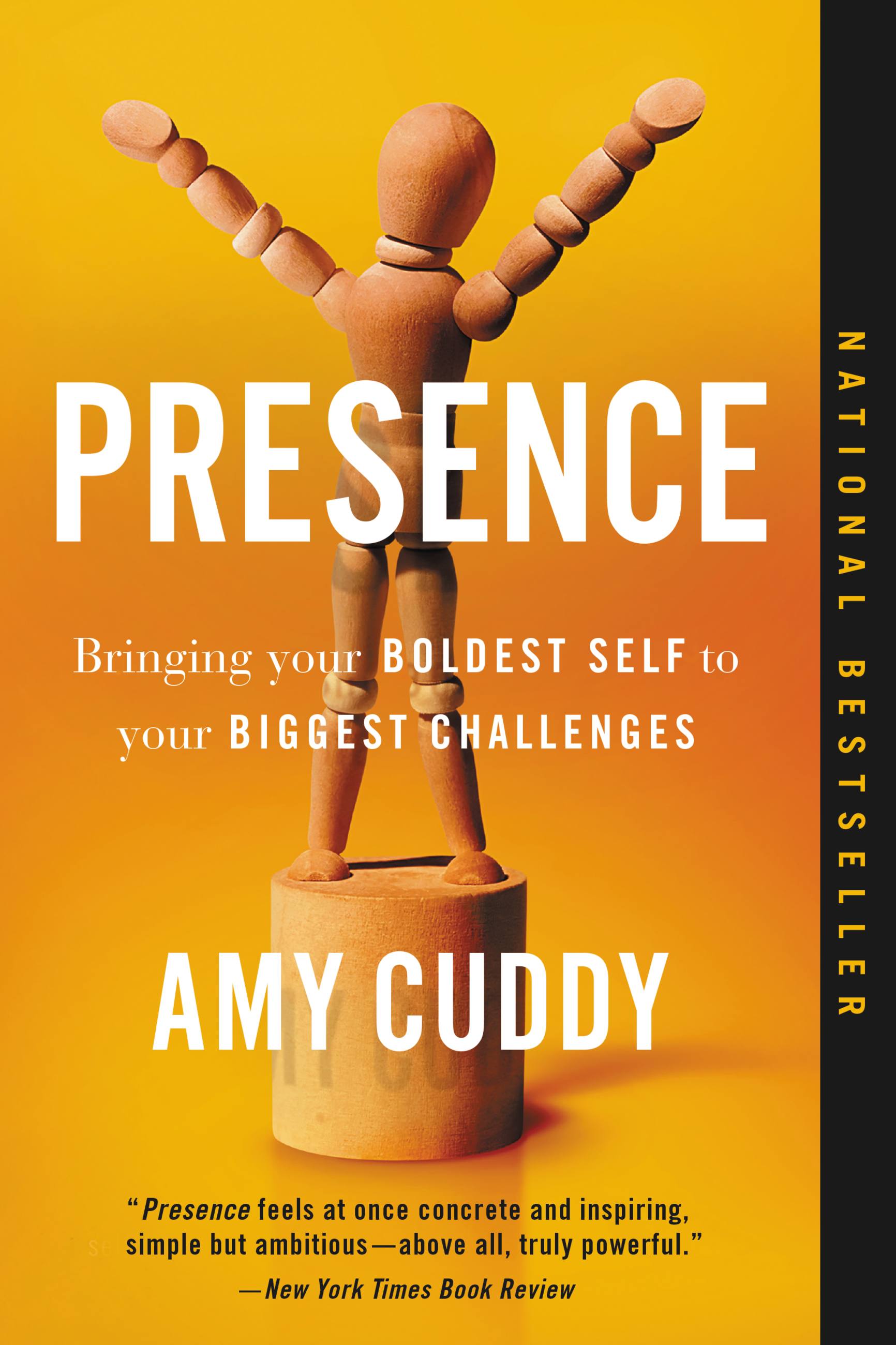
I posted about Amy Cuddy’s book Presence on January 31. I finally finished it today. What a great read.

The last two chapters were worth the wait. Chapter ten addresses what she called self-nudging. Here are a few quotes:

Presence is about approaching your biggest challenges without dread, executing them without anxiety, and leaving them without regret. We don’t get there by deciding to change right now. We do it gently, incrementally, by nudging ourselves – a bit further every time.

Focusing on process encourages us to keep working, to keep going, and to see challenges as opportunities for growth, not as threats of failure.

The more you reframe your anxiety as excitement, the happier and more successful you may become.

And chapter eleven captures the point of the whole book. “Fake it till you become it.”

They Don’t Have To

I got a call today from a friend looking for a reference for his friend. He flew states away to help his friend who is in crisis. He illustrated this truth about friendship-you do what you don’t have to.

A friend doesn’t have to tell you the hard truth.

A friend doesn’t have to go to bat for you.

A friend doesn’t have to give you their time.

A friend doesn’t have to offer you help.

A friend doesn’t have to sacrifice for you.

A friend doesn’t have to go the extra mile.

A friend doesn’t have to do for you what you aren’t capable of doing for yourself.

A friend doesn’t have to care about your future, your success, or your wellbeing.

A friend doesn’t have to choose to be your friend.

But because they do what they don’t have to, you can call them friend. 

Who in your life does what they don’t have to for you? Thank God for them. Thank them for them.

The Gift of Balance: Work (Part 2)

(This is part two of the third topic in a series on the subject of balance. It being the holidays, we thought titling this series the gift of balance seemed appropriate. By “we,” I’m referring to the series contributors. Joining me in this series are Mark Stanifer and Tonya Waechter. At the end of this post are some suggested resources on this topic.)

Mark: One challenging mindset for balance at work revolves around the idea of wealth/power/status. That can lead to this lifestyle trap of debt and maintaining income to maintain a certain status. I can’t tell you the number of times that I saw people motivated to work extra hard because that’s what they were chasing.  But when they got there, they started chasing the next thing. To pull back from this chase, it would mean significant changes in their lifestyle.

Tonya: I’m wondering if that’s a deeper level of need for people to understand their values. Helping people understand their values and what it means to live out of them may be more challenging in the corporate setting.

John: Two words coming to me here are worth and success. Where are we looking for our worth, and what is the perception of success. “Is success what goes along with my values or is it based on something I’m chasing after that I don’t even know what it is or when I’m going to get there? I’m just following the flow.”

Mark: Being clear on your why is part of the practical step of maintaining balance. Sometimes it takes a little imbalance to remind you of your why. Or sometimes you have to go through something to realize this isn’t what you wanted. Values clarification can help define healthy balance and maintaining that.

Tonya: I’m always marveled by the fact that God’s ways are backwards and upside down from what we believe in the world.  When we put his values first, that may mean scaling back on work hours or spending more time in relations.  The world may say, “No way. You’re never going to build a business that way.”  Then God comes and blesses our taking steps back. I’m not trying to paint a picture it’s all good and roses, but God’s ways are much easier than what the world puts on us.

John: You just reminded me of a book called Upside Down Devotion. The point of the book was that we often don’t realize we are caught up in a thought that God doesn’t want us to be thinking or pursuing.

Mark: That plays along with another mindset regarding peer pressure to keep up with the Jones’s.  It’s a challenge sometimes to be comfortable and confident to know your identity enough to say, “I’m going to do things different than the world does, and I don’t care.”  That’s not a one-and-done decision.  It is a struggle to live according to the kingdom’s economics versus the world’s economics.

John: We can be drawn into trying to be someone that we are not. The struggle is similar to what Paul wrote about struggling between what I want to do and what I don’t want to do. We may find ourselves in this struggle until someone may smack us upside the head, maybe God, and says, “You’re trying to be somebody that I don’t intend for you to be.  That’s not even who you are. Why are you trying to do something that I didn’t design you to do?”

Tonya: I think it keeps coming back to knowing who we are, what are our gifts and passions.  They change too, through the years. You’re right, we do keep recalibrating. But getting our value in who God says we are is key. My husband and I are going through this time where we are tempted to come up with all the answers for college costs.  We are being reminded God is here and is in control. It’s a continuing growth and rebalancing.

Mark: I’ve been learning recently just how different we all are. Balance for one person could be working a paying job 20 hours a week and give the rest of their time to other pursuits. Someone else could be working 60-70 hours a week and still be in balance because of how they’re wired and driven and their circumstances. Balance is not a static definition, not a one size fits all. It’s a flow in life that we should all be evaluating and trying to achieve based on who we are, how God has called us and wired us, and what our circumstances are.

John: I like that because I’ve seen a lot of staff members wrestle with this for various reasons. Just because another person can work 50 hours and look like they could work 50 more doesn’t mean you have to work like that. And depending on your season of life, single or married, it’s going to shift, and that’s okay. Another thought is along the line of what you both are doing, and that’s moving into a new direction in your career. You better have your values straight or you’re going to crash and burn.

So not to miss this, one of my temptations that I’ve struggled with over the years is to not allow myself to be looking toward the next thing-the next job or ministry. If I was going through a rough season, I’d appease myself by going and looking at all the job postings out there and maybe even throw resumes around just to see what would happen. Often that was just to make myself feel good, not because the Holy Spirit told me to do it. The idea of staying present through the difficult and challenging times is balance.

Tonya: Both of your comments ring true with my heart. I’m also the, “We’ve been here for eight years. Let’s pull out. Let’s go.” The same thing with careers. “This is awesome, but I’ve got a few other ideas I’d like to try out.” Mark, it also flows from that I have lots of energy. I had to ask myself questions like, “Tonya, you could do a lot of things, but what does that do to your family?” When I got married and had children, my personal balance had to change based on how it impacted them. I had to slow down to live in my choices. I’ve looked at it as seasons from raising my kids to now they don’t need me so much and I have more time to do other things. In that time I had to reevaluate. Adding people into our life requires us to stop and recalibrate. I could probably do the 50-60 hours of work as a single person, but it would have impacted my relationships negatively. So one way to gauge this is to ask, “Is my spouse hurting? Are my kids getting enough of me?” For me, this required me setting a schedule, a very specific schedule that helped me stick with it.

Mark: What I hear in there is being clear on your values. What you said was, “I am making my children and my family a priority, and here is how I’m going to find balance for this season.” You are illustrating the use of boundaries, how far can work go into your non-work life. Like technology for instance. It makes it very easy for you to bring work home with you. There is the expectation because of access to email or work that you are always on demand. Is that okay with your boundaries? Spending time determining your boundaries and being willing to defend them is difficult but practical to maintaining the balance you are seeking.

Tonya: I remember when the kids were young and I started homeschooling having to learn to leave the cell phone in the bedroom or leave it off. That phone can be an amazing tool and an amazing distractor. People today have to really work on that one. All of us grew up in an era where we didn’t have that. We managed then; why do we feel like we can’t now? For me, along with this is focus on time, knowing what distracts, especially since I’m working from home now.

John: Going down that thought of time at home, when I feel most balanced is when my morning has good margin before I even leave the house. Like if I’m running that morning and I’ve planned to run for an hour, do I leave myself enough margin after showering and eating so that I’m not just running out the door? If that’s true, then I’ve started my day all about me. Even though I’m doing a good thing by exercising, where’s God at the beginning of my day? I can get caught up in that quite easily. I don’t have to worry about getting the kids ready for school, or there’s five people trying to use one bathroom. I still have to make sure the margin of time I give myself before I even go to work has my mind ready by inviting God into the day.

Mark: So starting your day with your key priority in mind.

John: Right. That flows from my values.

Mark: That’s an interesting and different take on balance. Instead of only defining balance as working too much, you’ve brought into the conversation that balance is also about making sure that we make time for other important things, in your case, your time with God.

John: And I say that because I’ve played around with that. Do I do that in the morning, is it at work, is it in the evening, again, because I can. Not being a morning person by nature, I used to be very sarcastic and harsh toward people who said they couldn’t start their day without their time with God. And I realized that was something God was telling me. “You’ve put me in a box over here. You’ve determined when you are going to spend time with me. Get over yourself. Your day is going to go better if you do start it with me.” That was a strong shift that I personally had to make. When I maintain it, I show up better to the office.

Tonya: Same thing for me. I had to realize for me I had to start my day with God. In that book Emotionally Healthy Leader, he talked about the daily office. That challenged me too. He talks about having that time again 15 minutes at lunchtime to refocus through scripture. I like that because you can have an amazing time with God in the morning and forget all about him by 1 o’clock. That’s a practice I’m working on.

I also love what you said on margin. I live in California, and people are crazy. Every time you get on the highway, people are going way too fast, just racing and racing. They have no margin, which is critical to balance in your whole life and to having peace of mind.

Mark: If you know you’re out of balance and need to do something drastic, you have to be willing and to allow yourself to believe there is another way. A real practical solution is to initiate change by walking away from the imbalance, seek a different circumstance or scenario that would give you that margin, that balance, the ability to reset, to hit the reboot button and start over, to clarify what’s important and put in the boundaries and structure and routine to help maintain that.

John: What you just described is someone that could benefit from a mentor or a coach. They may not know how to pursue what you just described on their own. Who are the people in their life or people they may need to hire to speak into their life to help them make that change happen. Another thought on that same line is to look at mentoring someone themselves, someone who is younger or newer in their field. Our investing in other people keeps us accountable to our own balance. When we talk to others about their balance, it challenges us about ours. Talking about balance, whether it’s to someone I’ve hired or someone I’m speaking into their life, is good, self-imposed accountability.

Tonya: I started doing something a while back that worked for me. I’d take a paper plate and write down “everything on my plate.” And then I would ask the Lord, “What is on this plate that is not from you? It might be good, but it’s distracting me from what you want.” That was a good way to cross off those things that weren’t coming from him.

Mark: One of the books I appreciate and have found recently is Essentialism. The tagline is the disciplined pursuit of less, but better. It’s the idea that just because something is good doesn’t mean it is beneficial for you to be doing or it is yours to do. There is this myth that we can do everything, we can do it all and should. It takes a large amount of self-awareness and courage to step away, admit being out of balance, and to let go of something that’s good for something better.

John: What you’re both describing is the need to walk in a listening mode. We have to be open and not defensive when we hear a nudge from the Holy Spirit. Stop and check the validity of it. We have to allow the Holy Spirit to tell us when to stop, to say whatever he needs to say. Our hearts have to be open and ready to receive and do the action that he tells us to do on a daily basis.

Tonya: Yep. Being FAT-Flexible, Adaptable, and Teachable.


Suggested Resources:

Mark’s

Tonya’s

John’s

Hitters: Even the Best Fail More Than They Succeed

(This is the seventh in a series on wisdom from baseball. In this article, Mark Stanifer continues to mine his playing experience for insights into how to better play the game of life.)

One thing that has always fascinated me about baseball is the best hitters still fail to get a hit about 7 times out of 10. Think about that for a minute. Only 3 in 10 appearances at the plate result in a hit. The all-time MLB leader, Ty Cobb, finished with a career average of .3664. This season, José Altuve leads all players with a .350 average. There aren’t too many professions where a 65% failure rate would be tolerated, let alone celebrated as hall of fame worthy.

Learning to live with failure is a must to be successful in baseball. It cannot be avoided. It is a key part of why success requires winning the mental game first. Interestingly, being successful in life also involves dealing with failure. I’m using “successful” here in a very broad context — parenting, running a business, balancing career and family, living fulfilled, following Jesus. Regardless of what you are pursuing, you are bound to make some mistakes along the way. The key is how you look at those mistakes.

Defining Failure

My Mac dictionary says the verb fail is defined as “being unsuccessful in achieving one’s goal.” This has long been my only understanding of failure — an unsuccessful attempt to do something right. In fact, and I admit this with some embarrassment, there have been times I avoided even making an attempt at something for fear of experiencing failure. I realize some of this is my personality wiring, but more often I have not appreciated the benefit that comes with failure.

There is another way to look at failure — neglect to make an attempt. Thomas Edison famously stated that he didn’t fail in his many attempts to make a light bulb, he simply discovered 10,000 ways not to. He also said, “Our greatest weakness lies in giving up. The most certain way to succeed is always to try just one more time.” Do you think his perspective on failure had anything to do with his success?

Learning From Mistakes

For the successful batter, there is a balance between expectations and reality. If you don’t first expect to succeed then the likelihood of success is diminished. But regardless of your level of expectation, it does not guarantee a hit. I have always believed that making mistakes are rich experiences for learning, for others. But I have not always been so understanding for myself. Maybe you know what I mean.

What do you do when you swing and miss? For some it is a helmet toss or slamming the bat. But after the emotion passes, the successful batter will reflect on the at bat — “What did I do well?” “What could I do better?” “What pitch did I miss?” He analyzes what he can in preparation for the next time. It would be foolish for the player to say “I didn’t get a hit so I’m not even going to bat next time.” Is it not also foolish for us to take the same approach?

Keep Looking For At Bats

Professional hitters are really good. We often say things like “this guy is horrible” or “I can’t believe how bad he is” but that is a relative comparison. And while natural ability has a lot to do with it, much of what makes them so good is they had a lot of practice, a lot of at bats. It’s not always true that the more you play the better you get, but the more at bats you have the more chances there are to get better. I think that’s why so many successful people emphasize the importance of failure as part of growth. They recognize that with each attempt there is an opportunity to get better, to get a hit.

There are no stats per se to measure our life’s batting average. Even if there were, I’m pretty certain that none of us would bat 1.000. Maybe you struck out in your last at bat. Or maybe it has been a while since you’ve even been to the plate. Whatever your game, your previous at bat doesn’t have to be your last. Consider your attitude towards failure. Use failure as an opportunity to learn. Don’t let it keep you from trying again. You can stay in the game and continue to get better, but the next move is up to you.

How Good Are You at the Small Ball?

(This is the fifth in a series on wisdom from baseball. In this article, Mark Stanifer continues to mine his playing experience for insights into how to better play the game of life.)

Because it didn’t happen often, you would think I would remember every time it did. Unfortunately, that’s not the case. However, I do recall one time, in high school, pretty clearly. I knew I made good contact on the ball, but as usual I put my head down and just started running. It wasn’t until I was almost on second base that I realized the ball actually carried the fence for a home run. I was so surprised, I’m not sure I even slowed my pace by the time I crossed home plate.

Baseball today is a much different game than when I played. The players are bigger and stronger, the gear is better, and there are some dynamic home runs. Yet despite all that, I believe it is still the small ball — walks, singles, bunts, sacs — that wins games. When it comes to winning at life, there’s application as well. Here’s what I mean


Do the Little Things

During my time playing the game, one phrase was constant — do the little things. That meant being good with the fundamentals of the game, such as making good decisions with the ball, being ready for the play, or minimizing errors. In life there are fundamentals too. Here are a couple worth mentioning.

  • Discipline—To become good at something, whether a skill or attitude, it takes discipline. The skill or quality produced by discipline doesn’t usually happen through a home run. It is the consistent single or double which creates runs and ultimately produces wins. In your career, it may be consistent excellence in your performance. In physical health it is diet and exercise. Whatever the circumstance, discipline is a key contributor to the results you’re looking for.
  • Manufacture Runs—Small ball wins games because it creates and leverages opportunities. Take the lottery for example. There are certainly some big home runs for the winners, but just because there is a winner doesn’t mean it is a good investment strategy. To manufacture runs means to create your own opportunities rather than wait for the big one. It means that you’re looking at life proactively, rather than reactively. And it means you are able to see the potential in the singles and doubles, rather than focusing solely on the home run.
  • Play a Team Game—Home runs are a solo effort, whereas small ball is a team game. It requires you to know your role, which sometimes means sacrificing your at bat for the good of the team. Your team might be the organization you work for, your church, your family even. Regardless, the attitude of small ball is ‘what can I do to make the team better?’ It means that you’re willing to put others ahead of self, and to help when needed. It is recognizing that by contributing to the success of others, you also contribute to your own success.


It’s How You Play the Game

We all recognize the phrase “It’s not whether you win or lose, but how you play the game that counts.” We may be tempted to quickly dismiss this as a Little League consolation statement. But what if it is true? What if what really counts is how you played the game? Statistics track wins and losses, but stats never tell the whole story. A loss can be a success—an improvement from the last game. And a win can be a failure—not playing to your full potential.

In his book Resisting Happiness, Matthew Kelly writes, “The world is always trying to seduce us with the extraordinary. The culture fills our hearts and minds with spectacular dreams about hitting home runs, but life is about getting up every day and hitting a single.”

Home runs certainly create memorable moments and grab attention. But in the end, playing small ball — doing the little things in the right way — presents the best chance for being successful over the long term. So, how’s your small ball game?

31 Proverbs Highlights: #23-Heart Envy

(A simple series highlighting verses from each chapter of the book of Proverbs) 

Don’t let your heart envy sinners; instead, always fear the Lord. Proverbs 23:17 HCSB

What might heart envy look like?

So my boss has gotten to his position by running all over others. Looks like success. Maybe…

So my neighbors live so carefree and just seem to have everything they want. Of course, they have crazy amount of debt and fight constantly about money. But…

These guys at the gym are always talking about how much fun they have after they leave the gym. They invite me to come along all the time. I doubt my wife would like these guys, but…

Awe of God will give you the right perspective of success, finances, and fun. Guard your heart. Resist its envy.