What is a Miracle?

“We see miracles in our work all the time.”

I immediately made a note to chew on that one after hearing it from a colleague.

Did they really mean to use the word miracle? Or did they just mean change, transformation, growth? Doesn’t a miracle mean the impossible happened, something unexplainable, maybe even supernatural?

Those answers vary for many reasons: education, faith, philosophy, convictions, science. Traditions seem to dictate one’s definition. For those who prefer black and white, these provide what they need. I’m wondering if there’s more, more that would prompt someone to say they see miracles all the time.

In reading the New Testament, you cannot help but think of miracles as being something visible, something physically observable. Blind eyes healed. Leprosy cleansed. Dead raised.

Not having experienced it myself, I wonder what else happened to the blind man when he suddenly could see. Was the miracle only about his vision? How could this event not encompass all of his being-spiritual, emotional, mental? The healing miraculously altered all of him.

That thought suggests miracles can start in other areas for humans other than their bodies. Should we not consider unexplainable transformations to one’s spirit or mind also miraculous? Just because we cannot physically observe and identify the change does not disqualify it as miraculous.

An even broader conviction embedded in my colleague’s statement is that miracles are routine. Can this be taken too far? Sure. But it’s highly possible we created beings eventually lower our awe of routine miracles provided for us every day of our lives.

Are miracles confined to the extraordinary? Seems to me the rising sun contains miraculous elements. How often are they declared?

And maybe that’s the answer to the question. The answer isn’t found in a black and white definition. It’s found in genuine awe that every day contains happenings which I have no explanation for, things that I could not produce, things that touch the whole of how God created us.

Each one is a miracle. When I stop and consider them, the classification of the work lessens in importance to the one behind it.

It’s possible the answer to what is a miracle is that it’s the wrong question. What if we replace it with this one: What does a miracle say about its source?

Photo by Federico Respini on Unsplash

Are We Doing Church Right?

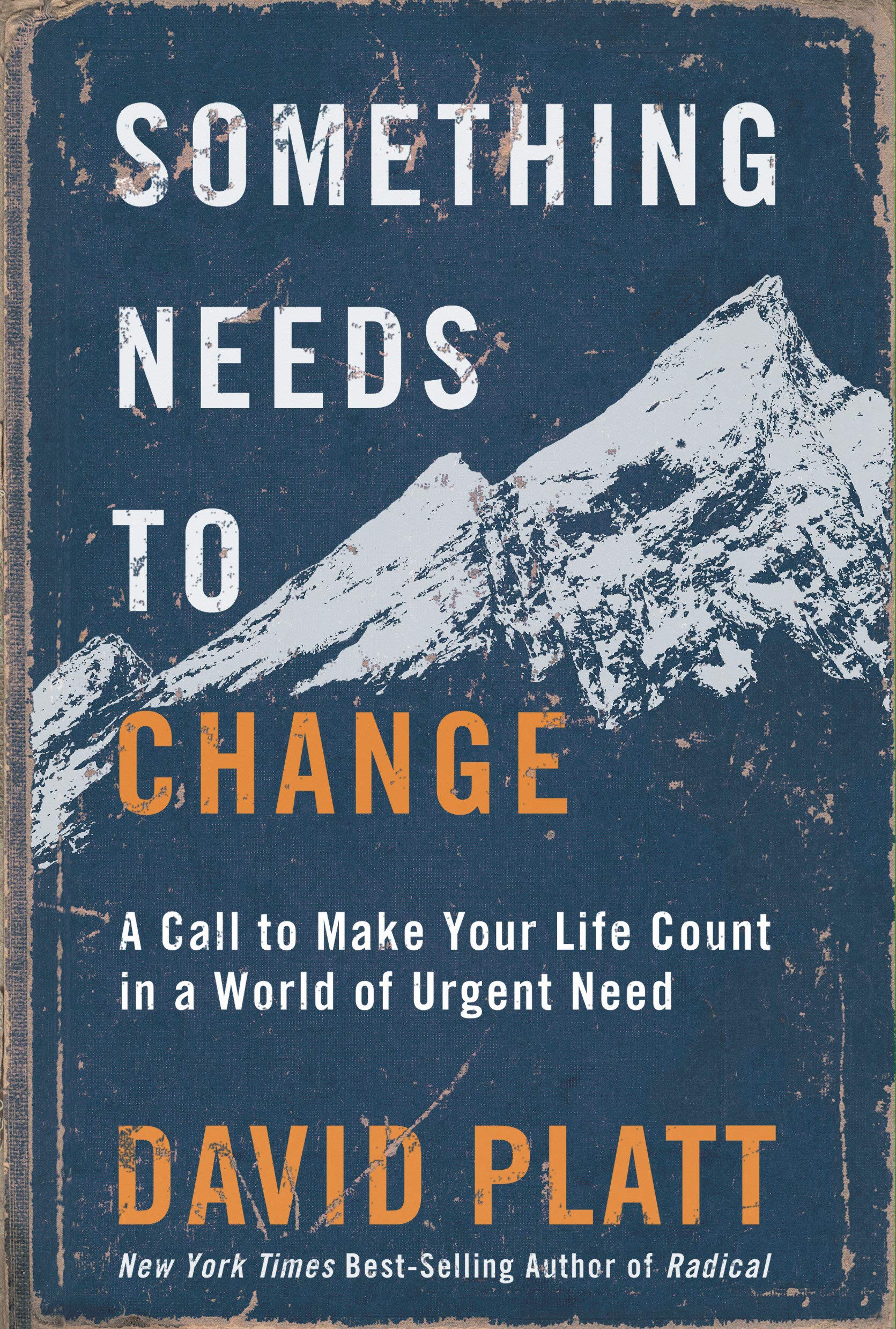
A friend (thanks, Pat) recently loaned me a copy of David Platt’s latest book, Something Needs To Change. If you’ve read anything by him, I’ll go ahead and suggest you haven’t read anything like this one. Platt chronicles his week-long journey through the Himalayas where he came face to face with some of the most difficult questions and challenging needs in the world. Because he’s reacting, you react. Because he’s questioning, you question. And nothing is outside the realm of analysis. Even the church.


In chapter six, Platt shares the lives of church leaders in the Himalayas. Their work is not easy. And it’s quite different than the majority of church leaders in other countries-vastly different from American churches. At the end of the day, he was asked to do some teaching and training. Here’s an excerpt of his thoughts about that time:

Over the coming hours, we walk through all kinds of pictures and passages in the Bible describing the church as God designed it. As I’m teaching and we are all discussing what we see in God’s Word, I am struck with a fresh realization.

Looking at the Bible to see how God has designed the church is exactly what needs to be done. As I had reflected a couple of days ago, these villages needed the church in them, but they don’t need an American version of church; they need a biblical version of church.

As I walk through the Word with these leaders, it hits me that so many of my conversations about the church in America are often focused on cultural traditions that are extrabiblical at best and unbiblical at worst.

For example, as I read the Bible with these brothers and sisters, we don’t see anything about constructing church buildings or organizing church programs or managing church staffs, topics that so many church conversations in America revolve around. It makes me wonder, Why are Bible-believing, Bible-preaching churches in America so focused on what is not in the Bible? As I ask myself this question, I can’t help but think that one of the greatest needs not just in the church in the Himalayas but in the place where I live is for us to open our Bibles with fresh, unfiltered eyes and ask, “Are we really doing church the way this book describes it?”

American Christian, it’s a fair question. If you aren’t convinced, get a copy of this book. After you’ve read it, come back to the question. We must be open to the possibility that we are not doing it right. And if that’s true, what are we going to do about it.