Valley/Highland/Grace Friends

I’ve written about friends in previous posts. Nose hair friends. 21st Century friends. Even three types of hard times friends. This morning a new thought bloomed based on the song in this video.

I first heard this song after being pointed to it by a nose hair friend going through hard times. It’s on my 2025 Rest Playlist, which I started my day with today. Because friendship was on my mind, I listened to this song with a different ear and heart.

Here’s the thought that surfaced:

Some friends are better valley friends; some friends are better highlands friends.

I can hear some head scratching. “John, true friends, real friends don’t care about valleys and highlands. They’re in it for all of it.” Heard. But let me tell you my experience.

Back in the early-90s while in my 20s, I had a group of friends that got together often to play card games. Anywhere from 4-6 of us. We were friends mostly through work and church. Some were married, some single. We were very much highlands friends.

Eventually we all parted ways as relationships go, yet we tried to keep in touch. And then, one of the couples got a divorce. In that moment, we were challenged.

I had never experienced friends getting a divorce. For that matter, I’d never experienced anyone divorcing that was close to me. It was foreign territory. An unknown valley that I was more observing than experiencing. And as much as I tried, it was just awkward. The result? These days we’d call it ghosting. I felt a lot of guilt about it.

Forward five years, another couple of church friends got divorced. This time, I knew better, and I was the valley friend they needed. I had grown in what it meant to be a friend through the valley. That experience led me to go back to my first divorced friend and acknowledge I could have been a better friend through his valley.

Here I sit almost thirty years later, and it’s like I’m the opposite-better valley friend than highland friend. And when I listened to this song this morning with my friend evaluator hat on, it was a call to grace.

Grace for myself. Sure, I’d like to be the ideal friend regardless of the space. When I believe I’m not, grant myself grace to grow in whichever land my friend is walking.

Grace for my friends. Sure, I’d like them to be ideal friends regardless of my space. When I’m tempted to say they aren’t, grant them grace to grow in the land I’m walking.

Maybe the lesson isn’t as much about valley and highland friends. It’s about grace granting, to others and to myself. “All the same.”
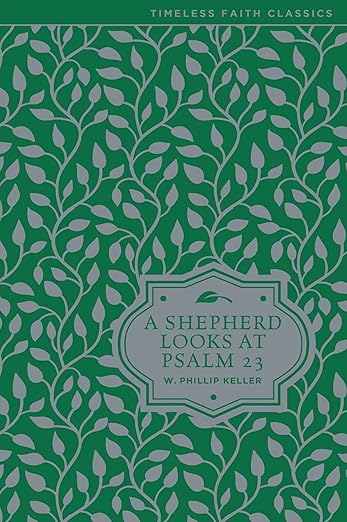
A Shepherd Looks at Psalm 23 (book review)

After reading The Lord is My Courage on hoopla, a related title was suggested which I decided to read because of the unique promise. That promise was a look at this poem from the basis of the author’s years as a keeper of sheep. It did not disappoint.

An overall takeaway is just how near death sheep can be unless their shepherd relentlessly cares for them. Keller explains that David’s poem actually addresses all four seasons in a year of a sheep’s life and what is necessary for the sheep to “not want.”

The strange thing about sheep is that because of their very makeup it is almost possible for them to be made to lie down unless four requirements are met…They are free of all fear, free from friction, free of pests, and free from hunger. (Chapter 3, “He Makes Me Lie Down in Green Pastures”)

In that same chapter he explains that a flock that is restless, discontented, always agitated, and disturbed never does well. Sound familiar? The value of being made to lie down is to our benefit.

The most vivid image Keller paints comes in chapter five, “He Restores My Soul.” He draws a parallel between another familiar David passage in Psalm 42:11, “Why are you downcast, O my soul? Why so disturbed within me? Put your hope in God…”

Only those acquainted with sheep and their habits understand the significance of a “cast” sheep or a “cast down” sheep.

This is an old English shepherd’s term for a sheep that has turned over on its back and cannot get up again by itself.

A cast sheep is a very pathetic sight. Lying on its back, its feet in the air, it flays away frantically struggling to stand up, without success. Sometimes it will bleat a little for help, but generally it lies there lashing about in frightened frustration.

If the owner does not arrive on the scene within a reasonably short time, the sheep will die…Nothing seems to so arouse his constant care and diligent attention to the flock as the fact that even the largest, fattest, strongest, and sometimes healthiest sheep can become cast and be a casualty.

He goes on to describe what’s required when he finds a cast ewe, which includes rubbing limbs to restore circulation after picking her up one or more times until she regains equilibrium and starts to walk steadily and surely.

One final noteworthy thought is this one from chapter 7, “Even Though I Walk Through the Valley.” Keller shares that this is a turn in the poem not only from the viewpoint but also in the season being described, how summer and autumn look for the shepherd and his flock. Keller explains David’s firsthand experience by making this statement: “Never did he take his flock where he had not already been before.”

If you find yourself today in search of freedom, or lying on your back flaying, or walking through the valley, rest assured your shepherd is with you. He has what you need. He’s watching over you. I encourage you to find a way to read this book to let those truths grow roots in your heart, mind, and soul.

Photo by Peter Hoogmoed on Unsplash

Lay It Down Day(s)

In the Christian world, Sunday is a special day. It’s a day set aside for several reasons, depending on which lane of Christianity you’re following. I’ve been pondering this since before my alarm was set to go off this morning. I’m thinking in some ways Sundays aren’t necessarily special. More on that later.

This week had peaks and valleys. If I’m not paying attention, I can relive the valleys to the point the peaks are forgotten. That’s what I was dealing with to start the day-and I wasn’t even out of bed.

Before the alarm sounded, God and I had a talk. (SIDENOTE: A definition for prayer that I read yesterday described prayer as what happens when you pay attention. It’s okay if you stop to chew on that.) In thinking about heading to church this morning, we landed on this mindset: Everything the last six days have offered did not have to dictate how I showed up to this day. In fact, for the day to be what it’s intended, start by laying down whatever isn’t needed for the day.

What did that include?

  • Unresolved conflict
  • Confusion
  • Unanswered questions
  • Unmet expectations
  • Disappointment

To be clear, by laying it down we didn’t say these things don’t matter. Act like the week was just one big peak experience. Nothing truthful about that.

Laying it down meant don’t let it consume this day. If Sunday is going to be what it’s meant to be, I decided I didn’t need to carry those valleys into it. Today didn’t have to be a valley. The valley could have a small peak.

My word for the year is rest. I’m finding more and more that rest is a state of mind. Rest is possible in the valley just as much as it is atop the peak. It has to be chosen. That doesn’t make the valley disappear, nor does it mean the valley magically lights up. It means my body, mind, and spirit don’t have to hurry finding the path out of the valley. Chances are probably greater if I enter the church doors having already laid things down I will receive what God knows I need. I might even be able to help someone else lay something down.

Which leads me back to Sundays being special. Sure, it’s the day of gathering. But imagine if the other six days of the week were considered just as opportunistic. What if every day was a Lay It Down day? What if God and I had a similar talk every morning before standing up for my first step? I’m guessing that paying attention effort would result in more day’s intentions transpiring, valley or peak.