Let’s Talk

Started listening to a new audio book, In the Shelter by Padraig O Tuama. In chapter one he asked an interesting question about prayer, one I’ve not heard worded this way before. “Where is it that we are when we pray?”

It’s a different way to challenge one’s emotional and mental approach to prayer.

We are often in many places. We are saying to ourselves, “I should be somewhere else,” or, “I should be someone else,” or “I am not where I say I am.” In prayer, to begin where you are not is a poor beginning.

To begin where you are may take courage or compromise or painful truth telling; whatever it takes, it’s wise to begin there. The only place to begin is where I am.

Not where you want or feel you ought to be. This could mean rather than naming your present state-confused, frustrated, hurt, angry, lonely, unhappy, etc.-you ask for where you want to be or where you feel it is your duty to be-fulfilled, joyful, connected, healed, satisfied, understood, peaceful, etc.

Not in many places. We can often pray about what has happened, what we fear is going to happen rather than what is happening in this moment. We can be drawn to focus on the past or the future to the point that the present is ignored, maybe even avoided. The result that we aren’t even intending can be distance, even creating space for drifting to begin.

I believe what he’s encouraging is twofold. One is raw honesty. The other is naked vulnerability.

Prayer that is honest and vulnerable, not pious or fake, says to God, “I’m here. I believe you are too. Let’s talk.”

Photo by Fallon Michael on Unsplash

Deliver Me (book review)

Meeting writers after you’ve read their book or blog is an interesting experience. My experiences have always been positive. I can’t think of an interaction when I walked away saying, “They weren’t at all what I expected.”

There’s a whole different vibe when you know them before they are published or start a blog. If you thought you knew them well beforehand, you find out pretty quickly that they have layers, stories that have made them the person you know. In many ways, you walk away from reading their work saying, “What a gift they just gave the world!”

That’s my response to reading my friend Dawn Van Beck‘s latest book Deliver Me. Only having crossed paths this last year, we are still learning our layers and stories. Well, I guess I can’t say that as much now since that’s pretty much what Dawn does in this book. And she doesn’t hold back.

Dawn’s raw vulnerability as she addresses regrets, shame, forgiveness, and letting go relays her healing journey to freedom. You can imagine she states many life-giving lessons, but here’s the one that I most appreciated.

That’s what happens when you give God a little-He creates more. (chapter 11, “Releasing the Shackles”)

In describing a dream where she experienced the release from shame and the gift of forgiveness, Dawn paints a clear picture of what I believe she did by writing this book. One belief of mine: I believe she gave more than a little. She gave a whole lot more. And God is creating even more.

Dawn, thank you for giving. Thank you for sharing your story. I pray God continues to create more.

Take All the Time You Need

Unintentionally, it’s been a month since my last post. Pre-Milton. Pre-election. Gulf Coast residents have had a month.

I came back to Bradenton October 13th. For me, not much had changed. A few inconveniences. For my community, layers upon layers of change. Some visible. Some yet to be unearthed.

I’ve been struck by this image on my cul-de-sac.

It typifies how it feels to navigate response and recovery. Like the vegetation on the right, those in the line of work to lead response stand tall and strong, seemingly untouched by the winds of change. Those on the left, completely different. At least visibly.

They’re still here, but not the same. They’re bent but not broken. Their roots are exposed. They are vulnerable. They are in need. Recovery is a hope, but can feel untouchable. They lean in the direction of the tall and strong.

My neighbor who lives in the condo behind the leaning vegetation didn’t evacuate. She now leans also. She endured the long, uncertain, and terrifying night. She’s bent but not broken. The exposure of her roots is uncomfortable and has left her scurrying in the fog.

The night of October 9th, many may have felt like Jacob in Genesis 32. That night in Peniel changed him-he even got a new name. He said when it was all over, “I have seen God face to face, and I am still alive.” He left with a limp. He also left processing a life-altering encounter.

Disasters come in our lives. They limp us. We’re tempted to focus on the changes in our world to the point that we don’t stop long enough to notice and tend to the changes to our minds, emotions, spirits, and bodies.

It’s okay to pause. It’s okay to gaze. It’s okay to tend.

Take all the time you need.

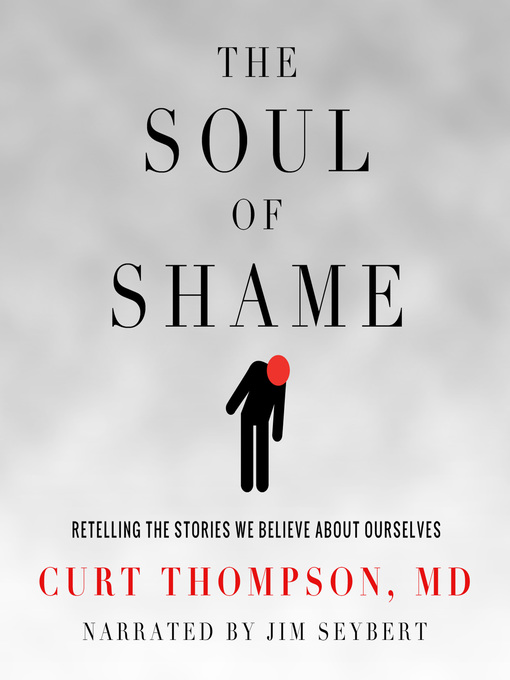
The Soul Of Shame (book review)

I first mentioned Dr. Curt Thompson’s blog Being Known over a year ago in this post: https://johngregoryjr.com/2021/04/25/storytelling-finding-joy/. After listening to the majority of the episodes and hearing references to his books, I finally got around to reading one. Thanks to hoopla, I just finished The Soul of Shame.

Like the podcast, this book is one to be revisited. Like the podcast, it’s not over your head. Like the podcast, it breathes life into its consumer.

We become what we pay attention to.

Chapter 2, How Shame Targets the Mind

If my highlights are an indicator, apparently my attention got stronger as I moved from chapter to chapter. The first four chapters build the case for the universality of shame’s reach. Then starting with chapter five, Thompson explains shame’s role in the biblical narrative, how it impacts our own narrative, and the remedies that produce redemption.

Honest vulnerability is the key to both healing shame-and its inevitably anticipated hellish outcome of abandonment-and preventing it from taking further root in our relationships and culture…To be human is to be vulnerable…God is vulnerable in the sense that he is open to wounding. Open to pain. Open to rejection. Open to death.

Chapters 5 & 6

Thompson declares that shame pushes us into isolation to keep us from pursuing being human, being vulnerable. To counter shame’s work, Thompson encourages us to understand our cloud of witnesses (Hebrews 11-12), pursue nurturing communities, and renew our vocational creativity.

We will not be rid of shame this side of the new heaven and earth; rather, we grow in our awareness of shame in order to scorn it…There is no more significant place for us to counteract shame than in those venues where we spend most of our waking hours. In these places we are called to be agents for creating goodness and beauty, but these are the very places where shame is more than willing to do its most effective work.

Chapters 7 & 8

A word to the church: Thompson believes “the family of God is the crucible in which we learn what real family is about and in which the what and how of education is ideally imprinted into our souls, transforming both our life in our biological families as well as all that we learn about our world and our place in it.” The church gets the opportunity to help people choose between shame and love.

I encourage you, especially if you are in a place of influence and leadership, to read The Soul Of Shame. Shame won’t like you for it. Your soul will.

Choosing To Lead (a book review)

As we walk daily through COVID-19, at times it seems minute by minute, we observe leadership. Regardless of the outcomes and personal opinions of decisions, we are learning what choices mean to leadership.

After finishing Harvey Kanter’s book Choosing to Lead, I’d encourage all leaders of any position to use your downtime in the next few weeks to dialogue with it. He addresses several practical and vital aspects of leadership such as communication, optimism, values, curiosity, humility, and decisiveness. His definitions are experientially based; his directions are growth oriented. His encouragement is that many people have position to lead but have yet to actually choose to do it, and pursue doing it well. Kanter doesn’t claim to have all the answers; maybe that’s why his thoughts are worth considering. His words model his values based on his choices. Below are a dozen highlights.

  • I am not my resume.
  • Leaders keep seeking answers until they find them…asking questions is paramount to leading well.
  • When a leader is seen “doing what needs to be done,” a precedent is established for the team that you need to jump in and take action, not wait for someone else to act.
  • Your ability to learn through the unexpected will grow your leadership capacity…the kind of leader you are shows up in adversity.
  • Your ability to grow is in direct correlation to your level of curiosity and inquisitiveness. Your orientation towards learning will either stretch you to expand your thinking or constrain you to live in a static world.
  • A confident leader is one who recognizes the best qualities in others without being threatened.
  • We like to work with people we can believe in. We tend to believe in people who genuinely believe in themselves.
  • Leading people in sharing their views, risking that they may be misunderstood or that their view may not be appreciated by others, is a critical leadership skill.
  • Trying things new and unfamiliar stimulates subconscience problem-solving, forcing you to see things from a new point of view.
  • Actions are the truest reflection of values.
  • Accountability requires vulnerability.
  • The smartest people surround themselves with even smarter people.

Vulnerability

One effort, and it is for me, to achieve better and deeper this year is to listen to more podcasts. I don’t tend to follow every episode of a podcast; therein lies my effort. Rather than just tune in for every episode dropped, I have to search for episodes that speak to what I’m looking to receive, areas of growth I need to pay attention to.

My friend Mark cohosts a podcast called The Next Man Up. His target audience is fathers. Since I’m not his target, I tend not to tune in to every episode. Reality is, though, most of the content is for men in general; so regardless of your stage of life as a man, you get something from each episode.

For example, I just listened to Episode #91. The subject is vulnerability, which men stink at. I’m not the worst at it, but I’m not the best either. But I know this, if a podcast episode has the name Brene Brown in the show notes, I’m probably going listen. I haven’t regretted doing so yet.

Guys, I’m not going to rehash the episode’s content. Odds are pretty high you need to get better in this area also. Click on the link. It’s a good use of thirty minutes today.