Two Values of The Rich

I follow a page on Facebook called Becoming Minimalist. I wouldn’t call myself a minimalist, but the posts on the page are compelling. They certainly align with my values.

Last weekend I joined the ranks of those who no longer have a DVD or CD collection. Thank you, Goodwill. They have enriched my home by accepting my once treasured collections. In addition to these two collections, they now own all my clocks and about half my library.

Why are these collections gone? Am I making room for other collections? No. Am I downsizing? No.

Some would call it decluttering or minimizing. All I’m doing is getting rid of things that no longer enrich my life. And in a sense, my life is being enriched even further.

One of the latest Becoming Minimalist posts grabbed my attention in any odd connecting way. It was a guest blog post that was more for readers with large clothing collections. Not that I’d say I fit in that category, but I have gradually been doing the same with clothes-not replacing, just decreasing.

The blog writer was Julia Ubbenga of Rich in What Matters. The topic of her post addressed simplifying life by repeating outfits. In her list of 10 reasons, check out the enriching values of #9:

9. More reminders of how little you need to be happy

Owning a repeatable, small wardrobe constantly sends you the message that contentment can be found in less. A glance at your curated closet prompts thoughts like: “I need so much less than I thought I did to be happy.”

I’m much less likely to buy on impulse or waste time scrolling in search of my next purchase when these thoughts infiltrate my mind every morning. My sense of gratitude also increases the more I remember life truly is better with less.

“10 Reasons Repeating Outfits Will Simplify Your Life”

Contentment. Gratitude.

It wasn’t a goal that I woke up with one morning. “To increase my contentment, I’m going to get rid of stuff.”

What is a goal is to pursue contentment. If that pursuit leads to real treasure, so be it.

What is a goal is to be more grateful. If that pursuit leads to an awareness of how rich I already am, so be it.

There Was a Curtain There?

My understanding of spiritual disciplines has been exposed as limited in the last few weeks. A thread of three interactions pulled back the curtain.

Depending on who you’ve read or what denomination you’ve participated in, any teaching on spiritual disciplines containing a list most likely included any or all of these:

  • meditation
  • prayer
  • fasting
  • study
  • simplicity
  • solitude
  • submission
  • service
  • confession
  • worship
  • guidance
  • celebration

This list is from Richard Foster. The article where you can find this list includes several more. Seems a lot to master. One could see why many just don’t bother. Daunting.

The first peek behind the curtain came when a lunch conversation mentioned Rob Bell’s teaching that everything is spiritual. I hadn’t heard his name is years and wasn’t familiar with his book by that exact title. I read the Kindle sample and checked out a few videos (here’s one). Bottom line: Goes to reason if everything is spiritual, then all disciplines are spiritual.

Not long after that, Chuck DeGroat pulled the curtain back further when I read this in his book:

Disciplines place us in relationship-with Christ and within a community of wounded healers. The discipline of a disciple is to follow-that is, to walk in the shadow of Christ, to learn his ways, to struggle together when difficulties arise, to laugh and to cry. This is how friendship with God unfolds, as a relationship between two persons deeply committed to each other in covenant love. This relationship cannot be reduced to a mere practice or ritual, but it certainly involves practice and ritual-the give and take required in any relationship.

Toughest People to Love, Chapter 8

These two lead-ins prepared my mind to completely receive the final one. In a conversation on this subject and how to freshen them up, out of nowhere the question was asked, “Have you looked at blogging as a spiritual discipline?”

Fully exposed.

Funny. I wasn’t aware there even was a curtain.

Glad it’s been removed.

Photo by Gwen King on Unsplash

The Best Book I’ve Read This Year

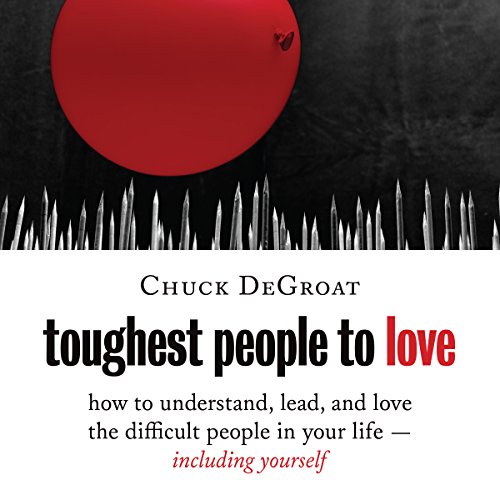
Finished the most meaningful book I’ve read this year. I’m glad to have followed the breadcrumbs to be introduced to Chuck DeGroat. Toughest People to Love (2014) is the first of his books I chose to read.

There are many things to appreciate about his style of writing.

  • He makes it clear where he’s going
  • He balances instruction with stories
  • He provides solid references
  • He gets to the point
  • He scored points with me by referencing Dr. Curt Thompson several times

It’s not lost on the reader that DeGroat chose to include “love” in the book title. He comes across as wanting that for you and for the people in your life.

We’re not called to make people feel bad or guilty. We’re called to lead them to an honest appraisal of themselves, which in turn leads to honesty before God and others.

Chapter 5, Loving the fool: when relationships turn ugly

It’s not a gooey love that he’s after. He means it when he asks for honesty. DeGroat achieves truth and love as an author, showing a great balance as a former pastor and a professor.

Consider the fragmented, dualistic thinking of the modern world. Often psychologists see depression merely as a neurochemical problem that needs to be fixed with medication and therapy. And too often pastors spiritualize psychological maladies that may require further expertise…Compassion does not ignore the truth. It enters into it, wrestles with it. It requires a solidity and strength of relationship with others which endures even in times of extraordinary difficulty.

Chapter 6, Growing through pain: the gift of the dark

Part three of the book is likely the part that will most deeply speak to readers. The three chapters focus on personal growth, and he mentions the concept of wholeheartedness (he has another book by this title, by the way; on my “to read” list). His clarity on the divided heart from a biblical view leaves no question as to what that means and why it needs to be addressed.

One glaring symptom of the divided heart is exhaustion…To be whole, we need to be healed, and this takes a lifetime.

Chapter 7, Living with wholeness: rest and resiliency in the leader’s life

For leaders, he saved the best for last in chapter 8, Growing into leadership maturity: self-care and the art of shadow-boxing. He describes five disciplines that involve “practice and ritual-the give and take required in any relationship.” He also gives the following description of American culture, one that I firmly agree with:

I’ve heard many criticize American culture, and even American Christians, as self-consumed. I beg to differ. I see people who are afraid of themselves.

If you fall in any of the following categories, I encourage you to read this book:

  • People who know they could love better
  • People who are leaders in any capacity
  • People who can’t figure out how to love a significant other
  • People who aren’t satisfied with their current capacity to love
  • People who enjoy the works of Dan Allender, Curt Thompson, Richard Rohr, Eugene Peterson, David Benner, and Henri Nouwen

“No Thanks, Well-Meaner”

This afternoon I had one of those “Huh…I never thought of it that way” moments.

I was describing to someone why it’s never worked out for me to pursue a particular job. Over the years many folks have encouraged me to pursue it, and I even came relatively close to it once. As I was telling this story, these words came out of my mouth: “It just never felt right. You know, sorta like trying on Saul’s armor.”

I stopped talking for a second to let that sink in, more for me than the guy listening. In my head I said, “That’s a perfect analogy. Can’t believe I’ve not made that connection before.”

If you don’t know that reference by the way, or need a refresh, check out 1 Samuel 17. It’s the David & Goliath narrative. Well-meaning Saul outfits shepherd boy David in his own armor. No go. David knew well enough that it wasn’t going to work. He took it all off, and we know how the story ends.

Suppose David ignored “well enough.” Suppose he caved because that’s King Saul. How do you question the king, that you just met? “Who do you think you are?” Suppose he allowed the natural to get in the way of the supernatural. We’d have a whole different story end.

Truth is, many relationships start by well-meaners that knew well enough. Many jobs begin that were never the right fit. Hindsight tells us that, but imagine what’s possible when courage undergirds one’s mindset and convictions so that well enough writes the story.

When we are in tune with God and with our own mind and body, we know well enough. And it’s really just a split second between anyone’s well meaning and our well enough that determines how the story ends.

In preparation for that split second, what if we chose this conviction? “I’m not here in the king’s name. I’m not even here in my name. I’m here in the name of the same God as David’s. Well-meaners, thanks, but no. In this moment, in this battle, in this decision, God’s well enough fits just fine.”

Photo by Nik Shuliahin 💛💙 on Unsplash

Small Christian Living

Dear, dear Corinthians, I can’t tell you how much I long for you to enter this wide-open, spacious life. We didn’t fence you in. The smallness you feel comes from within you. Your lives aren’t small, but you’re living them in a small way. I’m speaking as plainly as I can and with great affection. Open up your lives. Live openly and expansively!

2 Corinthians 6:11-13 MSG

Earlier this week the explanation for division amongst Christians that resonated with me was how small we’ve made God…without seeing it. The next morning these three verses were part of my daily devotional reading. Sync.

When believers sing “How Great is Our God” but refuse to drive onto the campus of another church whose theology doesn’t perfectly align with theirs, Paul says, “You fenced yourself in…and God.”

None of us have all the answers. And the second we believe we do, God no longer sits on His throne. He’s lost any signs of “omni” because we’ve lowered him to our image, the reverse of our beginning.

Forgive us.

Forgive us for our reductive pride.

Forgive us for yielding to the temptation to make you in our image.

Forgive us for we know not what we do.

Photo by Ronny Sison on Unsplash

Falling Cherry Blossoms

Last March I posted a blog referencing Makoto Fujimura. He’s become a staple for me to follow-podcast episodes, videos, books, etc. A few months ago I started reading his book Silence and Beauty, where he goes in depth to analyze the book I mentioned in the previous blog post and its place in Japanese art and history. I finished reading it on a plane ride Saturday.

I’m glad I took my time reading this book. The slower read allowed for his words and thoughts to breathe and to sink. What I enjoyed most about this form of Fujimura’s art was how he chose to build toward the ending. His final chapter, Mission Beyond the Waves, overflowed with images and challenges that perfectly summarized his message of silence and beauty.

The image that most caught my attention was his imagery and symbolism of falling cherry blossoms. “In Japan of old, cherry blossoms are considered most beautiful when they are falling.” He penned that following this quote by former archbishop of Canterbury Rowan Williams:

Our voyages are all about loss and death. At the moment of our death, which could be any moment, how is my mortality to be made fruitful in the life of another? How may my loss and my suffering become a Word to others? The ultimate question that any of us, or any art, can ask is this: “How may I die generously?”

Meditation on Death

If indeed cherry blossoms are most beautiful when they fall, they are most beautiful when they are broken and completely sacrificed. Fujimura’s challenge is for us all to be generous. Generosity in our faith and in our acts “can be a sacramental act to bridge the divide and brokenness created in society.”

What generous act are you prompted to complete? How can your faith assist you? What beauty is coming when you offer your creations?

Photo by Raimond Klavins on Unsplash

Acting Despite the Stone

You know that moment when you read something for the umpteenth time and it feels like the first? That happened to me reading the first three verses of Mark 16. Here they are:

When the Sabbath was over, Mary Magdalene, Mary the mother of James, and Salome bought spices so that they might go to anoint Jesus’ body. Very early on the first day of the week, just after sunrise, they were on their way to the tomb and they asked each other, “Who will roll the stone away from the entrance of the tomb?”

Even though I’d read this multiple times, something jumped out at me clear as day. That something was the order of events.

It wasn’t the first thing on these three ladies’ minds to ask themselves about the stone in the way. No, they bought the spices, set their alarms (although I have a sense they didn’t really need to), and were already headed to the tomb to tend to Jesus’ body before they really pondered exactly how they were going to get in.

I found that very telling. Many times we let the impossible keep us from preparing for it. These ladies didn’t worry about that. Why?

I believe it was because they were so focused on serving Jesus. Literally. The stone in the way didn’t deter them from buying the spices. They could have said, “Uh, what’s the point of spending money on something that I might not be able to use. I’ll just pray about it and hope that stone gets out of the way somehow.”

Instead they bought them, got up early, and headed for the tomb. It seems they had so much faith they were going to get to tend to Jesus that their attitude was, “Somehow, we don’t know how, but somehow that stone will not keep us from getting to him.”

I have a sneaky feeling their question wasn’t one of doubt but one of wonderment. Just how was God going to help them.

It seems that God often does his best work when we let him deal with the impossible while we deal with the possible. They did everything they could to be ready to serve. What did God do? He made sure the obstacle in their way was removed.

The Lesson: Act despite the stone. Avoid letting the impossible paralyze you from living an active life of faith. These ladies would have seriously kicked themselves had they let the question come first.

What they would have missed. I’m thankful for their example of not letting the question of the impossible stifle their actions of faith.

Photo by Katherine Hanlon on Unsplash

Making God

In Psalm 115, the writer describes the gods of other nations besides Israel’s. He makes an interesting comment in verse eight. He says those who make their own gods will become like the gods they trust.

It certainly is convenient to make your own god. Making a god allows for the worshipping of that god to also be up to the maker. So the philosophy can go something like “make your own god, make your own rules, make your own values, make life what you want it to be and you should be happy and fulfilled.”

The challenge of making your god is that your god is confined to the stuff you used to make it. Since that stuff was determined by a human, then that god can only serve humans within their own limits. For me, I need something more. And I’d rather become like something more.

When the Maker and Ruler of the universe expresses a desire to be my god, I’m drawn to consider that option over any other option. He has the best chance to work outside of what I can do, make, or value. I choose to let Him continue to make me, in essence continue to create me into His likeness. I’ll take my chances on fulfillment and happiness in becoming like the god who made me rather than any god I could make.

Photo by Jackson David on Unsplash

Celebrating Complexity

I thank you, God, for making me so mysteriously complex! Everything you do is marvelously breathtaking. It simply amazes me to think about it! How thoroughly you know me, Lord!

Psalm 139:14 TPT

This is one of those verses where translation matters. And this translation gave me something new to consider.

Most of the other translations read the psalmist declaring he is “fearfully and wonderfully made.” What a head-shaking nuance to consider being made mysteriously complex. And to sound joyous about it.

There’s normally a negative tone when being considered complex. We say it about ourselves to ourselves. We say it about others-well, maybe we just think it.

Whoever we say it to, what if we changed the tone? What if we celebrate instead of bemoan the complexity of how we’re made?

I had to practice this today. I was in a setting where there were open displays of people’s makeup. Bemoaning tried to reign in my head, but it couldn’t stay because of the joy in the room. Why? No one was pointing out flaws, dislikes, or disapproval; no one was bothered by their own or anyone else’s complexities. Like-minded psalmists caught their breath and marveled.

Lord, forgive us when we fail to marvel. May we stay amazed in your mystery.

Photo by ANIRUDH on Unsplash

Making Faith Complete

I don’t know that it matters how long someone has been a professing Christian to wonder why you still have thoughts like this one: “Is my faith good enough?” Or maybe, “Am I doing this right?”

I just read a line from a devotional that might help us all, whether you’re fresh in or a long hauler.

Was Abraham’s faith a faith without deeds? No way, says James. Abraham trusted God so much he was willing to sacrifice his son (Genesis 22). His faith was not only a conviction about the existence of God; it was a conviction that was ‘made complete,’ that is, shown to be true faith, by his deeds of devotion. And so was fulfilled the statement of Genesis 15:6, “Abraham believed God, and it was credited to him as righteousness.” To believe in God in the biblical sense, argues James, involves a commitment to action.

James 2, Worldly Favouritism (YouVersion)

99.9% of us will never be asked to carry out Abraham’s test. But if we’re attempting to communicate daily with the Holy Spirit, we are asked to do ordinary faith deeds every day. When we do, our faith is being made complete.

For example…

  • When we hold our tongue from gossiping
  • When we don’t return hate
  • When we respect our elders
  • When we love the unlovely
  • When we are generous with our time
  • When we say yes in spite of our fear or rebellion
  • When we have compassion for a stranger in pain
  • When we weep with those who weep

This list could go on and on. The meaningful and encouraging word from this devotion was that my faith may not be perfect, but that’s not the point. The point is that it’s active.

At the end of each day, may we look back to see where our faith was active and hear a whispered, “In you I am well pleased. Your faith is complete.”

Photo by Joshua Earle on Unsplash