Even in the Silence

Recently I was introduced to artist Makoto Fujimura. In exploring his works, I discovered his love for another artist, novelist Shusaku Endo. This admiration led to Fujimura becoming an advisor for the movie production based on Endo’s book Silence, a movie directed by Martin Scorsese. With all this overlapping of creativity, I decided I would read the book and then watch the movie. Today I finished the book and managed to find the movie on demand to watch this afternoon.

First, let me say what a joy it is to receive the creative gifts by these three artists-a contemporary artist, a novelist, and a filmmaker. Not only are they masters at their craft, but they engage all of who they are into their work, including their faith and beliefs. Unafraid of transparency, they allow you into their wrestling and therefore make it acceptable for you to acknowledge yours.

Endo’s Silence is set in seventeenth-century Japan. The tale challenges your commitment to your faith as you follow two Portuguese Jesuit priests encounter the forced renouncing of beliefs by their Japanese Christian brothers and dialogue with a silent God. You are forced to acknowledge persecution has always been a part of Christian history and will always be, something we prefer to forget Jesus told his disciples to expect.

Such stories produce various responses. Responses usually focus on what ifs and reminders to not forget those currently experiencing persecution. My biggest response today is this: I am the sole guardian of my faith. It’s not up to the church, a pastor or priest, or anyone close to me to secure my faith. In decisive moments where I have to live out my faith, it’s entirely up to me. When my mind tells me I’m alone and God has abandoned me, my faith reminds me that he said “I am with you always,” even in the silence.
Mimickry

I’ve been at it for over two years. It’s a slow burn.

When I transitioned to a new job and anticipated working more from home and not having an office, I knew something had to be done. All my books weren’t going to fit on one bookcase at home. So it began. The personal library deconstruction. As the walls enclose, the books are finding new homes.

I’m guessing all book lovers have similar problems. Not only do we buy more than we need nor have room for, we tend to not get around to reading all of them either. I’d guess someone has labeled this a disorder. I mean, chocolate lovers don’t buy boxes of chocolate just to put them on display never to be opened and eventually discarded. At least I don’t. I enjoy what’s inside. The chocolate box, just to be clear.

To address this problem, I’ve continued the deconstruction in two ways. One, if I’ve never read the book and don’t see that I will in the near future, “off with its head (given away in some fashion).” Two, rather than buying new books (Kindle doesn’t count), I’m reading the books I haven’t read and then deciding if it deserves to stay or go.

Occasionally, I encounter deja vu. Happened yesterday. I finished a book, which deserved to stay on the shelf. So I picked out another one I was pretty sure I hadn’t read. Not even sure where I got it, honestly. It’s signed by the author, which most likely explains why it’s still on the shelf. As I’m reading the first few chapters, it reads like a new book-nothing familiar at all. And then, with the light on the page just right, I see faint yellow highlighting. Are you kidding me? I’ve read this book before, even highlighted it, and I don’t remember. Another book lover problem. Actually, there’s several problems in that realization, but let’s move on.

One joy in re-reading a book is your eye, your mind being captured with more. Something you didn’t engage the first time speaks to you the second time. Like re-watching a movie. Here’s the line in this book that captured me:

We mimic the god we serve.

God’s Resting Place: Finding Your Identity In His Peace, by Ron Marquardt

Marquardt explained that our belief of God’s character plays out in how we live. “If I believe God is angry and hard to please, I find myself behaving the same way. If I find Him happy one moment and angry the next, I will soon follow suit.” (p.19) Mind captured.

So I chose to meditate on that in a journal entry. Rather than analyze my mimicry, I decided to make a list of truths I believe about God. This list, certainly not exhaustive, can then serve as a checklist of how I’m mimicking Him:

  • God loves us as we are
  • God sent his son not to condemn
  • God receives us from our wandering
  • God seeks the lost sheep
  • God rests
  • God listens to his children
  • God blesses those who bless him
  • God humbled himself for his creation
  • God keeps his promises
  • God forgives
  • God is faithful
  • God has eternity in mind
  • God gives generously
  • God has compassion
  • God remembers we are dust

Deconstruction leading to deja vu leading to mimickry. Here’s to the slow burn!

Photo: Izabela Zagaja-Florek

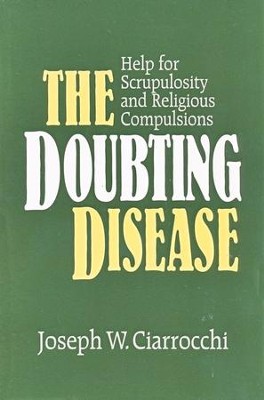
The Doubting Disease (book review)

“If you make listening and observation your occupation, you will gain much more than you can by talk.”­ – Robert Baden-Powell, founder of the scouting movement

I’m still working at this occupation at age 53. Certainly hope I’m better than at 23.

A while back during staff meeting, a colleague mentioned a book on a subject I’d never heard of-scrupulosity. I downloaded the Kindle sample. After reading that, I couldn’t help but buy it and see what I could gain.

Ciarrocchi defines scrupulosity as seeing sin where there is none, a “phobia concerning sin.” The title of his book comes from a label the French give to the emotional condition which is sometimes part of scrupulosity.

Having been in church life since I was born in a pastor’s home and then serving over 20 years on church staffs, I have witnessed this phobia. But reading the connection Ciarrocchi makes to OCD was eye-opening to exactly how doubters struggle. With this knowledge, one can see a variety of ways to navigate life while struggling with deep emotional and spiritual challenges.

He quotes Dr. Judith Rapoport of the National Institute of Mental Health as describing OCD as losing the ability “to know if you know something.” This description paints a picture of OCD as being as much about doubt as it is about anxiety. Quite a different view of what an OCD patient is enduring. Dealing with their compulsions and obsessions can lead to depression therefore challenging everything they believe and think they know. To show the severity of it, he shares historical examples in chapter three through the lives of John Bunyan and St. Ignatius Loyola. Both considered suicide. Ignatius prayed, “Show me, Lord, where I can obtain help: and if I have to follow a little dog to obtain the cure I need, I am ready to do just that.”

The hope Ciarrocchi provides begins in chapter 4 and continues through the rest of the book. This hope is directed to both professional and pastoral counselors. Unfortunately, those living like Bunyan and Ignatius often feel like they’ve tried everything and have failed, nothing is available to help. He provides worksheets (chapters 5-7) and techniques for counselors to use to send this message to their clients: “Past failure does not mean you are weak-willed or hopeless. You have simply lacked some essential ingredients for effective change. You can learn skills with patience and proper direction.” Chapter 8 is where he provides those ingredients. One of the most helpful directions by Ciarrocchi is his listing and explanations of three types of scrupulous behavior in chapter 9:

  • Developmental, prominent during adolescence and following a religious conversion in adulthood
  • Milieu-influenced, as taught by family and religious educators
  • Clinical, the version associated with OCD symptoms

He ends the book encouraging those in religion and psychology that they can learn from one another.

Clinical work also requires validation of counseling methods that make explicit use of clients’ religious perspective. This research is long overdue, and some preliminary work indicates the utility of this approach. Researchers studied treating depressed patients who had a religious orientation. They found that incorporating the clients’ religious beliefs through either cognitive-behavior counseling strategies or standard pastoral counseling methods led to more rapid recovery than standard counseling methods without using the clients’ religious beliefs. What is even more intriguing is that using the clients’ religious beliefs was effective even if the counselors were agnostic themselves.

I’m thankful I was listening in that staff meeting and have read this book. Had I read this during my church ministry days, I know of at least one lady I would have ministered to better. My encouragement to all those remotely touched by this review, get your copy and gain.

Photo by Annie Spratt on Unsplash

First 2022 Reads

If my first two reads of 2022 are any indication, I’m in for an education.

Book #1

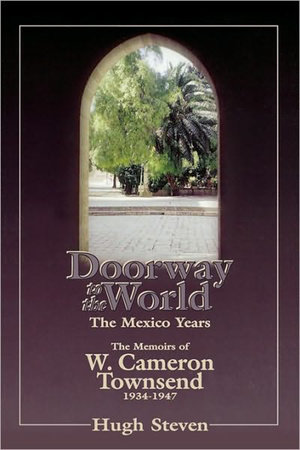
Before reading this book, I knew nothing about the start of Wycliffe Bible Translators and Summer Institute of Linguistics (SIL). It’s quite a story. In this memoir, you learn just how passionate founder Cameron Townsend was and how that passion laid the foundation for one of the largest mission organizations. His vision and commitment led many world leaders to join forces to transform communities. He used what he had and relied on God for what he didn’t have.

Book #2

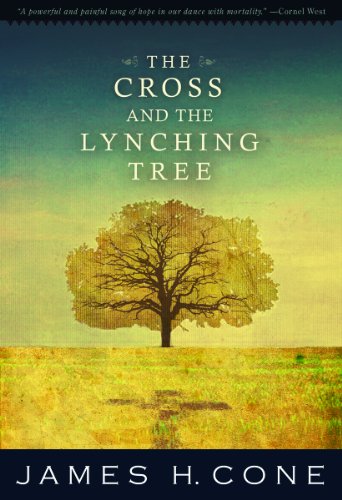
If James Cone only wrote this book for me, it would have been worth his time. I’m thankful for the direction I received to read it. I had no idea what I was going to learn and experience. I learned many things. Much of what I learned gave voice to my mind’s whys I didn’t know I needed to voice and answered my soul’s questions I didn’t know I needed to know. As a white, 53-year-old son of a Baptist preacher, my heart ached and my eyes teared through much of this book. So many what if’s and why not’s simultaneously producing shame and empathy, anger and compassion. My view of American history has changed. My appreciation for suffering has deepened. My belief in Jesus’ sacrifice has solidified.

These two books exemplify why it’s important to read. What are you reading? What education will you give yourself in 2022?

2021 Library

For a fourth year I have followed a self-developed reading strategy with the objective to read broader. The goal: read books falling under nine headings. This strategy is still working for me.

For the curious, here is the library of 21 books (Look at that! 21 in ’21! Totally coincidental…or was it?) including avenue of reading:

  • The Greatest Motivational Tool by Rod Olson (hard copy)
  • Simplifying Coaching by Claire Pedrick (kindle)…best book on coaching I’ve read in a while
  • The Color of Compromise by Jemar Tisby (hard copy)…most challenging book in this library
  • Presence by Amy Cuddy (hard copy)…book with best takeaway, “Fake It ‘Til You Become It.”
  • Hope Rising by Casey Gwinn & Chan Hellman (kindle)…favorite book in this library
  • Opening Up by Writing It Down by James Pennebaker & Joshua Smyth (kindle)
  • Now Hope by Paul De Jong (kindle)
  • Into the Silent Land by Martin Laird (kindle)…most surprising book in this library
  • Baca by Valerie Hyer (hard copy)
  • Unfinished Business by Lee Kravitz (audio)
  • When Mama Can’t Kiss It Better by Lori Getz (kindle)
  • The Journey by Lee Ann Martin (hard copy)
  • The Red Badge of Courage by Stephen Crane (hard copy)
  • Love Like You’ve Never Been Hurt by Jentezen Franklin (kindle)
  • Prepare by J. Paul Nyquist (hard copy)
  • Sound Doctrine by Bobby Jamieson (hard copy)
  • Awe by Paul David Tripp (kindle)…I read this annually
  • Don’t Give the Enemy a Seat at Your Table by Louie Gigilio (kindle)…favorite Christian living book in this library
  • How the Light Gets In by Pat Schneider (kindle)…second favorite book in this library
  • Heartbreak to Hope by Samuel Wright (hard copy)
  • Another Gospel by Alisa Childers (kindle)

We See What We Look For

Recently a friend gave me a copy of Michael Hyatt’s Full Focus journal. So I’ve taken the challenge to complete it’s 90-day design.

The journal page for today had a portion of this quote by author John Lubbock:

What we do see depends mainly on what we look for… In the same field the farmer will notice the crop, the geologists the fossils, botanists the flowers, artists the colouring, sportmen the cover for the game. Though we may all look at the same things, it does not all follow that we should see them.”

― John Lubbock, The Beauties of Nature and the Wonders of the World We Live in

I instantly narrowed that down to this thought: We see what we look for.

How we view what we see is very dependent on what we are looking for. For example, when we read current events or listen to the news, we have biases that filter what we read and hear. How often do we evaluate those filters? How often do we assess if those filters really are ours or are they residual from other influences? Do we ever alter what we are looking for?

As a suggestion, here is a list that I started in my journal to illustrate what I mean. As you read it, consider how such a list in your journal would read.

  • We see God when we look for him
  • We see enemies when we look for them
  • We see offense when we look for it
  • We see opportunity when we look for it
  • We see solutions when we look for them
  • We see danger when we look for it
  • We see rejection when we look for it
  • We see grace when we look for it
  • We see humility when we look for it
  • We see strength when we look for it
  • We see courage when we look for it
  • We see unity when we look for it
  • We see love when we look for it

What are you looking for today? This week? This holiday season?

Let’s Seek a Better Understanding

Last week I was given a book to read. Each page has grabbed me, but none like the start of chapter five, “Defending Slavery at the Onset of the Civil War.”

Let me share a few lines.

As historian Mark Noll has written, no single individual characterized the conflict better than Abraham Lincoln. When Lincoln was inaugurated for his second and very brief term as president in 1865, a Union victory was on the horizon. Robert E. Lee would formally surrender at Appomattox, Virginia, just a month later. Rather than gloat about his military success, Lincoln’s address struck a somber and reflective tone: “Both {Union and Confederacy] read the same Bible and pray to the same God, and each invokes His aid against the other…The prayers of both could not be answered. That of neither has been answered fully”…Throughout the conflict, Christians of both the Union and the Confederate forces believed that God was on their side.

This startled me. Change a few elements of the storyline, and I feel like he’s describing today’s America.

We should be startled. We should not be divided.

We should be humbled. We should not be puffed up.

We should be listening. We should not be yelling.

In his review of Tisby’s call to repentance, Daniel Williams ended with these words:

Racial reconciliation, Tisby argues, won’t occur without confession of sin and repentance from white Christians—a repentance that some Reformed churches have already started to model, but which hasn’t yet occurred en masse. With God’s grace, it can occur. For those seeking a better understanding of what this confession and repentance might entail, Tisby’s book offers a helpful guide.

History does not have to be repeated. Let’s seek a better understanding.

Into the Silent Land (a book review)

A few days ago I included a reference to Into the Silent Land in a post. When I heard about this book, I thought it was going to be about the spiritual discipline of solitude. To my surprise, it turned out to be much more than that.

Laird shared in the introduction that his objective was to examine two contemplative practices: the practice of stillness (meditation or contemplative prayer) and the practice of watchfulness or awareness. He had my attention.

I won’t be able to compact his descriptions of these practices with justice. What I can do is relay that if you believe you’ve read or heard all there is to know about prayer, you might want to make sure by reading this book. What I thought I knew about contemplative prayer has been deepened. What I practice in meditation has been retooled.

The meat of the book is chapters four and six. Chapter four introduces and outlines what Laird calls the three doorways of the present moment. He describes a method of praying based on utilizing a prayer word. I found it familiar but not. He was putting words to my novice practices and revealing how to mature them. Then in chapter six-my favorite-he makes it real by sharing three overcomer’s stories. Their struggles include fear, pain, and compulsion. The victory in these three human stories support his label of their moving from victim to witness.

You may be wondering if this book is for you. Here are three descriptors to try on for size:

  • If you wonder if the practice of meditation carries value, this book is for you.
  • If you wish your prayer life to be more relational and not just petitionary, this book is for you.
  • If you are looking for a spiritual discipline challenge, this book is for you.

Laird doesn’t write to be quoted, but here are a few highlights worth sharing:

If we are going to speak of what a human being is, we have not said enough until we speak of God.

God does not know how to be absent.

There is a certain wisdom that settles into a life that does not attempt to control what everybody else ought to be thinking, saying, doing, or voting on. Wisdom, health, life, and love cannot be found in trying to control the wind, but rather in harnessing the wind in the sails of receptive engagement of the present moment.

It is very liberating to realize that what goes on in our head…does not have the final word on who we are.

If you want to make fear grow, run from it.

Fear, anger, envy-any afflictive thought or feeling-cannot withstand a direct gaze.

We commonly meet our wounds in temptation and failure.

Divine love doesn’t have to decide whether or not to forgive. Divine love is forgiving love.

Photo by Adam Rhodes on Unsplash

I-35 Lesson #3

My best reading happens on planes. This past weekend was no exception. The book I was reading was a find from listening to the Being Known Podcast. They had referenced it too many times for me to ignore, so I got it. I read the majority of it on this trip. The book is Into the Silent Land by Martin Laird.

I’ll post another blog about this book later, but here’s an excerpt that applied to my running experience for this I-35 Challenge. In it, he is describing a patient who was living with a rare, auto-immune disease.

Health-care professionals, family, and friends arrived to help her and left feeling helped by her. They would end up bringing up their own problems, their own life pain. She would say, “Don’t think about the pain. Be still before the pain.” She didn’t mean to give, and they didn’t intend to receive. But the more she was able to surrender to the loving silence at the center of her pain, the more she was a vehicle of this loving silence.

Medical writer Steven Levine observes “true healing happens when we go into our pain so deeply that we see it, not just as our pain, but everyone’s pain. It is immensely moving and supportive to discover that my pain is not private to me.” This is precisely what Elizabeth discovered about pain. If she could be silent within herself, in the midst of her pain and not get caught up in commenting on the pain, she saw her isolation vanish and what she found, even in the midst of this pain, was communion with all people in the silence of God.

I didn’t come close to Elizabeth’s status while putting myself through self-inflicted pain, but I caught a glimpse of what being still before the pain was like. My quads were already in pain before we started the half on Sunday morning. But as I ran, I focused less on my pain by noticing others who seemed to be dealing with their own that was greater. Communion happened.

This one runner in particular that I came upon around mile 7 got my utmost attention. She may have been 5 feet tall. From behind, it appeared she ran as if one leg might have been shorter than the other. For whatever reason, she seemed to run leaning to her right side. And she ran with a limp. Was it painful? I don’t know. It appeared it was a chronic condition that she lived with every day. And yet, here she was running a half marathon. There we were, fellow embracers of pain.

I-35 Lesson #3: Be still before the pain.

There’s more to see past your pain. There’s more to experience through your pain. Communion. Humility. Maybe even peace.

I’d say I’ve been on this lesson journey all summer. The result: Rather than avoid or complain about pain, embrace it. In the embrace, communion with your fellow embracers is found, and together you experience the presence and peace of God.

Parent, You Are Chosen!

Read Judges 13 this morning and a question came to me. What would it have been like to be Samson’s parents?

Manoah and his wife display such a teachable, humble, surrendered, and reverent spirit. Neither of them give a vibe of bitterness, doubt, or frustration at their lack of having a family yet. Neither of them display disgust at being told that with the promise of a child came a restrictive vow. Nope. Instead they reply with awe and an outlook of being blessed.

No wonder God chose them to be Samson’s parents. Unbeknownst to them, Samson would make some irreverent choices. He would not follow in their steps of humility. His surrender came by force.

Does this mean Manoah and his wife failed as parents? No. There’s where my judgment has gone in the past when reading their story. But it doesn’t seem to be the best view.

Rather than view them through their son’s actions, it seems better to view them through the eyes of the angel of the Lord who interacts with them in this chapter. They appear to be chosen. They definitely were heard. Without question, they experienced blessing through a promise personally delivered by “I Am” and its fulfillment.

God chose them. Just like all uncapable-of-controlling-the-future parents, they were chosen. God saw something in them and said, “You are the right couple to birth the last judge of my chosen people. You have the spirit to stay with me when your son chooses otherwise. I choose you.”

Father, you were chosen to father your children. God knew what he was doing. You can trust him, surrender to him, allow him to teach you.

Mother, you were chosen to mother your children. God saw your spirit. You can trust him, follow him, lean on him to sustain you.

Photo by Julian Hochgesang on Unsplash