37 Years of Fear

I came across a 6-day reading plan on YouVersion that is worth rereading over and over. The reading plan is called “Turn Your Wounds To Scars” by Vijay Thangiah. Day 4’s devotion touches on the importance of learning how to forgive in order for wounds to become scars. For a biblical example of someone putting this into practice, Day 5’s devotion goes to the end of Genesis. Take a guess at who the example is.

If you said Joseph, you’re correct. Joseph got wounded by just about everyone in his life. He bore many scars. Yet, he is lifted as a great example of forgiveness because of this statement to his brothers in chapter 50:

But as for you, you meant evil against me; but God meant it for good, in order to bring it about as it is this day, to save many people alive.

That’s a statement from a scar, not a wound.

In all my readings and hearing messages about this passage, I’ve never heard the following statement that was in Day 5’s devotional:

His brothers on the other hand had never been able to forgive themselves for the wrong that they had done to Joseph and were constantly living in fear. So 37 years after they threw him down a well and having lived under his gracious care for 20 years, once their father Jacob dies, they are still afraid that Joseph will seek revenge against them.

What this portrays is the weight we carry when we don’t understand or practice how to forgive ourselves. Joseph’s brothers were not afraid because of a recent act. Their fear was 37 years old. That’s a long time for the enemy to wreak havoc.

That havoc, unfortunately, may not live in just one heart. It may leak out into many relationships resulting in many wounds that have nothing to do with the original wound. 

Your healing is possible. And it may actually start with you forgiving you.

Photo Credit: Unsplash/Felix Koutchinski
Make a Difference

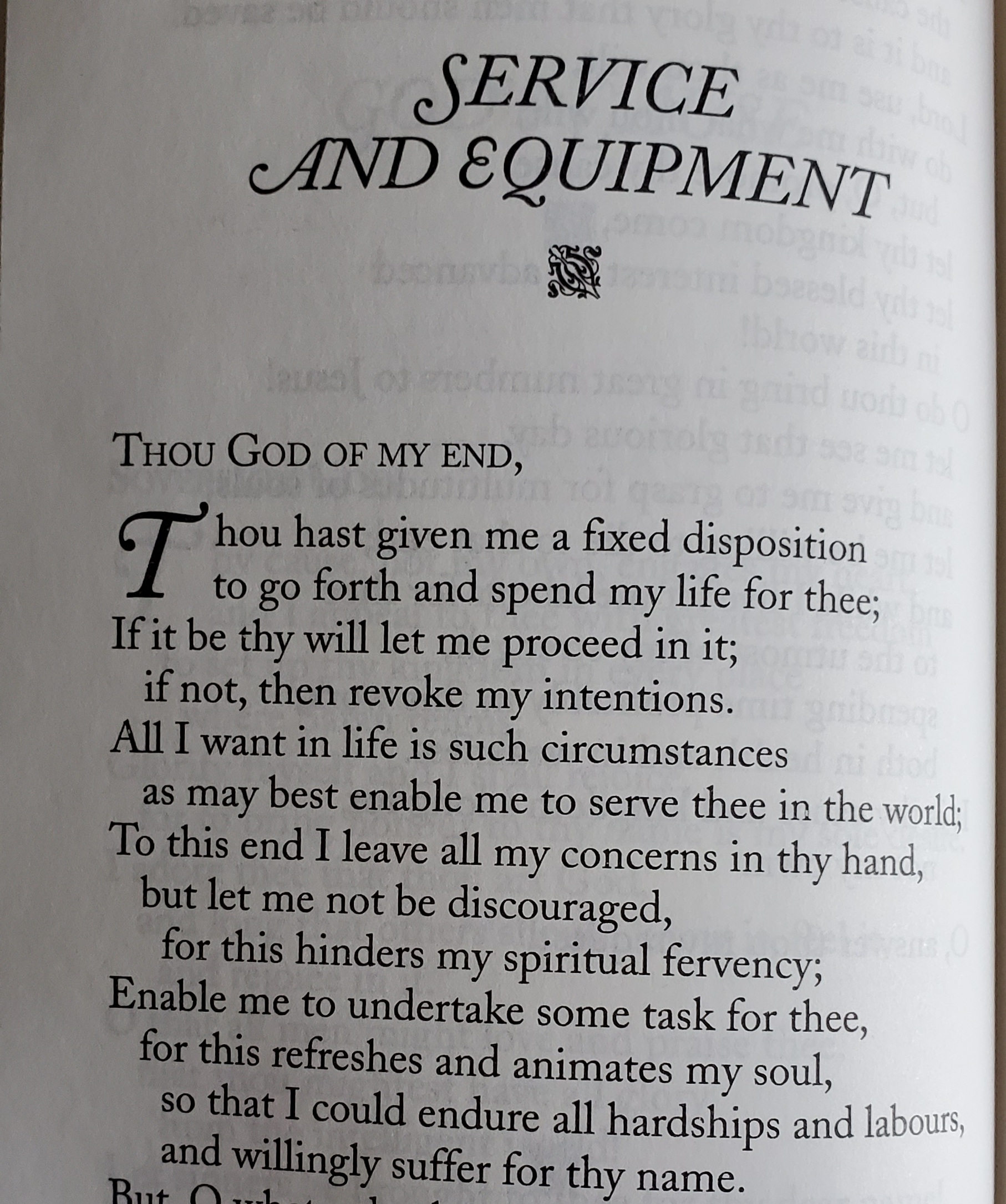
Recently I was given a book of Puritan Prayers and Devotions entitled The Valley of Vision.

This photo is an excerpt of the prayer I read before sitting down to my desk to start work this Monday morning.

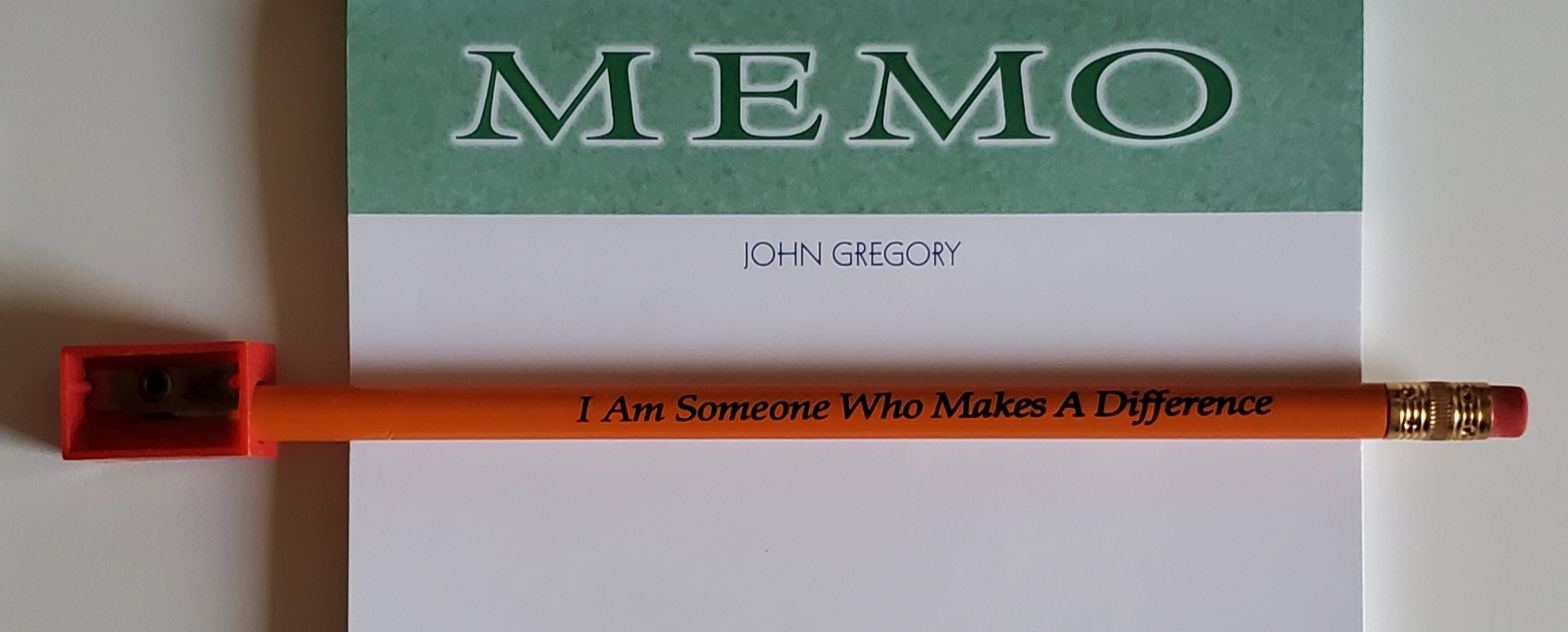
Only a few minutes in, I went to find a pencil in my collection of unused writing utensils. The first one I grabbed had the engraving “I Am Someone Who Makes A Difference.”

I saw a connection that we could all use. May we all pray to submit ourselves to make a difference in our God-given disposition. May we walk, therefore, confidently, purposefully, and observantly to make a difference.

8 Ways to be Kinder

Recently I received a card that included an article cut out of The Wall Street Journal. The columnist wrote about the effects of kindness to our brains, particularly if we are the giver. She referenced Jamil Zaki’s book The War for Kindness: Building Empathy in a Fractured World. Beside the article was a list of kindness suggestions, particularly needed in our current climate. Check it out below.

Embrace the Pace

2020 has, if nothing else, provided many lessons. One of those has to do with pace. Sometimes life’s pace feels extreme; other times it crawls. The lessons are many, but here’s one on my radar: Whatever the pace, embrace it.

That’s not a call to laziness or workaholism. It’s more a call to submission. If God says run, run; when he says rest, rest. Whatever pace he’s setting, embrace it.

Embracing a pace requires awareness and commitment. The pace of a 5k is much different than a marathon. Why? For starters, there’s a difference of 23.1 miles. That pretty much sums it up. That awareness determines the mindset needed. Training is built on it. Racing is built on training. The entire process requires embracing.

Solomon seemed to understand this. Check out these verses from his books:

  • “My love calls to me: Arise, my darling. Come away, my beautiful one. For now the winter is past; the rain has ended and gone away. The blossoms appear in the countryside. The time of singing has come, and the turtledove’s cooing is heard in our land. The fig tree ripens its figs; the blossoming vines give off their fragrance. Arise, my darling. Come away, my beautiful one.”‭‭ Song of Songs‬ ‭2:10-13‬ ‭CSB‬‬
  • “There is an occasion for everything, and a time for every activity under heaven:” ‭‭Ecclesiastes‬ ‭3:1‬ ‭CSB‬‬

There is a pace of hibernation which shifts to wondering.

There is a pace for listening and reflecting which shifts to singing and celebrating.

Whatever pace God is leading you at today, you can trust that it’s correct. Embrace it.

Photo Credit: Unsplash/David Brooke Martin

God’s…Not Mine…Mine (Part 3)

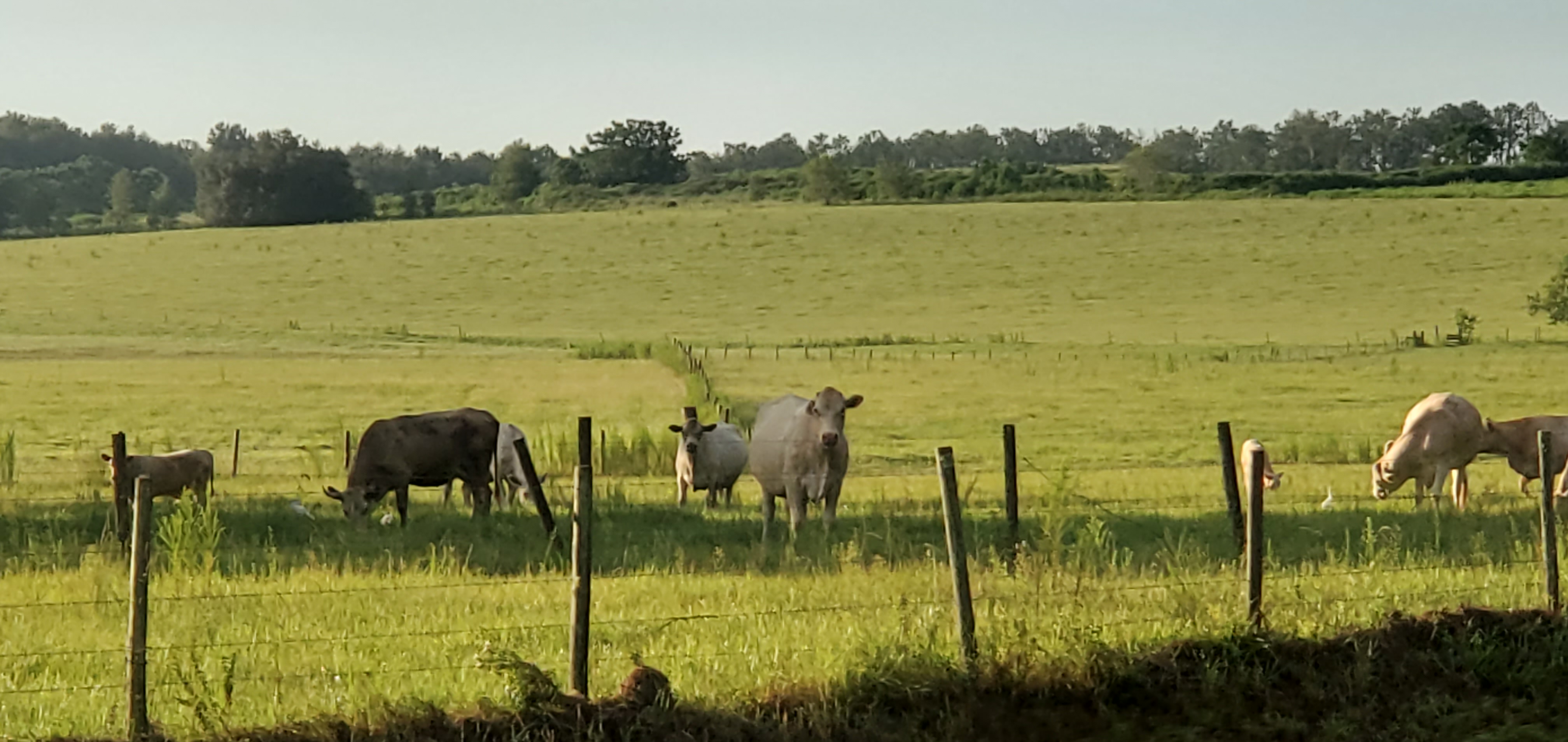
I checked into an Airbnb in Dade City Monday. Across the road is this scene, a huge pasture with a lake.

Each morning I’ve driven downtown to get in my run. Tuesday morning when I returned, the pasture cows were having breakfast.

A couple of them paused to check me out. This one, I’ll call him Fred, was the most curious. He seemed a little bothered like, “Hey, human! What’s your problem? Can’t we eat without you people always staring at us?”

And that’s what Fred and I did-stared. It became a contest. Human won.

In my exercise work under the “Mine” column, I’ve come to a conclusion. I can be a lot like Fred. Chewing, wandering, mooing, doing whatever I want when someone comes along, mostly God, and interrupts. Gets my attention. Even calls me out. “How’s your responsibilities going?”

I’ve concluded that there is one thing that must top the list of mine-above my character, my integrity, my heart and soul. If I keep this one thing, it seems everything else on the list will fall into place. The top item is a surrendered will.

Freds can be stubborn, territorial, even proud. But eventually, they will surrender. And usually that comes in a moment of prayer. Consider these words from Paul David Tripp’s Awe:

The Lord’s prayer is a model for us. From “Our Father” to “your will be done,” the opening of this prayer presents a way of thinking, living, and approaching God inspired by awe of him. Only awe of him can define in you and me a true sense of what we actually need. So many of our prayers are self-centered grocery lists of personal cravings that have no bigger agenda than to make our lives a little more comfortable. They tend to treat God more as a personal shopper than a holy and wise Father-King. Such prayers forget God’s glory and long for a greater experience of the glories of the created world. They lack fear, reverence, wonder, and worship. They’re more like pulling up the divine shopping site than bowing our knees in adoration and worship. They are motivated more by awe of ourselves and our pleasures than by a heart-rattling, satisfaction-producing awe of the Redeemer to whom we are praying.

Christ’s model prayer follows the right order and stands as a model for our personal prayer. It’s only when my heart is captured by the awe of God that I will view my identity rightly. And it’s only when I view my identity rightly that I will have a proper sense of need and willingness to abandon my plan for the greater and more glorious plan of God.

So I guess I need to thank Fred. And do what’s mine, and only mine. Stay surrendered.

God’s…Not Mine…Mine (Part 2)

Exercising leads to discoveries. And when it comes to this exercise about responsibility, the discoveries may not feel good at first. Like discovering you really shouldn’t eat the entire quart of ice cream just because you worked out today.

Chances are through this exercise you discovered that you are taking responsibility, trying to own something, that isn’t yours. It’s a common battle for humans to wrestle with God, stealing responsibility. Paul David Tripp says it’s because we are at war between being in awe of ourselves and being in awe of God. When we are losing that battle, we think everything is ours: money, possessions, relationships, career. Contrary to our wants, we win when we let God own what really is his.

That second heading, Not Mine, can be as big a battle as the God heading. When we haven’t won in that heading, forget about winning in this one. Why? Because if I’ve kicked God off the throne taking all the responsibility, it’s going to inevitably spill over into every area of my life. I have all the answers and control. In fact, I believe I want them. Reality is, I’m burdened and miserable. Like Pilgrim trudging uphill bearing his burden.

I have found three things to address when I’ve discovered I’m taking on someone else’s responsibilities. You might say, these are my responsibilities to stay out of “not mine” responsibilities.

  • Trust-Sure, you’ve job searched before; so what’s keeping you from staying out of your spouse’s or child’s searching efforts? You’ve also scheduled employees before; so what’s keeping you from allowing your manager to do it? You’ve been doing this task much longer than your new volunteer; so why are you micromanaging them? Discovery #1: Sometimes we do what’s not ours because we have trust issues. (Proverbs 3:5; Isaiah 55:8)
  • Humility-If I’m having responsibility issues, chances are I’m also having pride issues. Humility is required to allow good failure (yes, that’s a thing). Humility is required for personal and team growth. Ball hogs, dictators, authoritarians, glory-stealers, all losers in general taint outcomes because of pride. Discovery #2: Often we do what’s “not mine” because of our pride. (Matthew 23:12; Ephesians 4:2; Philippians 2:3)
  • Being For-Many of us are recovering tellers; by nature we take “not mine” responsibility by telling what needs to be done. My recovery started a few years ago. One mindset for a recovering teller is to be for others. Parents/bosses/leaders, you can avoid the “not mine” heading by being for your child/employee/volunteer. Not being over, behind, ahead-be for them. Encourage. Celebrate. Cheer. Discovery #3: Everyone benefits when we are all for each other. (Ecclesiastes 4:12)

Those are my three. They may be yours also. What else may yours be?

We’ll address that more in Part 3.

Photo Credit: Unsplash/Elizabeth French

What Now? (book review)

Recently a friend told me about a newly published book that could help many people. The book is coauthored by two ministry leaders, Jim Henry and Deb Terry. They wrote this book about their experiences of being caregivers for their loved ones who dealt with dementia and Alzheimer’s. They titled their book What Now: Help and Hope for Caregivers, Family, and Friends.


Thinking there is potential opportunity for future programming with my new position (more on that in future posts), I reached out to Deb. She graciously sent me a few copies. I finished my copy today and have already given away all the other copies to people who are walking this journey or provide counseling to those who are.

One caregiver that got a copy read it in four days and had this to say:

I cried and was just in the preface. I would describe the book as a big dose of realism with hope thrown in! I’ve started a journal for my husband, going back to January at his diagnosis and including decisions and events. I plan to start another one for me and my journey through this. I plan to go back through the book again at a slower pace, including looking at resources for each chapter. An example is a chapter about telling friends and family. His family hasn’t been told at his request, and we need to revisit that. Thank you again for giving me a copy.

When I was a child I watched my mom and her twin sister walk this road. This road isn’t easy. What Jim and Deb have produced is a resource to make the road less difficult. They did this by answering 18 questions addressing the journey from diagnosis (How Do I Share the Diagnosis? and What Can I Do to Prolong the Good Years?) through carrying on at the end (What Might I Expect When the End is Near? and How Do I Move Forward with My Life?).

If you are on this journey, get this book. If you know someone who is, get them a copy. In general, I encourage you to share this post with others to help Jim and Deb’s work accomplish its goal.

Quotable Spurgeon

Maybe one of the most quoted preachers in history is Charles Haddon Spurgeon (1834-1892). His thirty years of ministry at the Metropolitan Tabernacle in London resulted in sixty-three volumes of published sermons. 

I’ve never been drawn to read sermons. By assignment, I have made way through them. But recently I assigned myself to read this book:


And now I see why he is quoted so much. This selection of twelve sermons are helpful to anyone: the preacher wanting to hone his craft, the new believer wanting to learn about biblical characters, the small group leader wanting to gain insight, etc.

For a sample, here are my favorite ten quotes from these sermons:

“True religion never was designed to make our pleasures less but to give us new ones.”

“We always find that where Christ is, there is a Judas somewhere about.”

“Where Christ is not valued, gold becomes an idol. Where Christ is not prized, health becomes an idol. Where Christ is not loved, learning and fame become idols. Where Christ is not first and foremost, even personal beauty may become an idol. But when Christ becomes our all in all, because our eyes have seen his salvation, then the idols fall.”

“You have no occasion to advertise that you have genuine humility: let it discover itself as spice does, by its perfume: or as fire, by its burning.”

“If you believe for little success, you should have little success; but if you believe for great things, and expect great things, you shall certainly find your Master’s words fulfilling your desire.”

“There is no need for you to give information to your God, for he knows it already; you need not pick your words in prayer in order to make your case plain and perspicuous, for God can see it, and all you have to do is uncover your wounds, your bruises, and your putrefying sores.”

“If we lived more in the atmosphere of the cross, sin would lose its power, and every grace would flourish.”

“Man feels that the presence of goodness is a silent witness against his own sin, and therefore he longs to get rid of it.”

“When the world is so dark, we had need that every lamp should give some light, and that each lamp should burn as much oil as it will carry, that its light may be of the brightest possible kind.”

“Once the art of being still is fully learned, what strength and bliss is in it! If it were now decreed that at this moment you must lay down your life, could you smile?”

Justice Must Be Foundational

Righteousness and justice are the foundation of your throne; faithful love and truth go before you. Psalms 89:14 CSB
This week I along with some friends completed a youversion reading plan by Dr. Tony Evans answering the question “What is Biblical Justice.”  A couple of thoughts stood out to me:
  • There is no clear and right definition of justice that excludes God.
  • Biblical justice encourages freedom through affirming accountability, equality, and responsibility by linking the spiritual to the social realm.
The last devotional referenced this verse from Psalm 89. I’ve read it many times over the years, but never has its words been more powerful than when considering the topic of justice. The imagery of the throne of God being built on a foundation of justice is transformational. Before fulfilling his mission for which he left that throne, Jesus gifted one last act of justice by caring for the repentant thief, this while dying unjustly. That’s justice found in one’s foundation. As a citizen of God’s kingdom, I must align myself with that foundation. In order for the King to reign in my heart, mind, and soul, justice must be sought and preserved. That’s possible if it’s in my foundation. Photo Credit: Unsplash/Mirko Blicke

Straight Paths

“In all your ways know him, and he will make your paths straight.”
Proverbs 3:6 CSB
https://bible.com/bible/1713/pro.3.6.CSB

Often when praying for others, I ask God to make their paths straight. Other translations read that God will keep you on track or show you which way to go.

This blessing from God is preceded by knowing him in all our ways. Other ways to say that is to seek his will, to submit to him, and to listen to his voice.

How could this play out?

  • Listen for his direction about financial planning (purchases, saving, investing, charity)
  • Submit to his ways in honoring others (family, leaders)
  • Seek his wisdom and place it above anyone else’s (otherwise, you’re letting someone else determine your path)

Praying this for others clears the way for the start of their path. Interestingly, it also challenges me to do the same for myself.

Here’s to straight paths!