Another approach to journaling is answering a pre-determined set of questions. I’ve come across two this year that I’ve engaged.
The first one I started on Easter Sunday. It was a 30-Day challenge created by Alex Banayan, author of The Third Door.
Now, before you dismiss it thinking you can’t commit to something 30 days in a row, here’s your better option. Think 30 consecutive journal entries. Some missed days along the journey are to be expected and shouldn’t be viewed as failing. I took 40 days. No guilt or shame.
The focus is similar to yesterday’s post-a review of your day. But answering three questions may take a little more time and thought. Here they are:
What filled me with enthusiasm today?
What drained me of energy today?
What did I learn about myself today?
The balance in these questions is healthy. You give yourself an opportunity to engage what fills you, to overcome what drains you, and to grow in understanding yourself.
Banayan encourages this reflection as a final entry following the challenge: Read back over your entries to identify patterns for all three questions. That exercise will take some time. No rush. I didn’t do that in one setting, by the way. Took one question at a time over a couple of days.
What I liked about this challenge was that it led to progress. If you’re wanting more from your journaling than reflection, this challenge is for you.
In the last month, two younger men have asked how to start journaling. Love it. Speaks to many things about their approach to life and their desire to grow.
When I said something akin to, “There’s no right way to journal; you’ll figure out what works best for you,” they both pretty much responded, “Not helpful.”
The exercise is simple. At the end of the day, within the hour before going to bed, write down three wins from the day. This effort has many possible positive outcomes: better sleep, grateful mindset, acknowledging progress, and fostering happiness.
To increase your gain more, a deeper step is to write down three wins to achieve the next day. No more than three. This focus has the potential to improve setting priorities and increasing productivity.
No matter your age or season of life, I’m guessing trying this approach to journaling for the next month could be fruitful, maybe even life changing. After 15 years of this practice, here’s how Dan Sullivan describes its impact:
I go to bed feeling excited about the next day. I wake up the next morning excited. Oftentimes, what happens is I have wins bigger than the three I had imagined the night before.
If you’re struggling in your journaling discipline, give this focus a try. You are already winning. Take note.
Started listening to a new audio book, In the Shelter by Padraig O Tuama. In chapter one he asked an interesting question about prayer, one I’ve not heard worded this way before. “Where is it that we are when we pray?”
It’s a different way to challenge one’s emotional and mental approach to prayer.
We are often in many places. We are saying to ourselves, “I should be somewhere else,” or, “I should be someone else,” or “I am not where I say I am.” In prayer, to begin where you are not is a poor beginning.
To begin where you are may take courage or compromise or painful truth telling; whatever it takes, it’s wise to begin there. The only place to begin is where I am.
Not where you want or feel you ought to be. This could mean rather than naming your present state-confused, frustrated, hurt, angry, lonely, unhappy, etc.-you ask for where you want to be or where you feel it is your duty to be-fulfilled, joyful, connected, healed, satisfied, understood, peaceful, etc.
Not in many places. We can often pray about what has happened, what we fear is going to happen rather than what is happening in this moment. We can be drawn to focus on the past or the future to the point that the present is ignored, maybe even avoided. The result that we aren’t even intending can be distance, even creating space for drifting to begin.
I believe what he’s encouraging is twofold. One is raw honesty. The other is naked vulnerability.
Prayer that is honest and vulnerable, not pious or fake, says to God, “I’m here. I believe you are too. Let’s talk.”
I listened to Kathleen Norris’s book The Cloister Walk this week. Fascinating.
A highlight was Chapter 13, an honest look at her 10 years of relationships with celibate men and women.
In them the strengths of celibacy have somehow been transformed into an openness that attracts people of all ages, all social classes. They exude a sense of freedom.
She acknowledges her own struggle to understand how this can be, yet rejects culture’s prejudice take on reasons for celibacy.
As celibacy takes hold in a person over the years, as monastic values supersede the values of the culture outside the monastery, celibates become people who can radically assess those of us out in the world, if only because they’ve learned how to listen without possessiveness, without imposing themselves. With someone who is practicing celibacy well, we may sense that we are being listened to in a refreshingly deep way. And this is the purpose of celibacy. Not to obtain an impossibly cerebral goal mistakenly conceived as holiness, but to make oneself available to others, body and soul. Celibacy, simply put, is a form of ministry.
Natural tendency is to reject what we don’t understand or aren’t willing to be open to accept as necessary.
Ministry is a choice.
Availability is a choice.
Listening is a choice.
Our obedience to God’s choices for us won’t always be understood or accepted by others. Jesus actually told us to expect this to happen, to follow calling, to be about the Father’s work.
It’s necessary for transformation, for freedom.
Be strong in your obedience. Your body and soul will thank you. So will other’s.
Last Fall I read Krispin Mayfield’s Attached to God.
I wrote one post about a lament exercise he outlined, but I never offered my thoughts about the whole book once I finished. Today, I finished rereading it. Time to share.
I’m a little obsessed.
My hunch is that anyone wishing to understand or improve their relationships with humans and with God would also believe Mayfield delivers on the subtitle’s promise of a practical guide. His effort to breakdown attachment science then connect it to one’s relational experience with God produces clarity and hope for any breakdown to be restored.
Of all my highlights, here are three to whet your appetite.
Distance happens in all relationships. (Chapter 1, “The Still Face of God”)
A friend of mine recently made a self awareness by saying, “I guess I live in a fantasy world.” I’d say that’s true for many professing Christians in regards to their beliefs about how close they are expected to feel to God at all times. Mayfield argues human relationship with God is like our other relationships-distance happens.
I was in my 30s before I fully accepting this truth. Many close friends moved and distance happened. It’s normal. That doesn’t provide comfort or easy acceptance, just normalcy. Learning how to respond to distance in a secure way is worth the effort, for you and for the relationship.
Information doesn’t change your beliefs, experience does. (Chapter 4, “Shutdown Spirituality”)
When religious folks get their head around this one, attachment shifts. And it’s a struggle. Why? We are programmed that attending church or a study group is the sole means of establishing beliefs. Any transparent pastor or counselor would most likely agree with Mayfield. They’ve seen how experiences affirm or alter beliefs, in their own lives and in those they serve.
From my experience, this has definitely played out the last 15 years for me. Traveling to other countries, visiting other denominational churches, and dialoguing with Christians on the other side of all kinds of aisles has made me check my beliefs. And yes, some have changed.
In any authentic relationship, there’s room for real talk. (Chapter 10, “The Risk of Trust”)
When people describe what the younger generations are looking for in their attachment to religion and God, the word authentic comes up regularly. I believe age doesn’t matter; we all hunger for it. This 57-year-old does.
RECOMMENDATION: For all your attachment seasons, secure or insecure in any relationships including God, this book deserves space in your library.
Meeting writers after you’ve read their book or blog is an interesting experience. My experiences have always been positive. I can’t think of an interaction when I walked away saying, “They weren’t at all what I expected.”
There’s a whole different vibe when you know them before they are published or start a blog. If you thought you knew them well beforehand, you find out pretty quickly that they have layers, stories that have made them the person you know. In many ways, you walk away from reading their work saying, “What a gift they just gave the world!”
That’s my response to reading my friend Dawn Van Beck‘s latest book Deliver Me. Only having crossed paths this last year, we are still learning our layers and stories. Well, I guess I can’t say that as much now since that’s pretty much what Dawn does in this book. And she doesn’t hold back.
Dawn’s raw vulnerability as she addresses regrets, shame, forgiveness, and letting go relays her healing journey to freedom. You can imagine she states many life-giving lessons, but here’s the one that I most appreciated.
That’s what happens when you give God a little-He creates more. (chapter 11, “Releasing the Shackles”)
In describing a dream where she experienced the release from shame and the gift of forgiveness, Dawn paints a clear picture of what I believe she did by writing this book. One belief of mine: I believe she gave more than a little. She gave a whole lot more. And God is creating even more.
Dawn, thank you for giving. Thank you for sharing your story. I pray God continues to create more.
First, I want to think my friend Megan for gifting this book to me. And I’m going to regift it as suggested.
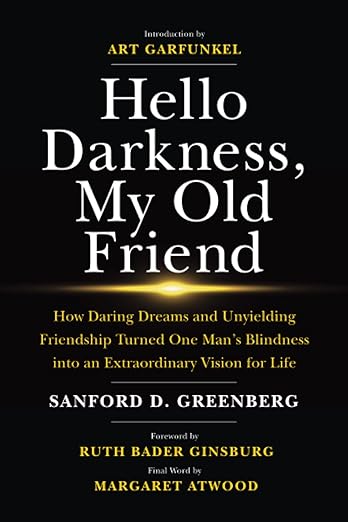
You’re not alone if the name Sanford Greenberg is new to you. After reading his memoir, I suggest taking the time to get to know him.
His life is triumphant in numerous ways, most notably the journey of taking the tragedy of going blind and living life to the fullest in spite of it. How he accomplished finishing college and going after other degrees is one thing. But continuing to dream big and go hard in all areas is equally inspiring.
Knowing I’m regifting the book, I didn’t do any highlighting. Out of many elaborative thoughts and quotes, I’d like to share just one from chapter 14, “The Start of Something Big.”
I was bitten by some kind of bug. Once someone gets his or her resolve up and running, and gets it focused in a direction, it is hard to put on the brakes. In a word, there is momentum. Also, aggressive work habits form. For us blind people, it is especially hard to hold back because we are always concerned about security. Like those who survived and prospered long after the Great Depression but could never shake the habit of stockpiling food and cash for a rainy day, we never feel comfortable, in our guts, about sitting back and saying ‘Okay, that’s it. I’ve done enough.’
Sitting back. It seems to be an art form of sorts. Or at least some form of discipline that some do naturally and others work hard to pursue.
Security. It seems to be more and more pursued yet less and less attained.
Greenberg’s journey of learning to sit back and where to find security led him to this conclusion: “The only worthwhile things in the world are people and ideas.” These drove him to an extraordinary life that may have only been possible due to overcoming tragedy, striving for the light.
I’m richer for having read Sanford Greenberg’s memoir. I’m glad we met.
If it’s doubtful you’ll read it, enrich yourself by watching this video about his lifelong friendship with Art Garfunkel.
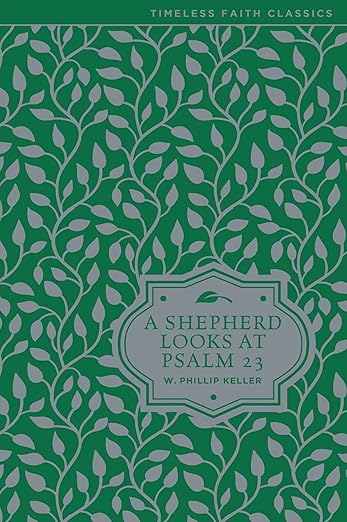
After reading The Lord is My Courage on hoopla, a related title was suggested which I decided to read because of the unique promise. That promise was a look at this poem from the basis of the author’s years as a keeper of sheep. It did not disappoint.
An overall takeaway is just how near death sheep can be unless their shepherd relentlessly cares for them. Keller explains that David’s poem actually addresses all four seasons in a year of a sheep’s life and what is necessary for the sheep to “not want.”
The strange thing about sheep is that because of their very makeup it is almost possible for them to be made to lie down unless four requirements are met…They are free of all fear, free from friction, free of pests, and free from hunger. (Chapter 3, “He Makes Me Lie Down in Green Pastures”)
In that same chapter he explains that a flock that is restless, discontented, always agitated, and disturbed never does well. Sound familiar? The value of being made to lie down is to our benefit.
The most vivid image Keller paints comes in chapter five, “He Restores My Soul.” He draws a parallel between another familiar David passage in Psalm 42:11, “Why are you downcast, O my soul? Why so disturbed within me? Put your hope in God…”
Only those acquainted with sheep and their habits understand the significance of a “cast” sheep or a “cast down” sheep.
This is an old English shepherd’s term for a sheep that has turned over on its back and cannot get up again by itself.
A cast sheep is a very pathetic sight. Lying on its back, its feet in the air, it flays away frantically struggling to stand up, without success. Sometimes it will bleat a little for help, but generally it lies there lashing about in frightened frustration.
If the owner does not arrive on the scene within a reasonably short time, the sheep will die…Nothing seems to so arouse his constant care and diligent attention to the flock as the fact that even the largest, fattest, strongest, and sometimes healthiest sheep can become cast and be a casualty.
He goes on to describe what’s required when he finds a cast ewe, which includes rubbing limbs to restore circulation after picking her up one or more times until she regains equilibrium and starts to walk steadily and surely.
One final noteworthy thought is this one from chapter 7, “Even Though I Walk Through the Valley.” Keller shares that this is a turn in the poem not only from the viewpoint but also in the season being described, how summer and autumn look for the shepherd and his flock. Keller explains David’s firsthand experience by making this statement: “Never did he take his flock where he had not already been before.”
If you find yourself today in search of freedom, or lying on your back flaying, or walking through the valley, rest assured your shepherd is with you. He has what you need. He’s watching over you. I encourage you to find a way to read this book to let those truths grow roots in your heart, mind, and soul.
Recently, after reading a book about the life of Jesus, I decided it was time to read through the Gospels. For the most part, I’m taking it a chapter a day.
This week I read the Parable of the Sower, one of Jesus’ most well-known parables, in Mark 4; it’s also found in Matthew 13 and Luke 8. The teaching focuses on four outcomes of the sown seeds: stolen, short-lived, choked, and fruitbearing.
Keeping your path receptive to the sown seeds requires diligence. Diligence against predators. Diligence to protect roots. Diligence to prioritize eternal things. Diligence to stay hungry and thirsty.
The featured picture on this post is from my back yard. Fortunate for me, HOA fees keep the community where I now live quite immaculate. In the month that I’ve lived here, it’s clear diligence is heavily disciplined.
The state of my heart and soul is no one else’s responsibility. I can’t pay a fee for someone else to be diligent on my behalf. Pretty sure that leads to wrong priorities, unprotected and rootless living. If my heart was originally set on eternity, it’s in my best interest to diligently maintain that origin.
Jason Dunn’s accomplishments are extraordinary. His drive definitely seems to put him in a small percentage of not just athletes but people of any discipline or profession.
His strategies to prepare and execute his goals are worth attempting. It may be tempting to think, “I can’t do anything close to what he’s done (100-mile races, Ironman World Championship).” But I believe he’d be the first to reply, “This is not about going after what others go after. It’s about overcoming the doubt and fear to pursue what feels impossible.”
These four quotes thread how Dunn went about setting goals, going after them, and accepting the ups and downs.
Finding inspiration is often easier than people realize; you just need to choose to see the good in the world around you.
If you think or say that something is hard, it will be hard.
Grateful people are not only beautiful, but they are often humble, too.
To be truly successful, you must first do what you don’t want to do when you don’t want to do it-until you do!
If you are on the fence about going after something that seems out of reach, give this book a read. May you find the inspiration to test your limits.


 John Gregory