Fruity Fridays: A Story of Faithfulness

(A series about the Fruit of the Spirit, Galatians 5)

post by Jeremy Nixon

“But the fruit of the spirit is love, joy, peace, patience, kindness, goodness…and FAITHFULNESS.” Galatians 5: 22-23 

There are a lot of stories in the Bible about faithfulness that I enjoy reading. God has been faithful throughout the whole book in showing he created us for a purpose and for our purpose to be fulfilled. There is one story in particular that sticks out, and it’s found in the Old Testament. Read 1 Samuel 15-18. 

In 1 Samuel 15, God paints a picture of how important faithfulness is to Him. Saul was the king of Israel. Saul was not a king who pleased God, so God chose to give the honor of being the king to David, a young man who worked for King Saul. David spent a lot of time in the palace and became very good friends with Saul’s son Jonathan. After some time, King Saul became so jealous of David that he wanted to kill him and even though he wanted to kill him, Jonathan, Saul’s son, remained David’s best friend. In 1 Samuel 23: 16-18 you see how faithful Jonathan is to David. So faithful that the two of them made a covenant, and Jonathan promised David that his dad wouldn’t lay a hand on him. That’s pretty powerful when you are poised to be the next in line for the throne but you also know that God wants to make your best friend king. I couldn’t imagine how that would feel, but right here we see how important faithfulness is.  

Faithfulness: the words strict, truth, allegiance, reliable, and trusted come to mind. When we read about the friendship between Jonathan and David, it shows us that true friends are faithful to each other even in difficult circumstances. It shows me that being faithful means that we are willing to give up our own valuable things for what is important to God. Faithfulness means sticking by God in the easy times as well as the hard times, and He honors our sacrifices. 

God honors those who are faithful. We are faithful to God when we obey his commandments and choose to do what is right. I think about David, how he didn’t kill Saul even though Saul was trying to kill him. God rewarded David’s faithfulness by allowing David to become the king of Israel. And there was Abraham, who was faithful because he followed God’s directions to go to an unknown land far away. He believed that God would give him a son, and at an old age God was faithful to Abraham. God rewarded Abraham’s faithfulness by making his descendants many! There is story after story where God honors the faithful. 

God has shown his faithfulness time and time again in the Bible. He cared for the faithful men and women of the Bible, and we can trust that He will care for us too. God is who He says He is and does what He says He will do. God is faithful to us, and we can always trust in Him….and because He does that, He is worthy of our praise and our faithfulness.  

Go and be a faithful servant today and watch God be faithful to you. Give Him all the praise and be the faithful people God has called us to be. 
Perhaps 

“Now you, son of man, get your bags ready for exile and go into exile in their sight during the day. You will go into exile from your place to another place while they watch; perhaps they will understand, though they are a rebellious house.” Ezekiel 12:3

Perhaps is a descriptive word. It usually paints a negative picture, like there isn’t much of a chance. So when Ezekiel is given this task with this clarification, he has an interesting choice ahead of him. The choice is, what is his mindset going to be as he follows through.

From my experience, I’m not sure most, if not all, of God’s directives involving ministering to others shouldn’t be entered into with this mentality. Why? There are no guarantees. Just because you come in the name of the Lord doesn’t guarantee you or your message will be received at all, let alone as a message from the Lord. And how they respond, if your message is delivered as directed, has nothing to do with you.

Perhaps will keep you.

Perhaps will protect you.

Perhaps will direct you.

Perhaps will humble you.

Perhaps will focus you.

Perhaps leaves it all up to your director.

Fruity Fridays: Don’t Give Up

(A series about the Fruit of the Spirit, Galatians 5)

post by Eric Vorhies

After Adam and Eve ate the fruit, becoming aware of good and evil, God made a promise to bless the world through her seed. That blessing was Jesus. Now, let’s think about the events that took place between those two points in time. The newly freed Jews desired to be enslaved in Egypt rather than to depend on their miraculous God. From prophets to judges to kings, God’s chosen leader often rejected guidance and wisdom from their Creator. The world became so detestable at one point that God wiped it clean except for Noah and his family. And so on and so on.

If I was God, I would have been out by book two. So, in terms of what it means to be faithful, God is our model.

Faithfulness is an unswerving adherence to a person, thing, promise, etc. This is the characteristic that allows parents to have hope that their estranged child will come home. It gives permission to a devastated spouse to forgive the unfaithfulness (of any kind) of their partner. Faithfulness is at the heart of the story of the adult child who prays for 17 years that their mother would accept Christ as their Savior. Supernatural faithfulness isn’t a characteristic of the resilience of humanity. Rather, it is a fruit of the Holy Spirit that is imparted on us by God.

Here’s the take away — You don’t have to give up or give in. Everyone has some hope or desire that has been worn down and beat up by disappointments as time drags along. And, let’s be honest, it’s hard. It’s exhausting. It even seems pointless to continue pressing on. But the endurance that faithfulness demands of us isn’t our own. We have access to a Father that understands. And it is His strength that carries us. We don’t have to give up because God is our source.

Or maybe you are on the other side of the equation. Maybe you are the one who keeps failing. The one who keeps rejecting God when the pressure of the world seems to be upon you. You also don’t need to give up or give in. God’s faithfulness is greater than our unfaithfulness. And though we may stumble and fall, if we keep trying again and again, as many times as it takes, we will be able to tap into that power that God is offering us and become faithful.

So, don’t be like me…don’t say, ‘I’m out,’ before the end of book two…because the story that God is writing is much bigger than we can imagine…and masterpieces take time to complete.

Fruity Fridays: External Bridge to Internal Goodness

(A series about the Fruit of the Spirit, Galatians 5)

post by Eric Vorhies

You ever hear the phrase, “Fake it till you make it”? I became aware of the power of this in high school. Everyone in class had to do a speech of some sort multiple times throughout the year. I was a high schooler. I didn’t know what I was doing. Like most, I was nervous to talk in front of people. I was consumed with what they must be thinking while I was speaking. I was consumed with fear.

But after a couple of speeches, I realized that those people listening were probably thinking similar things as I was when they were giving speeches. For instance, “Did I finish that Spanish homework?” or “I wonder what’s for lunch today?” That’s when I decided I could just fake my confidence in public speaking until I actually figured it out.

Let’s be clear, I haven’t figured it out, but I can talk to a large group of people with way more confidence then I should. The reason why I say this is because of how I perceive Kindness and Goodness relating to each other. To me, kindness is this external interaction that bridges people together. Goodness, in my opinion, is an internal feeling that motivates kindness.

I hope you see where this is going.

I don’t always have goodness inside of me toward people or situations. I can look at a situation and think, “Well, I could have done better.” Or if i am trying to figure out what other people are thinking about me…I internalize all the excuses of why things played out the way it did or why they shouldn’t be commenting on it. It is far too easy to train ourselves to react selfishly or out of fear. That’s why we think bad things about people or assume the worst. But it’s more empowering to learn to feel goodness instead.

Let’s be honest though, feelings are complex, and we can’t just change our feelings. I mean, we don’t have total control over them…They CAN BE conditioned though. So, this is where we fake it till we make it, and we do that through acts of kindness.

  • Do you want to have goodness in your heart toward someone? Stop talking badly about them.
  • Find yourself always judging people for the way they do things? Take time to tell them something you think they are doing really well (do not follow it up with what they could do better…no compliment sandwiches)
  • Have anger toward someone for what they said? Buy them a cup of coffee and have a conversation. 

We can’t just change the way we feel about something or someone, but we can choose to lead with kindness in those instances. And it is amazing how doing so will soften our hearts. Then, over time, the external bridge of kindness will lead to internal goodness. You won’t have it all figured out, but you will be able to judge a situation more honestly and with more understanding and forgiveness than most.

We are not good, but God leads us to goodness. Share some of it today.

6 Months to Live

Recently I was part of a short discussion around this question: “What if a doctor told you that you have only six months to live? What would you do?” The discussion involved answers that could mostly fall under two headings, tactical and relational. Tactical meaning get everything (insurance, memorial service, will, finances) in order. Relational meaning make the most of every day, do things you haven’t done, say things that need to be said, enjoy the rest of your days.

Let’s reframe the question a tad. What if God told you that you only have six months to live? What would you say? Not what would you do; what would you say? In other words, how would you respond in prayer.

This very message came to a king in the Bible. His name was Hezekiah. His story is told in two passages, 2 Kings 20 and Isaiah 38. Here are the first three verses of Isaiah 38:

“In those days Hezekiah became terminally ill. The prophet Isaiah son of Amoz came and said to him, “This is what the Lord says: ‘Set your house in order, for you are about to die; you will not recover.’ ” Then Hezekiah turned his face to the wall and prayed to the Lord. He said, “Please, Lord, remember how I have walked before you faithfully and wholeheartedly, and have done what pleases you.” And Hezekiah wept bitterly.” ‭‭Isaiah‬ ‭38:1-3‬ ‭CSB‬‬‬‬

Hezekiah’s simple and confident response prayer is remarkable. Hezekiah didn’t offer a response of lament, of begging for his life, or of questioning God. He responded by asking just one thing-remember our relationship.

Hezekiah didn’t point out his position, his accomplishments, his family, or even his desire to live. His focused response was about his relationship with God. 

In a “near death” state, you wouldn’t ask God to remember something that is either weak or anemic in order to trade or barter for life. You would offer something strong, vibrant, and full of life. What would you ask God to remember?

From Hezekiah’s response, we can adapt some truths to our prayer life (our responses to God) that apply, near death or not. 

  • You can pray with confidence when you know your relationship with God is active and alive.
  • The status of your relationship with God determines the strength of your prayers.
  • You can pray in simplicity when your relationship with God is deep, trusting, and honest.
  • A strong relationship doesn’t require overdone conversation.

While we can ask God to remember, we have things to remember about him, also.

  • Remember, God sees all, including your heart.  
  • Remember, God knows all, including your needs and wants.
  • Remember, God controls all, including your situations and your future.

Your turn. You get this message, “You have six months to live.” What do you ask God to remember?

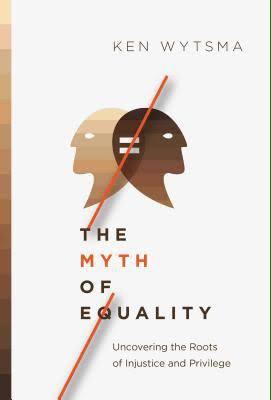
The Myth of Equality (Book Review)

I just finished reading a book that I didn’t know I needed to read.

I wasn’t looking for it. Had it not been given to me, I most likely wouldn’t even know about it.

Why did I need to read it? 

  • Because I didn’t know what I didn’t know. The first part informed me about the story of race.

Racism in the United States is worse than we thought, its lasting consequences are more significant than we think, and our responsibility is greater than we’ve been taught…There are many things that can only be seen through eyes that have cried.

  • Because I needed to see this subject through the lens of God’s kingdom. The second part took me deeper into the truth of equality.

If every person is made in the image of God, then stereotypes lead us down a dangerous path…Racial equality and fairness is not just a good thing but an ideal that we must work toward if we are to fully realize Christian obedience, national justice, and individual flourishing.

  • Because I needed to know about my privilege. The final part challenged me to listen and learn, lament, confess, and lay down.

White privilege doesn’t mean your life isn’t hard. It means if you are a person of color, simply by virtue of that, your life might be harder…If any part of justice matters then all of justice should matter.

Most likely, you didn’t know about this book before reading this post. You need to look for it. You need to read this book.

Fruity Fridays: Running to Do Good

(A series about the Fruit of the Spirit, Galatians 5)

Of the nine fruits of the Spirit, I’d guess this one to be the one most wrestled. 

Doing good is different from being good. You can be good on the inside. But to show the fruit of goodness it has to be seen, you have to do. That isn’t always easy. It’s downright challenging in many cases, on a regular basis.

  • It’s hard to do good to someone who views your decision as wrong.
  • It’s mind bending to do good to someone who intentionally undermines you.
  • It’s gut wrenching to do good for someone who knowingly lies about you.

These are examples that are difficult because they reveal where your power originates. If your power to handle wrong, undermining, and lying lies only in you, you will be less likely to do good.
No, we have to rely on a better source of power than ourselves. That power comes from the model of goodness. That model and power is described in Acts 10:38.

God anointed Jesus of Nazareth with the Holy Spirit and power, who went about doing good and healing all who were oppressed by the devil, for God was with Him.

Instead of looking at yourself to muster the power of goodness, we must look to the Holy Spirit. No matter how hard the situation, he has the power to do good through you. So how do we look to the Holy Spirit?

  1. Work through your anger, jealousy, selfishness, etc., before responding. (HINT: This may take more than five minutes.) Start doing good by not doing wrong by allowing destructive emotions to control you.
  2. Pray to the Holy Spirit. Ask Him what goodness will look like in your situation, for that person. Only move when you have peace and commitment to the action.
  3. Practice, Practice, Practice. You only get better at something by doing it. Start with a simple good thing that you know the Holy Spirit wants you to do. Example: Pray that God would bless your offender rather than praying God would convict them. (HINT: Conviction isn’t our job.) A staggering baby step like this will lead to steady walking which will lead to strong running.

Running isn’t easy. Certainly not to do goodness. Surrender to the Holy Spirit to help you run to do good.

5 Rules to Avoid Regrettable Commitments

Who knew a book on business could be so rich? Well, I can tell you that Larry Burkett’s book Business by the Book is.

For example, in chapter 6, Keeping Vows, he gives five simple rules that could not only be applied to good business practice but also good personal living practice. He developed them to avoid making commitments he might later regret:

  1. When in Doubt, Say No
  2. Keep a “Year at a Glance” Calendar
  3. Prioritize the Day
  4. Don’t Book Too Far Ahead
  5. Use a Written Contract

Here are two quotes from the chapter that seem to support the need for these rules:

  • Situational ethics have so shaped our society that even God’s people have lost the concept of absolutes when it comes to keeping our word.
  • The probability of a misunderstanding in a written agreement has been calculated at 20%, more or less. The probability of a misunderstanding in a verbal agreement is nearly 100%!

Faithful Love

This week my Bible reading plan took me through Hosea. This read is always a good one.

One could label the message of Hosea to be “beware of spiritual adultery-drifting little by little into disaster.” 

I highlighted verse 6 from chapter 6, and when I highlighted verse 12 from chapter 10 I noticed they share a term, faithful love. Read these two verses here:

For I desire faithful love and not sacrifice, the knowledge of God rather than burnt offerings…Sow righteousness for yourselves and reap faithful love; break up your unplowed ground. It is time to seek the Lord until he comes and sends righteousness on you like the rain. (‭Hosea‬ 6:6; ‭10‬:‭12‬ CSB)

  • Drifting from love belittles faithfulness; adultery betrays love’s commitment.

The beauty of faithful love in our relationship with God is shown by the agricultural images in chapter 10. Yes, we reap what we sow. If we choose to sow unrighteousness, that is what we will reap. But that’s not an everlasting sentence. What we reap can be changed. God’s faithful and loyal love for those who choose rather to sow righteousness never ends; it is everlasting. He longs to pour this love on us so abundantly that it would be like rain.

How’s your love? Is it drifting? How can you correct your sowing choices, keep faithful love, in order to allow God to bring you rain?

Fruity Fridays: The Only Goodness in Us

(A series about the Fruit of the Spirit, Galatians 5)

post by Jeremy Nixon

Webster’s Dictionary defines goodness as the state or quality of being good; moral excellence, virtue; generosity, strength or the best part of anything. I particularly like “the best part of anything.” When talking about goodness you have to understand the opposite: evil. I think we all know what evil is, and it’s not the Descendants of Disney! However, my girls love that show, and as a “good” dad I oblige. Evil is everything derived from Satan, badness. The very thing that makes you happy (God) is good, and the thing that makes us imperfect…our flesh.

I don’t know about you, but I struggle with my flesh and doing the right things at time because of my fleshly cravings. I know it’s hard to believe that I’m not a good person all the time…just ask John; he’ll tell you the truth. We all know that our struggle with sin is real (Romans 3:23). Paul writes in his letter to the Romans in 7:18-20 “for I know that nothing good dwells in me, that is, in my flesh. For I have the desire to do what is right, but not the ability to carry it out. For I do not do the good I want, but the evil I do not want is what I keep on doing. Now if I do what I do not want, it is no longer I who do it, but the sin that dwells within me.”

Paul’s struggle with sin was real, so real that he cried out for rescue! Our lives, if we are honest, are really no different than Paul’s. I know as having been a pastor that everyone looks to leadership in the church and seems to think that they are perfect; that if we could just be like them and have it all together then we’d be happy and good. I’m here to tell you that we don’t have it all together, and we are all not GOOD on our own. We struggle with sin just like you, maybe different or maybe the same. Pastors extort goodness and we see all the good that they do and so we see them as goodness. As a member of the body of Christ, we are urged to walk by the Spirit and one of the fruits of the Spirit is goodness.

Since we belong to Christ we are to strive to be good, not for salvation but because of Christ’s love in laying down his life for us and saving us. Because of God’s great sacrifice our response is the fruits. As a Christian that doesn’t work in the church, I find it harder to display the fruits, but it’s more rewarding when we are able to. To God be the glory because we can NOT do it without him. He is the only GOOD in me. This week our fruit is goodness, and I encourage you to demonstrate goodness to others. It’s encouraging knowing that Paul and others in the Bible struggled with their sin and being good…but the Lord delivered them. Our hope is in Christ and through him goodness can be displayed through us to reach others.

I get it wrong more than I get it right…but if you love God and love others like you love Him, I can promise goodness will prevail and the Lord will be glorified.