The Faith Doctor

I’m half through the autobiography of Jerry Kill, a successful college football coach known for turning around programs. One part of his personal story is a bout with kidney cancer. In the chapter recalling the bout, he gives a shoutout to his team chaplain with these words:

He is the best Christian man I know. He knows how to talk to you, how to relate to you, and he has the “it factor.” He’s a faith doctor. You have to have your medical doctors obviously, but he was a faith doctor for me.

That’s a first-hearing someone categorized as a faith doctor. Made me ask two questions:

  1. Who’s my faith doctor?
  2. Who’s faith doctor am I?

Maybe we all should ask those questions. After answering them, we could ask further ones like…

  1. How often do I see my faith doctor?
  2. What symptoms do I need to acknowledge to my faith doctor?
  3. How willing am I to be someone’s faith doctor?
  4. What fruits of the Spirit are needed to be someone’s faith doctor?

You get the gist. This chapter, by the way, was entitled Upsetting Cancer. Whatever spiritual issue you have that needs upsetting may well be worth answering these questions.

Better & Deeper!

Questions: Three for God, Three for Us

The media, culture, and environment in which we live has sought to define love as a feeling that lives rooted deep within our emotional character. This could not be farther from the truth when understood through the focused lens of God’s Word. God defines love not in emotional terms but in commitment and covenant. God has self-defined Himself as love and rests His identity in His intention that He will never recant that commitment to humanity nor will He break His own special covenant no matter our propensities toward sinfulness or spiritual rebellion. (-The Pastor’s Wife and The Other Woman)

I started a new book last night. This quote is from a section discussing how our choices regarding our time indicate what is significant to us.

What is significant is more than what feels good. What we know we can count on, what is solid, what has been tested, what has survived fire-that is significant.

When we question our significance to God, here are three questions to ponder:

  1. What promises has He kept?
  2. How has He shown Himself to me recently?
  3. When was the last time He forgave me?

Turning the spotlight on the other person in the relationship, here are three questions for us:

  1. What promises have I made to God?
  2. How am I looking for God each day?
  3. How do I open my heart to God?

The god of comfort

In seeking the direction and power of the Holy Spirit, the man of God must be willing to do whatever the Spirit leads him to do. This means he will probably be led out of his comfort zone.

This quote is another one from the book Uniquely Bivocational that has general meaning for anyone seeking God’s power in their lives. The chapter it is from focuses on how a pastor prepares to share a message. Yet the title, Receiving and Sharing a Word from the Lord, has application for anyone who wishes to speak into other’s lives as led by God.

Here’s how. Take the phrase “the man of God” out of the quote and replace it with the pronoun “I.” See what I mean? “…I must be willing to do whatever…and I will probably be led out of my comfort zone.”

God is limited when we refuse to be willing. God cannot do all he could if we insist on being comfortable. The god of comfort will keep us from experiencing the power of the God we profess, the God we need.

Believer, drop all the “buts” and “what ifs.” Offer your willingness. Embrace the uncomfortable. Prepare to experience God’s power unlike you ever have.

Uniquely

Recently-well, before “stay in place orders”-a ministry leader stopped by the office to leave some information. He was with The Bivocational and Small Church Leadership Network. Check out their website; you’ll learn some things like I did.

One of the pieces this leader left with me was a book, Uniquely Bivocational: Understanding the Life of a Pastor who has a Second Job, which I’m reading now.


For sure, there are unique things to consider about a man finding himself living this out. However, after reading chapter 8, The Need for Balance, there are general things for believers, and particularly any ministry leaders, to keep in mind. For instance, here’s the list of twelve keys to achieving balance Gilder mentions:

  1. Put God first in your life
  2. Establish priorities
  3. Link your calling to your calendar
  4. Have a clear purpose and direction for your life
  5. Be proactive rather than reactive
  6. Maintain a clear conscience
  7. Find an accountability partner
  8. Have a family council
  9. Find the secret of contentment
  10. Realize you are not superman
  11. Make regular deposits into your emotional bank
  12. Do what you do as unto the Lord

Look like a list that could help your balance? 

Yes, I’m reading this book as designed. But I’m finding that much of it could be generally applied to anyone desiring to live as God would have them-Uniquely.

Equal Access

Occasionally someone will say to me, “How about you pray for me? Your connection is better than mine.”

We both understand the thought, but reality is it ain’t true. Just because one person may practice praying more than another doesn’t mean their connection is better. For a really clear illustration of that, check out Jesus’ teaching in Luke 18:9-14. Frequency of praying doesn’t assume better.

Does that mean we shouldn’t bother praying regularly? SMH. It means we should take advantage of the access God graciously gives everyone. My connection ain’t better than yours. No ones is. Well, except Jesus. Why? Because of Jesus’ resurrection. That’s right. One of the many impacts of his resurrection for all people is direct access to his Father through him. His sacrifice gave everyone equal access. His job right now is to sit by his Father to intercede on your behalf.

So if you’re tempted to believe the lie that you don’t have equal access and maybe give yourself an out for praying, why not tell Jesus, “How about you pray for me? Your connection is better than mine.”

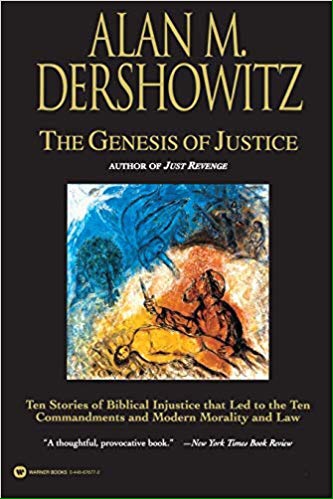
Think You Know All About Genesis? (A book review)

Whatever you know about Alan Dershowitz, if you’re like me, it’s not from reading his books. So when I came across this one, I was quite intrigued. About the only thing we have in common is we both have benefitted by living in homes who taught us the value of the Bible.

His upbringing in Judaism and his practicing of law tremendously frame his view of God, man, and the Bible. He most definitely has a biblical worldview. Does that mean all biblical worldviewers would agree with his interpretations of Genesis? Pretty sure you know the answer to that question.

My opinion: that should not keep one from reading another’s integrated and exhaustive presentation of their interpretation, in particular if their frame is one you do not have. That explains why I valued this reading. I grew because of Dershowitz’s work. That’s enough for me.

If these nine quotes make you think even a hint differently about Genesis, here’s your sign to choose growth:

A God who can admit that His mind has been changed by mere humans is a truly great teacher. (referencing God and The Flood)

The God who invites Abraham to argue with him about justice is a God who encourages rational discourse. The God who rebuked Job for trying to understand an obvious injustice is a God who promotes unthinking fundamentalism. One of the beauties of the Bible is that even its God speaks in different voices over time.

The entire book of Genesis is about the early development of justice in human society…The Genesis stories all take place before the advent of formal rules of law… Viewing Genesis as a book about the development of justice before the existence of a formalized legal system helps to explain why the narrative is so much about crime, sin, deception, revenge, punishment, and other bad actions.

For all of his trickery, Jacob never tries to deceive God. He bargains with him, even wrestles with him, but he’s always straight with God. The result is that God blesses Jacob with leadership, but makes him understand that the wages of deception are deception.

Like much of the earlier narratives of Genesis, the Joseph story shows us what it was like to live in a world without a legal system – a world in which those with high status could, with impunity, falsely accuse those of lower status. It shows us the need for a system of justice in which all stand equally before the law and those accused of a crime have a fair opportunity to challenge the evidence against them and demonstrate that it was planted, false, or mistaken. It leads inexorably to the later biblical rules against favoring in judgment either the rich or the poor.

The common law of Judaism is that it is not only permissible, it is obligatory to argue even with God about a proposed injustice. Humans can argue with God, but they cannot refuse to obey a direct order from Him. (referencing God and Abraham)

Had the Torah-the great law book-simply begun with a list of rules, the reader would wonder about the basis for the rules. Some of them appear eminently logical, but the others cannot be understood without reference to the experience of the Jewish people.

If the book of Genesis tells the story of the developing legal system-ad hoc rules, common law, statutes, and so on-then Sinai does not represent so dramatic a break with the past. It is a culmination of a process begun in the garden of Eden and continued with Cain, Noah, Abraham, Jacob, Dina, Tamar, Joseph, and the other actors in opening narratives of the Bible.

The Bible uses stories of injustice to teach about the need for justice…The story of Genesis will continue until the end of humankind.

God of My 20’s: 2 Things I Would Tell Myself

(Post #10 in a collaborative series)

Guest Blogger Eric Vorhies

The things that the 35-year-old Eric would tell the 20-something Eric would need a TLDR (too long didn’t read) section. Don’t go to college unless you have to, travel before having kids, don’t eat too many gummies (they will lead to cavities), learn more about leadership, manage your time better with routine and discipline, stop eating dessert after every meal, etc. There are specific reasons for each of these, and for the ones that I did not share. BUT the problem is that the 20-something Eric wouldn’t have really heard these nuggets of wisdom. He was too sure of himself. So, I have narrowed it down to two things that I wish I could tell myself when I was 10, 15, 18, 21, 25, 27, even yesterday: choose your treasure wisely and stop seeing the world in a binary way.

The Treasure We Choose

Jesus tells a parable in Mt 13: 44-46 about people finding something valuable and doing whatever it takes to obtain it. Elsewhere, the Bible tells us that where our treasure is, there our heart will be. Look…the Bible has a lot to say about treasure. So much so, I think I got lost in the things that I treasured. Now, I didn’t treasure ridiculous things. I like movies, playing frisbee, hanging out with friends, and sleeping in…you know, the normal stuff. Those things are important to me; but when I consider the value that my treasure had, it feels empty.

Before you think I am crazy, let me explain. Friendships are good. Relaxing is good. Exercise is good. What I did wrong is nuanced. I regret making those things the goal in and of themselves. When relaxing or friendship becomes the goal, I subtly shifted from serving God to serving myself. Subsequently, those things are then viewed from a self-serving perspective.

Something needed to shift. That’s when I realized just because we treasure something doesn’t mean it has value. To find treasures of value, we have to pursue God to discover what He values and treasure those things. When we do, everything else becomes a by-product of that pursuit. For instance, the more I pursue God, the more I understand His grace and His love for people. Therefore, I serve at my church, I lead a small group, I foster kids, I push myself to become a better parent and husband. And all the while, I have found more peace and patience, deeper friendships, stronger relationships, and a faith that comes from God because I have reached the end of my rope so many times that I have nothing else to do except trust in Him.

So, I would tell myself to treasure things that have real value, relentlessly pursue them, and learn how to merge what you are naturally passionate about with that pursuit.

There Are Two Kinds Of People In This World

Yes/no. Black/white. Right/wrong. True/false. Iphone/android. Are there really only two options for everything? I used to think that in very mathematical terms. If I put in the right information into a solid equation, then I can predict the outcome. If it failed, then I had a bad equation or didn’t have the right information. A better understanding of the variables and their relationships was the solution to the world’s problems. The thing is…the world is messy. It’s messy in such a way that it shouldn’t always be seen as a problem to be solved, but rather a tension to be managed.

Can’t find the perfect person to date? The perfect church? Your dream job? Well, that’s because they don’t exist. That’s a problem you can’t solve. So you manage the tension. I have learned this is the most deeply personal and profound way that I could. Here’s the truncated version: We fostered a teenager. It was amazing for 1.5 yrs. After getting guardianship, she developed mental disorders. I became a parent of a child I never thought I would have. In a nutshell, I have quit judging other parents…and people in general.

That’s what having kids does to a person. See a frazzled woman with a stain on her shirt — yeah, she could be just some unhinged woman, but she’s likely just a mom. Some guy sleeping in church…of course he could be bored out of his mind, or maybe he didn’t get any sleep because his 5-year-old climbed in his bed and was repeatedly kicking him throughout the entire night.

The world is messy. People are suffering and hurting. Some of them do not have the tools or capacity to know how to respond. So, rather than turning from the mess and complexity, the 20-something Eric needs to embrace it. But not as a problem to solve, but as a tension to manage. A tension that will never go away. But it can get better. And when it gets worse, that’s okay too, because I can always get better also.

TLDR

I get it. 20-something Eric would not have listened well through this either. So, the bullet points:

  • Treasure the things that God says have value
  • The world’s messiness isn’t something to be solved but a tension to be managed

Hopefully, the words of 40-something Eric will be more like, “always have ice cream with your pie,” or “it’s ok that you bought that tool for that thing that you never actually fixed because your neighbor got a lot of use out of it.” I just pray to God that these two are burned into my character at this point. Otherwise, I will make some easily avoidable mistakes.

Covid-19 Update: I wrote this before the pandemic. I have learned some new things, but I will spare you…except for this one last one: Wisdom is a depreciating asset. I am glad to have re-read this today because it reminded me to look at the season I am in now with a fresh perspective. So, be open to re-learning something that you already knew.

The Curse Will Be Over

Revelation 22:3 was in my @youversion reading plan today. It reads, “and there will no longer be any curse. The throne of God and of the Lamb will be in the city, and his servants will worship him.

That first phrase jumped off the page. So I spent much of the day working on lyrics to a song entitled “The Curse Will Be Over.”

Verse 1

Today is the same, same as the rest

Knowing it’s closer than it’s ever been before

My heart knows you’re there preparing the best

To give me the joy of meeting you when I walk through the door

Chorus

The curse will be over

My eyes will behold you

The lamb who was slain, the risen one

O hallelujah

I’ll sing to proclaim your worth

I’ll finally be home

And the curse will be over

Verse 2

The garden was where this curse was begun

The bitten lie pierced my soul, ushered in shame

You said, “I’m not done.” You sent down your son.

I’ve bowed my knees, said please forgive me. I come bearing his name.

Bridge

Over, death and the grave

Over, disease and pain

Over, darkness and shame

Over, temptation and blame

Over, hatred and war

Over, betrayal and hurt

Over, anger and fear

Over, apart from you

Over, it will be over

Sin’s curse will be over

5 Ways to Combat Forced Fear

Yesterday I saw the CBS commercial featuring actors from their shows sending this message: “We’re in this together.” Yes, community is important, always but certainly now.

If you think about that message for a moment, you can be more descriptive by replacing “this” with a specific noun. Like…

  • …We’re in economic uncertainty together
  • …We’re in confusion together
  • …We’re in isolation together
  • …We’re in media overload together
  • …We’re in the drive through together
  • …We’re in the grocery line together
  • …We’re in fear fatigue together

I’ll stop there to chew on that one. This “this” is one of the major things we are in together. 

Some of us by nature, personality, or any number of reasons tend to live more fearfully. But this is different. This feels like we’re all in fear together whether we want to be or not. Feels forced, on many levels.

We all have natural tendencies in responding to fear. Generally, we are defined as fighters or flighters. I tend to be the former, which explains why I tend to believe much of the fear we are in together is forced.

Regardless of its origination or our response tendency to it, fear does not get an automatic win. It can be overcome when we choose to combat it. You probably are already trying to combat it, subconsciously or thoughtfully. In case you’d like more help, because we’re in this together, here are five ways I’m combating forced fear.

  1. Created a Playlist…just this morning I decided it was time to create a COVID-19 playlist. My list includes songs that address fear directly, bring God into the picture, and focus on the hope of eternity. Pretty sure I’ll be playing it daily.
  2. Exercising Early…many years ago I had to overcome not being a morning person in order to pursue better running training. I’m not in training mode right now. But I’ve put my mind in combat fear mode, meaning setting the alarm on most mornings to get up and exercise first thing. My guess is, if you don’t already do this, when you give it a try you’ll like it.
  3. Increasing Peace Intake…this “this” is to combat that media overload we’re in together. Here’s a challenge to consider: however much time you spend watching, reading, scrolling, engaging in media that produces fear in you, spend at least that same amount of time or more taking in peace. Whatever produces peace in your heart, mind, and spirit needs equal time. Personally I’m barely looking at Twitter, looking at Facebook less, and pretty much looking at headlines only.
  4. Making Others First…this one can be very simple. Something as simple as letting someone go ahead of you in the grocery line, greeting the cashier by name, thanking them for the extra work they are doing, being empathetic with those you’re together with in the grocery aisles (practiced these Wednesday). For something more impactful, ask God to bring to mind someone to bless and how to do it (doing this today).
  5. Reading>Meditating…in particular, biblical characters that endured forced fear. Examples: Joseph, Esther, Ruth, Daniel, Mary and Joseph, and certainly Jesus. Many of them were forced to face the fear of death. Read their stories. Meditate on how they combated fear. I’m taking a look at Genesis all this weekend.

How are you dealing with forced fear? Got something else to share? Please do. We’re in forced fear together.