Piano Lessons on Humility

Bored between football and hockey late this afternoon, my surfing led me to a documentary mid-air. It being about a piano, I paused and didn’t move the channel.

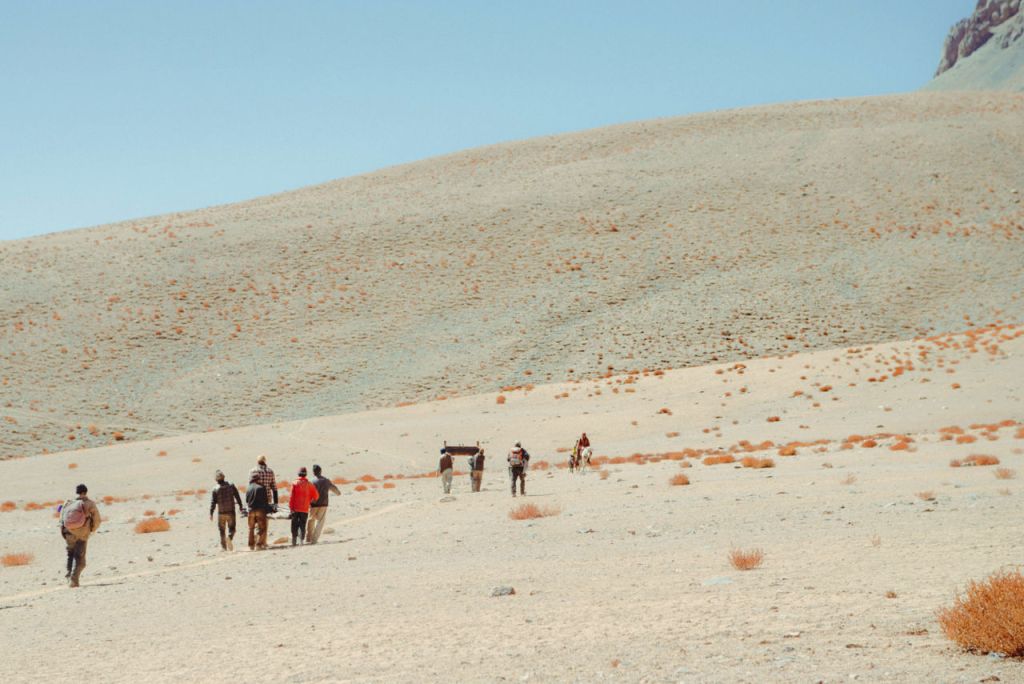
Piano to Zanskar is an award-winning British documentary film which tells the story of Desmond O’Keeffe, also known as Mr Gentle, a 65-year old piano tuner who embarks on an impossible mission.

Facing his future in retirement, “sitting in deck chairs and eating lemon drizzle cake”, Desmond decides instead to take on the most challenging and perilous delivery of his four decade career: transporting a 100 year-old, 80 kilo, Broadwood and Sons upright piano, from bustling London to the remote heart of the Indian Himalayas. 

Setting off from his busy workshop in Camden Town, and enlisting the help of two young and eager apprentices, Desmond’s ambitious destination is a primary school in Lingshed, Zanskar. At 14,000 feet above sea level, it is one of the most isolated settlements in the world. 

At 56 years of age, I continue to receive lessons on humility; they come faster and deeper. Watching this film, I faced several realities of extraordinary privilege my life has afforded that I must stop taking for granted.

  • Grew up in a home with a piano. (As of 2015, one in 3,788 U.S. families owned a piano. That statistic for the world isn’t known.)
  • Received piano lessons at various levels.
  • Earned a degree in music education.
  • Taught piano for seven years.
  • Started a piano competition in the early 90’s, now known as The Greater Jacksonville Federation Piano Competition, that continues today.
  • Have played for thousands of church worshippers in America, Belarus, and Jordan.

God has used pianos to heal me, to touch others, and to lift his name high.

For His sake, may the humility lessons continue.

Discovering Who You Really Are

Wednesday I asked a pastor a theological question worded something like this: “There’s two views on this topic. Which one do you take?”

I’ve experienced two reactions to this question: “How much time do you have” or “Really? That’s what we’re doing right now?” His rolled eyes didn’t match his answer.

I see a tension between both of those. So I see both of them in Scripture, and sometimes I just have to say you can’t answer that tension… I think we need to just to leave that tension there than trying to answer it, because Scripture doesn’t answer the tension.

“That tension can’t be answered. Just leave it there.”

His response was worded unlike any other. Even if pastors acknowledge the tension and would like to avoid it, no one has expressed their view like this. Bottom line: it’s okay to not have the answer. It’s actually better for peace and rest to not force one for any reason.

Continuing to chew on his answer I find it refreshing, particularly when applied to other tensions society revels over debating and dividing over. Millions of dollars and minutes are wasted over tensions that just need to be left alone.

The pastor’s reply modeled this beatitude: “Blessed are the peacemakers for they shall be called children of God.” In his paraphrase The Message, Eugene Peterson wrote “that’s when you discover who you really are and your place in God’s family.”

Here’s to resting in our place in God’s family!

Photo by Eric Prouzet on Unsplash

Eternal Fences

I’ve had fences on my mind. Apparently, they have permanent residence and need to be managed.

This is my way of understanding a season I’ve recently emerged from, a season I always seem to have a foot in. I call it the what’s next season.  That question keeps a firm grip on my brain, if I let it. And that’s where the fences come in.

Sometimes I recognize it; sometimes I don’t. The temptation to look over the fence. The temptation isn’t necessarily about looking for greener grass. It’s more like, “What’s over there? If it looks good, should I find a way over there? Should I be looking for a gate? Looking at the field I’m in, there’s probably a better one on the other side of part of this fence, right? I just got to keep looking. Seek and find.”

While chewing on these questions this week during a prayer moment, a connection was made that made me say, “Well that’s interesting.” The connection was to a verse from Ecclesiastes, a book containing a look at forever fences. Here’s that verse:

He has made everything appropriate in its time. He has also set eternity in their heart, without the possibility that mankind will find out the work which God has done from the beginning even to the end. -Ecclesiastes 3:11 NASB

Oddly, my mind relaxed. The connection: Because eternity is placed in my heart, I am always going to be tempted to look over the fence. And I’m not alone in that. Every human asks, “What’s next? Is this it? There’s got to be more, right?” We ask it in different ways, seek the answers from different sources, but we ask the same questions.

The lessons that seem to be on repeat during a what’s next season are 1) Embrace Now and 2) Balance Anticipation. As I thought about these lessons, another uplifting passage came to mind. It’s from an equally encouraging chapter, this time from the New Testament. Hebrews 11 contains a roster of fellow fence gawkers who are described as sharing another top of mind focus. Check out verses 13-16:

13 All these people were still living by faith when they died. They didn’t receive the things God had promised. They only saw them and welcomed them from a long way off. They openly said that they were outsiders and strangers on earth. 14 People who say things like that show that they are looking for a country of their own. 15 What if they had been thinking of the country they had left? Then they could have returned to it. 16 Instead, they longed for a better country. They wanted a heavenly one. So God is pleased when they call him their God. In fact, he has prepared a city for them.

You see why fences have been on mind? It’s actually good stuff. At the end of it, I find myself in excellent company, both in the past and the present. I say the present because these thoughts led me to three songs that I gravitate toward when eternity is on my mind.

So at the close of this month, this week, this Thanksgiving weekend, I encourage you to take 11 minutes, stare at the eternal fence, and listen to these fellow “longers for a better country.”

Photo by Marie Martin on Unsplash

Huddle Up, Planners!

Hey Planners! Huddle Up!

You’ve been on my mind this week. 2024 has not been kind to you. I feel it with you. In this huddle, let’s acknowledge a few things.

First of all, we’re not alone. We all get it. That trip you had planned for the second week of October turned out to be a totally different trip. And not only that, the work event two weeks prior that had been on the calendar since January had to be cancelled. That event was supposed to help you feel like you weren’t losing your mind due to Debby’s rudeness. Seriously, three’s enough.

Second, whatever happened to the answer to not failing is having a plan. That’s what they tell us. “Failing to plan is planning to fail.” You had a plan to retire in that house. You had a plan to grow your business. You had a plan to provide for generations in your family. You thought it was The Plan. Were you wrong?

Driving home from church this morning I wondered, “What character in the biblical narrative could planners relate to? Someone who probably felt like they were doing everything right, had lived as surrendered as possible, and yet felt like their foundation crumbled.”

I can’t say for certain she was a planner, but the person that made me stop rolling through the profiles was Mary, Jesus’ mother. It’s mind blowing to consider the change of plans she navigated, how many times she felt the earth shake.

  • The pregnancy and marriage phase
  • The parenting phase
  • The empty nest phase
  • The losing a child not once but twice phase

I can’t imagine anything about her life felt normal.

Normal. That’s the word I said to God this morning on my drive to church. Which made me laugh and spew, “Why do I get caught up in expecting normal? Who am I to demand whatever that means?”

Planners, hear this. The security and peace you seek in the black and white of the bullet points of your 5-year-plan isn’t permanent. When it turns into gray or is completely erased, the stark reality of eternity is brought back into focus. And it’s good for us.

Don’t hear me dismiss the emotions of confusion and disappointment and frustration and anger. Those are normal. It’s not recorded; but in her humanity, I imagine Mary walked through all of those too.

Fortunately for her, Jesus was with her. Fortunately for us, just like her when he left her the second time, he doesn’t leave us alone when our plans disintegrate.

Did you hear that? He hasn’t left you. He’s with us in this huddle. And as only he can do, he’s simultaneously elsewhere working on our eternity.

Yes, it’s earthshaking to not see what’s next, to be yanked back into considering eternity. It’s disturbing to feel like you messed up so bad that recovery isn’t possible, that what’s in front of you is all there is. So let me remind you.

He sees it all.

He holds the world.

He is in the rebuilding business.

His plan is in tack.

Here’s what I want to offer you. I’m not going to break this huddle. Instead, I invite you to stay here as long as you need. Sit down if you need to. Lie down even. Put your body in a position that best says, “I’m not going to take another step until you show me which direction. I know because you are big enough to work on the eternal that you have what I need in the present. Your plan is mine. It’s enough. I’m with Mary. No matter how many times the earth quakes and my plans shatter, I am blessed that you know me, see me, stay with me, and let me call you mine.”

Photo by Mark Vihtelic on Unsplash

What? We’ve Been Fasting?

Chances are, if you grew up in church, you can count on one hand the number of sermons you’ve heard that mentioned fasting. Church folk like their food, right?

Chances are most likely even higher that any mention of fasting didn’t reference Isaiah 58. That’s what crossed my mind this morning when I read it as part of a Thanksgiving-themed devotional plan. Check out verses 6-12.

Isaiah 58:6-12 NIV
[6] “Is not this the kind of fasting I have chosen: to loose the chains of injustice and untie the cords of the yoke, to set the oppressed free and break every yoke? [7] Is it not to share your food with the hungry and to provide the poor wanderer with shelter— when you see the naked, to clothe them, and not to turn away from your own flesh and blood? [8] Then your light will break forth like the dawn, and your healing will quickly appear; then your righteousness will go before you, and the glory of the Lord will be your rear guard. [9] Then you will call, and the Lord will answer; you will cry for help, and he will say: Here am I. “If you do away with the yoke of oppression, with the pointing finger and malicious talk, [10] and if you spend yourselves in behalf of the hungry and satisfy the needs of the oppressed, then your light will rise in the darkness, and your night will become like the noonday. [11] The Lord will guide you always; he will satisfy your needs in a sun-scorched land and will strengthen your frame. You will be like a well-watered garden, like a spring whose waters never fail. [12] Your people will rebuild the ancient ruins and will raise up the age-old foundations; you will be called Repairer of Broken Walls, Restorer of Streets with Dwellings.

If you’ve been involved in anything mentioned in this passage, SURPRISE! You’ve been fasting.

  • Loosing the chains of injustice = FASTING
  • Feeding the hungry = FASTING
  • Sheltering the poor = FASTING
  • Clothing the naked = FASTING
  • Not turning from your family = FASTING
  • Doing away with finger pointing and malicious talk = FASTING

As we’ve watched many of these actions in our community these last few months, we didn’t use the word fasting to describe them. Two words I did hear were light and healing. If you take this passage to be a promise, imagine what’s coming because of the fasting. Not only will this fasting result in literal repairs of walls and restoration of streets and homes, but it will also shine light and nurture healing as God replies to our cries by saying, “Here I Am.”

Photo by jean wimmerlin on Unsplash

3 Hard Times Friends

The latest episode of Everything Happens drove me home a few hours ago. The guest was Sam Wells, Vicar of St Martin-in-the-Fields in Trafalgar Square, London, since 2012. The conversation centered on this question: How do you stay close to someone whose pain you can’t fix, whose questions you can’t answer? I encourage you to listen.

In her conclusion, Kate shared these thoughts:

I loved Sam’s three categories for being a friend through hard times. There is being for someone. That’s all the actiony stuff that we can think of when someone is struggling. That’s the boy, oh boy are they helpful. Dropping off a meal, organizing a fundraiser, driving them to and from an appointment, just the like checking it, doing it in the mix. Then there’s the being in with someone. That’s practicing empathy of seeing and understanding someone’s painful realities, of not making them feel other. Like there’s this Plexiglas wall between you. And then there’s being with them. Now, this is the toughie. Being with means staying present without any words to say, any tangible comfort to offer, or any ability to fix their circumstance. Being a friend involves one or all of those three. Being for, in, and with

I was baptized into being with in a room at Baptist Hospital in Gadsden, Alabama. I was 12. My dad was the cancer patient in the bed needing his trachea tube suctioned periodically. There was no talking. There was little to do. There was little choice but to be with.

Over the last 44 years I’ve tried to be a hard times friend. There’s been a lot of being for. Not as much being in with, but some. But it’s been the last decade where being with has resurfaced the most. And I have to say it comes with a little “no thank you” mixed with “what an honor.” “No thank you” because it rarely comes without flashbacks. “What an honor” because it’s sacred, beautiful, and lifegiving.

I recognize with Kate that hard times friends can be one or all three. Truth is, we can rest in being the right one in the moment; there’s no pressure to be them all. As for me, I’m striving to recognize when it’s my time to be with, run toward the pain I can’t fix, and sit in the unanswered.

Photo by Frederic Köberl on Unsplash

Bruised

For a while now, part of my weekends is listening to the latest episode of 20 The Countdown Magazine.

The song at #7 this week has been on the countdown for 27 weeks. That says something.

The lyric that said something to me this morning was “I’m bruised but I’m not destroyed.” Based on 2 Corinthians 4:9, it seems like a relatable image to how many people in our community feel today.

I suppose it depends on their definitions of bruised and destroyed.

By the dictionary, bruised means damaged or wounded by or as if by being struck; destroyed means put an end to the existence of (something), defeat (someone) utterly, ruin (someone) emotionally or spiritually.

It’s hard for me to imagine most don’t feel bruised. It’s easy to imagine that many do feel destroyed.

I can’t say I align completely with the mindset behind this song. But I do hope for everyone, whether feeling bruised or destroyed, they will find peace that where they find themselves today is not the end. Fear and shame do not have to reign. Keep calling out from your woundedness. Healing and restoration await.

As You Live and Move and Breathe

Came across a song new to me today that voiced a prayer of personal need. Before sharing it, do you know or remember this one?

Matt Maher gave us this song 11 years ago, a prayer declaring an awareness and desperation regarding needing God. There are moments in life where this prayer song matches our spirit. In those moments, I believe God is like a father, thankful his child trusts their need with him.

The song I found today is also a prayer song about need, but the declaration isn’t a cry for help. Instead, the song is a declaration of belief in God’s ability to meet needs and, therefore, a desire to stay close to him. Why? Because he knows what we need. That “because” leaves the lyricist to declare something about himself. He wants everything he does and says to lead him back to the one who knows what he needs.

Two songs about human need. Two songs voicing a prayer of faith. Wherever your faith is today regarding your needs, chances are one of these songs captures it.

As you live and move and breathe, sing along. He’s listening.

Pursuing and Exiting Silence

The final segment from this podcast episode transcript to highlight focuses on the value of silence. Opinion: silence should be a love language.

Parker: I’m grateful to the Quaker tradition. I’ve been hanging around with Quakers since I was 35, I guess for 50 years, and I’ve learned a lot from them about the power, the value of silence, which I did not learn in my mainline Protestant upbringing… whenever the minister said in the church, I grew up in the Methodist church, now we’ll have a moment of silence. The organ broke into loud pouring for sixty seconds so that none of us could hear what we were thinking. Which was precisely the point.

Kate: Oh my gosh my son said something like that the other day. He goes, why do you keep, he said it so sweetly, but he was like, why do you keep bringing me to this place where they keep saying listen to God, but everyone’s talking.

Parker: Exactly, oh I like that a lot. Tell your son that’s so good. Exactly. So I learned a lot from the Quakers who don’t worship the silence. They worship in silence, and what they’re doing is listening. And Quakerism has its problems, just like every religious tradition or sect does. But I have seen wonderful things come out of that silence where people kind of touch a bedrock of truths. It emerges in vocal ministry, as Quakers call it. And community starts happening around those deeply held concerns. Because so often when we speak from that place of depth, we’re tapping into the aquifer that feeds all the wells. And it turns out that other people, as they tap in, are feeling that same thing or getting that same message. And then we’re poised to do something that’s real and could well make a difference in the world.

“They worship in silence, and what they’re doing is listening.”

Without question, my spiritual formation is strengthened by the amount of silence I naturally have living alone. In the silence I have been freed to listen which, with proper discipline, leads to worship.

In these last three months, I’ve done less writing and reading. When I heard this part of the conversation, I wondered if that may be attributed to my subconscious (mind/body/spirit) leading me to more silence in response to disaster and heartbreak.

Imagine what’s possible when silence is consciously pursued.

  • Healing
  • Forgiveness
  • Grace
  • Clarity
  • Direction
  • Humility
  • Surrender
  • Joy

Imagine what awaits as one speaks upon exiting silence.

Photo by Nathan Anderson on Unsplash

Heartbroken…There…I Said It

“How are you doing?”

It’s an ordinary, everyday question. But some people have a knack for asking it more like, “No, really. How are you doing?”

I’ve got more than my share of them. Over the last four days, three of them pried. I skirted one, dumped on the other, and indulged the last one.

It wasn’t until listening to the end of the podcast episode I posted about yesterday that the one word to describe how I’m doing surfaced. And it’s one I have never used for myself. I’ve felt and experienced it, just never declared it to be a current condition.

Heartbroken.

Kate: If we think of ourselves as a very sad but also kind of broken in certain parts person, it can feel like, well, that’s not the person who is going to be able to help very much, do very much. We’re already consumed by all the things that have made our lives difficult or tragic in the first place. We are already too aware of the fact that we are living inside of like crosscurrents of things we can’t fix. Kids with intractable problems. Parents with intractable problems. Jobs with intractable problems. But you and I both agree that there’s something weird that happens to the broken hearted, is that there’s like, a kind of an inside-out-ness that happens that can make us maybe exactly the right people to live in unfinished times.

Parker: I think so. This level of engagement, either in politics or in personal and communal life seems to me to require the kind of opening that can comes through broken heartedness. Absolutely. So just as you said, I’ve thought a lot about the fact that there are two ways for the heart to break. It can shatter into shards and just lie useless on the floor, never to be put back together again. Or you can exercise your heart on a daily basis by taking in the little losses, the little deaths, you know, those things that are feel hard to absorb, the news that’s hard to absorb, take it and let it exercise that muscle the way a runner exercises muscles so they won’t snap under stress, and the heart has a chance then to become so supple that it will break open into largeness rather than apart in into shards. And, you know, the most trustworthy people in my life are people who have known broken heartedness, and those who have known it in depths. Those are the people I can go to and say, and tell it the way it is for me. And then, and in the process, experience healing. They don’t have answers for me anymore than I have answers for them. But we can have a conversation rooted in broken heartedness and honesty about that experience that goes somewhere humanly, right?

In my inside-out-ness, I have to say I’ve probably been heartbroken for years without acknowledging it. The recent storms and reactions to the election have brought me to this awareness that I’m oddly thankful for.

I ask myself what’s this about. I didn’t personally experience loss from any of the three hurricanes. Nor did I personally lose a bid for public office. What’s there to be brokenhearted about?

The answer may seem obvious to you, but it’s not always been obvious to me. My Enneagram 1, Myers Briggs ISTJ self tends to be pretty cut and dry. But not recently. At least not these last three months.

I’m leaning into the belief that loving your neighbor as yourself means seeing ourselves as one. When the community hurts, you hurt. When the community loses, you lose. When any portion of the country cries and mourns, you cry and mourn.

The years of brokenheartedness I’m most aware of has to do with my personal church history. To see the church in the middle of the polarization of the country these last five years continues to cut deep. This last week, my heart jolted, even collapsed, as one side hurries to make false biblical comparisons while the other huddles in fear and shock. It’s war. And it’s heartbreaking.

On my run this morning I asked myself two questions: 1) How long do I allow myself to be heartbroken over these two things that personally don’t impact me? 2) What am I doing about this status?

I answered the first one with more questions:

  • Is there a formula? Like, three times the amount of time it takes for all the debris to disappear.
  • Isn’t there more to recovery than just removing and repairing the visible damage?
  • Feels like there’s grief everywhere, right? How long does that take?
  • God’s probably been heartbroken over the Church for longer than I’ve been alive. Where does that leave me?
  • Feels like heartbreak is part of life, and I’m just now owning it. Or at least on behalf of my neighbor. I’ve missed it for a long time, right?

As for question two, my best answer for my spirit was this: Don’t Rush.

  • Don’t Rush to Retort
  • Don’t Rush to Judge
  • Don’t Rush to Wholeness
  • Don’t Rush to Solutions
  • Don’t Rush to Fix
  • Don’t Rush to Start the Day
  • Don’t Rush to Comfort

To the one I skirted, I’m heartbroken. There. I said it.

Cover photo credit: https://www.instagram.com/theoriginalrtpix?igsh=MTkydWQ1MG9qMnJiaA==