Recently I was introduced to artist Makoto Fujimura. In exploring his works, I discovered his love for another artist, novelist Shusaku Endo. This admiration led to Fujimura becoming an advisor for the movie production based on Endo’s book Silence, a movie directed by Martin Scorsese. With all this overlapping of creativity, I decided I would read the book and then watch the movie. Today I finished the book and managed to find the movie on demand to watch this afternoon.
First, let me say what a joy it is to receive the creative gifts by these three artists-a contemporary artist, a novelist, and a filmmaker. Not only are they masters at their craft, but they engage all of who they are into their work, including their faith and beliefs. Unafraid of transparency, they allow you into their wrestling and therefore make it acceptable for you to acknowledge yours.
Endo’s Silence is set in seventeenth-century Japan. The tale challenges your commitment to your faith as you follow two Portuguese Jesuit priests encounter the forced renouncing of beliefs by their Japanese Christian brothers and dialogue with a silent God. You are forced to acknowledge persecution has always been a part of Christian history and will always be, something we prefer to forget Jesus told his disciples to expect.
Such stories produce various responses. Responses usually focus on what ifs and reminders to not forget those currently experiencing persecution. My biggest response today is this: I am the sole guardian of my faith. It’s not up to the church, a pastor or priest, or anyone close to me to secure my faith. In decisive moments where I have to live out my faith, it’s entirely up to me. When my mind tells me I’m alone and God has abandoned me, my faith reminds me that he said “I am with you always,” even in the silence.
That was the opening question in our staff meeting recently. Then a devotion was shared which compared trusting God to the work between trapeze artists. In their work, there are two roles: flyers and catchers. The job of the flyer is to do what it sounds like-release from the bar and fly in the air to be caught by their teammate. And by fly they mean do nothing. Don’t try to help the catcher. Don’t reach for the catcher. Just be in the air and trust that you will be caught.
As I listened to the devotion and the following discussion, my mind went to the previous day and my personal experience of trying to help when I wasn’t supposed to. Since my second neck surgery in 2014, I keep regular appointments with my massage therapist, Mike. And we have some interesting conversations while I’m on the table. There are rarely any lulls.
My neck was particularly tight that day, so Mike was having to spend more time on it. He always starts on my neck while I’m on my back. And he always finishes working on my neck with the same move. I know it’s coming; after 8 years I pretty much know exactly what he’s going to do next. His final move is to put both hands under my head, lift, and slowly bend my neck toward my chest. Most visits, he’ll do this several times.
On that day, I immediately knew I had done something Mike told me not to do the first time he worked on me. Rather than let him do the work, I helped. I mean, do I really need someone to lift my head toward my neck? I wasn’t born yesterday. Mike is from New York; he’s got no problem calling you out. So on that first visit when I helped him lift my head he said, “Don’t do that. While you’re on my table, you need to let me do all the work. Just pretend you’ve lost all control of your body. Go limp. Trust me and don’t get in the way of my work.”
In my talking while Mike lifted my head on this visit, I knew instantly that I had helped and wasn’t limp. So before he scolded me I said, “I helped you, didn’t I?” He said, “Yes, you did. Stop it.”
Too many times I try to help God. I get in the way. He doesn’t scold me, but he certainly lets me know things could be done more in his way, in his time, and in his perfection if I’d just go limp. Sure, I can do all the work I should while off the table. But when I’m on the table, he’s most going to have his way when I’m trusting him to do what only he can do.
I’ve been at it for over two years. It’s a slow burn.
When I transitioned to a new job and anticipated working more from home and not having an office, I knew something had to be done. All my books weren’t going to fit on one bookcase at home. So it began. The personal library deconstruction. As the walls enclose, the books are finding new homes.
I’m guessing all book lovers have similar problems. Not only do we buy more than we need nor have room for, we tend to not get around to reading all of them either. I’d guess someone has labeled this a disorder. I mean, chocolate lovers don’t buy boxes of chocolate just to put them on display never to be opened and eventually discarded. At least I don’t. I enjoy what’s inside. The chocolate box, just to be clear.
To address this problem, I’ve continued the deconstruction in two ways. One, if I’ve never read the book and don’t see that I will in the near future, “off with its head (given away in some fashion).” Two, rather than buying new books (Kindle doesn’t count), I’m reading the books I haven’t read and then deciding if it deserves to stay or go.
Occasionally, I encounter deja vu. Happened yesterday. I finished a book, which deserved to stay on the shelf. So I picked out another one I was pretty sure I hadn’t read. Not even sure where I got it, honestly. It’s signed by the author, which most likely explains why it’s still on the shelf. As I’m reading the first few chapters, it reads like a new book-nothing familiar at all. And then, with the light on the page just right, I see faint yellow highlighting. Are you kidding me? I’ve read this book before, even highlighted it, and I don’t remember. Another book lover problem. Actually, there’s several problems in that realization, but let’s move on.
One joy in re-reading a book is your eye, your mind being captured with more. Something you didn’t engage the first time speaks to you the second time. Like re-watching a movie. Here’s the line in this book that captured me:
We mimic the god we serve.
God’s Resting Place: Finding Your Identity In His Peace, by Ron Marquardt
Marquardt explained that our belief of God’s character plays out in how we live. “If I believe God is angry and hard to please, I find myself behaving the same way. If I find Him happy one moment and angry the next, I will soon follow suit.” (p.19) Mind captured.
So I chose to meditate on that in a journal entry. Rather than analyze my mimicry, I decided to make a list of truths I believe about God. This list, certainly not exhaustive, can then serve as a checklist of how I’m mimicking Him:
God loves us as we are
God sent his son not to condemn
God receives us from our wandering
God seeks the lost sheep
God rests
God listens to his children
God blesses those who bless him
God humbled himself for his creation
God keeps his promises
God forgives
God is faithful
God has eternity in mind
God gives generously
God has compassion
God remembers we are dust
Deconstruction leading to deja vu leading to mimickry. Here’s to the slow burn!
“If you make listening and observation your occupation, you will gain much more than you can by talk.” – Robert Baden-Powell, founder of the scouting movement
I’m still working at this occupation at age 53. Certainly hope I’m better than at 23.
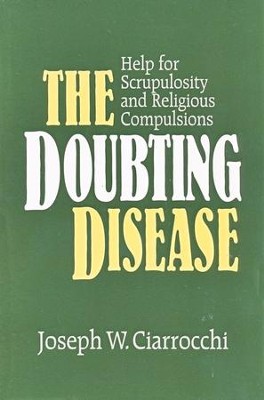
A while back during staff meeting, a colleague mentioned a book on a subject I’d never heard of-scrupulosity. I downloaded the Kindle sample. After reading that, I couldn’t help but buy it and see what I could gain.
Ciarrocchi defines scrupulosity as seeing sin where there is none, a “phobia concerning sin.” The title of his book comes from a label the French give to the emotional condition which is sometimes part of scrupulosity.
Having been in church life since I was born in a pastor’s home and then serving over 20 years on church staffs, I have witnessed this phobia. But reading the connection Ciarrocchi makes to OCD was eye-opening to exactly how doubters struggle. With this knowledge, one can see a variety of ways to navigate life while struggling with deep emotional and spiritual challenges.
He quotes Dr. Judith Rapoport of the National Institute of Mental Health as describing OCD as losing the ability “to know if you know something.” This description paints a picture of OCD as being as much about doubt as it is about anxiety. Quite a different view of what an OCD patient is enduring. Dealing with their compulsions and obsessions can lead to depression therefore challenging everything they believe and think they know. To show the severity of it, he shares historical examples in chapter three through the lives of John Bunyan and St. Ignatius Loyola. Both considered suicide. Ignatius prayed, “Show me, Lord, where I can obtain help: and if I have to follow a little dog to obtain the cure I need, I am ready to do just that.”
The hope Ciarrocchi provides begins in chapter 4 and continues through the rest of the book. This hope is directed to both professional and pastoral counselors. Unfortunately, those living like Bunyan and Ignatius often feel like they’ve tried everything and have failed, nothing is available to help. He provides worksheets (chapters 5-7) and techniques for counselors to use to send this message to their clients: “Past failure does not mean you are weak-willed or hopeless. You have simply lacked some essential ingredients for effective change. You can learn skills with patience and proper direction.” Chapter 8 is where he provides those ingredients. One of the most helpful directions by Ciarrocchi is his listing and explanations of three types of scrupulous behavior in chapter 9:
Developmental, prominent during adolescence and following a religious conversion in adulthood
Milieu-influenced, as taught by family and religious educators
Clinical, the version associated with OCD symptoms
He ends the book encouraging those in religion and psychology that they can learn from one another.
Clinical work also requires validation of counseling methods that make explicit use of clients’ religious perspective. This research is long overdue, and some preliminary work indicates the utility of this approach. Researchers studied treating depressed patients who had a religious orientation. They found that incorporating the clients’ religious beliefs through either cognitive-behavior counseling strategies or standard pastoral counseling methods led to more rapid recovery than standard counseling methods without using the clients’ religious beliefs. What is even more intriguing is that using the clients’ religious beliefs was effective even if the counselors were agnostic themselves.
I’m thankful I was listening in that staff meeting and have read this book. Had I read this during my church ministry days, I know of at least one lady I would have ministered to better. My encouragement to all those remotely touched by this review, get your copy and gain.
Last weekend we traveled to New Orleans to run the Rock ‘n’ Roll race. Unless you hibernate in your hotel, you see and therefore learn a lot in New Orleans. I’ve never been disappointed visiting New Orleans.
As for seeing and learning in New Orleans, a visit there should include taking in great food. We made it a point to not eat at the same place twice. Not necessarily hard to do, but certainly fun to achieve. Here’s the food establishments we visited during our stay:
We ate just about anything you could ask for: crawfish, shrimp and grits, crab, gumbo, pasta, burgers, pizza, chocolate, ice cream, and beignets. No regrets.
Boil Seafood House
I can only imagine the challenges these owners and employees have survived during the pandemic. This race, an annual event, wasn’t even held last year. And who knows how many others were canceled. So to be open and surviving is a testament to their commitment to their business and their customers.
We Floridians came to town somewhat clueless to the continuing COVID protocols in place in New Orleans. We learned real quick. Not in a rude way, but it was clear we were not at home. Mask mandates required us to mask up everywhere we went. No problem. Happy to comply. In some places, vaccination proof was required; we knew this as a requirement to enter the race expo. No problem. Happy to comply.
What was interesting to see was how the employees of these ten food businesses went about treating their customers while holding to these protocols. 9 out of 10 were excellent experiences. Regardless of their choosing to uphold the protocols or choosing to require vaccination proof, these employees treated their customers with excellent respect and warmth as they worked under unusual circumstances.
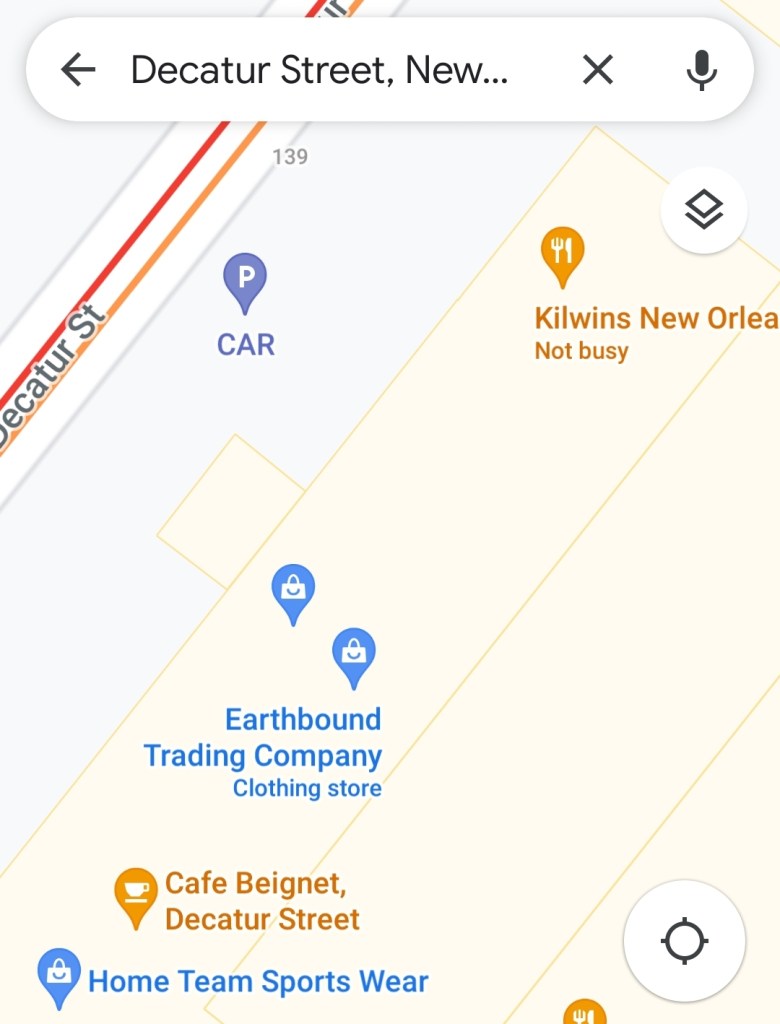
Our best experience was at Kilwins on Decatur Street. It was Sunday afternoon, and my friend wanted a shake. Google told us the closest shake available was Kilwins, so we headed there. We passed Cafe Beignet on our way there and decided it was time to get some beignets as well, after Kilwins. The next 10 minutes was a lesson in customer service.
If you know me, a “no” to ice cream is rare. But I was saving room for beignets. Even the chocolate was not tempting me in Kilwins. We already had our share from Leah’s Pralines, so I didn’t enter Kilwins with a shopping mindset. Just taking it in. We were not greeted at the door by anyone checking proof of vaccination. What we were greeted with was employees behind the counter welcoming us in the store, “Welcome to Kilwins!” My buddy ordered his shake, while I eyed the chocolate. Nicey, behind the counter, asked if I needed any help. I said, “No, just looking.” She offered to give me a fudge sample. Do you think I said no? After that sample of her favorite, she asked if I saw another fudge I’d like to sample. Well, I had to admit I didn’t need a sample. I had been hooked into buying a chunk of Toasted Coconut Fudge, simply because it sounded intriguing. Plus, Nicey lived up to her name. We walked out of Kilwins happy shake and fudge customers expecting to enjoy more happiness in beignet land.
We went from the best customer experience to the worst customer experience in what felt like another city, but only two stores apart. Not to bore you with the details, but suffice it to say one Cafe Beignet employee was determined to have things her way when it came to COVID protocols to the point customers did not feel welcomed. We were thankful for outside seating.
In that ten minutes in New Orleans, we saw and learned a few things about customer service, about how to treat one another during challenging times, about power, about treating others the way you want to be treated.
To the 90% of New Orleans businesses that made our trip amazing, thank you. We remember our time with you as minutes well spent, minutes we were seen and heard, minutes you thought more about us than you did yourself. Keep giving your customers great minutes!
This week I toured a new residency for a nonprofit whose mission is to provide homeless women and men with mental health challenges a hope for the future. Second Heart Homes is the name of this Sarasota-based nonprofit.
The facility my colleague and I toured-the first residence in their program designed for women-just opened in December. At the moment, three clients are in the program; the facility will eventually be prepared to house 12 women.
My first visit in one of Second Heart’s Homes was in the fall of 2020. I revisit that first tour every time I enter a new residence. Each visit in each residence breathes new life into everyone in the room. Why? Because their is love and hope in each heart and smiles on each face.
Yet, the reality remains that behind that smile is a heart and mind with wounds waiting to be healed. Steps have been taken to start the healing, but the journey has just begun.
This hit home as I heard a simple illustration about one of the new clients in the women’s facility. Although she’s been there for several weeks…although she was friends with one of the other women before moving in…although she no longer has to rely on the Salvation Army for shelter each night, she has to have lights on and her purse is under her pillow while she sleeps.
Take a moment. Imagine what’s behind these necessities.
The image of a purse under a pillow stuck with me. Many thoughts went through my mind, so many to chew on. The one that I most appreciated was this: Thank God someone got in the ditch for this lady.
True empathy cares about not just providing a pillow but what it might be used to protect. True empathy gets in the ditch.
If my first two reads of 2022 are any indication, I’m in for an education.
Book #1
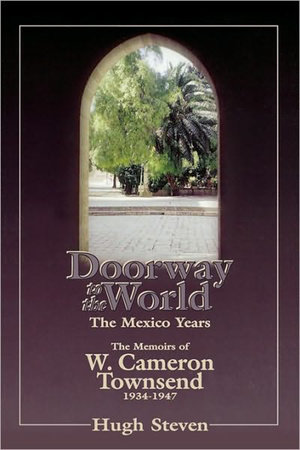
Before reading this book, I knew nothing about the start of Wycliffe Bible Translators and Summer Institute of Linguistics (SIL). It’s quite a story. In this memoir, you learn just how passionate founder Cameron Townsend was and how that passion laid the foundation for one of the largest mission organizations. His vision and commitment led many world leaders to join forces to transform communities. He used what he had and relied on God for what he didn’t have.
Book #2
If James Cone only wrote this book for me, it would have been worth his time. I’m thankful for the direction I received to read it. I had no idea what I was going to learn and experience. I learned many things. Much of what I learned gave voice to my mind’s whys I didn’t know I needed to voice and answered my soul’s questions I didn’t know I needed to know. As a white, 53-year-old son of a Baptist preacher, my heart ached and my eyes teared through much of this book. So many what if’s and why not’s simultaneously producing shame and empathy, anger and compassion. My view of American history has changed. My appreciation for suffering has deepened. My belief in Jesus’ sacrifice has solidified.
These two books exemplify why it’s important to read. What are you reading? What education will you give yourself in 2022?
Yesterday my run was a 6-mile route I created last Summer. It mostly runs east and west, as you can see here:
At the mile 1 turnaround, I noticed something. I had been running with the wind to my back, which meant for the next three miles it was now in my face. Made me stop (I didn’t actually stop running) and think…and this is where my mind went the next three miles.
Some windy days are worse than others. On those worse days, like this past Sunday when gusts were 20+MPH, I run as much as possible in the crosswind. Of course, you always have the choice to say, “No thanks. I’m not even lacing up.”
Ultimately, you need to run into the wind. Why? Because Race Day is Coming!
All the training weeks before race day you can do whatever you want in choosing to deal with the elements. But come race day, it’s out of your hands. There’s no opting out. The course is already laid out, and the elements are not in any human’s hands. Race Day is here. You have to deal with it.
Runner or not, we all have race days.
Newly engaged…race day is coming
Newly pregnant…race day is coming
Final child about to graduate…race day is coming
Mid-life career change approaching…race day is coming
Anticipating retirement…race day is coming
These race days, if you’re living life well, you see coming and can do your best to make the right training choices. There are some race days you don’t see coming. Like 100MPH wind race days. If you are a “This Is Us” fan, this week you saw Beth and Randall have to deal with a major Race Day with their 17-year-old. All race days, known and unknown, come, and you don’t have a choice but to deal with the elements.
So what do we do? Sure, most training days and race days are mild. Enjoy them to the fullest. On those “unmild” days, recognize you have choices. If you want to be ready for race day, you’ve got to be willing to run into the wind occasionally. When that’s not your best option, it’s okay to slow the pace or claim it as rest day.
Three Saturdays ago I was sleeping the day away, pretty sure I had COVID. Test came back the next day affirming my suspicion.
I test my health often by running. Can I? How did it go? Do I need a nap soon after? Yadda yadda.
Thankfully my case was mild. I “ran a test” with a decent 5k the following Wednesday, but not every run since has been an indicator that all is well.
Earlier this week I set a plan to run each day this weekend-a progressive schedule of six miles on Friday, seven on Saturday, and eight on Sunday. Nothing new. This was a routine schedule this past Fall.
Not sure what it is, but Friday runs since the Summer have occasionally been rough. Yesterday was one of them. I cut it short, ending up with 4.15 miles. I haven’t let my mind look at Fridays any differently…well, until yesterday.
So last night and this morning I debated how far I should run this morning. Not running wasn’t an option I considered. I landed on simply running the same route as yesterday and see how the six went. Around mile two my legs felt pretty much like yesterday, not quite as sluggish. I decided it didn’t matter what pace I had to adjust to, how much walk/running I had to do, six miles was happening today.
A little over three miles I stopped for a quick water break in the park. I didn’t stop long. I didn’t want my body to tell my mind what to do. Somewhere in mile four my legs perked up. I told myself, “Go with it.” I adjusted my course and ran past my next turn taking the next road instead.
I ended up taking four more such turns and completed just under seven miles…with more in the tank.
Here’s my takeaway. We all have days when things don’t go according to plan. We all have to deal with letdowns, apparent failures, missed goals. At the end of those days when we assess the next one, we have options. They range from shutting down to overcompensating. Usually, somewhere in the middle is the best option.
How your next day goes is entirely up to you. You have options.






 John Gregory