3 Messages from Jordan

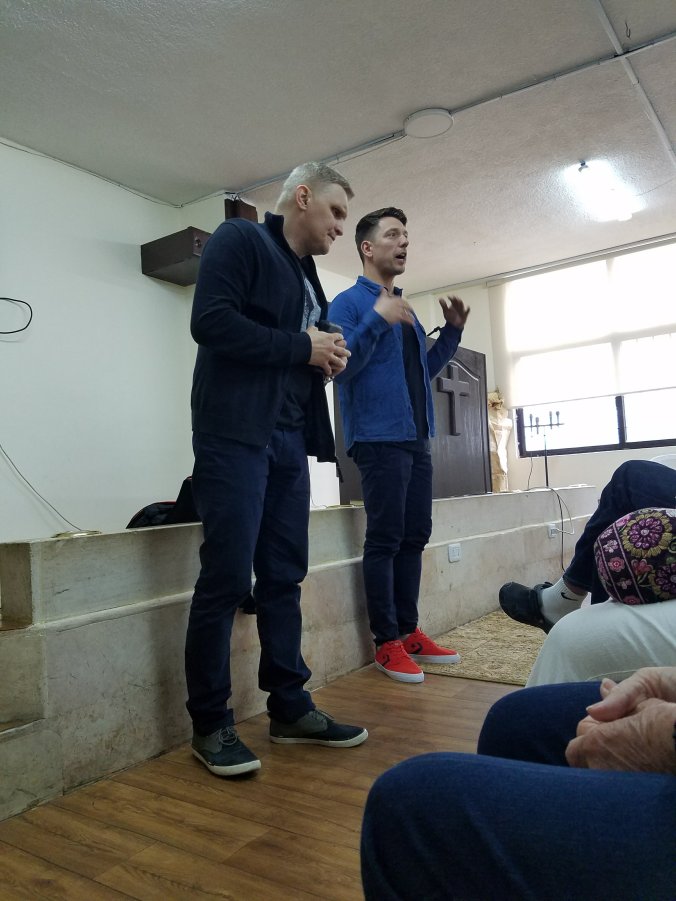
Back in Florida from a 13-day trip to Jordan. We had an outstanding time with the team (Latvians, Brazilians, Irish, Americans) pictured below.


When talking with those we went to support, I asked three of them this question: “When I have the opportunity to share with Americans a message from you, what would you like me to share?” Here are their responses:

Receive and love our people. They’ve suffered enough. Don’t add to their pain or cause them more hurt. -Iraqi refugee

When you pray for us, consider that you might be the answer to your own prayer. -Missionary

We believe the American church is our mother church. We pray for you. Please pray for us. -Pastor

Safe People (book review)

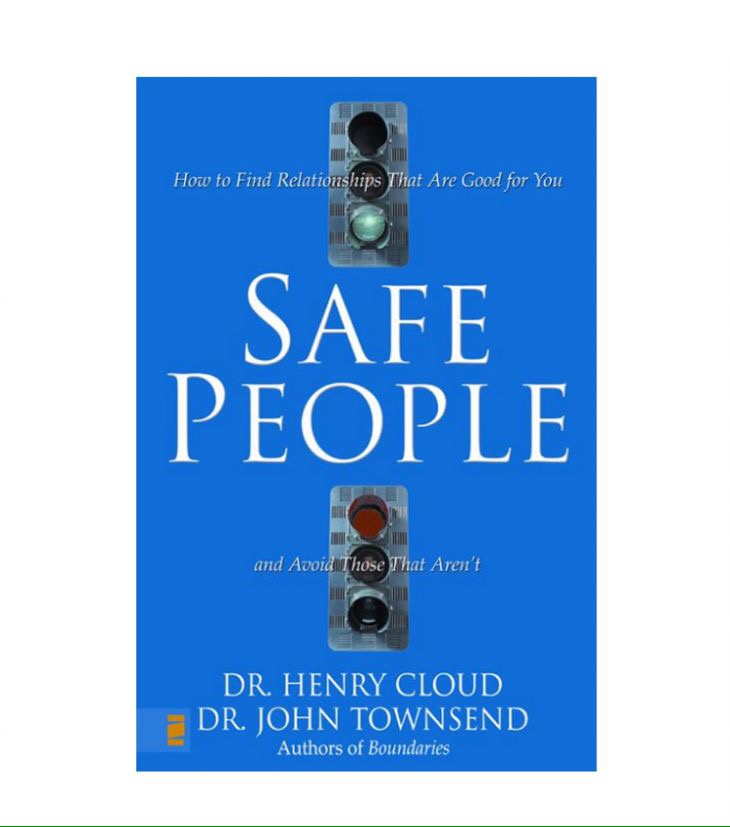
I finished another great read from Henry Cloud and John Townsend.

One of the marks of a truly safe person: they are confrontable.

Safe people know that they are subject to change. They want to mature and grow over time.

Safe relationships are not just about trust, support, and sharing. They are also about truth, righteousness, and honesty.

To best deal with unsafe people, we first need to understand what causes us to be unsafe.

And that’s just from chapters two and three.

I came across this book while searching for a resource for developing a coaching program about relationships. Pretty sure this book is worthy. Here’s why:

  • Clear definitions, illustrations, and suggested tools for implementation.
  • Complete and thorough look on the subject.
  • You are not given the idea that you are perfect and others aren’t. It’s a look at yourself, if you choose to accept the opportunity.

Anyone would find this book helpful. Keep your ears open for a group coaching program on this subject, most likely coming this fall.

Firsts

Mission trips usually contain firsts. In the last 48 hours, I’ve had a couple.

  • Yesterday I led a relay game for kids ages 4-9 carrying eggs on a spoon.
  • Today I was asked to share in a session on marriage with 11 couples at Rahwa Baptist.


Have your “yes” ready, even for firsts.

3 Questions to Counter Fear’s Lies

(a follow up from last post)

When, not if, fear lies to us, we should be ready with a counterpunch. Our most powerful counters will be focused on God, not us. In the story from Exodus 3-4, Moses’ counters were all about himself. Suppose he had countered with these questions instead.

What is God doing? 

  • And I don’t mean, “Pretty cool trick. How is he doing that?” Rather, I’m talking big picture. Moses may have actually been asking himself this question for decades, but I’m guessing his viewpoint was too small.

Where does God want me to join his work?

  • It’s pretty clear Moses gave up this thought long ago. His bully memories and self-excusing led him to accept, “This is all there is.”  It wasn’t long before he found out otherwise. 

How is God revealing himself?

  • Like most of us, Moses was caught up in his own awe. His self-imposed blindness allowed him to offer only what he could see. His world changed when God removed his blinders.

Go ahead. Counter Fear. Give God his chance to remove your blinders to show you what He’s doing and how you can join him.

Fear is a Liar

Exodus 3-4:16
Fear steals your curiosity. 3:1-4
Fear steals your “yes.” 3:11,13; 4:1,10,13
Fear steals your awe of God. 3:5-6,14-15;4:11

Daniel 3
Fear will tell you to bow to other gods. Vs. 1-6
Fear will tell you to give your allegiance to what you can see. Vs. 7-12
Fear will tell you to resist God’s plan. Vs. 13-18
Fear will tell you that God cannot be trusted. Vs. 19-30

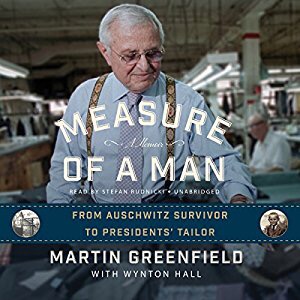
Measure of a Man (book review)

This may be the best audio book I’ll ever hear. If there aren’t plans for it to become a movie, it’s just a matter of time. Someone alert Steven Spielberg or Martin Scorsese.

The quality of an audio book can be determined by the reader. Within minutes you understand why this reader, Stefan Rudnicki, has won Grammys. 

Yet, even though the quality of the production is fantastic, the mesmerizing aspect of this book is the life story it covers. Mr. Greenfield’s story includes the horror of the holocaust, his transitioning to America, his providential start in the tailoring business, and his fortuitous connections to politicians and celebrities. Despite his success, he maintains the importance of loyalty to his family, his faith, and his workers. He gives all the credit to God for how his life illustrates the measure of a man.

Read this book if you…

  • …like biographies.
  • …enjoy history.
  • …are an immigrant.
  • …love America.
  • …are inspired by other’s success.
  • …believe God deserves all the credit.

Missing God’s Gift (Something Misplaced?)

Yesterday a friend told me how different he is from who he was just 18 months ago. Earlier this week a group discussed how a coaching program has altered their life’s rhythms in just 7 weeks. These people were expressing how receiving a gift from God, such as leaving a successful corporate job to start all over or exiting the routine of life to enjoy Sabbath, has changed who they are. And they want more.

God’s gifts come to us in various formations. Sometimes they are clearly seen as coming straight from God. Other times, we are a little more challenged to determine if an opportunity or unforeseen blessing are indeed gifts from God. That is, unless we live from the viewpoint that God works at all times and through all things in our lives. Until we reach that viewpoint, it’s likely we will often miss God’s gifts.

Why don’t we automatically have this viewpoint? What keeps us from it? How can we move toward it? In talking with these people, I’d say they would say they had some things misplaced.

Misplaced Contentment-Yes, it’s possible to be so content that you miss noticing an offer from God. Our contentment can often lead us to settling, stubbornness, and even pride. So a God-given opportunity can appear unsettling, unnecessary, maybe even unworthy. Think rich, young ruler.

Misplaced Fear-In this case, fear of just about anything (loss of job/income, ability, identity, power/influence, health, security) or anyone (family, peers, leaders, employer, yourself) has been given higher rank than God. Think Moses’ initial bush response.

Misplaced Stewardship-Stewardship covers more in our lives than just finances. Stewarding your family, your talents, your choices, your time, your emotions, your mind, your body, for example. Think about most kings in the Old Testament.

Misplaced Allegiance-Satan is committed to leading us to misplace our allegiances. We can become more allegiant to so many earthly kingdoms that we miss God’s leading us toward his heavenly kingdom. Think about the Pharisees and Paul’s warnings about false teachers in the church.

Misplaced Commitment-Commitments lead to routines, obligations, and expectations-some short term, others long term. These can become idols causing us to be completely blind to something more aligned with God’s plans for us. Think Eli, Saul, or Martha.

We often miss God’s gifts to us because our misplacements lead us to consider way too many “what ifs.” So consider a few reverse thinking “what if” results when God’s gifts are missed:

  • What if you miss God’s gift because you ignore a burning bush?
  • What if you miss God’s gift because you run toward Joppa instead of Nineveh?
  • What if you miss God’s gift because you always look backward rather than forward?
  • What if you miss God’s gift because you follow the crowd and declare, “Crucify him!”
  • What if you miss God’s gift because your faith is so small that your reply to God’s offer is, “No thanks.”

1st 50 years-5 things I’m Sure Of

Monday I joined the 50 ranks. Whatever that’s supposed to feel like, I’m pretty sure I don’t. By age 50, you’d think I’d feel pretty sure about just about everything. One thing I am most assured of is I’m sure I don’t.

Yet in a reflective mode, I challenged myself to list what I’m most assured of about life after living 50 years. These five things topped the list:

  1. God is Right-He’s right about himself, and he’s certainly right about me. He’s right about good and evil, love and hate, holiness and pride, the present and the future, and power and humility. The depth of my submission to his “rightness” is the depth of my contentment and peace.
  2. There’s More Than This-Although there’s a lot to enjoy about God’s earth, life is more than what I can see, taste, hear, touch, and feel. An eternal perspective reveals the “more” and keeps the visible in its proper priority.
  3. Less is More-Specifically less noise, less doing, less collecting of stuff replaced by more listening, more being, and more margin.
  4. Giving and Receiving are both important-Yes, Paul mentions in Acts that givers are more blessed. I don’t disagree with that. My caveat is that I can’t just keep on giving and giving and resist receiving. I have to receive in order to give. Both are important.
  5. A godly life results in no regrets-“I want no regrets when the horses come for me.” -Margaret Becker

What are you most assured of?

Three Ways to Let God Out of Your Box

(Third and final entry for this post)

The first two entries talked about two ways to let God out of your box: don’t give up and stop believing lies. Read Nick’s quote again to see the third way.

Too often we tell ourselves we aren’t smart enough or attractive enough or talented enough to pursue our dreams. We buy into what others say about us, or we put restrictions on ourselves. What’s worse is that when we consider ourselves unworthy, we are putting limits on how God can work through us! When you give up on your dreams, you put God in a box.

As a long-distance runner, I often hear people say something like this after they hear about some race I’ve done or I’m preparing for: “I could never do that. You’re amazing.” If I were to bluntly respond what I’m thinking when they say that, it would be something like this: “That’s ridiculous. Of course you could. And by the way, amazing I am not.” This is a simple example of what we often do to God as well. We tell him what’s possible…so in the box he goes. The third way to let him out of your box is to do the opposite.

Resist Putting Limits

Nick said we put limits on how God can work through us. And this can have tragic consequences. Case in point: the Israelite spies in Canaan (read Exodus 13-14). Twelve went in to check it out. Ten said, “No go.” Two said, “We should go.” Forty years later, the ten got want they wanted and so did the two. God showed up for the two who resisted putting limits on him. They experienced what God can do through those who allow him to work through them (read Joshua 6,14).

So how can we resist our human nature and give God all the freedom in our lives he deserves?

  • Foster a mindset of submission to daily prompts from God-“Sure, I’d be happy to ask my neighbor how I can pray for them. What else?”
  • Keep your finger on the “yes” trigger when God comes with a big ask-“Yes, I’ll take a vacation week to go on a mission trip. And I’ll stay open to even moving my family to live there permanently.”
  • Seek counsel from those we believe live submitted lives-“Can we have coffee soon? I’m needing some guidance on something God has challenged me to do.”
  • Surround yourself with other “resisters”-“God, who should be in my corner? Holy Spirit, surround me with fellow resisters.”

In what area(s) of your life is God in your limit box? What could God do through you if you’d resist putting limits on him? Tell God, “I’m sorry for not giving you my ‘yes’ more quickly. I desire to experience what it’s like to give you full access. Show me what it’s like to let you out of my box.”