Three Ways to Let God Out of Your Box

(Continued from yesterday’s entry)

Too often we tell ourselves we aren’t smart enough or attractive enough or talented enough to pursue our dreams. We buy into what others say about us, or we put restrictions on ourselves. What’s worse is that when we consider ourselves unworthy, we are putting limits on how God can work through us! When you give up on your dreams, you put God in a box.

There are three phrases in Nick’s quote that explain how we put God in our box: we tell ourselves, we buy into, we consider ourselves. These actions aren’t generated by God. They are generated by ourselves and others, and they reveal the second way to let God out of our box.

Stop Believing Lies 

Have you noticed you are one of the biggest liars about you? Nick gave you some examples: “I’m not smart enough. I’m not talented enough. I’m not attractive enough.” Sure, maybe someone actually said those or similar things to you one time, but who keeps repeating them more than anyone else? You do. Stop telling yourselves lies that you end up believing. 

Yes, others say things that we have a choice to buy into. A choice. In middle school, my music teacher said I wasn’t good enough to get a college degree in music. I chose not to believe that and got that degree anyway. And in my ministry career others have said I wouldn’t be able to get hired by churches because my marital status is single. For over twenty years now God has chosen otherwise.

To stop believing ours and other’s lies, we must fill our hearts and minds with God’s truths. Instead of undermining what God wants to do in our lives by considering ourselves unworthy, we should believe scriptures like Zephaniah 3:17: “The Lord your God is with you, he is mighty to save. He will take great delight in you, he will quiet you with his love, he will rejoice over you with singing.” Who in their right mind wants to believe lies and box up the God of that verse?

What lies do you need to stop believing? What God truths could replace those lies? Tell God, “I’m tired of the lies. I’m going to stop believing them and stand in your truths. Show me what it’s like to let you out of my box.”

(Blog completed tomorrow)

Three Ways to Let God Out of Your Box

You read that title right. You may not be almighty, but you are capable of stuffing God in a box of your making. It’s so easy that most of us do it without even knowing or thinking about it. And then we marvel at those who live what seem like extraordinary lives, not knowing that they have simply let God out of their box.

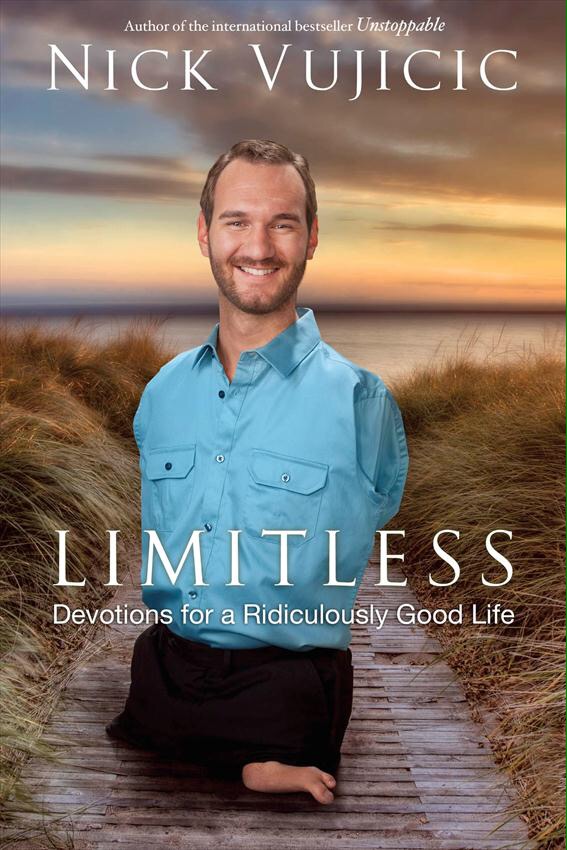
Case in point: Nick Vujicic. He was born without limbs-no arms or legs. Can you imagine the box he had as a child where he stuffed God? That box must have been filled with lots of whys, hows, whens, and seriouslys. And who could blame him? Sounds perfectly natural to think God had messed up-you might say he put himself in Nick’s box.

Somewhere along the way, Nick decided to let God out of that box. Nick is now 35 years old, married, travels the world speaking, and directs an organization that helps share the message of hope in the God he let out of his box. I started reading his devotional book, Limitless, this week where in the first day’s reading entitled Free from Limitations he wrote this:

Too often we tell ourselves we aren’t smart enough or attractive enough or talented enough to pursue our dreams. We buy into what others say about us, or we put restrictions on ourselves. What’s worse is that when we consider ourselves unworthy, we are putting limits on how God can work through us! When you give up on your dreams, you put God in a box.

From Nick’s quote, we can see three ways to let God out of any box where we’ve decided he belongs.

Don’t Give Up

Giving up is another one of those easy-to-do human things. What if we looked at giving up as putting God in a box? What if we stopped exercising our finite power in such a life-sucking way resulting in squelching the infinite power of God? For some other cases in point, consider the following people who didn’t give up:

  • Noah
  • Esther
  • Joshua
  • Daniel
  • Martin Luther
  • Abraham Lincoln
  • Alexander Bell
  • Winston Churchill
  • Martin Luther King Jr.
  • Jesus

How their lives and those impacted by their decisions would have been changed had God stayed in their box!

Are you considering giving up? On your marriage? On your education? On your faith? On your passion? Tell God, “It’s all yours. I’m not giving up. Show me what it’s like to let you out of my box.”

(Blog continued tomorrow)

2018 Reading Strategy

Two weeks into the year. And I asked for a strategy. Got it.

When it comes to reading, I’d say I’m slightly above the average reader as to how much and to diversity. But that’s been pretty much up to chance, outside of the structure of assigned reading by instructors or bosses. In my adult life, my content has been determined by curiosity, reference, or gifts. Nothing wrong with any of those. But for 2018 I wanted a strategy. So my coach and I walked through that this week. Here’s the result:

  • Overall goal: A well rounded, self-assigned curriculum that includes subjects I’m currently engaged with but also subjects that will widen my knowledge
  • Number goal: Not necessarily concerned about it, but landed on a total of 25-30
  • Targeted content: I will read 1-4 books that fall under the following ten headings: 
  1. Coaching
  2. Leadership
  3. Psychology
  4. Devotional
  5. Biographical
  6. Political
  7. Fiction
  8. Christian Living
  9. Audio books
  10. Miscellaneous

I really like this plan. It’s intentional. It’s accountable. It’s broadening. It’s flexible. It’s doable. It’s motivational.

If reading is a thing for you, what’s your strategy? Does it need reviewing or tweaking? Feel free to share by commenting.

If you have another thing, same idea. How can you grow in that thing in 2018?

Live How You Want to Die

Since Saturday I’ve had quite a few interactions with people giving me reason to ponder this question: How is it some people die happy and others don’t?

I say since Saturday because that’s the day some of our church family gathered to remember the life of Buna Brannon. She lived a full life. And I’m not just referring to her age of 84. Buna lived a full life because she chose to live it to its fullest.

By the time I met Mrs. Buna, she was already retired, 76 years of age. Nothing kept her down. Not illness. Not emotions. Not people. She made a choice to live life how she wanted, not how others wanted. And the foundation of that choice was her faith, how she understood God wanted her to live. And because of that faith, she lived happily, joyfully, actively, and extremely generously. And that’s also how she died. Until days before her living was done, she gave to others and thought of others which brought her joy, peace, and purpose. She had lived life in such a way that she was more than ready to leave it as she lived it.

However you live is probably how you’re going to die. It’s sad to watch people live unlike how they probably want to die. Angry. Depressed. Judging. Discontent. Proud. Buna made the choice to live with joy, with hard work, with purpose, and with love. And that’s what everyone will remember about her. She died how she lived.

If you want to die happily, live happily.

If you want to die sacrificially, live sacrificially.

If you want to die peacefully, live peacefully.

If you want to die regretless, live regretless.

The choice is clearly all yours.

The Worst Case of Being Misunderstood

Ever been misunderstood? I’m not asking have you ever had a misunderstanding. I’m talking about being mislabeled, mischarged, or mispegged to the point that trust was broken. In some cases, these events lead to years of damage and loss, such as years in prison for being accused falsely. If it’s been that bad for you, that’s rough. I can’t relate to that depth of being misunderstood. But I can tell you this, that’s not the worst case of being misunderstood. No, the worst case happened a few millienia ago.

The worst case of being misunderstood happened to God. Yes, that’s right. And just like the case usually is, it was because of a lie. The lie led to mistrust. The mistrust led to the worst decision known. And God and his creation have been suffering ever since. Yes, that’s right. You have been suffering because God was misunderstood.

You’ve probably guessed where this happened. If not, here’s a hint. The lie had to do with becoming like God. (Now that’s a whopper of a lie.) The lie caused Adam and Eve to lose trust in God’s character. The choice to believe that lie in essence said to God, “You can’t be trusted.” The first person to ever be misunderstood created those who made him feel misunderstood.

So here you are. Either being misunderstood right now or thinking about when it’s happened to you in the past. Find comfort in these thoughts:

  • God is the one person in the world who does get you, all of you.
  • God knows what it feels like to be misunderstood. It started soon after he created us and has never stopped.
  • God found a way to offer reconciliation to those who misunderstood him. You can do that too, most likely. But remember, just like his offer, yours may or may not be accepted.
  • God’s character wasn’t impacted by his being misunderstood. At his core, he is love. Strengthen your core with love.
  • God continues to do his work. So can you. Being misunderstood is not your identity. Your identity is found in your Creator. Don’t believe the lie that started this whole thing. 

3 Keys in Trying to Do it Right the First Time

My niece has a first coming. In three months, she and her husband will have another mouth to feed (pictured below). But more importantly, they will be first-time parents. She told me, “I can’t deny it. I’m a little nervous.” Yep.

We all have firsts. These come in experiences like our first day in kindergarten, our first time driving on an interstate, our first time praying in a group setting, our first time going for a job interview, or our first and hopefully only time to say, “I do.”

And they keep coming. Life is a journey of firsts. Last year my firsts included planning a sabbatical, running two half marathons in one weekend, researching for a book, and stepping up to the mic in a studio. These were firsts I chose to do. Not all firsts are chosen, though. Remember Noah? Chosen or not, all firsts come with moments of, “I’m a little nervous.”

I was more than a little nervous for my senior recital in college. You can say I chose it because I chose that field of study, but a 30-minute recital singing in various languages wasn’t shared in the catalog description. But I was buoyed by two things: my accompanist was the best on campus and my commitment to doing this right. My goal was to walk off stage thinking, “This is what I wanted to feel and experience.”

So how does one walk away from a first experience believing they did everything they could to get it right? Sounds audacious. Maybe even too lofty. But what’s that saying your probably heard from some mentor along the way, “If it’s worth doing, its worth doing right”? So from my efforts in trying to get firsts right, here are three keys to grasp:

  • Embrace your Emotions

    Your first could bring a myriad of emotions. Fear. Elation. Anxiety. Excitement. Doubt. Drive. I encourage you to deal with it all. Why? When someone deals with all their emotions, they grow in dealing with the negative and the positive. You learn your personal lane of balance. Some people are fearless and therefore are going to crash sooner or later; they need to find a balance of embracing healthy fear. Some people are born doubters and are constantly stunting their chance to go further; they need to find a balance of embracing healthy courage. Rather than falsely believing in the futility of balance seeking, we give ourselves a better chance of doing things right the first time when we embrace our emotions.

    • Stand in Your Why

      Convictions, purpose, values, vision: whatever your call them, they give you the stability to go after something for the first time. You must know them and ferociously guard them. Is your why clear? Do your methods live out your why? If you could state your why in five words, what would it be? Yes, your marriage should have a why. Yes, your parenting should have a why. Yes, your first 90 days on the job should have a why. We give ourselves a better chance of getting it right the first time when we stand in our why.

      • Be Fully Present

        Are you a “what-ifer”? Or a “if only-er”? Too much living in the past or for the future can stunt doing things right in the present. Using the example of parenting, research says that the core of who we are is established by age five. If that’s true, the parent concentrating on getting that child into Harvard while they’re in the pottytraining stage may miss some key elements in doing the parenting thing right. Live in the moment. Yes, plan for the future and learn from the past. But give yourself the best chance of doing this thing right the first time by being fully present now.

        Here’s to my niece, the first-time business owners, the first-time writers, and all first-timers! May God bless your efforts in trying to do it right the first time.

        2017 Library

        Throughout 2017 you’ve read posts referencing books I’ve read. Below is the library, in order which I read them. You’ll notice several books about coaching, which was required reading for classes I took during the year. Something else I noted this year on the list for the first time-whether I read the book on kindle (13) or hard copy (10). Something for the curious to know and chew on.

        God is in the Manger, Dietrich Bonhoeffer (hard copy)

        The Salvation of Souls, Jonathan Edwards (hard copy)

        Christian Coaching, Gary Collins (hard copy)

        Co-Active Coaching, Henry Kimsey-House, Karen Kimsey-House, Phillip Sandahl, Laura Whitworth (hard copy)

        Becoming a Professional Life Coach, Patick Williams, Diane S. Menendez (hard copy)

        The Next Level, Scott Wilson (hard copy)

        The God-Shaped Brain, Timothy Jennings (kindle)

        The Critical Journey, Janet Hagberg, Robert Guelich (kindle)

        Brain Savvy Leaders, Charles Stone (kindle)

        The Phenomenon, Rick Ankiel and Tim Brown (hard copy)

        The Myth of Equality, Ken Wytsma (hard copy)

        Business for the Glory of God, Wayne Grudem (kindle)

        Business by the Book, Larry Burkett (kindle)

        The E myth Revisited, Michael Gerber (kindle)

        1,000 Churches, Ed Stetzer and Daniel Im (hard copy)

        How to Become a Rainmaker, Jeffrey J. Fox (kindle)

        This Is Your Brain on Sports, L. Jon Wertheim and Sam Sommers (hard copy)

        Awe, Paul David Tripp (kindle)

        Law and Ethics in Coaching, Patrick Williams and Sharon K. Anderson (kindle)

        Ethics & Risk Management for Christian Coaches, Michael J. Marx (kindle)

        Effective Group Coaching, Jennifer J. Britton (kindle)

        Rhythms of Rest, Shelly Miller (kindle)

        The Rest of God, Mark Buchanan (kindle)

        2018 Resolution: Closing the Spiritual Gap

        This afternoon I finished reading my final book for 2017, The Rest of God by Mark Buchanan. I shared a thought from his book a few days ago regarding a sabbath type exercise, which he offers many of in this book. Here’s one from chapter 10 that seems fitting for New Year’s Eve:

        A good Sabbath exercise is to take stock. It is to sit and reckon where you are spiritually and calculate the gap between that and where you want to be – or, at least, where you know you ought to want to be. Do you want more grace, or trust, or peace? Do you want a greater sense of God’s presence and goodness? Do you want to live by Paul’s exhortation in Ephesians 4:29, to “not let any unwholesome talk proceed out of your mouth, but only what is helpful for building others up according to their needs, that it may benefit those who listen”?

        What if our resolutions for the new year were spiritual in nature? 

        What if our first priority was about our souls, our spirits? 

        What if a year from now we could say, “Thank God my spiritual gap isn’t as big as it was“?

        Real Sabbath: God’s Sovereignty

        My latest reading has been on the subject of Sabbath. Why? It’s a curious subject; we all need it; and I’m putting together a coaching program on the subject.

        The two books I’m reading through this month are excellent; they’ve made the resource list for the program. Here are links to them: The Rest of God and Rhythms of Rest.

        To give you a taste of the goodness of these books and what you could look forward to in a program on this subject, here’s a quote from chapter four of The Rest of God:

        Real Sabbath, the kind that empties and fills us, depends on complete confidence and trust. And confidence and trust like that are rooted in a deep conviction that God is good and God is sovereign.

        To give the reader a practical way to seek the sovereignty of God and therefore achieve an attitude of Sabbath, the author gave this challenge based on the storyline found in Acts 3-4 (you might want to read that now):

        To practice the sovereignty of God today when you pray, start with God. Survey what he has made. Recite what he has done. Proclaim who he is.

        So I tried that this afternoon as a journal entry. Give it a shot and see if your mind and spirit aren’t entered into a deeper place of trust and confidence. 

        The Gift of Balance: Ministry and Service (Part 2)

        (This is part two of the final topic in a series on the subject of balance. It being the holidays, we thought titling this series the gift of balance seemed appropriate. By “we,” I’m referring to the series contributors. Joining me in this series are Mark Stanifer and Tonya Waechter. At the end of this entry are suggested resources.)

        Tonya: The million dollar question is, “How do you distinguish God’s plan?” If we are making God first and really trying to follow the Holy Spirit, one thing is to pay attention to what’s in your heart, the passions of your heart. Pray that he will open and close doors. It doesn’t mean you won’t miss the mark sometimes, but then you have the chance to recalibrate. We don’t have to go forward fearfully; we can just go forward.

        John: I thought about that question by comparing my plans to God’s plans, what characterizes them. So for instance, my plans tend to be my first choice and God’s plans tend to not be my first choice. The reason for that is my plans tend to not require a whole lot of risks, they are comfortable and fit naturally; God’s plans tend to require me to trust him more and to have courage. So for me, I have to say, “Just because it looks good and looks easy doesn’t means it is God’s plan.” God’s plans tend to require me to figure out new boundaries and to step out in courage. They mature and grow me. In that talent parable concept, I shouldn’t try to hide talents as much as allow them to be worked on and developed and let God take care of wherever they go and accomplish. That’s not easy, but the more I live in it the more fulfilled I am; his work is getting accomplished, not mine.

        Tonya: He doesn’t always make it easy. He likes us to stretch.

        Mark: Well, it’s at that point that we are really trusting and leaning on him, not what we can manage and control on our own.

        Where I am at this point about this question about my plans versus God’s plans, first, there are times when God asks us to specifically do things, and as his follower, there really is just one choice. Even Jonah ultimately got to yes. Recognizing his voice and learning to listen over time makes it easier to hear those when they come. I also think there are lots of other opportunities where we just simply love others. There’s no law on how to do that. There are suggestions and guidelines throughout the New Testament of what that might look like, but really we have a lot of creativity and flexibility in being unique by how we were designed-like what you were saying, Tonya, following the passions of our heart. He’s already given us permission, wired us with gifts and passions to do that. Loving people inside of who he’s made us to be is part of being obedient to what he wants us to do.

        Tonya: God gives us room and choices. When my husband first graduated from Bible college and we were trying to choose where we were go and sending out resumes, a couple of opportunities came that made it a tough decision. Everything about them was good. I remember asking, “How do you know which one?” A pastor friend once said, “God may be saying this is the direction I have for you, but which one you choose is your choice.” So I think there are those times.  I also believe there are times he is very specific about you needing to be at a certain place. I think he gives us freedom at times in some choices.

        John: As you say that, I think that may go back to personality as well. I don’t live in the idea that I have to have 100% approval before I’ll step out. I know as I’ve moved from a church position to the next church position, there’s a moment of solid peace in that process that I know I’m supposed to be there next or I’m supposed to leave this place now even if I don’t know where the next place is. I’ve learned to wait for that moment or I’m not moving yet. That’s for me. Someone else could be willy nilly and be totally fine. I need to have that peace about those big ministry movements before I’m going to move in that direction.

        Mark: I can relate to that, for sure. My thinking has also expanded into what Tonya was talking about. I often have this visual of a bowling alley. There may not be a whole lot of room in a lane, but there’s room to move left and right in the lane. I think of God sometimes as the bumper guards that keep us moving down the lane. Sometimes we drift right or left, but the guard rails keep us moving in a specific direction with freedom to move left and right in that lane.

        John: I feel it’s important to add that we can’t always wait for the green light. We can’t always have every little jot and tittle clear before we’ll say yes. There are times we know enough, and it’s all we need to know. God will take care of step #29. If you know step #1 and #2, go on. You’re not going to get #29 because he’s not ready to give it to you. Those moments are trust tests on my part. “He’s given me the green light. Why am I not moving?” 

        Tonya: That seems to flow us into our final question we wanted to discuss, which was “What one belief best fortifies your balance?” I asked my husband that and he said, “Do it Jesus’ way.” His example was he did what the Father asked him to do. That’s it. He came and did what the Father asked him to do. He discipled people, spent time with them one on one, and he took rest. That was his example. I always love pointing out that he was in ministry three years. He discipled twelve, and eleven of them then created the church which still exists. He walked side by side. He rested. That’s my fortification for balance. Do it Jesus’ way.

        John: The scripture that came to my mind for this question was 1 Corinthians 6, “We are not our own. We are bought with a price. Therefore glorify God in what we do and in our bodies.” My best fortification is to be reminded that I am not my own. You could say Jesus’ modeled that also. He gave up everything for everybody. Another way to test myself when I’m not responding well to either current ministry or something new that I feel like God is pushing me to, “What is it I’m holding onto that’s not really mine or shouldn’t be mine?” That is a challenging statement to people in our culture. There’s this tension between “it’s not about you” but “of course it’s about me.” This presents the challenge to figure it out for myself, “How do I live in a surrendered place rather than a selfish place?”

        Mark: I’m thinking, John, that takes a lifetime of practice to perfect. For me, the undergirding belief is twofold. Kingdom living is full-time, whether it’s called work or service. What works for me as someone wired to be drawn toward legalism, what helps me to stay grounded is just two laws that we’ve already referenced: Love God and Love Others. If I stay focused on that, I 100% agree with what you said, Tonya, things just work out the way God wants them to work out. They may not be my plans or expectations, but certainly better because it works out the way God wants it to work out.

        Tonya: Yeah, it may not always be comfortable or feel good, but in the end it’s what he’s doing. Jesus always did what the Father wanted, but it certainly wasn’t always comfortable. He had to go through torture. It doesn’t mean it’s all going to be gravy, but it is all going to be good.


        Suggested Resources:

        Mark’s:

        John’s: